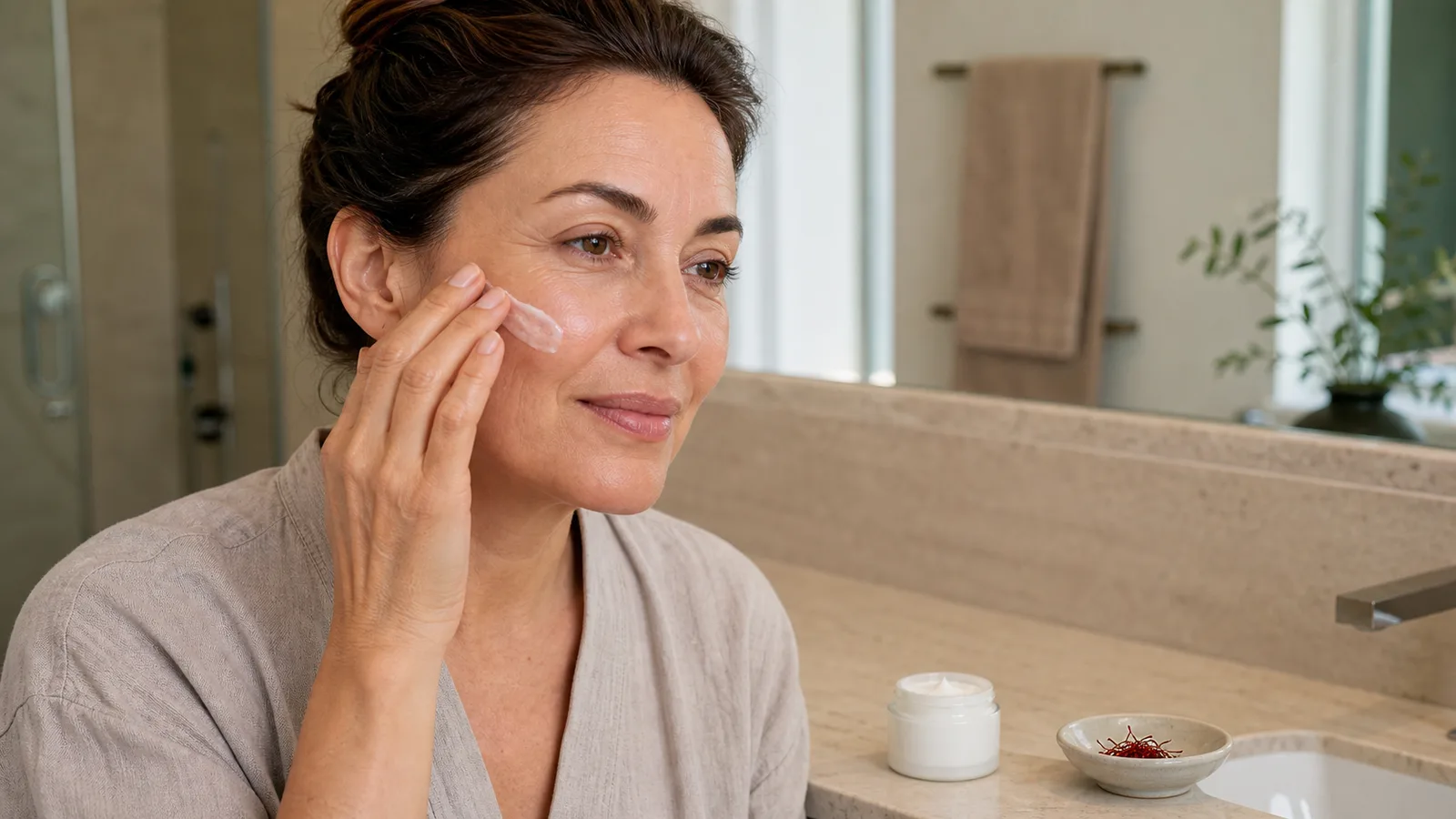
Does saffron tighten skin? There is not enough evidence to say that it does. One small study tested a cream containing both saffron extract and avocado oil and reported changes in wrinkle measures and skin elasticity after 12 weeks. It had only 20 participants, no comparison group described in the abstract, and no way to separate the effect of saffron from the rest of the formula. That is interesting early research, not proof that saffron threads, saffron milk, or a homemade mask firms and lifts skin.
A moisturising product can temporarily make dry fine lines look softer and the surface feel smoother. That cosmetic effect is different from tightening loose skin, rebuilding collagen, or changing the structure of the face.
Saffron skin tightening: what has actually been studied?
The direct human evidence is very limited. In the 2020 study, 20 healthy volunteers applied a formulated oil-in-water cream containing saffron extract and avocado oil every day for 12 weeks. The researchers reported improvement on an aesthetic grading scale in some participants, reduced nasolabial-fold measurements, and changes in elasticity readings. You can read the published saffron-and-avocado cream study.
Several limitations matter:
- The study was very small.
- The abstract does not describe a placebo or vehicle-control group.
- The product combined saffron extract with avocado oil and a complete cream base.
- It assessed one specific formulation, not raw threads, kitchen oils, or saffron milk.
- Twelve-week measurements do not establish long-term tightening.
Without a control cream, normal variation, moisturisation, massage, the base formula, and participant expectations cannot be ruled out. A larger randomised, blinded trial that compares the same cream with and without saffron would tell us much more.
Why antioxidant activity does not prove firmer skin
Saffron contains compounds such as crocin, crocetin, and safranal, and laboratory research discusses their antioxidant and anti-inflammatory activity. Oxidative stress is relevant to skin ageing, but that does not demonstrate that a topically applied kitchen infusion reaches living skin at an effective concentration or preserves collagen in people.
The old chain of claims—saffron neutralises free radicals, therefore protects collagen and elastin, therefore tightens skin—skips the clinical step. The same is true of statements that saffron boosts circulation and collagen production. Those effects have not been established for an ordinary saffron face mask.
The US Food and Drug Administration draws a useful line in its guidance on wrinkle treatments and anti-ageing products. Moisturising the skin or making lines look less noticeable is a cosmetic effect; claims that a product removes wrinkles or increases collagen concern the skin’s structure or function and require a different level of evidence and regulation.
Can saffron make skin look smoother temporarily?
A well-formulated cream can hydrate the outer layer of skin, which may make it feel softer and appear a little plumper. If saffron is one ingredient in that cream, the visible result still cannot automatically be credited to saffron. Humectants, emollients, oils, and the cream base are designed to change how the surface feels.
Colour can create another illusion. Saffron releases a strong golden pigment that may leave a temporary tint, especially in a concentrated mixture. A warmer tint is not improved elasticity, brightness at the biological level, or evidence of youthful skin.
How to use saffron for skin without making a tightening claim
There is no proven homemade recipe for saffron skin tightening. If you enjoy saffron as a cosmetic ingredient, a properly preserved, clearly labelled product is easier to assess than a mixture of food ingredients. Check the full ingredient list and follow its directions.
Before applying a new product widely:
- Patch-test a small amount on intact skin and watch for redness, itching, swelling, or burning.
- Keep it away from the eyes and do not use it on broken or actively inflamed skin.
- Introduce one new product at a time so you can identify a reaction.
- Stop if irritation develops; do not assume tingling means the product is working.
What about a saffron face mask?
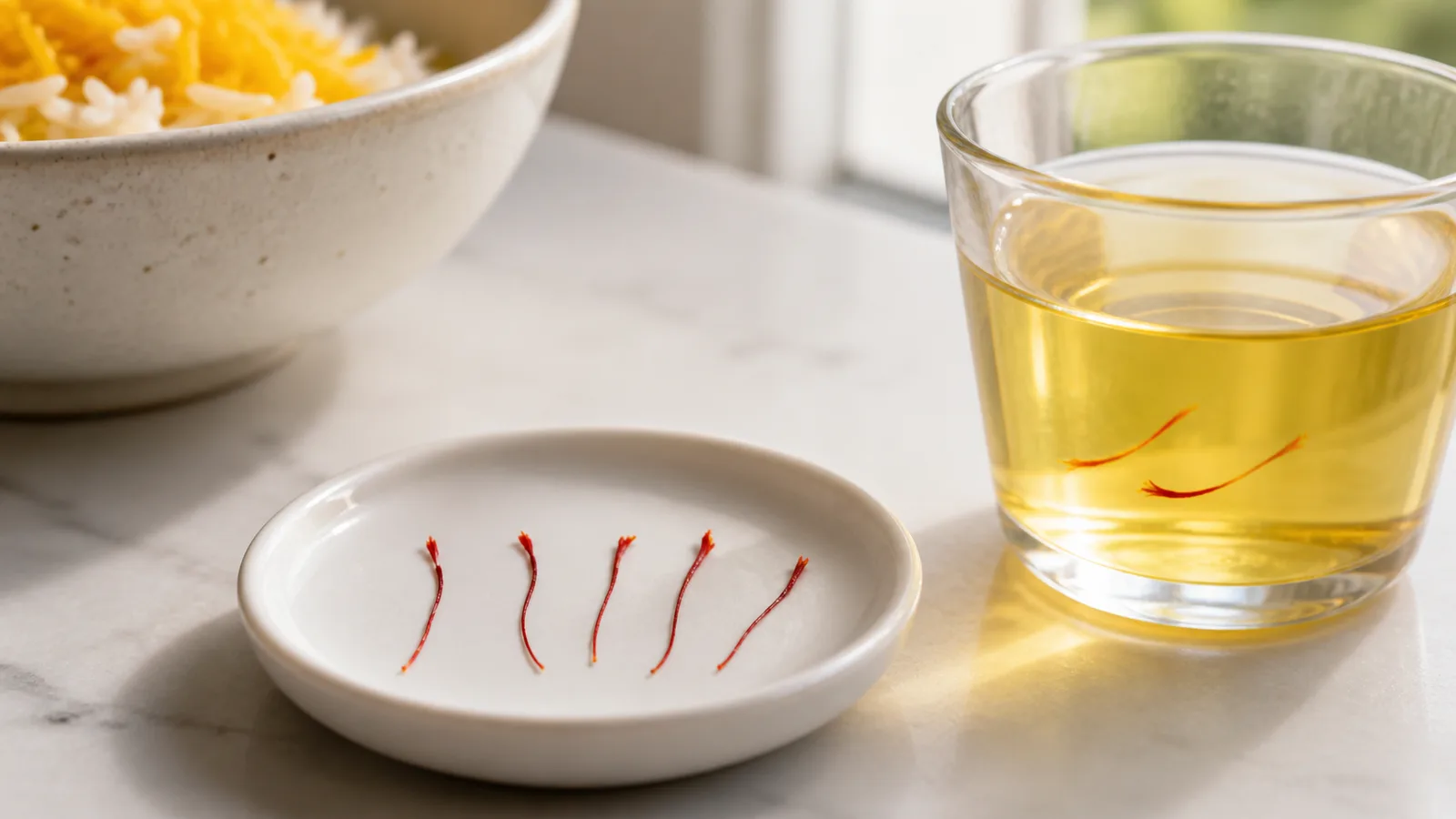
A commonly shared recipe soaks saffron in milk and mixes it with honey. It has not been shown to tighten skin. Milk, honey, and saffron can each complicate a reaction or leave residue, and a fresh kitchen mixture has not been tested for preservation, stability, or a consistent dose. If you still try one for the sensory experience, use clean utensils, make only what you need, patch-test it, rinse it off promptly, and do not store leftovers.
Saffron-infused oil
Almond or coconut oil may reduce a dry feeling by coating the surface. That can be useful for some dry skin but may feel heavy or aggravate breakouts for others. It does not lift the skin. Be cautious with products called “saffron essential oil” or fragrance blends; a name does not reveal concentration or safety.
Saffron milk used as a toner
Warm milk with saffron is a drink, not a stable toner. It can leave proteins, fat, and pigment on the face and has no proven tightening advantage. A fragrance-free moisturiser made for your skin type is a more predictable way to address dryness.
What has better evidence for fine lines?
Daily sun protection is the starting point because ultraviolet exposure contributes to premature skin ageing. For mild fine lines, uneven tone, or texture, retinol and prescription retinoids have substantially more clinical history than saffron. The American Academy of Dermatology explains how retinoids and retinol affect cell turnover and collagen, as well as why irritation, dryness, and sun protection need attention.
Retinoids are not appropriate for everyone, and pregnancy requires particular caution. A dermatologist can help choose an option for your skin and discuss procedures when laxity or deeper wrinkles are the main concern. Home remedies cannot reproduce the effect or safety controls of a properly selected medical treatment.
When to stop experimenting
Seek professional advice if a product causes persistent burning, swelling, blistering, or a worsening rash. A new change in the skin, a lesion that bleeds or does not heal, or a concern that is more than cosmetic also deserves assessment rather than repeated masks.
Eating saffron or drinking saffron milk has not been shown to tighten facial skin from within. Use saffron as food because you enjoy it, not as an oral anti-ageing treatment.
The bottom line
Saffron may be an appealing ingredient in a moisturising cosmetic, and one very small uncontrolled study of a saffron-and-avocado cream reported promising measurements. That is not enough to conclude that saffron naturally firms, lifts, or tightens skin. A temporary smoother feel from moisturisation should not be confused with a structural change.
If you want genuine threads for cooking or a cautious, patch-tested cosmetic experiment, you can browse our saffron product range. Keep expectations realistic and use established skin care when the goal is wrinkles or laxity.