Saffron Beauty Benefits: Does Saffron Make You Beautiful?
Saffron cannot make someone “beautiful,” and eating it does not reliably change skin tone, hair growth or facial appearance. Beauty is personal, while skin and hair are shaped by genetics, age, health, sun exposure, habits and care. Saffron is a prized culinary spice; claims that it creates glowing skin or transforms appearance go beyond the human evidence.
There are laboratory studies of saffron compounds and cosmetic products that include saffron. Those findings can support further research, but they do not prove that drinking saffron water, eating a few threads or applying a homemade paste will produce a visible beauty benefit.
What “saffron beauty benefits” can mean
The phrase is used for several different ideas, which should not be blended together:
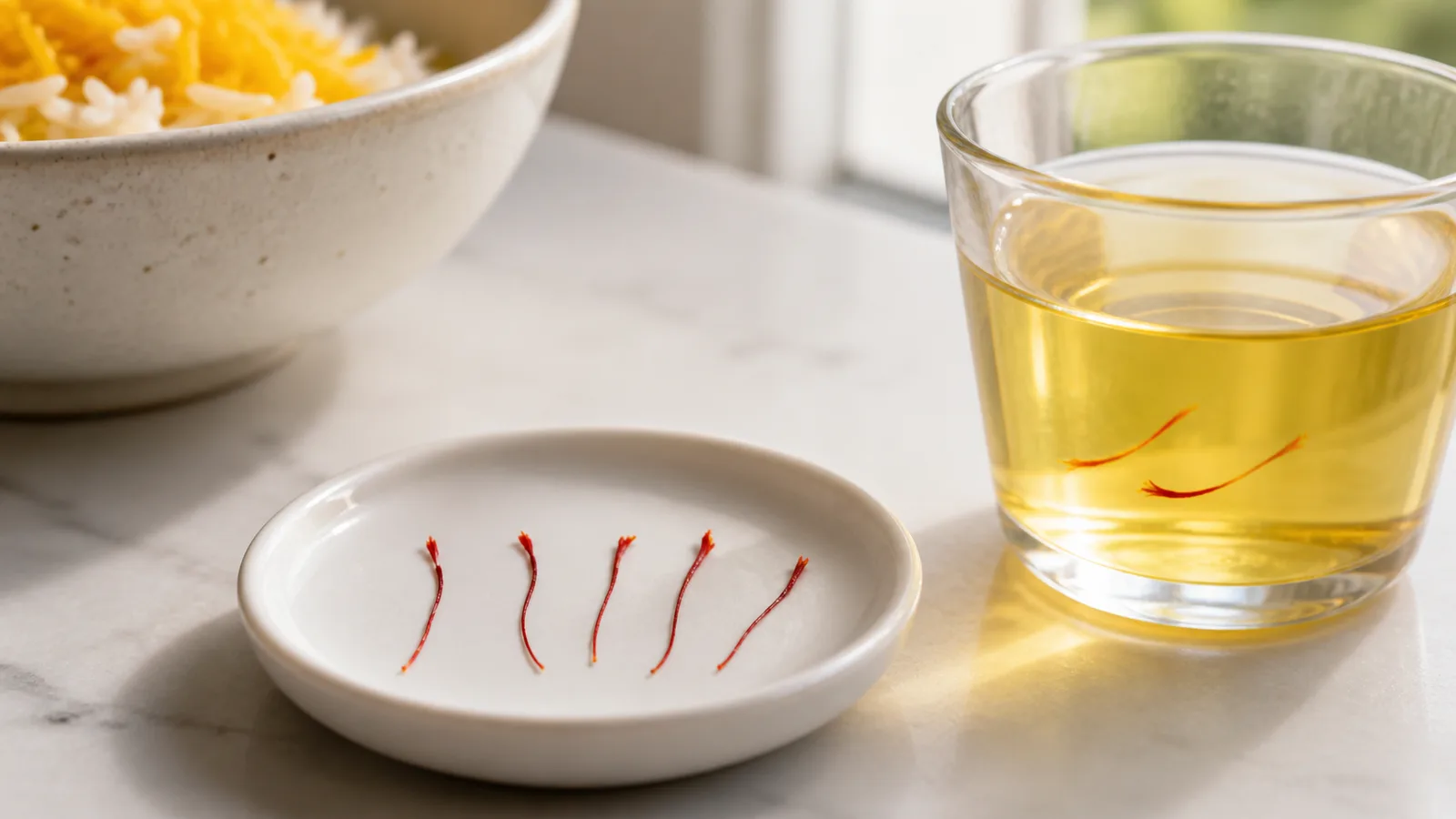
- the pleasure, colour and aroma saffron adds to food;
- laboratory research on crocin, crocetin or safranal;
- a finished cosmetic formulated with a saffron-derived ingredient;
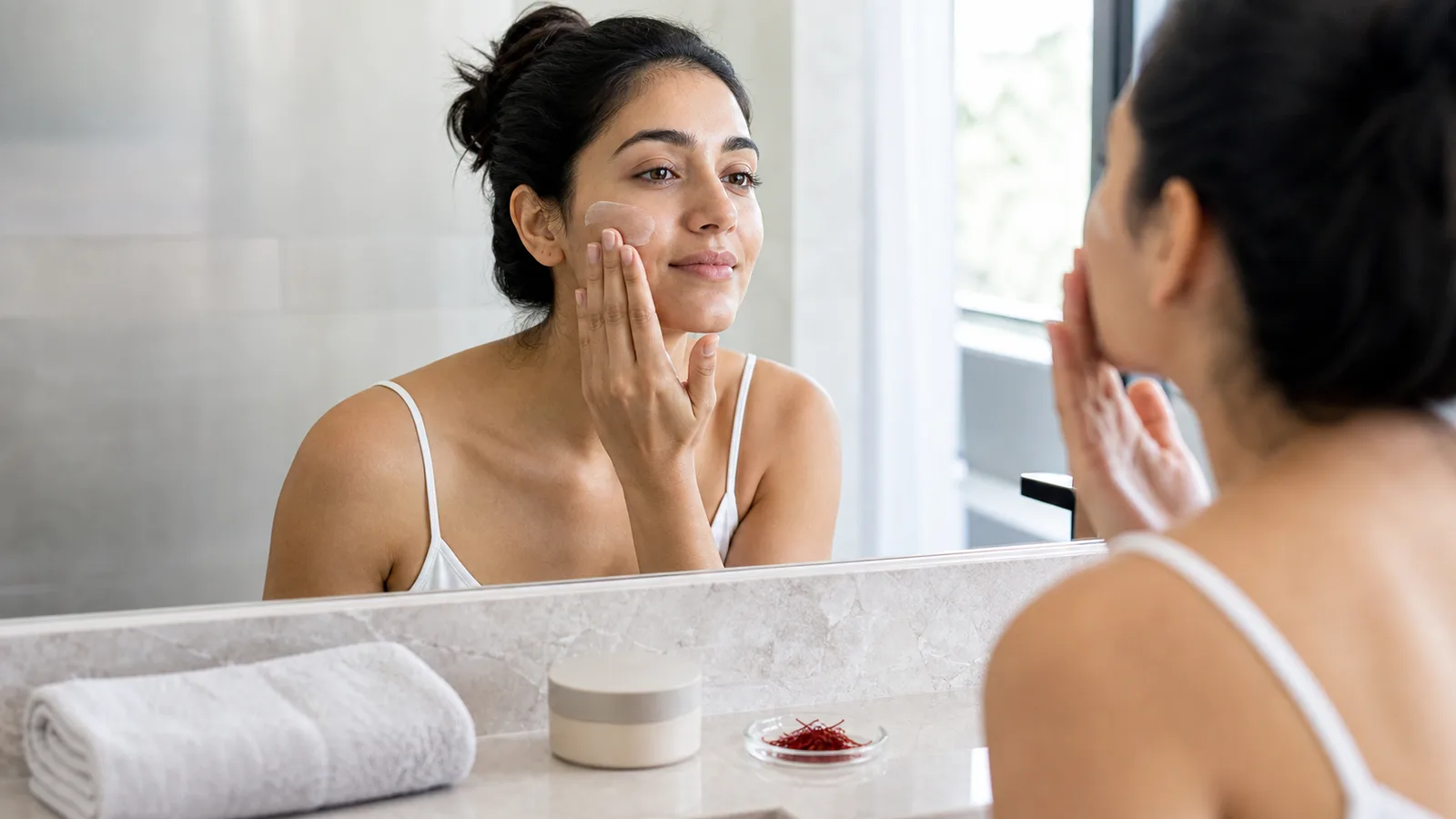
- a homemade face mask or hair mixture; and
- claims that swallowing saffron changes skin or hair.
A cell experiment is not a skincare routine. A properly formulated cosmetic is not the same as damp threads rubbed onto the face. And a supplement study for another outcome cannot be reused as proof that saffron improves beauty.
Does eating saffron improve skin?
There is no good clinical evidence that a normal culinary serving lightens skin, removes pigmentation, treats acne or creates a youthful glow. Saffron contains naturally occurring compounds often described as antioxidants, including crocin and safranal. “Contains antioxidants” is a chemical description, not a demonstrated cosmetic result in a person.
Skin colour is produced by melanin and influenced by many biological and environmental factors. Changing diet with the aim of whitening skin is neither a realistic use of saffron nor a healthy standard for beauty. If a dark spot, rash or changing lesion concerns you, a dermatologist can identify the cause before you try to alter it.
Eating saffron as part of a varied diet is fine for many adults in ordinary food amounts, but it should be enjoyed for flavour rather than as an oral skincare treatment.
What about topical saffron?
Some research has tested saffron extracts or individual compounds in cells, enzymes, animals or formulated products. These models can explore antioxidant activity, pigmentation pathways or protection from particular stresses. They do not establish that raw saffron applied at home will reduce wrinkles, fade marks or treat a skin condition.
A finished cosmetic depends on its entire formula: the concentration, solvent, preservatives, pH, packaging, stability and how the ingredient reaches the skin. Even if one tested product performs well, that result belongs to that formulation. It cannot be transferred automatically to saffron milk, rose water, honey or another kitchen recipe.
The FDA explains that cosmetic claims must be truthful and not misleading. A product marketed to treat disease or affect the structure or function of skin can be regulated as a drug, even when it also affects appearance.
Can saffron help hair?
Claims that saffron strengthens follicles, stops hair loss or stimulates new growth are not supported by robust human evidence. Hair shedding can follow stress, illness, nutritional deficiency, hormonal change, medication or a scalp condition. Treating the cause is more useful than adding an untested spice mixture.
A shampoo or conditioner may use saffron for fragrance, colour or a cosmetic story, but that does not make it a hair-growth treatment. The FDA specifically treats claims to promote hair growth or prevent baldness as drug claims rather than ordinary cosmetic promises.
Risks of homemade saffron skincare
“Natural” does not mean irritation-free. Saffron or another ingredient in a homemade mixture can sting, cause a rash or trigger an allergic reaction. The spice can also leave a temporary yellow stain, particularly when ground or used at high concentration.
Fresh mixtures made with water, milk, aloe, honey or plant material can support microbial growth. The FDA’s homemade-cosmetics guidance notes that microbial contamination can make a cosmetic unsafe. A kitchen jar has not been through preservative, stability or safety testing simply because its ingredients are familiar.
If you choose a commercial product, read the complete label, follow its directions and stop if irritation develops. Test only as the manufacturer instructs; do not put an untested mix around the eyes or on broken or inflamed skin.
What actually supports healthier-looking skin?
The most dependable routine is less exotic. The American Academy of Dermatology recommends gentle cleansing, moisturising and daily sun protection. Its advice for anti-ageing care begins with a broad-spectrum, water-resistant SPF 30 or higher sunscreen and a suitable moisturiser.
A simple routine is easier to assess and less likely to irritate the skin than introducing several active products at once. Choose products for your skin type, give them time to work and address one concern at a time. Sleep, not smoking, a varied diet and professional care for persistent problems also matter.
Can saffron affect how you feel?
Saffron extracts have been studied for mood in clinical settings. Feeling better may influence confidence or how someone perceives their appearance, but that is not the same as a physical beauty transformation. Research on mood, energy, relaxation or sleep should not be repackaged as proof of clearer skin or healthier hair.
Our overview of saffron health research explains why a clinical extract, culinary serving and cosmetic ingredient need separate evidence.
The practical answer
Does saffron make you beautiful? No ingredient can define or manufacture beauty. Saffron can make food look, smell and taste distinctive, and saffron-derived ingredients may appear in properly formulated cosmetics. Current evidence does not justify promises that eating saffron, drinking it or applying a homemade paste will improve skin, grow hair or transform overall appearance. For visible skin concerns, protect the skin from the sun, keep the routine gentle and seek a dermatologist’s advice when needed.