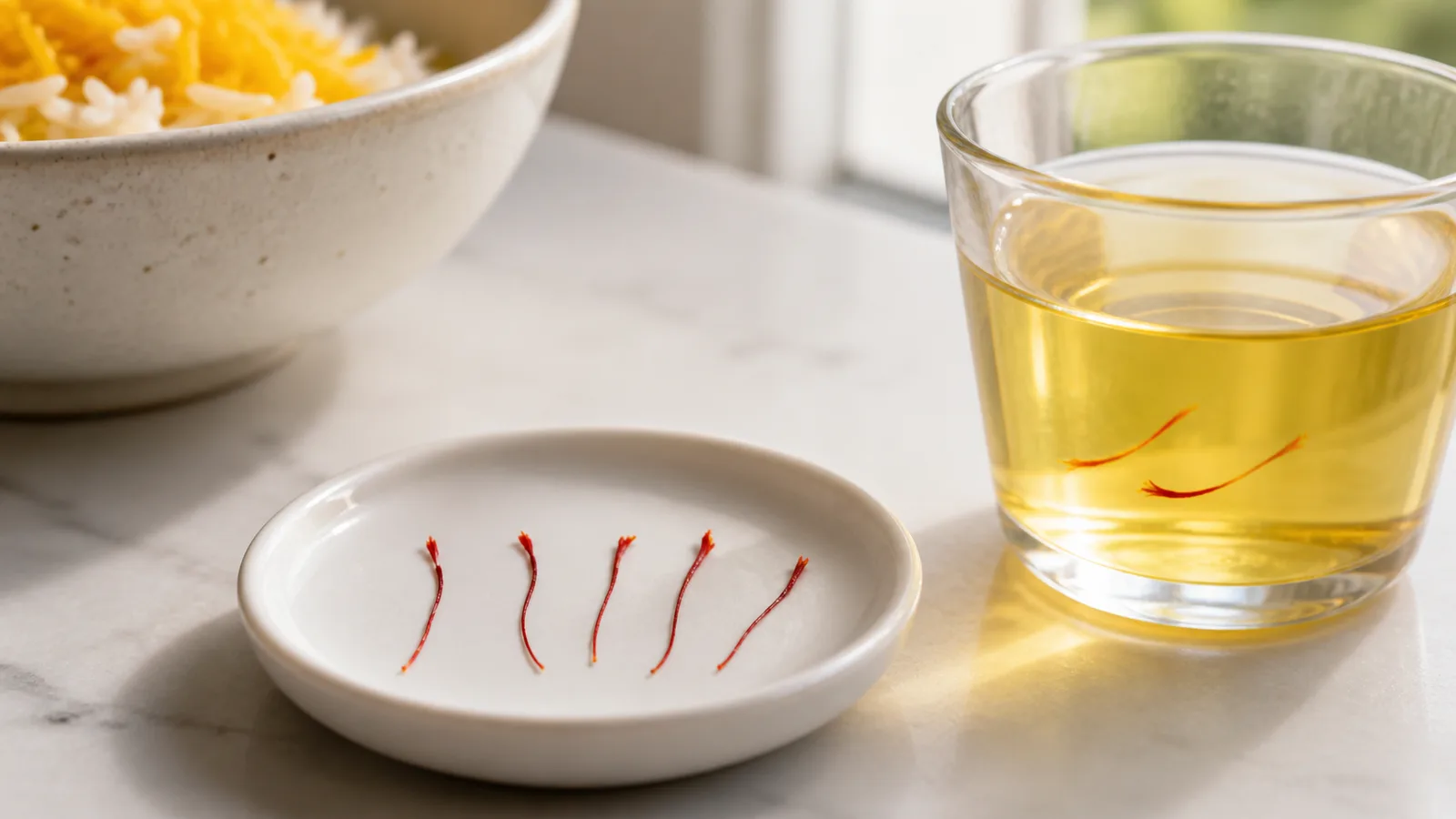
Does saffron help hair growth? There is not yet good evidence that it does. No reliable human clinical trial has shown that true saffron (Crocus sativus) regrows scalp hair, fills beard patches, or prevents a diagnosed form of hair loss. Saffron contains well-studied antioxidant compounds, but a plausible laboratory mechanism is not the same as visible hair growth in people.
That distinction matters if you are deciding whether to buy saffron oil, make a hair mask, or delay proper care. Saffron can still be part of a pleasant cosmetic routine, provided you treat it as a conditioning ingredient rather than a hair-loss treatment.
Saffron hair benefits: what can we honestly claim?
Saffron contains compounds including crocin, crocetin, and safranal. Research on saffron more broadly describes antioxidant and anti-inflammatory activity, although the strength and clinical relevance of those effects depend on the preparation and the condition being studied. A current review of saffron research and safety does not establish hair regrowth as a proven benefit.
For hair, the evidence gap is the important part. Antioxidant activity in a test system does not show that a product reaches a human hair follicle at an effective dose. Likewise, saying that an ingredient may feel soothing on the scalp does not prove that it reverses follicle miniaturisation, alopecia areata, or shedding caused by illness. Claims that saffron “stimulates scalp circulation” or “strengthens the roots” are common online, but they have not been demonstrated in good saffron-specific human trials.
Some people report softer, shinier, or better-conditioned hair after an oil treatment. That can be a genuine cosmetic effect from the carrier oil, even when no new hair is growing. Hair shine and hair growth are different outcomes.
What does the hair-growth research actually show?
Reviews of herbal approaches to hair loss discuss ingredients such as rosemary, saw palmetto, onion juice, coconut oil, and several other plants. A 2025 review of herbal remedies for hair loss, for example, did not identify saffron as an evidence-backed hair-growth treatment. That absence does not prove saffron can never help; it means there is not enough direct clinical evidence to recommend it for regrowth.
Saffron and safflower are not the same plant
One source of confusion is the similarity between the names. True saffron is the dried stigma of Crocus sativus. Safflower is Carthamus tinctorius, an entirely different plant whose seeds are also used to make oil. Recent phytochemical hair-growth literature has discussed Carthamus tinctorius; it should not be presented as a study of saffron. The botanical distinction is clear in the scientific profile of safflower.
We could not verify the often-repeated claim that a small human study found a saffron-containing extract regrew hair in people with alopecia. Without a named formulation, trial record, or paper, that claim should not be used as evidence. There is also no direct clinical evidence that saffron promotes beard growth.
Is saffron oil good for hair?
“Saffron oil” is an imprecise label. It may mean saffron threads infused in a carrier oil, a cosmetic fragrance blend, or a concentrated extract. Those products are not interchangeable, and the amount of saffron in them may be unknown.
An olive, coconut, or other carrier oil can coat the hair shaft and reduce a dry feeling. If saffron is infused in it, the finished oil may add colour and scent. Those are reasonable cosmetic uses, but saffron oil has not been shown to make follicles produce new hair. Check the ingredient list rather than relying on the product name, and avoid undiluted essential oils on the scalp.
How to use saffron for hair without overstating the result
There is no evidence-based saffron recipe or application schedule for hair growth. If you still want to try it for cosmetic care, keep the mixture simple and gentle:
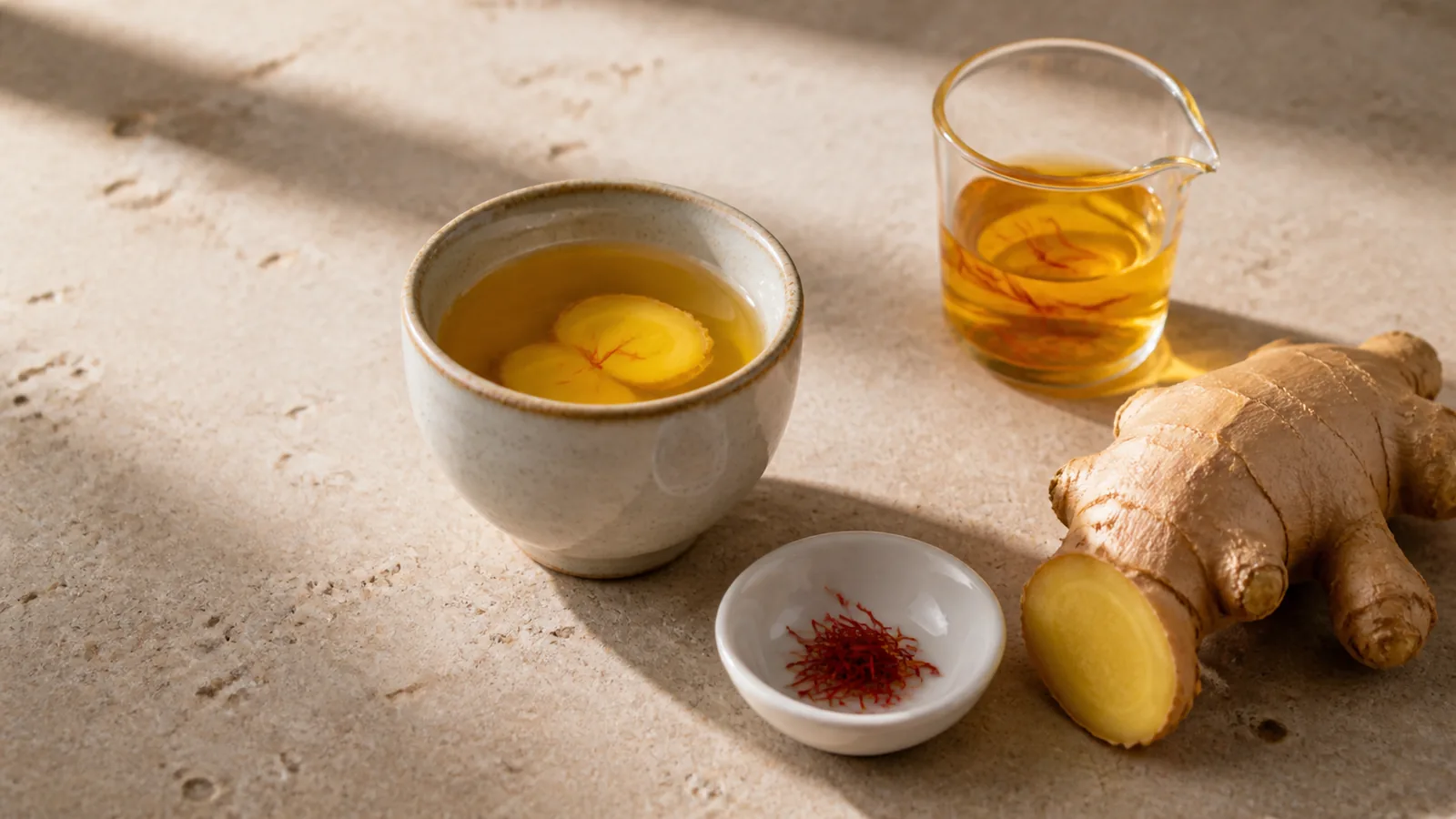
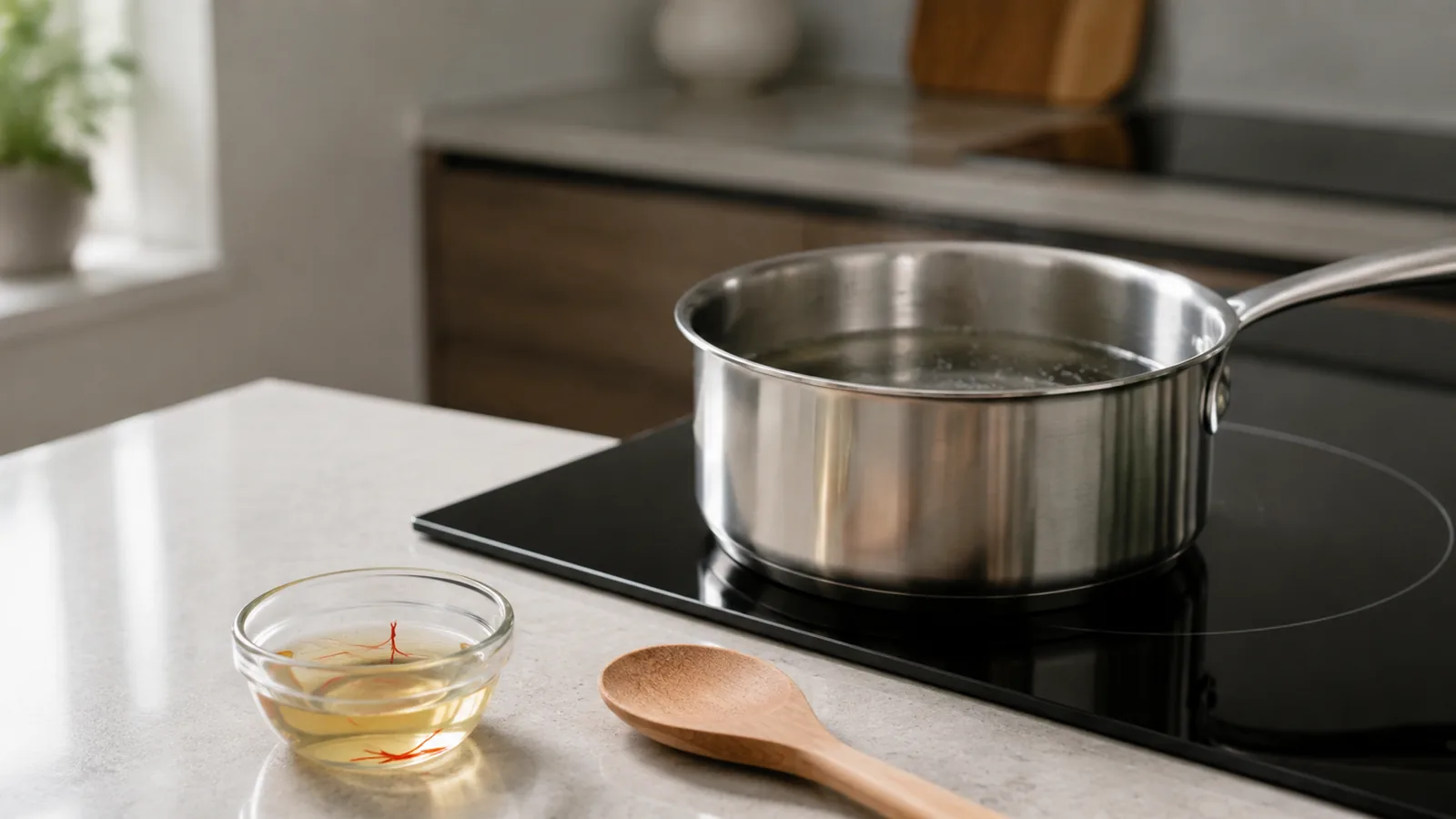
- Infuse a few genuine saffron threads in a small amount of warm water, or use a properly labelled saffron-infused cosmetic product.
- Patch-test it on a small area of skin first and wait for any redness, itching, or swelling.
- Keep it away from the eyes and do not apply it to broken, inflamed, or infected skin.
- Rinse it out if the scalp feels irritated, and stop using it rather than trying a stronger mixture.
Milk, honey, and kitchen oils are sometimes recommended in homemade masks, but a sticky multi-ingredient mixture can make it hard to tell which ingredient caused irritation. It also does not have a proven hair-growth advantage. If your goal is simply softer hair, an ordinary conditioner is easier to formulate, rinse, and evaluate.
Start with the cause of the hair loss
Hair can thin for many reasons: inherited pattern hair loss, alopecia areata, tight hairstyles, thyroid disease, nutritional problems, medication, a recent illness, or normal shedding after a major physical stress. The right response depends on the cause. The American Academy of Dermatology explains that an accurate diagnosis is central to effective treatment and that earlier care can improve the outcome for some conditions in its guidance on the causes of hair loss.
See a dermatologist or another qualified clinician if hair loss is sudden, patchy, rapidly worsening, accompanied by scalp pain or scaling, or affecting your eyebrows or beard. Seek advice as well if ongoing shedding concerns you. A clinician may examine the scalp and, when appropriate, check for an underlying illness, deficiency, hormone imbalance, or infection. No single home remedy suits all of those situations.
Some established treatments can help particular diagnoses. Topical minoxidil, for instance, is used for certain forms of hair loss, but it is not right for every person or every cause. The AAD’s diagnosis and treatment overview explains why the diagnosis should come first.
What about eating saffron or taking a supplement?
Normal culinary use is not the same as taking a concentrated supplement, and neither has been proven to regrow hair. The roughly 30 mg daily amount used in some saffron studies is a research dose for other outcomes, not a recommended hair-growth dose. Taking more does not close the evidence gap.
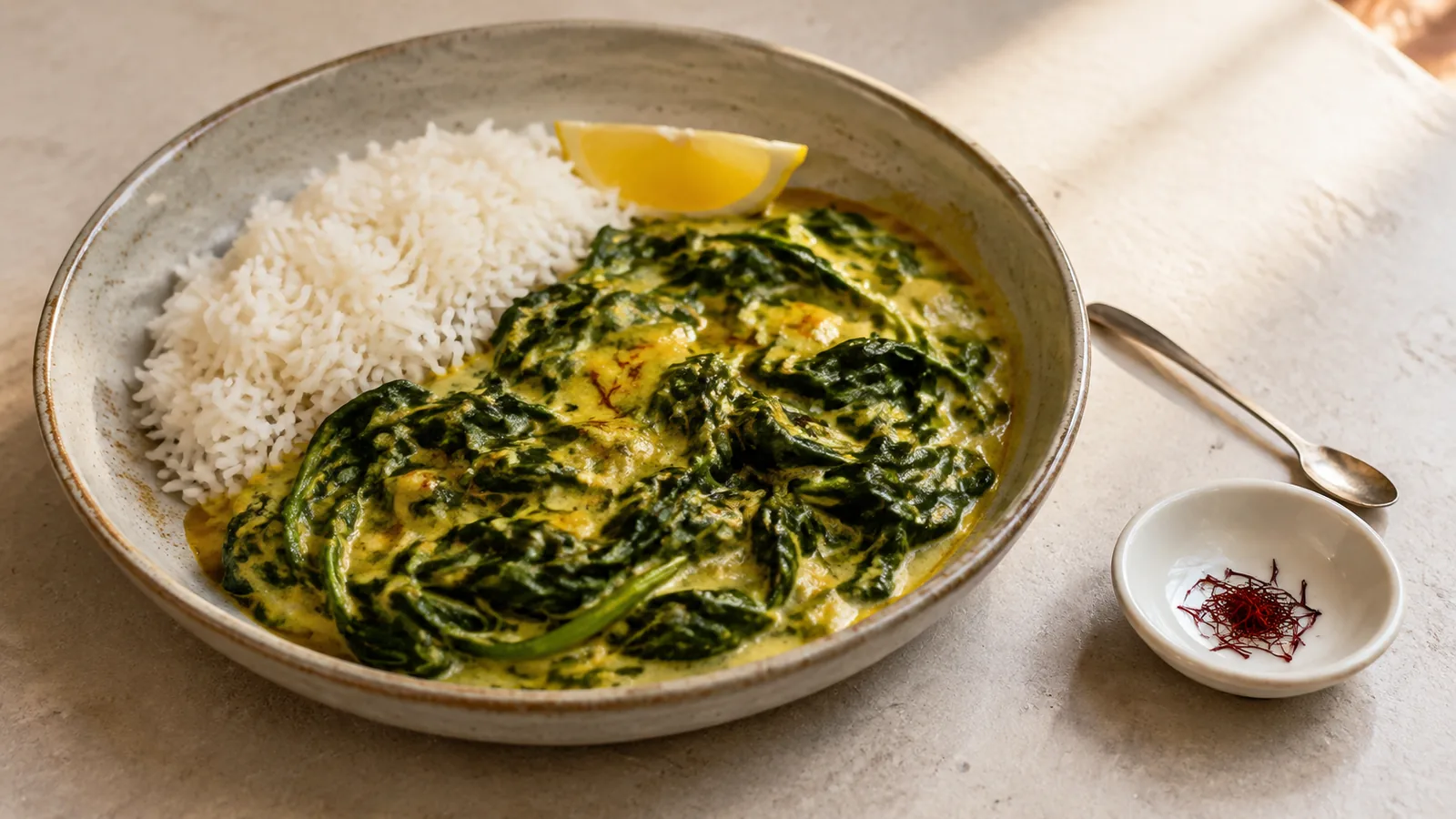
Avoid high-dose or unlabelled supplements. Anyone who is pregnant or trying to conceive, takes medication, or has a medical condition should speak with a healthcare professional before using saffron in medicinal amounts. If you simply enjoy saffron as food, use it for flavour rather than expecting it to treat hair loss.
The bottom line
The most accurate answer is still no: saffron is not a proven hair-growth treatment. Its compounds make it scientifically interesting, and saffron-infused products may have cosmetic saffron hair benefits such as scent or a conditioned feel. They should not be sold as evidence that saffron, saffron oil, or a homemade mask can regrow scalp or beard hair.
If you want genuine threads for cooking or a carefully patch-tested cosmetic infusion, you can view our saffron product range. For persistent hair loss, put the diagnosis ahead of the spice.