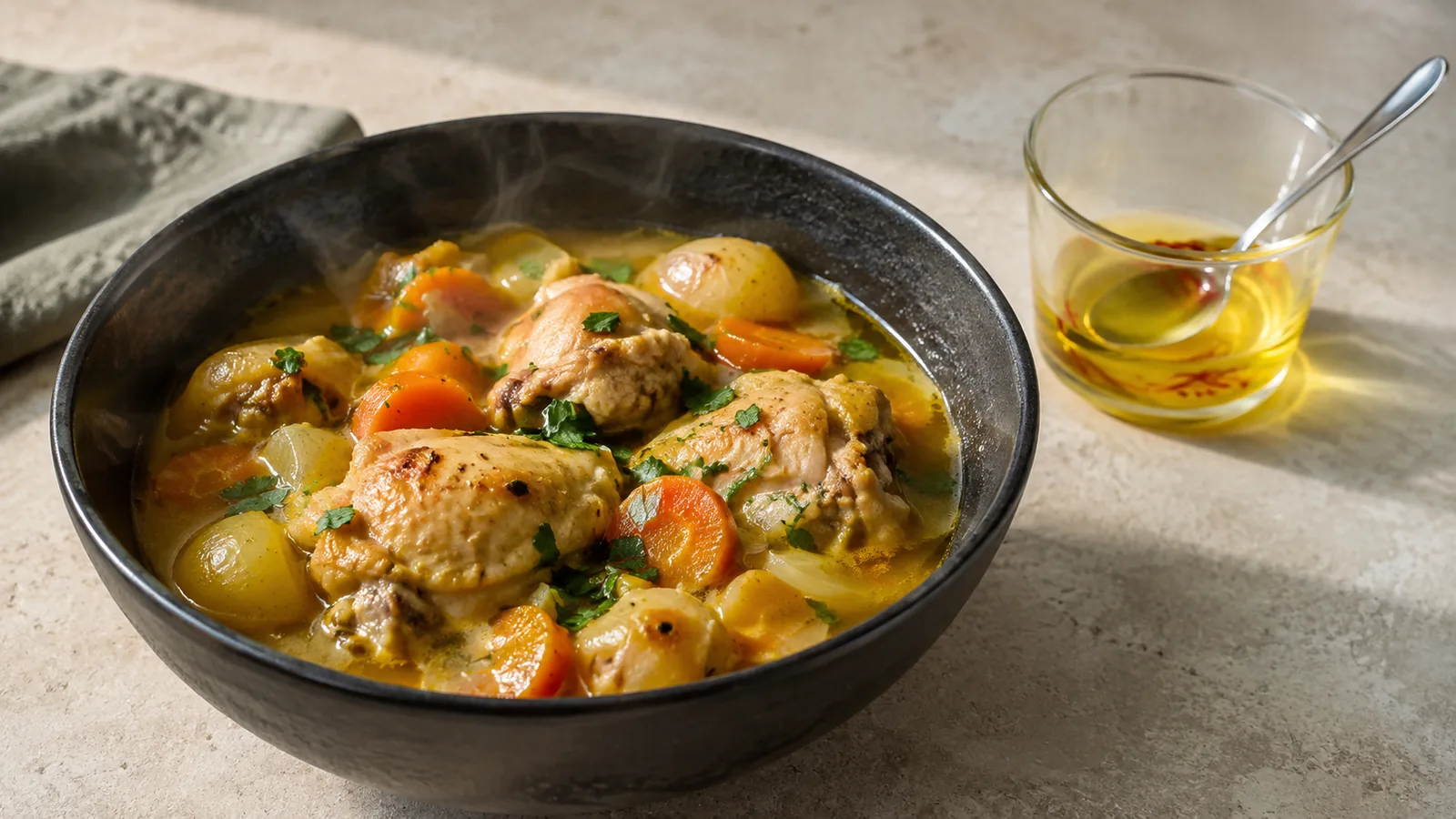
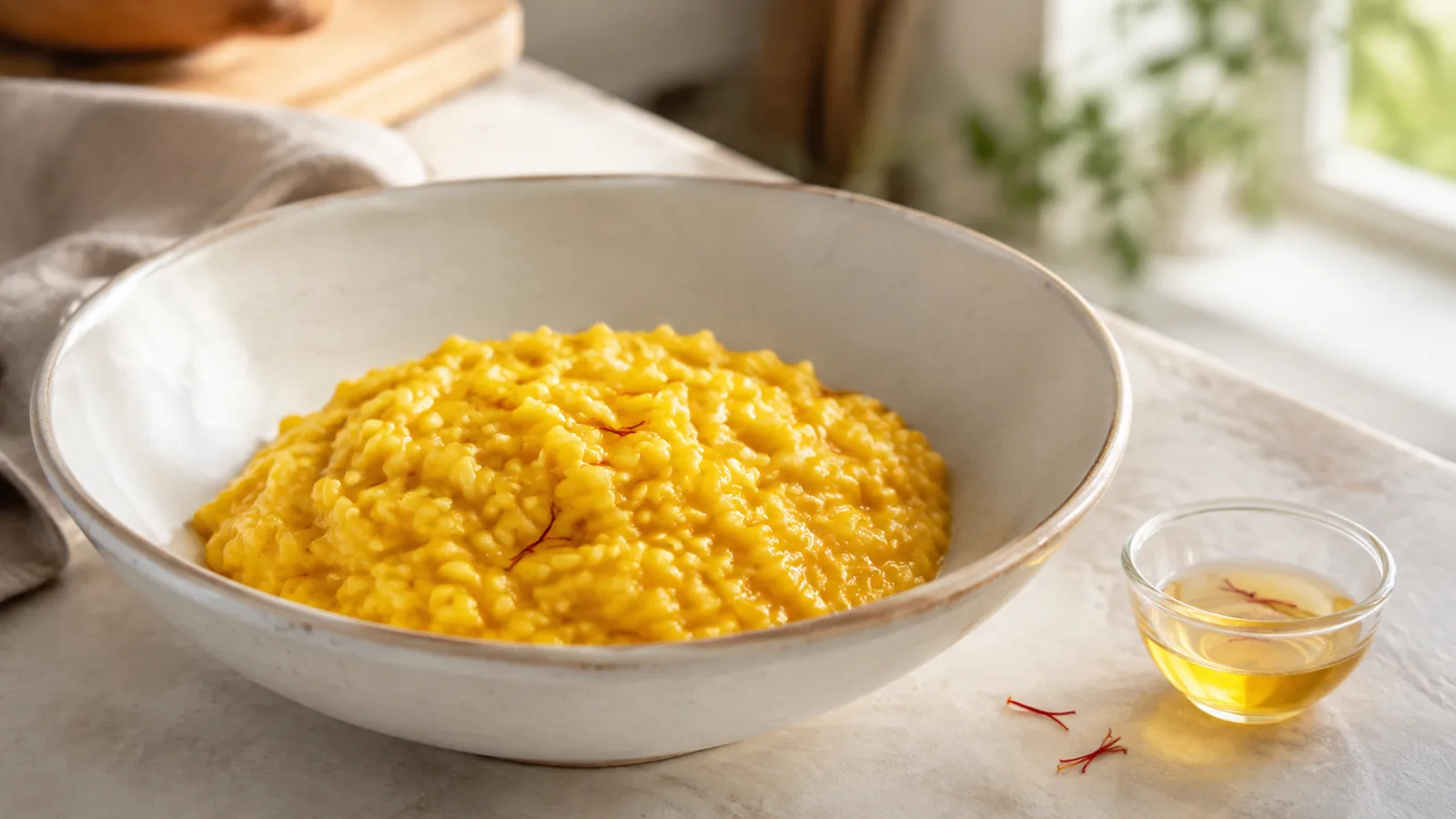
This saffron infused koobideh recipe brings the familiar flavour of Persian minced-meat kebab to a frying pan. Properly drained onion keeps the meat tender without making it fall apart, and a divided saffron infusion adds aroma to both the kebab and its buttery finish. It is a practical way to make koobideh when lighting a charcoal grill is not an option.
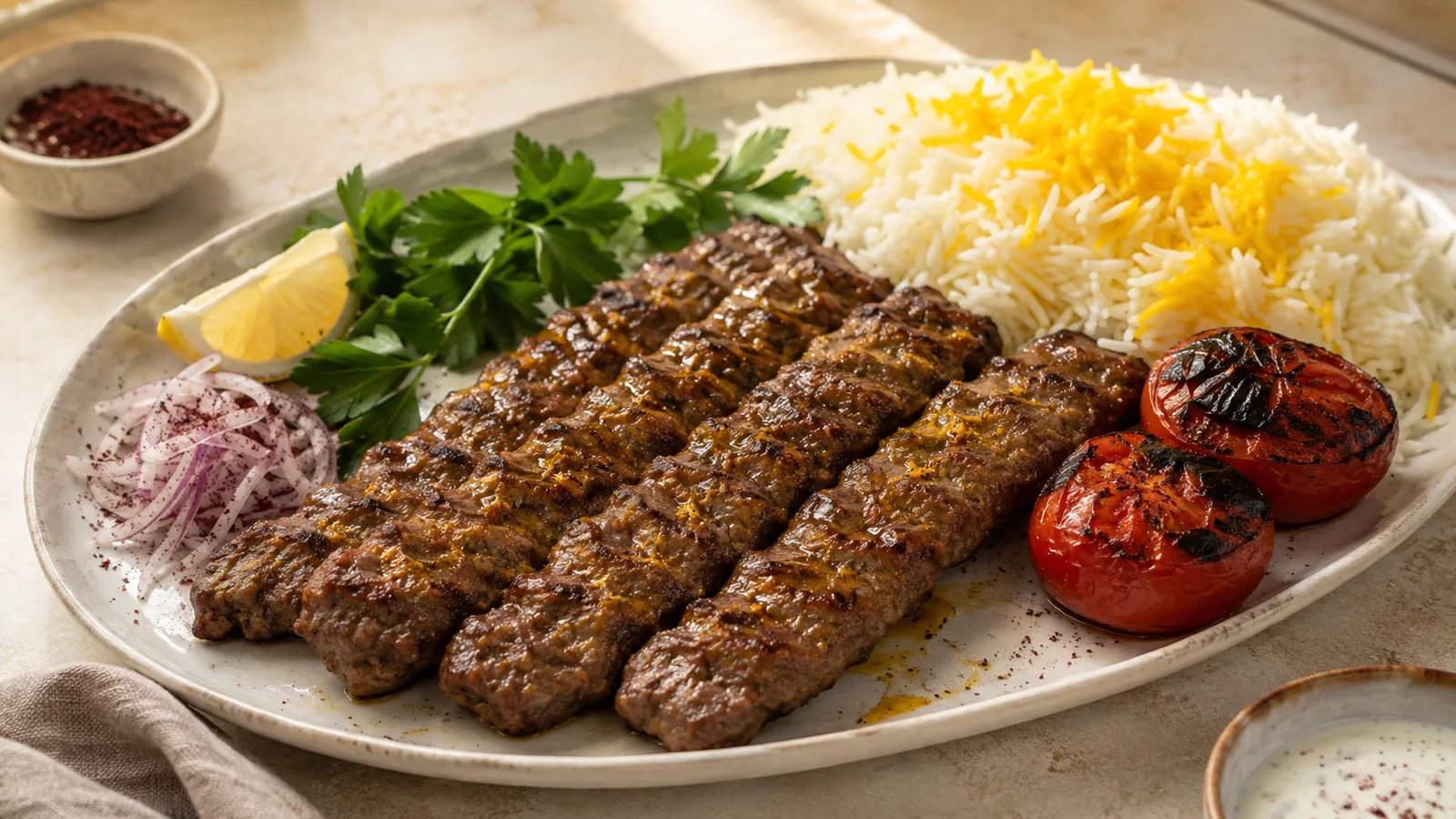
Saffron skillet koobideh at a glance
- Serves: 4
- Preparation: about 20 minutes, plus 30 minutes to chill
- Cooking: about 15–20 minutes
- Best pan: a 28–30 cm heavy frying pan
- Serve with: rice or flatbread, charred tomatoes, herbs and sumac
This is a skillet interpretation rather than a claim to reproduce the smoke and texture of koobideh cooked over charcoal. The same useful principles still apply: choose meat with enough fat, remove excess onion juice, mix until the proteins bind and keep the mixture cold before cooking.
Ingredients
- 500 g ground lamb, ground beef or a mixture of the two
- 1 medium onion, about 150 g before grating
- ½ teaspoon loosely packed saffron threads, about 0.15 g
- 2 tablespoons hot water for blooming the saffron
- 1 teaspoon fine salt
- ½ teaspoon freshly ground black pepper
- ¼ teaspoon turmeric
- ½ teaspoon garlic powder, optional
- ½ teaspoon onion powder, optional
- 1 teaspoon vinegar or lemon juice, optional
- 1 tablespoon tomato paste, optional
- 1 tablespoon neutral oil for the pan
- 15 g butter, optional, for finishing
For serving, allow two or three firm tomatoes, warm lavash or basmati rice, sliced onion, fresh parsley or mint, lemon wedges and sumac. Coriander or dill can join the herb plate, but mixing a large handful into the meat changes the character and makes the kebab more fragile.
Choose meat that will stay juicy
Koobideh needs some fat. Very lean ground beef can cook into a dry, tight patty, while lamb contributes a fuller flavour and softer texture. A beef-and-lamb mixture is a good middle ground. Whatever you choose, the meat should smell fresh, remain properly chilled and have a fine enough grind to bind evenly.
If the meat is exceptionally lean, butter brushed on at the finish helps more than pouring milk or water into the mixture. Extra liquid makes a skillet kebab harder to shape and can cause it to steam. The onion already supplies controlled moisture.
Bloom the saffron before mixing
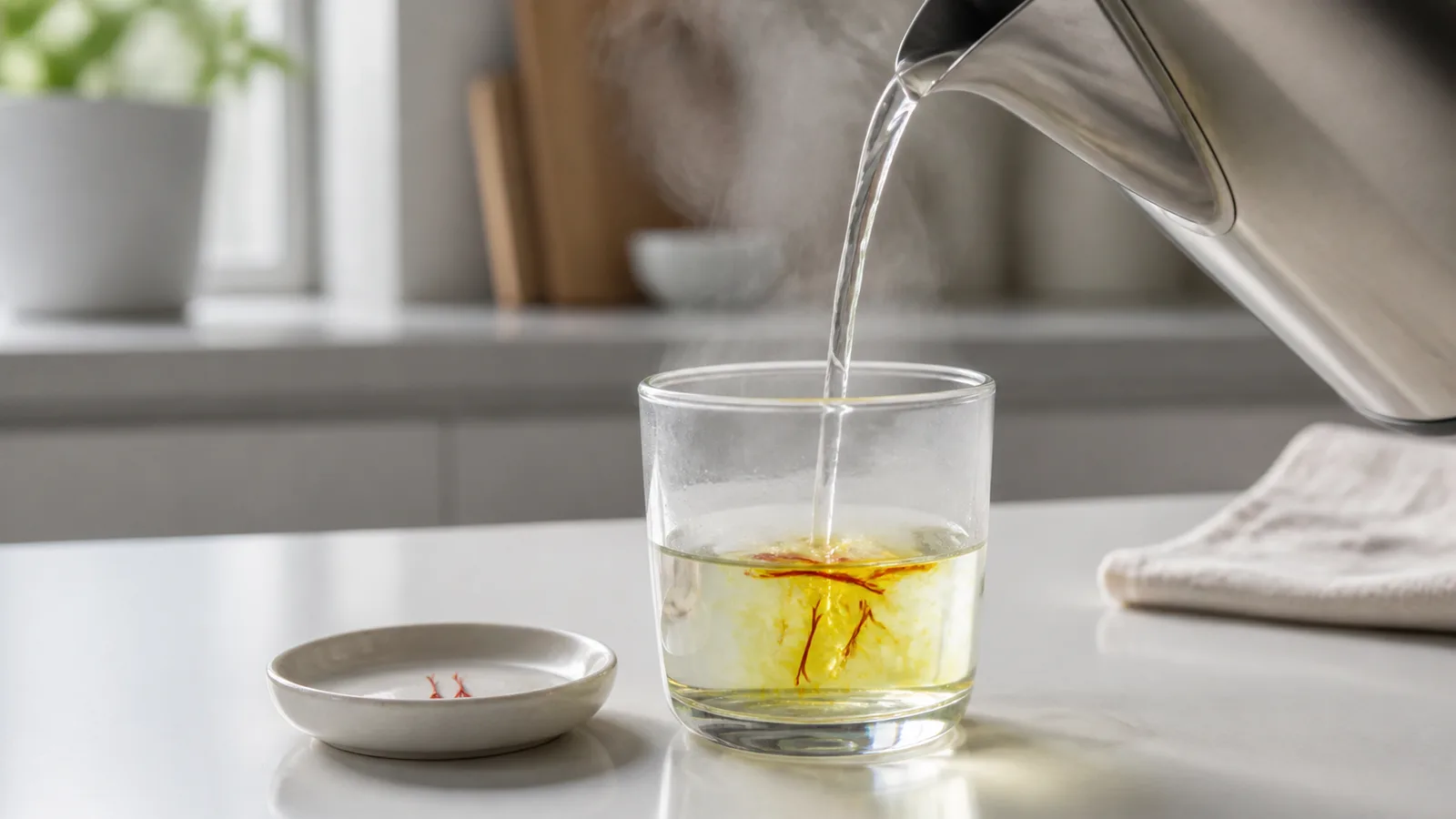
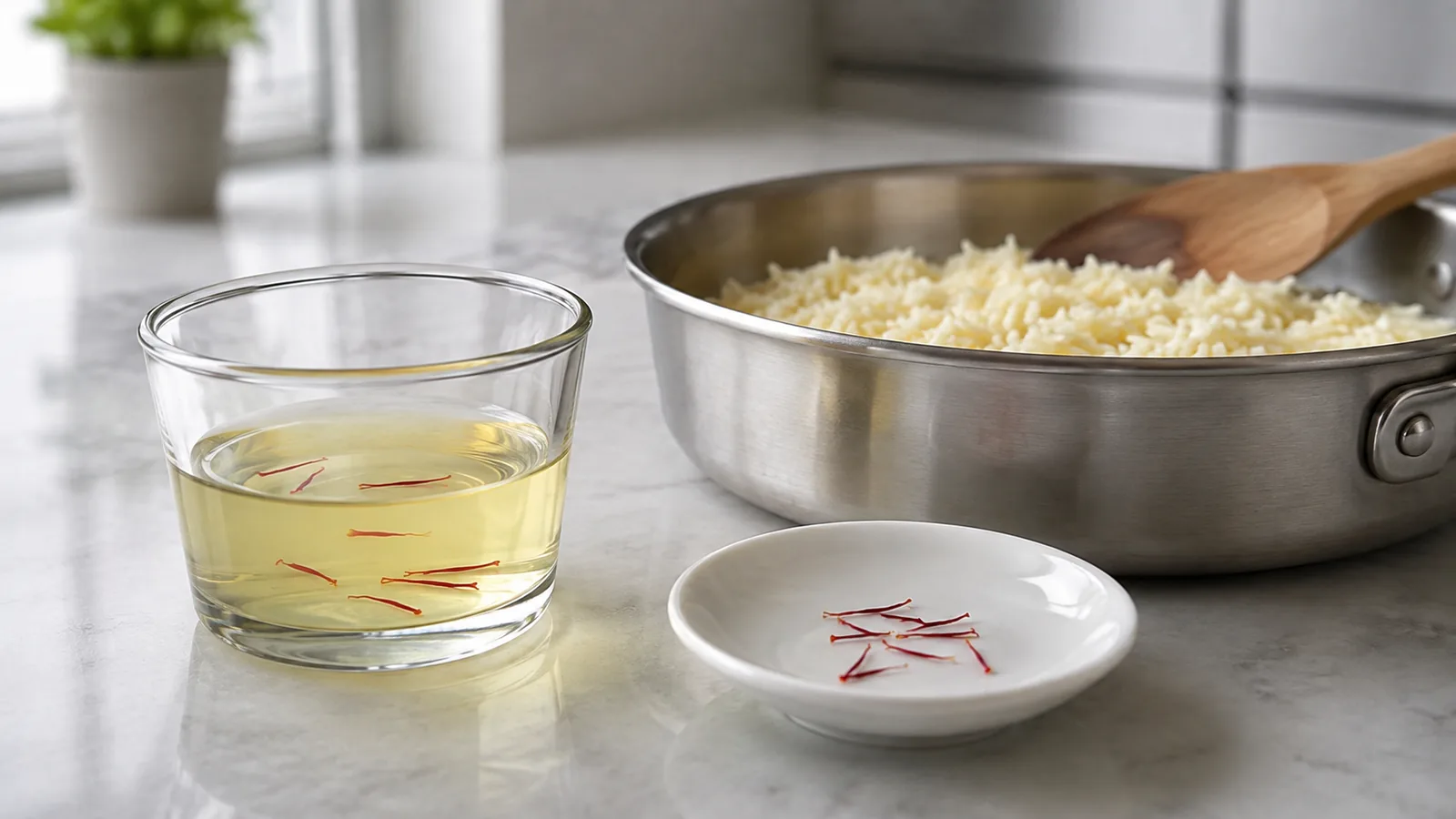
Grind the threads to a coarse powder with a pinch of the measured salt. Add 2 tablespoons of hot, not aggressively boiling, water; cover and leave for 10–15 minutes. Let the infusion cool before it touches the raw meat. Mixing hot liquid into ground meat can soften the fat and work against a firm bind.
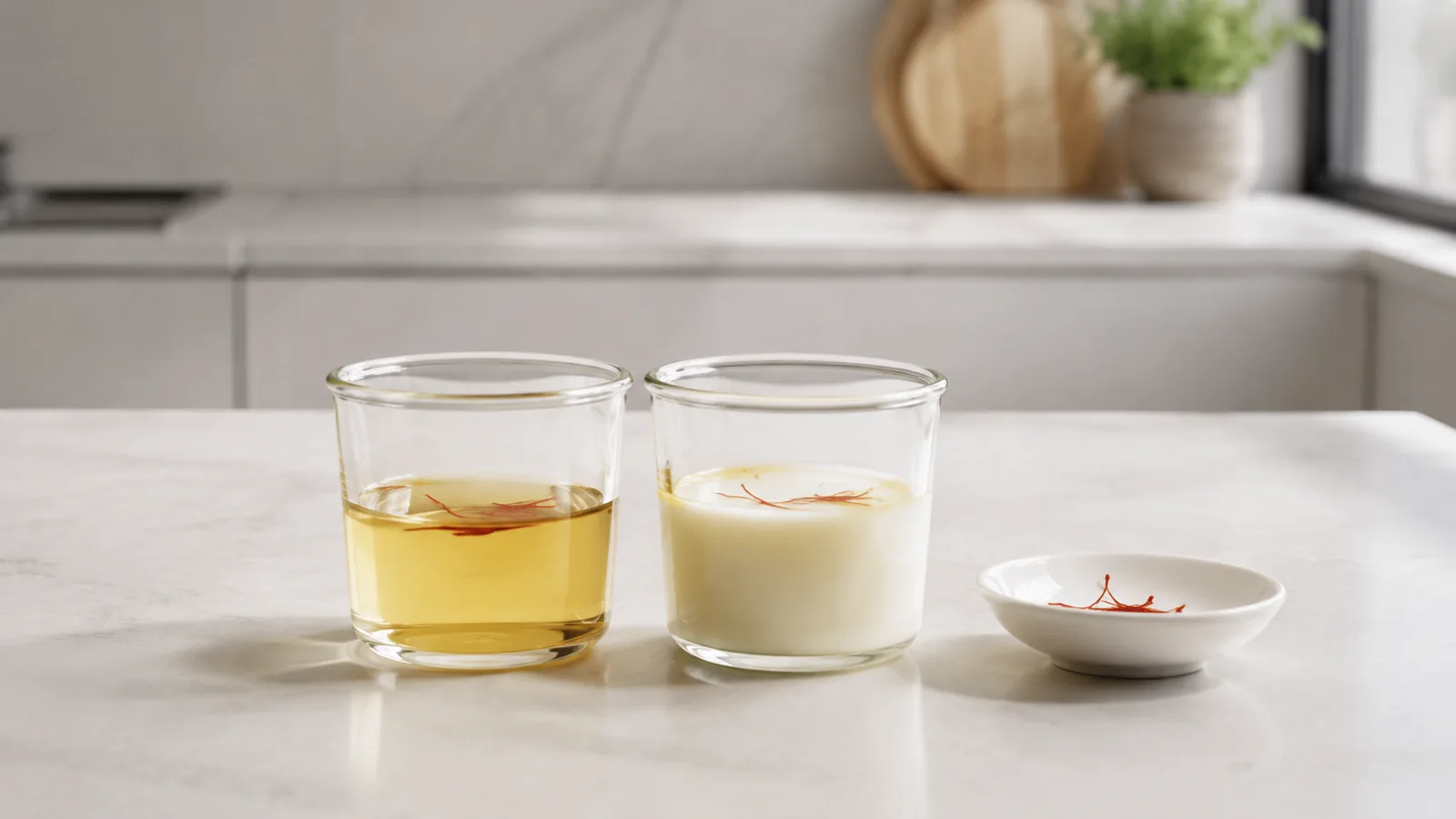
Reserve roughly one-third of the infusion. The larger portion seasons the meat; the remainder is mixed with melted butter and brushed over the cooked kebab. Our guide to blooming saffron before cooking explains the method in more detail.
Prepare the onion correctly
Peel and finely grate the onion. Transfer it to a clean fine-mesh sieve or cloth and squeeze firmly over a bowl. The goal is not to leave the onion bone-dry, but to remove the free juice that would pool in the pan. Keep the grated pulp and discard the liquid or save it for a cooked sauce.
Large onion pieces interrupt the meat mixture and make the kebab crack. A fine grater gives a smoother result than chopped onion. It also distributes flavour without leaving raw chunks in the finished strips.
How to make saffron infused koobideh in a pan
1. Mix until the meat binds
Place the chilled meat and squeezed onion in a bowl. Add the salt, pepper, turmeric and optional garlic or onion powder. Add the larger portion of cooled saffron infusion. If using tomato paste or vinegar, add it now; both are optional, and restraint keeps saffron and meat at the centre of the dish.
Knead with clean hands for 3–5 minutes. At first the mixture will look loose. Continue until it becomes cohesive, slightly tacky and able to hold together when lifted. Do not taste the raw mixture. Cover and refrigerate for 30 minutes so it firms before shaping.
2. Press and score the kebab
Lightly oil a cold 28–30 cm skillet. Press the meat into an even layer about 1.5 cm thick, taking it close to the sides without compacting it into a hard mass. Wet fingertips with cold water if the mixture sticks. Use a spatula to score the layer into long strips 3–4 cm wide.
This one-layer method is easier than trying to transfer soft, hand-shaped rectangles into a hot pan. If you prefer separate kebabs, shape short flat portions on a tray, chill them thoroughly and lift them into the pan with a wide spatula.
3. Cook the first side
Set the pan over medium heat. As the meat warms, it will release some juice and fat. Leave it alone until the underside has browned and the scored lines are firm enough to separate, usually 6–8 minutes. If a large amount of liquid collects, raise the heat slightly rather than draining away all the flavour.
Cut through the scored lines with the edge of a spatula. Turn each strip carefully. Colour alone cannot show whether ground meat is safely cooked, so browning is a texture and flavour cue rather than the final test.
4. Add tomatoes and finish cooking
Place halved tomatoes cut-side down in any open space around the kebabs, or char them in a second pan. Cook the meat for another 5–7 minutes. Check the centre of the thickest strip from the side with an instant-read thermometer; ground beef and lamb should reach at least 71°C/160°F.
If the surface is colouring too quickly, lower the heat and cover the pan briefly. Avoid simmering the strips in a large amount of water. Gentle trapped heat is enough to finish the centre without washing away their browned edges.
5. Add the saffron finish
Melt the butter, if using, and mix it with the reserved saffron infusion. Brush or spoon it over the hot kebabs during their final minute in the pan. Let the meat rest off the heat for 3–5 minutes before serving. The short rest settles the juices and gives the saffron butter time to cling.
What should the texture be like?
A good pan koobideh is browned outside, juicy in the centre and cohesive enough to lift without crumbling. It should not be springy like a heavily processed sausage. Thorough mixing creates the bind, but pressing too hard or cooking long past the safe temperature can make the result dense.
The saffron aroma should be clear when the pan is uncovered. It will not turn a beef-and-lamb mixture bright gold; the meat and optional tomato paste naturally keep a deeper colour. Adding more turmeric or tomato sauce for appearance can hide the spice you are trying to feature.
Tomato paste, vinegar and herbs: useful or optional?
The original skillet version uses tomato paste and vinegar. One tablespoon of paste gives colour and a gentle savoury sweetness, while a teaspoon of vinegar brightens a fatty mixture. Neither is essential to koobideh, and too much of either pushes the flavour towards meatloaf or a sauced kebab.
Fresh herbs are best served alongside. If you want them in the mixture, use no more than a tablespoon of finely chopped parsley or coriander and dry the leaves first. Wet herbs and large pieces can weaken the structure.
How to serve saffron skillet kebab
For a rice plate, spoon steamed basmati rice onto a warm platter and add a small saffron-tinted portion on top. Arrange the kebab and charred tomatoes beside it, then offer sumac and lemon at the table. With flatbread, add fresh herbs, sliced onion and a crisp cucumber-and-tomato salad.
Keep the sides sharp and simple. Rich sauces can cover the saffron aroma, while yoghurt, herbs and tart sumac provide contrast. A related chicken koobideh cooked in a pan is useful when poultry is preferred; it needs its own temperature and moisture handling rather than a direct meat swap.
Troubleshooting saffron koobideh
- The kebab falls apart: squeeze the onion more firmly, mix until tacky and chill before cooking.
- It is dry: choose meat with more fat, reduce the cooking time after 71°C/160°F is reached, or add the butter finish.
- It sticks: use a clean heavy pan, add a thin film of oil and wait for the first side to set before turning.
- It steams instead of browning: keep the layer even, avoid excess onion juice and do not crowd separate portions.
- The saffron disappears: cool the infusion before mixing and reserve part for the final brush.
- It tastes too salty: measure the salt rather than using a tablespoon; season accompaniments separately.
- The centre cooks slowly: make thinner, even strips and check temperature from the side.
Storage and reheating
Refrigerate raw meat mixture promptly and cook it the same day. Once cooked, cool leftovers without leaving them at room temperature for an extended period, then refrigerate in a covered shallow container. Reheat only what you plan to serve, until thoroughly hot.
A covered skillet over low heat works well. Add a teaspoon of water beside, not over, the kebab and finish with a drop of saffron butter. High microwave power can toughen the edges before the centre is hot.
A practical saffron koobideh with a clear Persian character
The details that matter are modest: drain the onion, work the meat until it binds, keep it cold, cook it to a measured safe temperature and save some saffron for the finish. With those steps in place, this saffron skillet kebab holds together, stays juicy and carries its aroma from pan to plate.