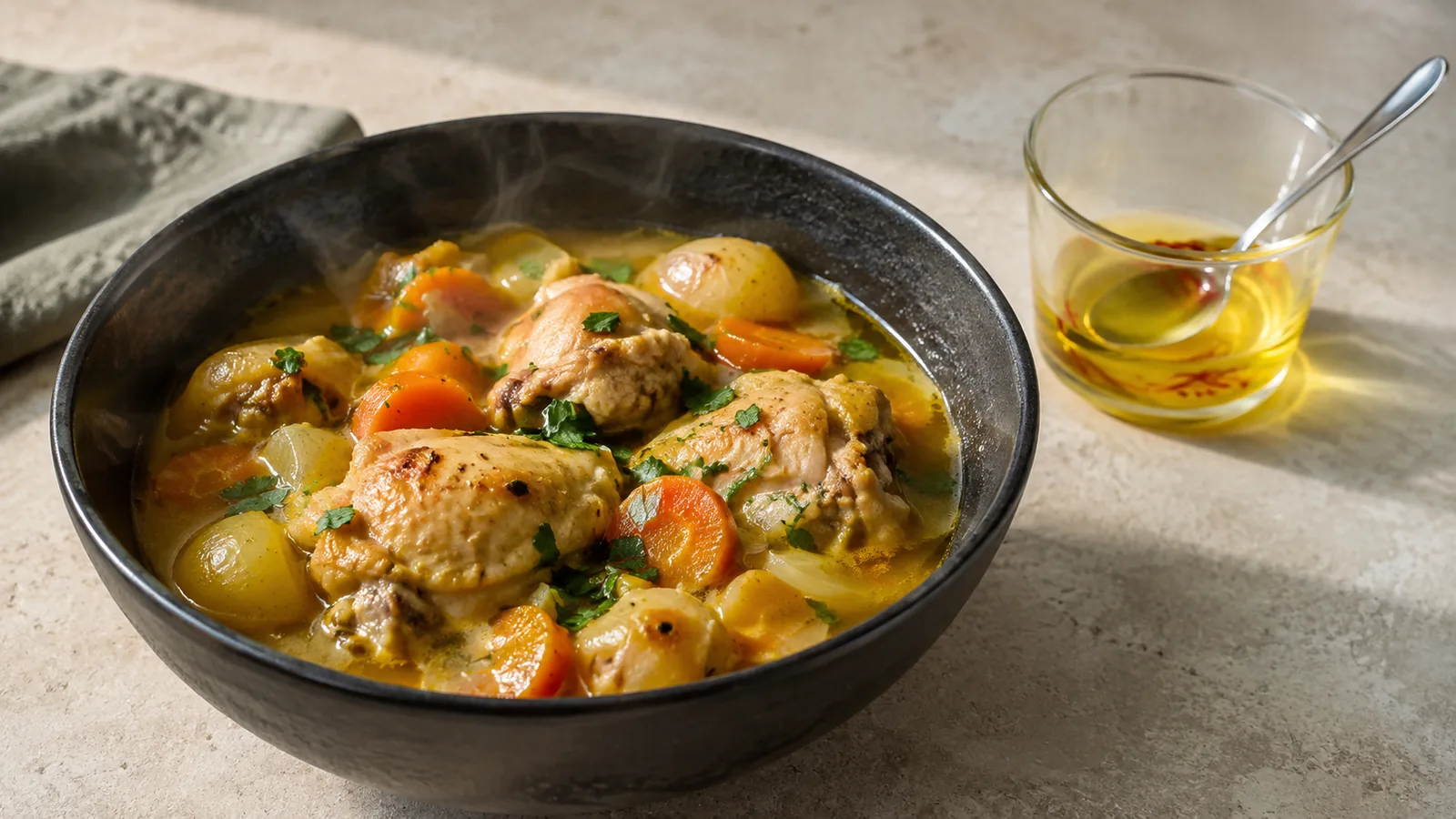
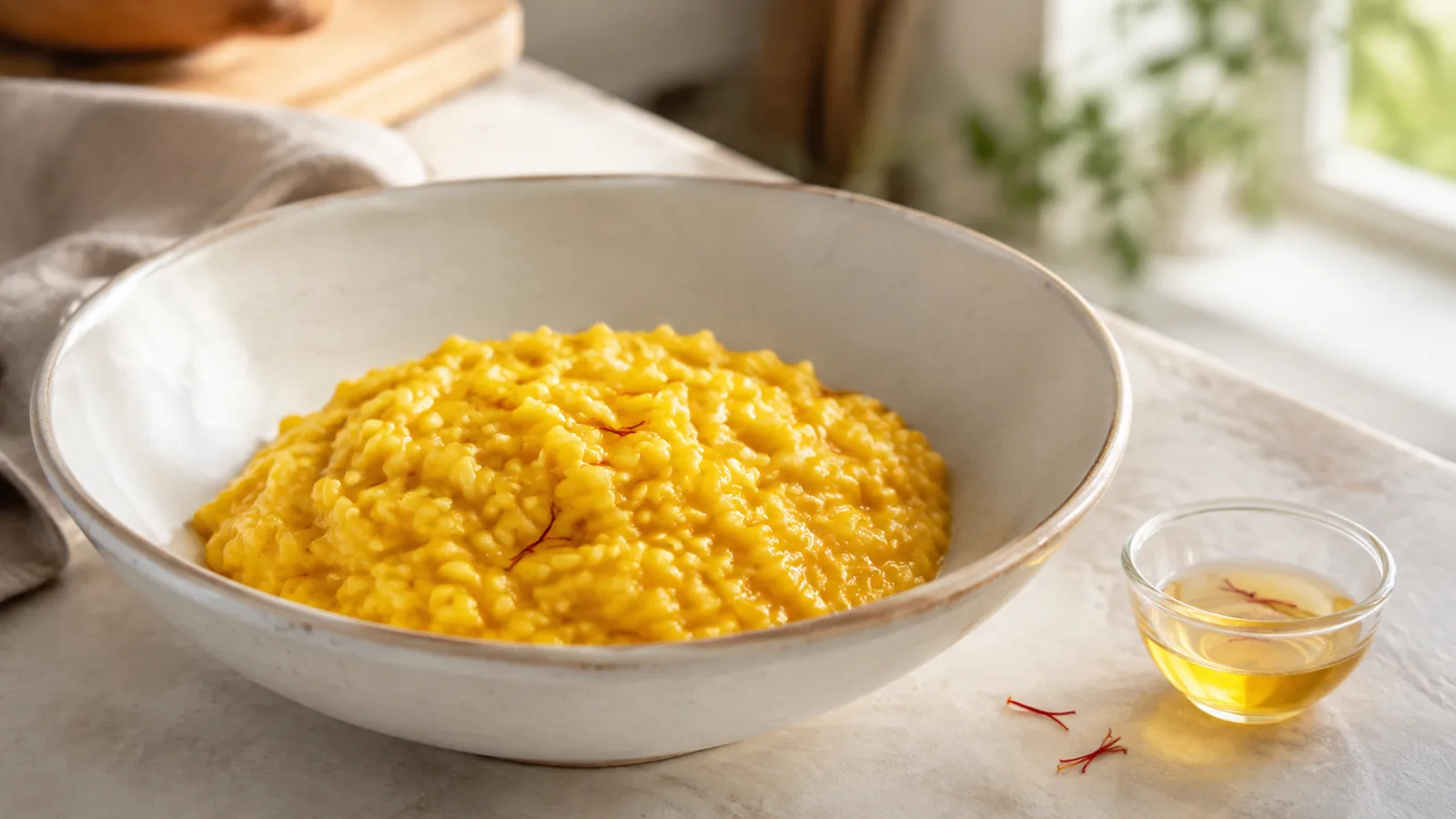
A good saffron soup should taste complete before the spice goes in. Stock, vegetables and grains build the body; saffron adds its warm aroma and a gently honeyed, earthy finish. These three recipes cover a hearty barley soup, a lighter chicken-and-rice soup and a tomato-chickpea version, with measured amounts and clear guidance on when to add saffron.
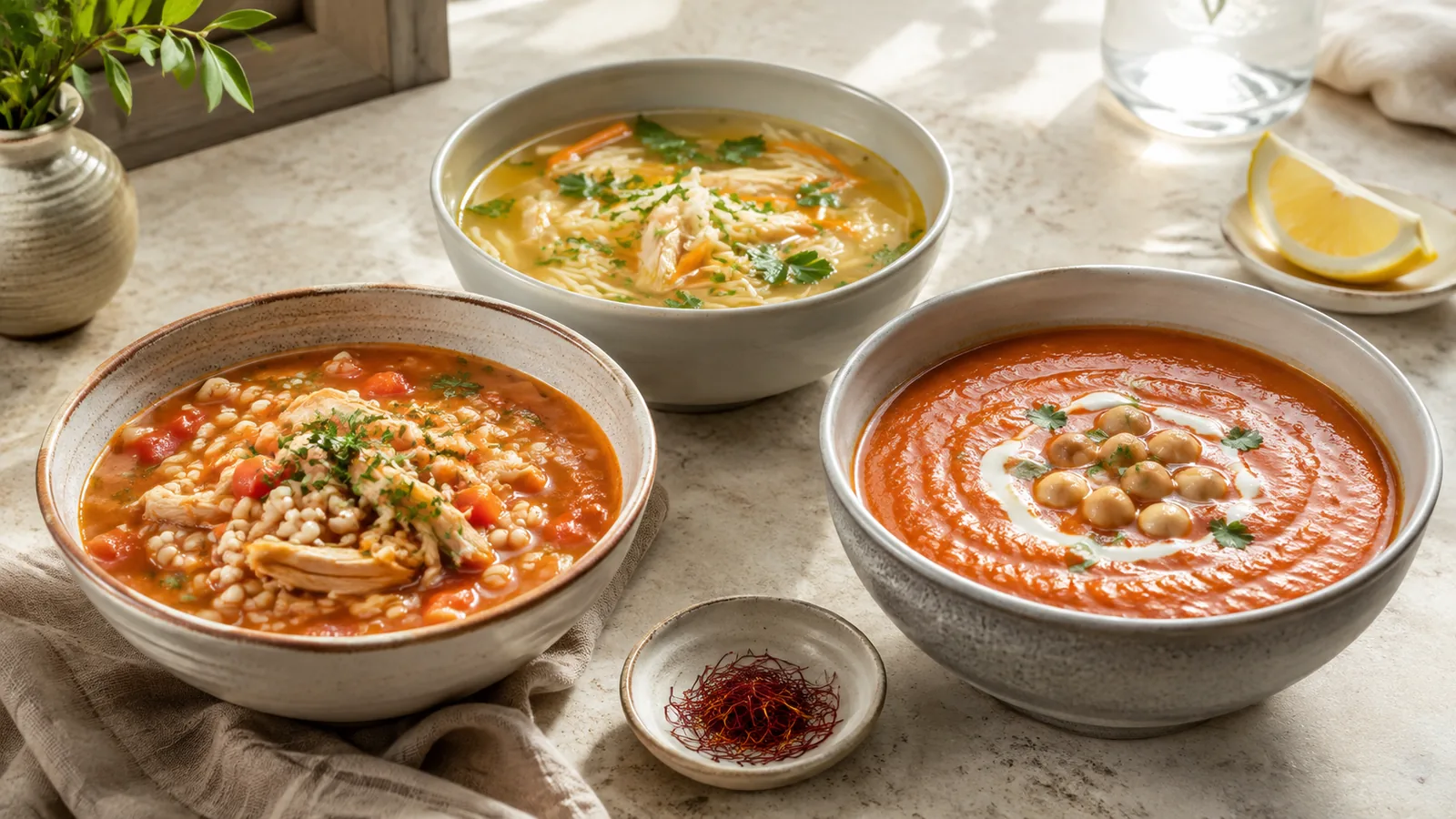
Three saffron soup recipes at a glance
- Saffron barley soup: tomato-rich, filling and suitable for a relaxed family meal
- Saffron chicken soup: a clear, comforting broth with rice, vegetables and lemon
- Tomato saffron soup: a smooth vegetarian soup made substantial with chickpeas
Each saffron soup recipe serves four to six people. The exact cooking time depends on the grain, the size of the vegetables and the width of the pot, so use the stated times as a guide and check texture as you go.
Can you put saffron in soup?
Yes. Saffron works particularly well in chicken broth, vegetable stock, tomato soup, barley soup and light seafood soups. It is aromatic rather than hot, so it can sit beside pepper, turmeric, lemon and herbs without turning the soup spicy.
A small measured amount is usually enough. For a pot holding roughly 1.5 litres of liquid, start with 0.1–0.2 g of good saffron threads. More is not automatically better; a heavy dose can make the broth bitter or medicinal and can obscure the other ingredients.
How and when to add saffron to soup
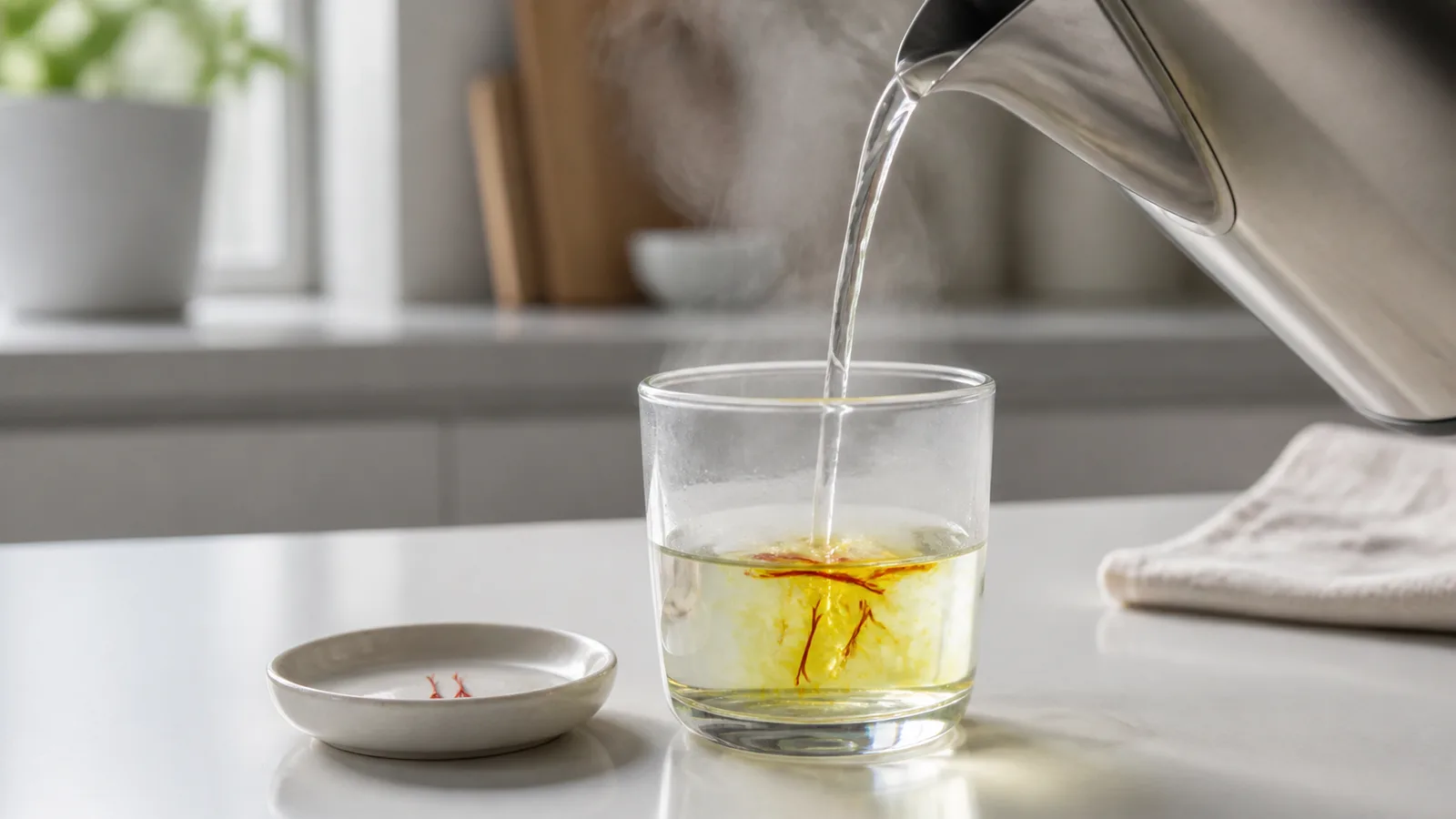
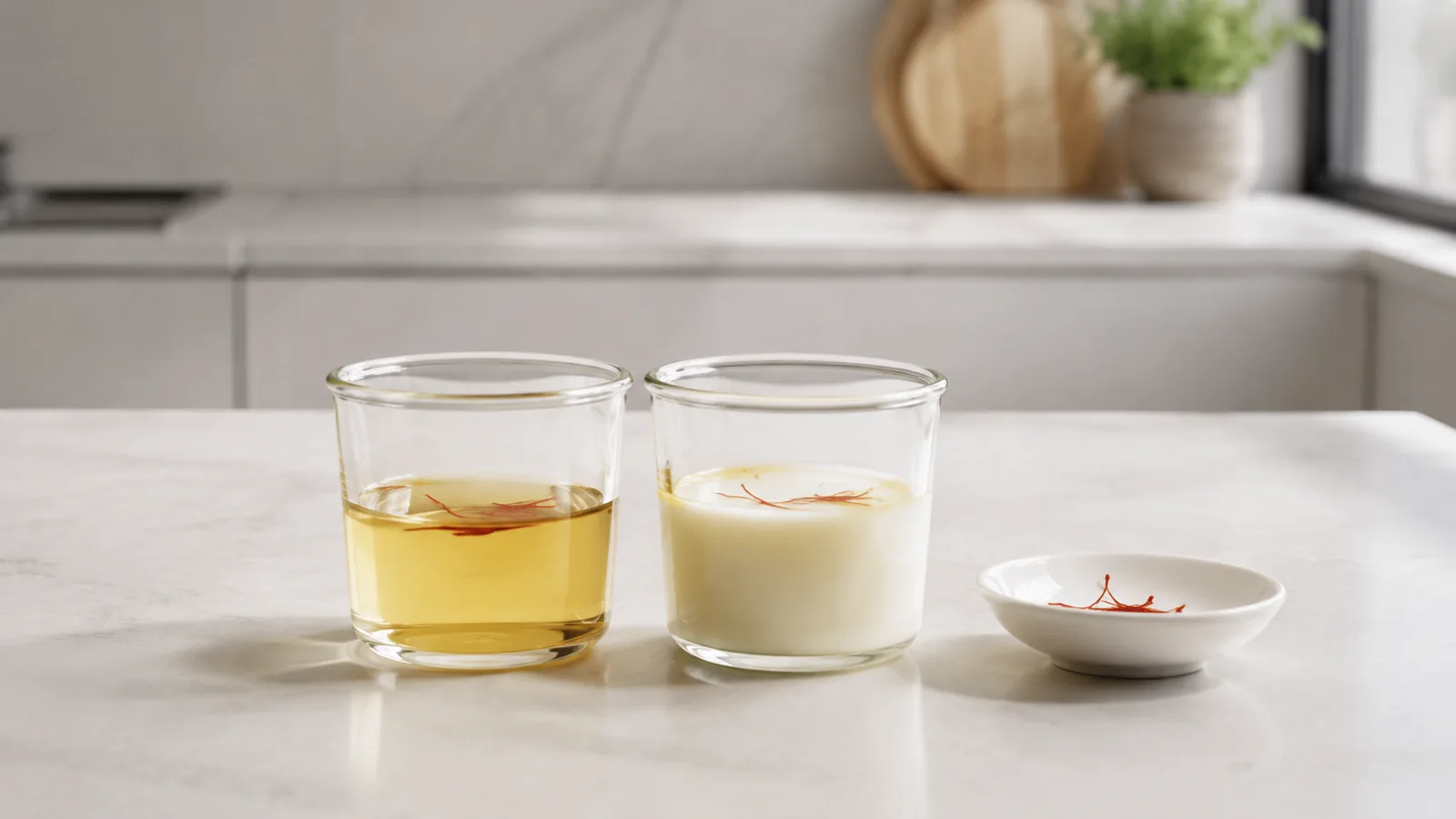
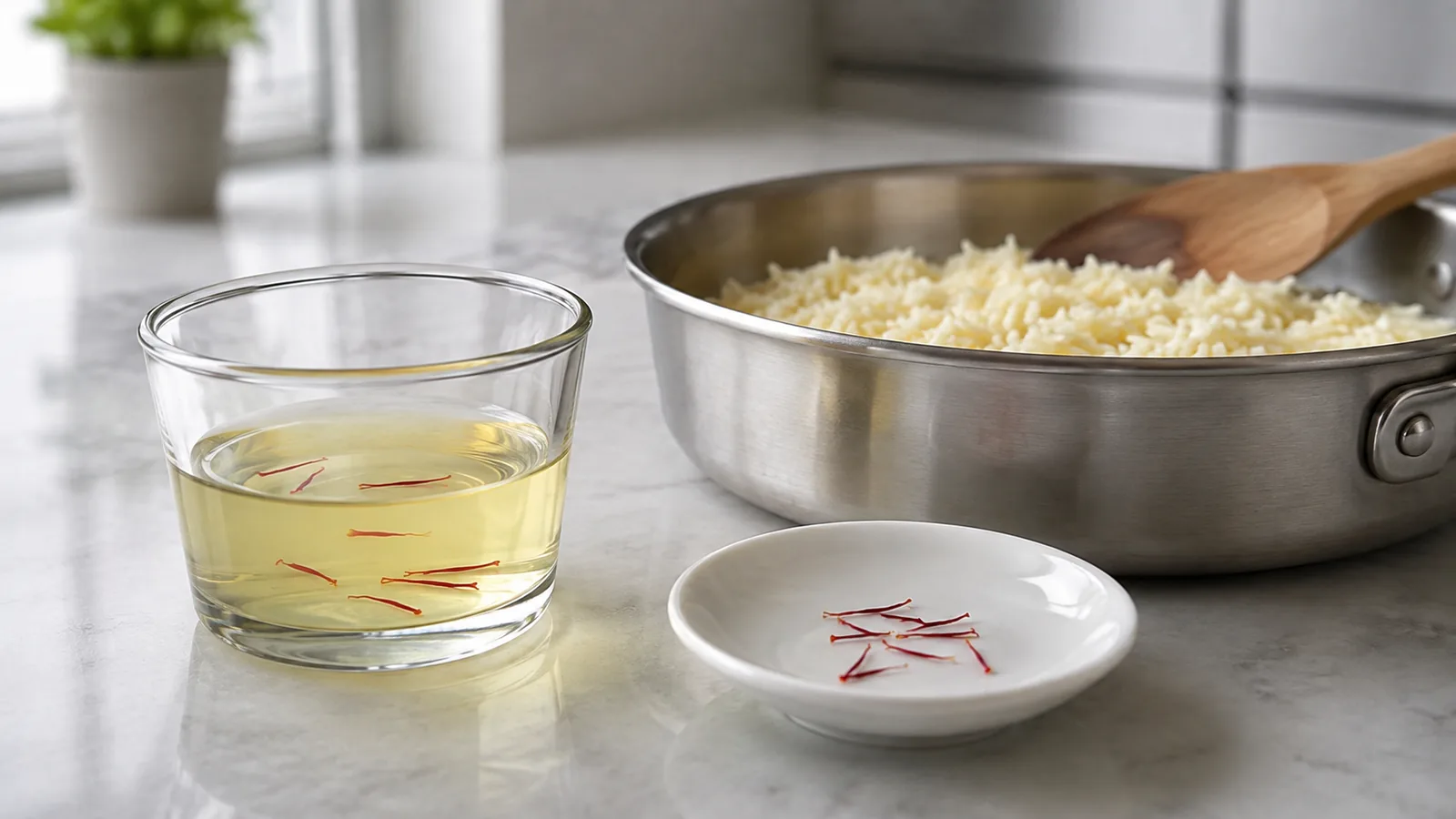
Grind the threads to a coarse powder, add 2 tablespoons of hot water and cover for 10–15 minutes. This makes an infusion that disperses much more evenly than dry threads dropped into a large pot. Our detailed guide to blooming saffron before cooking explains the temperature and timing.
Add most of the infusion during the final 10–15 minutes of cooking, once the stock and vegetables already taste balanced. Reserve a teaspoon or two for the last minute. Long, hard boiling flattens the aroma, while adding every drop after the heat is off may leave the flavour sitting on top rather than becoming part of the soup.
Taste before adding more salt. Stock, bouillon and tomato paste can all contribute sodium, and saffron is easier to notice when the broth is not aggressively salty.
1. Saffron barley soup with tomato and chicken
This is the most substantial of the three saffron soup recipes. Barley gives the broth a gentle thickness, tomato adds acidity and shredded chicken turns it into a full meal. Mushrooms are optional, but useful when you want a deeper savoury note.
Ingredients
- 150 g pearl barley, rinsed
- 300 g boneless, skinless chicken thighs
- 1.5 litres low-sodium chicken stock, plus more if needed
- 1 medium onion, finely chopped
- 1 medium carrot, cut into small dice
- 2 garlic cloves, finely chopped
- 400 g ripe tomatoes, grated or blended, or one 400 g can of crushed tomatoes
- 1 tablespoon tomato paste
- 150 g mushrooms, sliced, optional
- 1 tablespoon neutral oil
- 25 g butter, optional
- ½ teaspoon turmeric
- ¼ teaspoon mild curry powder, optional
- 0.15 g saffron threads, bloomed in 2 tablespoons hot water
- Black pepper and salt, added after tasting the stock
- 1–2 teaspoons lemon juice or vinegar, to finish
Method
- Warm the oil and half the butter in a heavy pot over medium-low heat. Add the onion and carrot with a small pinch of salt. Cook for 8–10 minutes, stirring, until soft but not deeply browned.
- Add the garlic, turmeric and optional curry powder. Stir for 30 seconds. Add the tomato paste and cook for another minute to remove its raw edge.
- Pour in the crushed tomatoes and cook for 5 minutes. Add the rinsed barley, chicken thighs and stock. Bring to a gentle simmer, partially cover and cook for 35–50 minutes.
- Check the chicken at about 25 minutes. Its thickest part should reach at least 74°C/165°F. Lift it to a clean board when safely cooked, shred it with two forks and return it to the pot.
- If using mushrooms, sauté them separately in the remaining butter until their released moisture has evaporated, then add them to the soup. This keeps their texture and prevents the pot from becoming watery.
- When the barley is tender, add most of the saffron infusion. Simmer gently for 10 minutes, adding stock or hot water if the soup is thicker than you like.
- Turn the heat low and stir in the reserved saffron. Taste, then adjust salt, pepper and lemon juice or vinegar. Rest for 5 minutes before serving.
Pearl barley does not need a long soak, although soaking it for a few hours can shorten the cooking time. Hulled barley takes considerably longer and may need more liquid. The soup will also thicken as it stands; loosen leftovers with stock during reheating.
2. Saffron chicken soup with rice and lemon
This saffron chicken soup is lighter than the barley version. Rice softens the broth without making it heavy, and lemon brings the saffron into focus. It is also a practical answer for anyone looking for a simple saffron broth recipe.
Ingredients
- 400 g boneless, skinless chicken thighs or breasts
- 1.5 litres low-sodium chicken stock
- 80 g basmati or other long-grain rice, rinsed
- 1 small onion, finely chopped
- 1 carrot, cut into thin half-moons
- 1 celery stalk, finely sliced
- 1 tablespoon olive oil or butter
- 0.15 g saffron threads, bloomed in 2 tablespoons hot water
- ½ teaspoon turmeric, optional
- 1–2 tablespoons fresh lemon juice
- 2 tablespoons chopped parsley or dill
- Salt and black pepper
Method
- Heat the oil in a soup pot. Cook the onion, carrot and celery over medium-low heat for 7–8 minutes, until the onion is translucent. Add the optional turmeric and stir briefly.
- Add the stock and chicken. Bring just to a boil, lower to a steady simmer and skim any foam that rises. Cook until the chicken reaches at least 74°C/165°F at its thickest point, usually 15–25 minutes depending on the cut.
- Move the chicken to a clean plate. Add the rinsed rice to the broth and simmer until tender, about 12–15 minutes. Shred or dice the chicken while the rice cooks.
- Return the chicken to the pot and add most of the saffron infusion. Simmer for 5 minutes. If the rice has absorbed too much broth, add a little hot stock or water.
- Stir in the remaining saffron, 1 tablespoon lemon juice and the herbs. Taste before adding more lemon, salt or pepper.
Breast meat cooks faster and can dry out, so check it before the thighs. For a clear saffron broth, strain the stock after the chicken cooks, then return it to the cleaned pot before adding rice. The flavour should remain savoury first, with lemon and saffron lifting the finish.
3. Tomato saffron soup with chickpeas
Tomato and saffron make a useful pair: tomato supplies sweetness and acidity, while saffron softens the sharper edges with aroma. Chickpeas give this vegetarian soup enough body for lunch without relying on cream.
Ingredients
- 2 tablespoons olive oil
- 1 medium onion, chopped
- 1 medium carrot, chopped
- 2 garlic cloves, chopped
- 1 tablespoon tomato paste
- 800 g canned whole or crushed tomatoes
- 750 ml low-sodium vegetable stock
- 240 g cooked chickpeas, drained and rinsed
- 0.15 g saffron threads, bloomed in 2 tablespoons hot water
- ½ teaspoon ground cumin, optional
- ¼ teaspoon black pepper
- Salt, as needed
- Lemon juice and plain yoghurt or a plant-based alternative, for serving
Method
- Warm the olive oil over medium-low heat. Add the onion and carrot and cook for about 10 minutes, until soft. Add the garlic, optional cumin and tomato paste; stir for one minute.
- Add the tomatoes, stock and two-thirds of the chickpeas. Bring to a gentle simmer and cook uncovered for 20–25 minutes, until the carrot is tender.
- Blend the soup until smooth with an immersion blender. For a more textured bowl, blend only half. Return the remaining chickpeas to the pot.
- Add most of the saffron infusion and simmer gently for 8–10 minutes. Stir in the remainder, taste and adjust salt, pepper and lemon.
- Serve with a small spoonful of yoghurt and a few chickpeas on top. Avoid a heavy garnish that hides the soup or overwhelms the saffron aroma.
If the tomatoes are very acidic, cook them a little longer before reaching for sugar. A naturally sweet carrot often supplies enough balance. If sugar is still needed, add it by the quarter-teaspoon and taste again.
How to make a clear saffron broth
Begin with a clean, lightly seasoned chicken or vegetable stock. Bloom 0.1 g of saffron for every litre of broth, then add the infusion during the final 10 minutes of a gentle simmer. Finish with lemon only after tasting; acidity should brighten the broth, not turn it sour.
For a cup-style broth, strain out the vegetables and serve it with a few herbs. For a meal, add cooked chicken, rice, chickpeas or small vegetables. Keeping the base simple makes the colour and aroma easier to appreciate.
Common saffron soup mistakes
- Boiling saffron for the whole cooking time: add it near the end to protect more of its aroma.
- Using unmeasured “saffron to taste”: begin with 0.1–0.2 g for a family-size pot and adjust next time.
- Adding dry threads straight to the pot: blooming distributes colour and flavour more evenly.
- Over-salting early: stock, bouillon and tomato paste may already contain plenty of salt.
- Using colour as a doneness test: check chicken with a food thermometer.
- Making every flavour loud: too much curry, cumin, garlic or lemon can cover saffron rather than support it.
- Expecting every barley to cook alike: pearl and hulled barley absorb liquid at different rates.
Storage and reheating
Cool soup promptly and refrigerate it in covered shallow containers. Barley and rice continue to absorb liquid, so store a little extra stock separately if possible. Reheat only the portion you need until it is thoroughly hot, then adjust the consistency.
Saffron aroma becomes quieter after repeated boiling. Warm leftovers gently and add a teaspoon of freshly bloomed saffron at the end only if the flavour truly needs it.
Choose the saffron soup that suits the meal
Make the barley soup when you want a generous one-pot supper, the chicken-and-rice version for a cleaner broth, and the tomato-chickpea soup for a meat-free bowl with substance. In all three, saffron works best as the finishing layer rather than a substitute for good stock and patient cooking.