


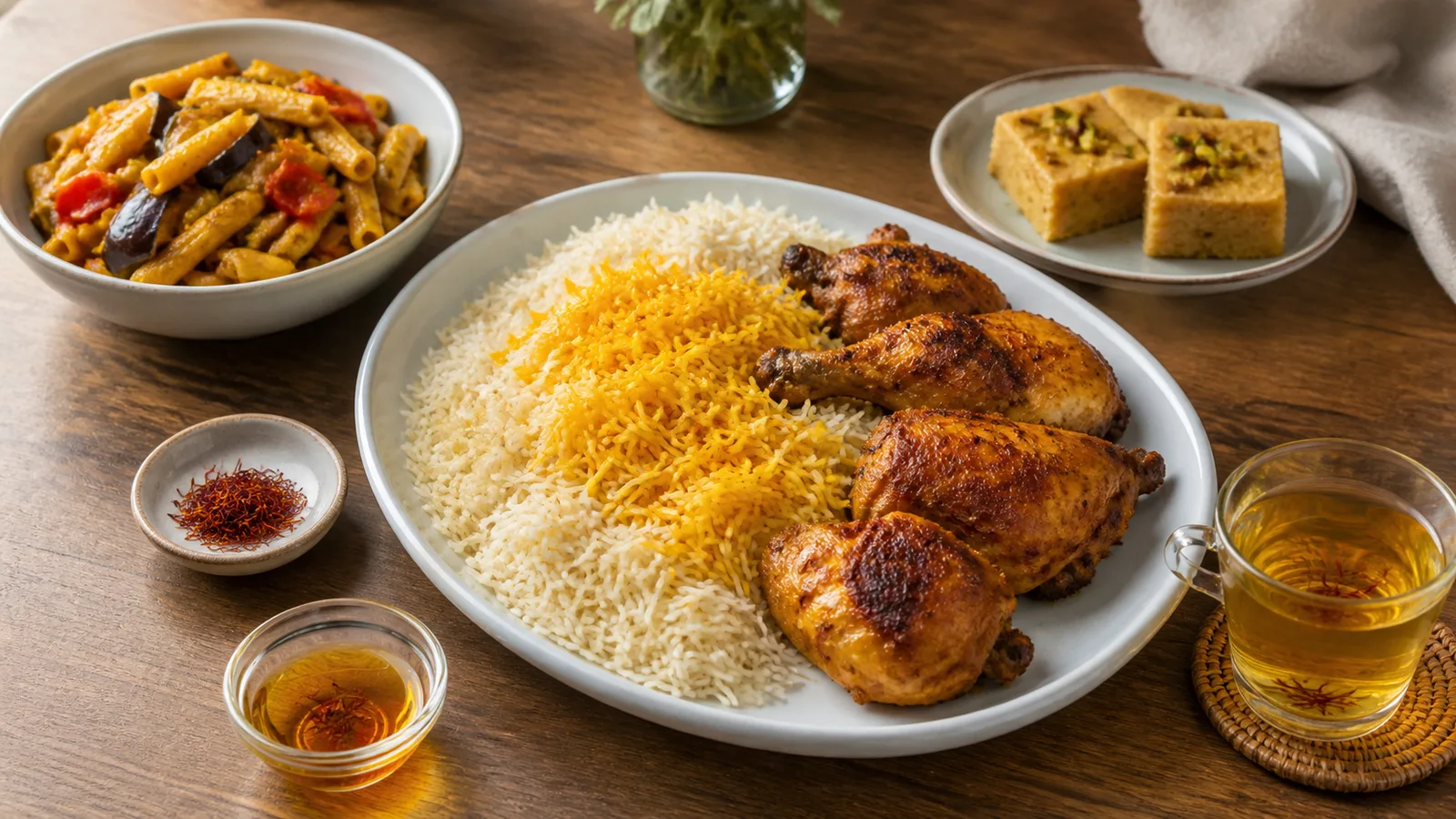
These delicious saffron recipes show how one spice can color rice, deepen a chicken dish, lift a pasta sauce, perfume halva, and make a simple cup of tea. Each recipe starts with the same small step: bloom the saffron in water before adding it to the food. That gives the threads time to release their golden color and helps the flavor spread evenly.
You do not need a heavy hand. Saffron has a distinct aroma and a gentle bitterness as well as color. Use enough to be noticed, then let the other ingredients keep their own character.
How to bloom saffron for recipes
For the recipes below, lightly grind the specified threads in a clean, dry mortar. Pour over the indicated amount of hot water, below a vigorous boil, and leave it for 10 to 20 minutes. The liquid should turn golden yellow to orange. Stir both liquid and threads into the dish unless the recipe says otherwise.
A 2024 food-chemistry study compared saffron compounds in water, oil, and mixed systems at different temperatures and times. Crocins, the main coloring pigments, transferred best in water. For a closer look at the technique, see the guide to using saffron for coloring dishes.
Chicken and saffron rice
This is a practical one-pan chicken to serve with separate saffron rice. Dried fruit and nuts are optional; use them when you want a sweeter, more festive finish.
Ingredients
- 1½ cups basmati rice
- 450 g (1 lb) boneless chicken thighs, cut into large pieces
- ¼ teaspoon saffron threads
- 3 tablespoons hot water
- 1 small onion, thinly sliced
- 2 tablespoons olive oil or butter
- ½ teaspoon ground turmeric
- ½ teaspoon ground black pepper
- salt, to taste
- 2 tablespoons barberries or chopped dried apricots, optional
- 2 tablespoons toasted slivered almonds or cashews, optional
Method
- Bloom the ground saffron in the hot water. Rinse the rice until the water is nearly clear, then cook it by your preferred absorption or draining method.
- Warm the oil in a wide pan over medium heat. Cook the onion until soft and lightly golden.
- Add the chicken, turmeric, pepper, and salt. Brown the pieces, then lower the heat and cook until the thickest piece reaches 74°C (165°F) on a food thermometer.
- Stir half the saffron infusion into the chicken during the final few minutes. Mix the rest with one quarter of the cooked rice.
- Spoon the white rice onto a platter, place the golden rice over it, and add the chicken. Finish with dried fruit and nuts if using.
The white-and-gold presentation keeps saffron visible instead of tinting every grain equally. For more rice methods, use the separate saffron rice guide.
Saffron pasta with chicken and eggplant
Eggplant gives this pasta body, while bell pepper adds sweetness. The saffron goes into a light broth-based sauce rather than a heavy cream sauce, so its aroma remains easy to recognize.
Ingredients
- 300 g (10½ oz) short pasta
- 300 g (10½ oz) boneless chicken thigh or breast, cut into strips
- 1 small eggplant, cut into 2 cm cubes
- 1 red bell pepper, sliced
- 1 small shallot or half an onion, finely chopped
- ¼ teaspoon saffron threads
- 3 tablespoons hot water
- ¾ cup low-sodium chicken stock
- 3 tablespoons olive oil, divided
- 1 tablespoon lemon juice
- salt and black pepper
- 2 tablespoons toasted pine nuts, optional
- chopped parsley, to finish
Method
- Bloom the saffron in hot water. Salt the eggplant lightly, leave it for 15 minutes, then blot the surface dry.
- Boil the pasta until just tender. Reserve half a cup of pasta water before draining.
- Heat two tablespoons of oil in a large skillet. Brown the eggplant and bell pepper, then transfer them to a plate.
- Add the remaining oil and cook the shallot. Add the chicken, season it, and cook until it reaches 74°C (165°F).
- Return the vegetables to the pan. Add the stock and saffron infusion, simmer for two minutes, then toss with the pasta. Loosen with a little pasta water if needed.
- Turn off the heat before adding lemon juice. Taste for salt, then finish with parsley and pine nuts.
Adding lemon at the end keeps its fresh edge. It is there for flavor, not to make saffron release more pigment.
Persian saffron halva
Persian halva is made by patiently toasting flour, then working in an aromatic syrup. The flour determines much of the final color, so stop at a warm tan if you want the saffron to remain visible.
Ingredients
- 1 cup plain flour
- ½ cup unsalted butter, neutral oil, or a mixture
- ¾ cup sugar
- 1 cup water
- ¼ teaspoon saffron threads
- 3 tablespoons hot water
- 1 tablespoon rose water, optional
- ground pistachios or almonds, to finish
Method
- Bloom the saffron in three tablespoons of hot water.
- Combine the sugar and one cup of water in a saucepan. Warm gently until the sugar dissolves. Remove from the heat and stir in the saffron infusion and rose water.
- Toast the flour in a heavy pan over medium-low heat, stirring continuously, until it smells nutty and turns evenly tan. This can take 15 to 25 minutes.
- Add the butter or oil carefully and stir until the mixture is smooth.
- Add the warm syrup in several portions. The mixture may bubble, so keep your face and hands clear of the steam. Stir until the halva pulls together and leaves the sides of the pan.
- Press it into a shallow serving dish while warm. Mark the surface with a spoon and add nuts.
If the halva tastes raw, the flour needed more toasting. If it becomes oily, it may have too much fat or may not yet have absorbed the syrup evenly.
Saffron tea
Saffron tea needs no medical promise to be worthwhile. It is a fragrant drink with a clear golden color, and it pairs well with cardamom, lemon peel, or a little honey.
Ingredients and method
- 6 to 10 saffron threads
- 250 ml (1 cup) hot water
- 1 lightly crushed green cardamom pod, optional
- a strip of lemon peel or a small spoonful of honey, optional
Place the saffron and cardamom in a cup or small pot. Add hot water, cover, and steep for 8 to 10 minutes. Strain if desired, then add lemon peel or honey to taste. For other pairings, see the collection of saffron-infused drinks.
Saffron masghati
Masghati is a soft Persian starch sweet. It sets more like a tender gel than a cake, so slow cooking and steady stirring matter.
Ingredients
- ½ cup wheat starch or cornstarch
- 2½ cups cold water
- ¾ cup sugar
- ¼ teaspoon saffron threads bloomed in 3 tablespoons hot water
- 2 tablespoons butter
- 1 tablespoon rose water, optional
- chopped pistachios, for serving
Method
- Whisk the starch into the cold water until no lumps remain, then strain it into a saucepan.
- Add the sugar and cook over low heat, stirring, until the mixture becomes glossy and noticeably thick.
- Stir in the bloomed saffron, butter, and rose water. Continue cooking until the spoon leaves a clear trail on the bottom of the pan.
- Pour into lightly greased dishes. Cool, then chill until set and garnish with pistachios.
Two more Iranian saffron dishes to try
Gheimeh with saffron rice
Gheimeh is commonly made with yellow split peas, not lentils. The stew combines split peas, meat, onion, tomato, dried lime, and spices, and is often served with rice and crisp potato strips. Use saffron in the rice or add a restrained infusion near the end of the stew. The broader guide to saffron dishes in Iranian cuisine explains the context.
Golden tahdig
For a saffron tahdig, combine a portion of parboiled rice with bloomed saffron and, if desired, yogurt or egg yolk. Spread it over oil or butter in a heavy pot, add the remaining rice, and cook over low heat until the base is crisp and releases. The exact time depends on the pot and burner; listen for steady sizzling and check the aroma rather than turning the heat up.
How to use saffron without losing its character
- Buy threads when possible, then grind only what the recipe needs.
- Bloom saffron in water before adding it to a large pot or dry mixture.
- Add part of the infusion late when you want a fresher aroma, while still cooking the dish safely.
- Let saffron be visible in pale foods; tomato, cocoa, and dark stock can hide its color.
- Store the remaining threads sealed, dry, and away from light and heat.
The best place to begin is the recipe you already want to eat. Saffron should make the dish more expressive, not turn every meal into the same golden plate.
Sources: 2024 research on saffron infusion temperature, time, and water/oil medium; and the USDA FSIS safe minimum internal temperature chart.

![Exporting Saffron to Turkey + Price Guide [Complete 0 to 100]](https://img.rowhanisaffron.com/20260827003933/saffron-export-turkey-quality-inspection.webp)



