How to Use Saffron for Coloring: Key Tips
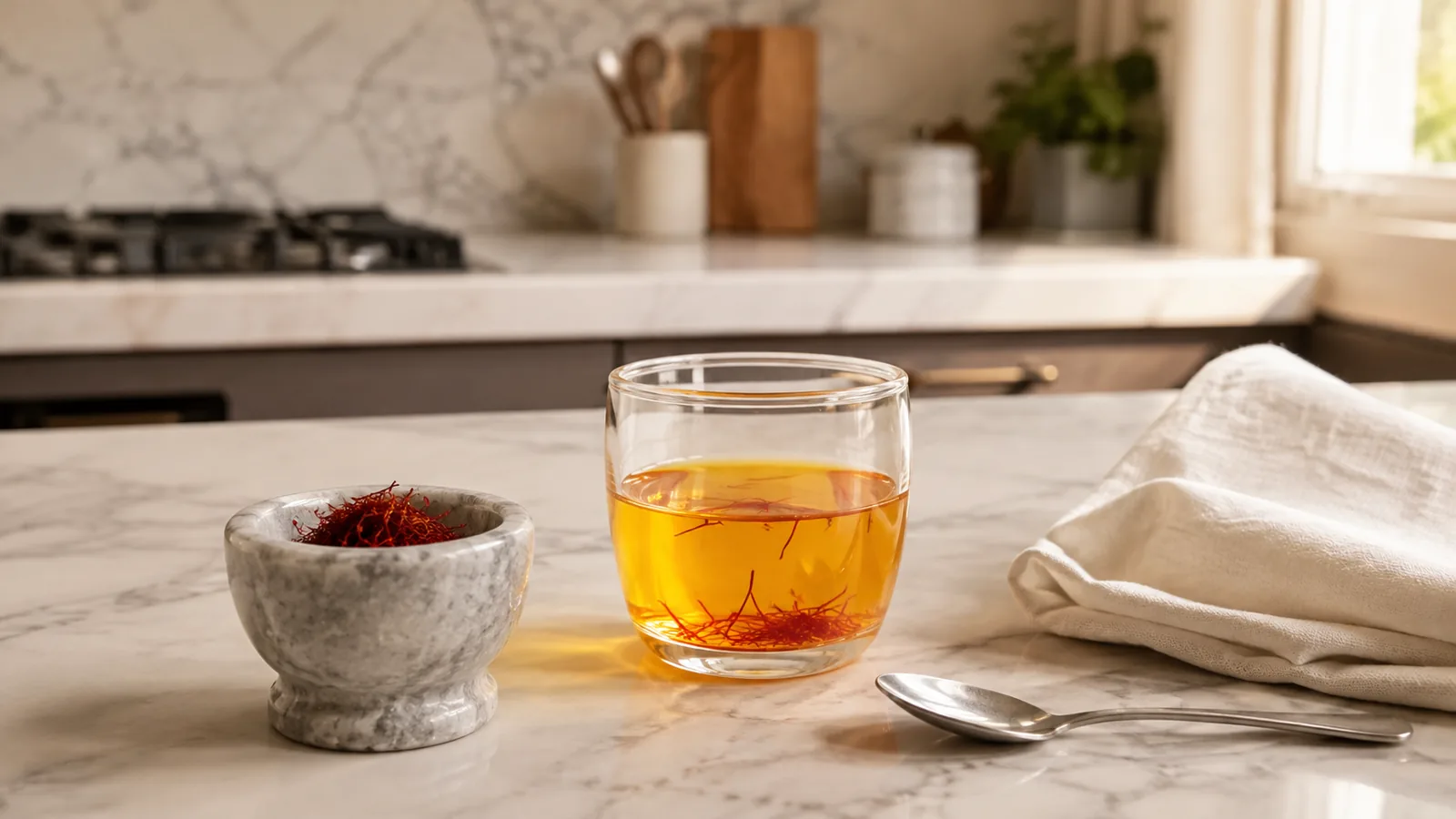
Saffron threads are deep red, but a good saffron infusion gives food a clear golden-yellow to yellow-orange color. For reliable results, grind the threads lightly, bloom them in a small amount of water, and distribute that liquid through the dish. This simple method makes better use of saffron for coloring dishes than scattering dry threads over the surface.
Use a recipe’s quantity as your guide. If none is given, begin with a modest pinch for a family-size dish and adjust the next batch rather than adding a large amount at once. Saffron brings aroma and a slight bitterness as well as color, so more is not always better.
Saffron’s role in cooking
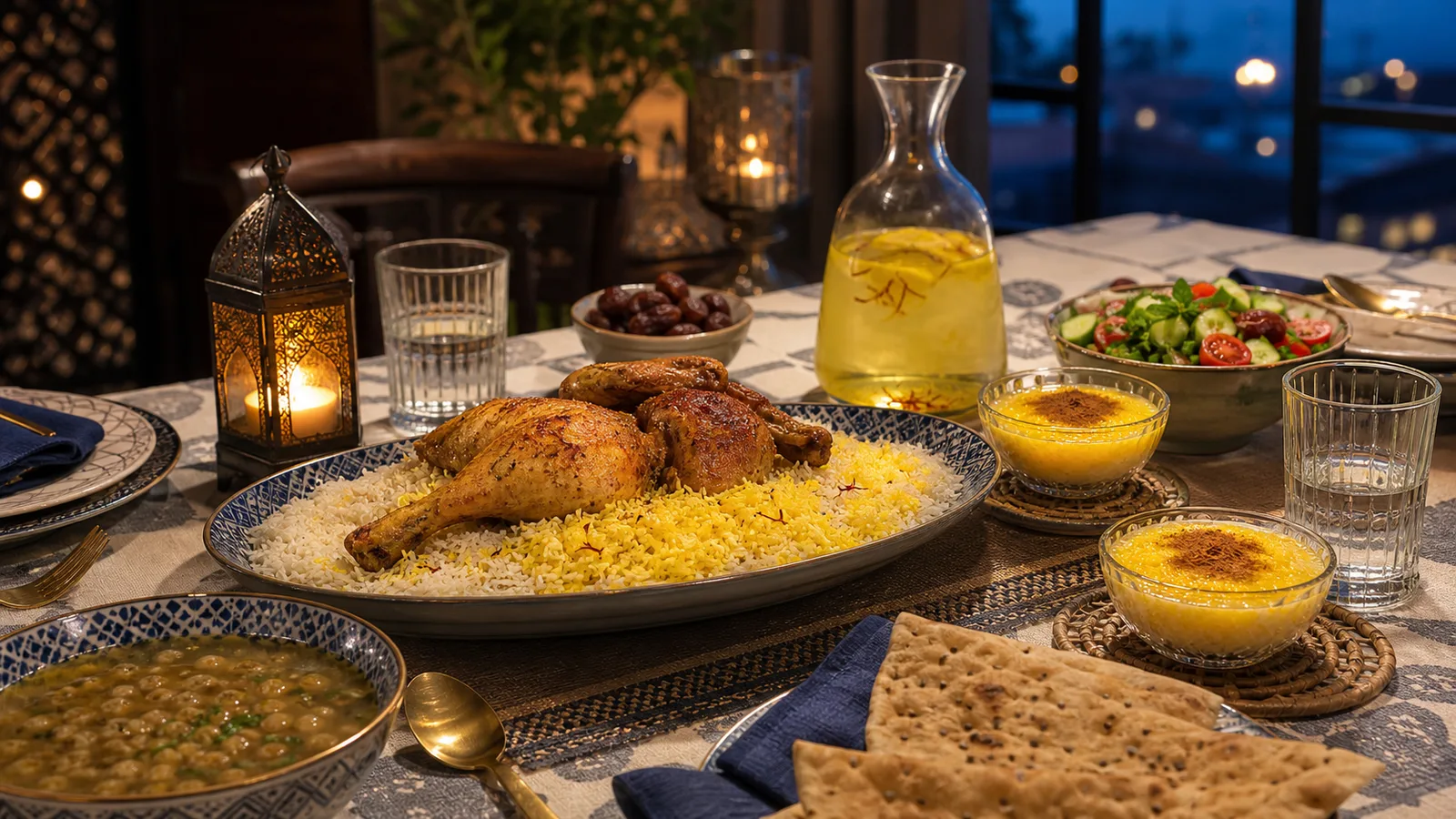
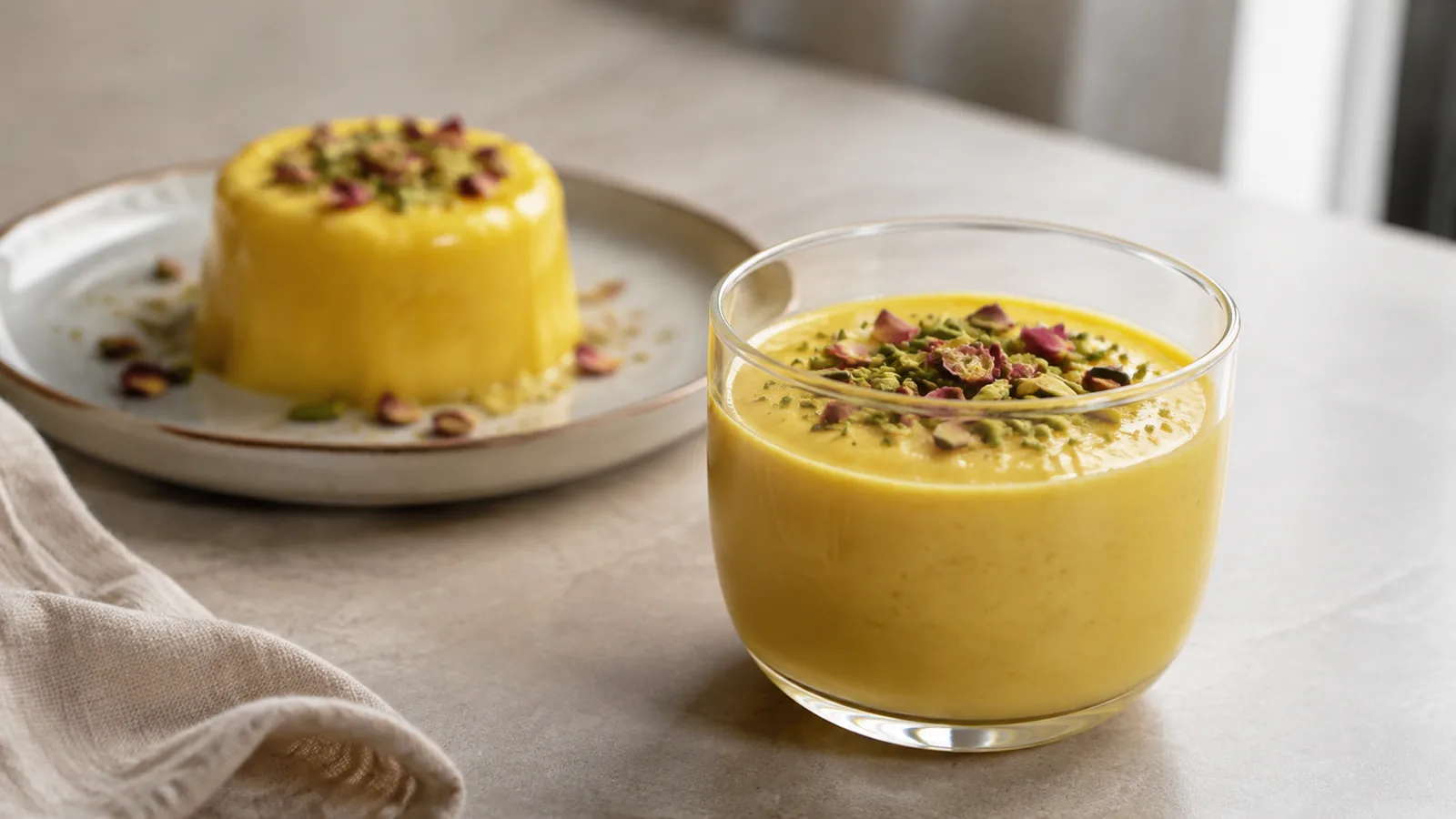
Saffron works as a natural food coloring and a spice. Used as saffron food coloring, it belongs in rice, seafood, broths, sauces, dairy desserts, baked goods, and hot or cold drinks. The aim is not an artificial neon yellow. Properly used saffron gives the food a warm golden tone and a recognizable aroma.
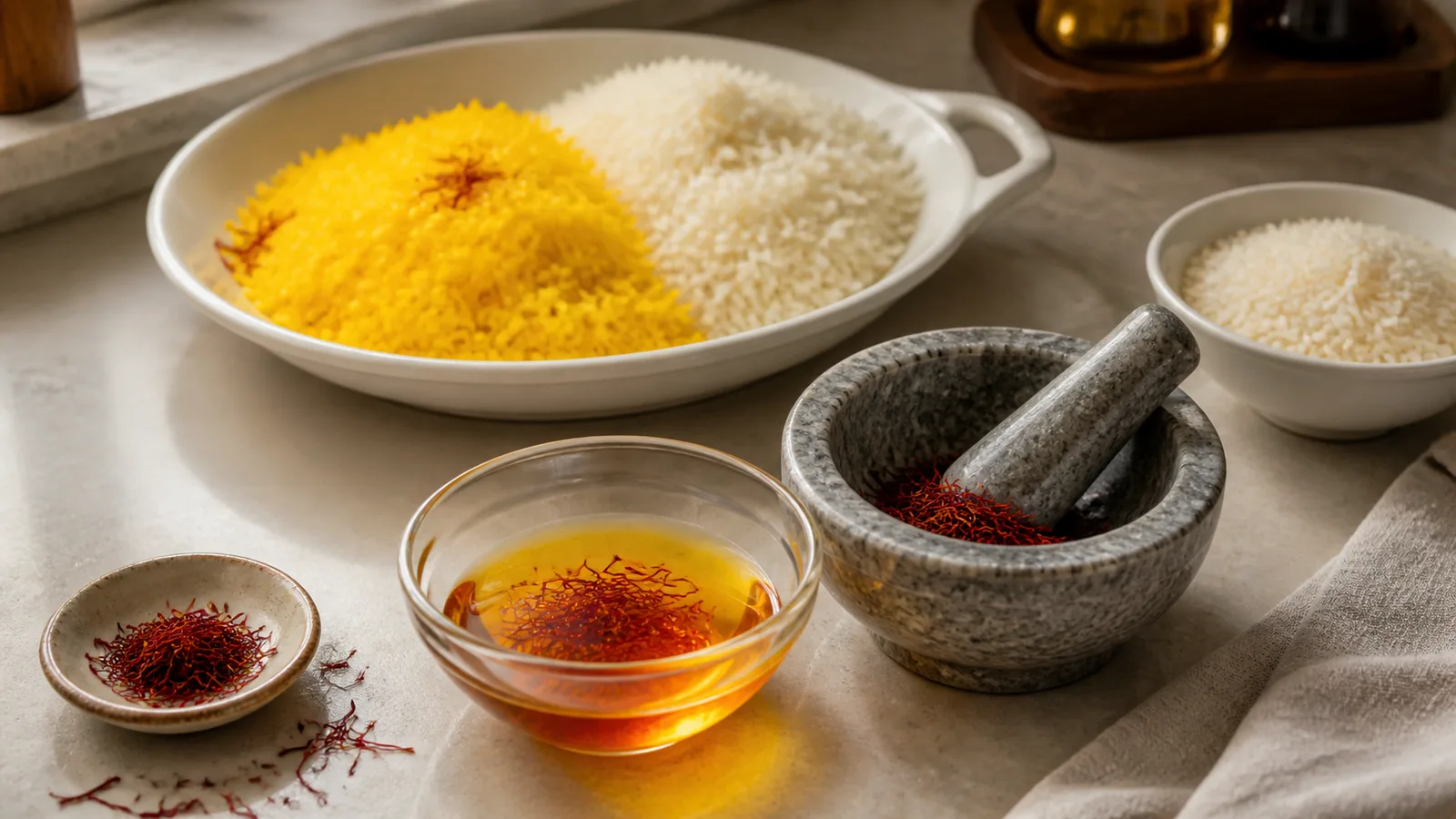
In a dish such as saffron rice, you can keep part of the infusion concentrated, mix it with a small portion of cooked rice, and fold that golden rice over the rest. In a pale sauce or custard, stir the infusion in gradually so you can see the color develop.
The science behind saffron’s coloring effect
Crocins are the main pigments responsible for saffron color. Unlike most carotenoids, these compounds dissolve readily in water. Picrocrocin is sometimes grouped with them in casual explanations, but it contributes bitterness rather than serving as the principal pigment. Safranal is closely associated with saffron’s aroma.
That chemistry explains why red threads produce a yellow-gold liquid. It also explains why water is the most dependable kitchen medium for extracting color. A 2024 food-chemistry study comparing water, oil, and mixed systems found that crocins were favored in 100% water, while some aroma-related compounds behaved differently in oil.
How to make saffron color in food
The practical method is to release saffron’s pigments into water before the spice reaches the main dish. That gives you a concentrated liquid you can measure, taste, and spread evenly.
Ideal methods for steeping saffron
- Measure the threads. Follow the recipe where possible. Avoid treating a universal milligram-per-cup figure as correct for every food.
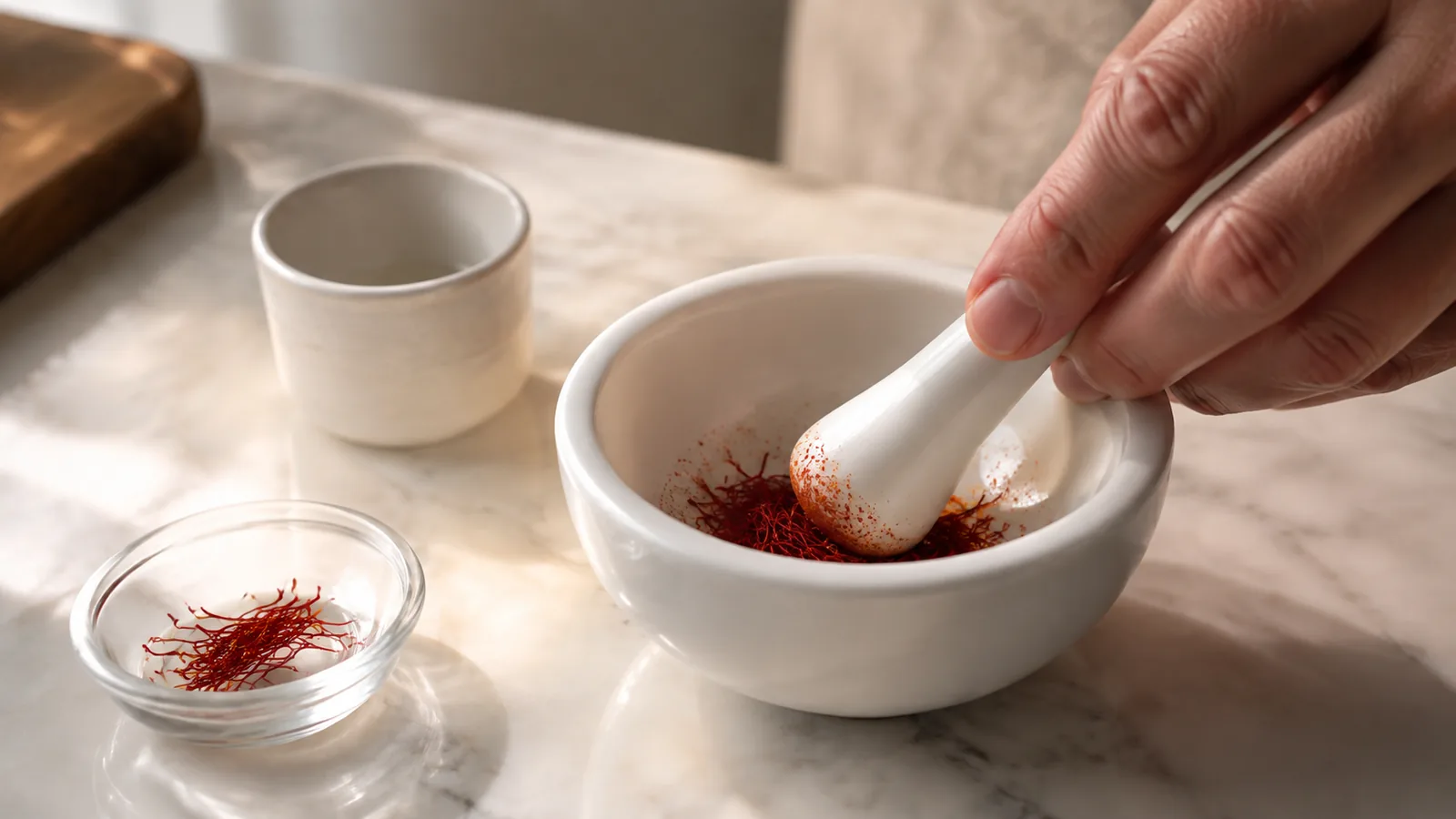
- Grind lightly. Crush the threads in a clean, dry mortar until they are fine enough to expose more surface area. They do not have to become dust.
- Add a little water. Use hot water that is below a vigorous boil. The liquid should be sufficient to wet and disperse the saffron without unnecessarily diluting the dish.
- Let it stand. Ten to twenty minutes is a practical kitchen window. Watch the infusion rather than a stopwatch; color will deepen as the pigments move into the water.
- Add it evenly. Stir the infusion into the liquid portion of the recipe, or drizzle it over food in stages when a marbled effect is wanted.
Research has measured saffron extraction across 60°C, 80°C, and 100°C and from 10 to 30 minutes. The results vary by compound and medium, so there is no sound basis for claiming that exactly five minutes or exactly 5–7 milligrams per cup is always ideal. For everyday cooking, hot water and a short rest are dependable without turning the process into a laboratory exercise.
Grinding saffron for more intense color
Grinding improves contact with water and helps the infusion spread through the food. A few grains of sugar or coarse salt can give the mortar more friction, but they do not chemically increase saffron’s coloring strength. Choose whichever belongs in the recipe, and keep the mortar dry before grinding.
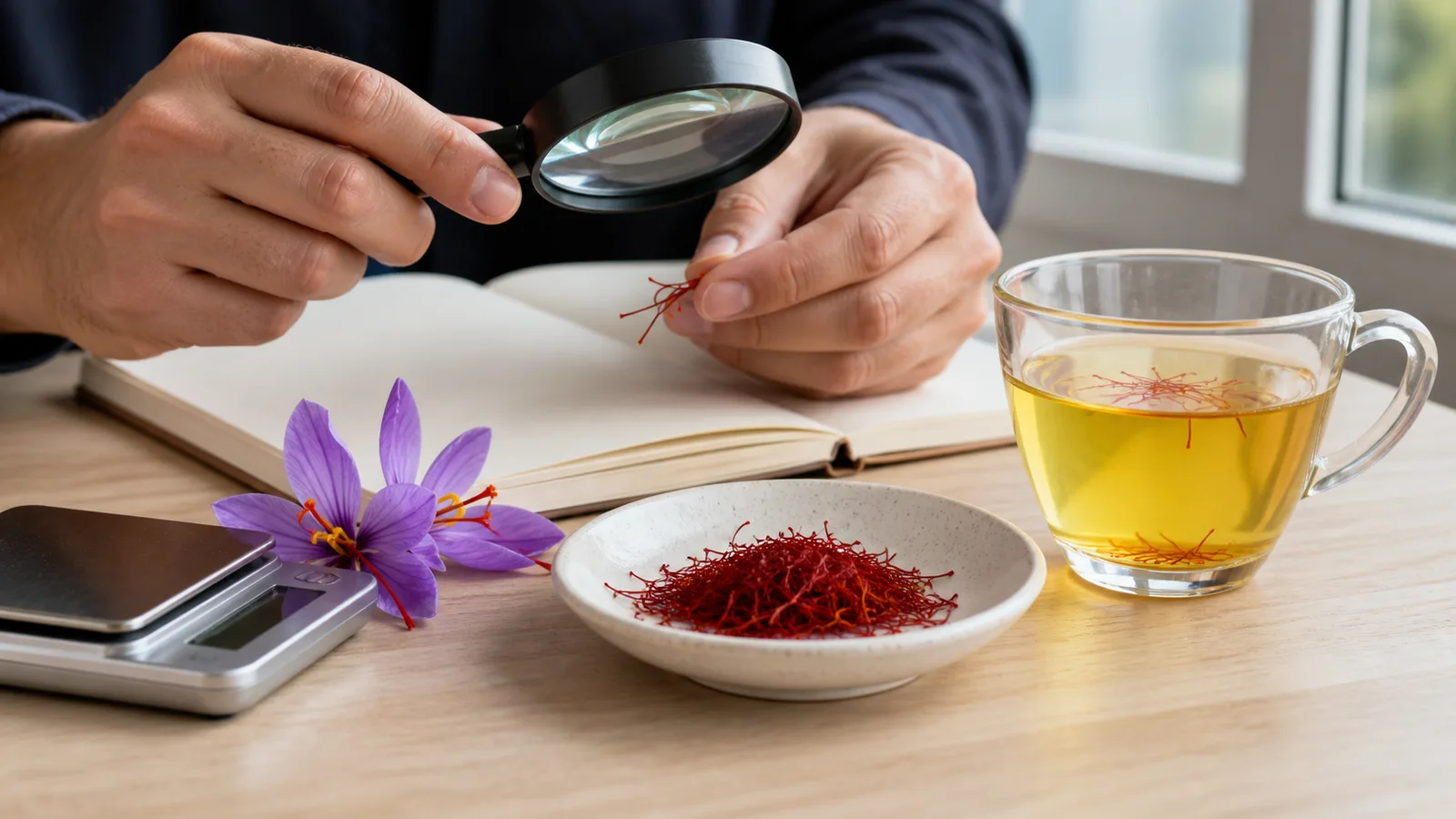
Grind only what you plan to use. Whole threads are easier to inspect for authenticity and generally have less exposed surface during storage. If the product releases an instant, unnaturally strong red dye or the threads lose all color at once, consult the guide to identifying pure saffron rather than trying to fix it with a different steeping method.
Using plant oils for better saffron coloring
Oil can carry some saffron aroma, but it is not the best first choice for color extraction. Crocins are water-soluble, and the comparative 2024 study found stronger crocin transfer in water than in oil or mixed media. Bloom the saffron in water first. If the recipe contains olive oil, butter, or another fat, combine it later as the recipe requires.
This distinction is useful in dishes that contain both water and fat. The water phase develops the golden color; the fat can help distribute aromatic compounds. Adding a drop of oil to the steeping cup is optional, not a color-boosting rule.
Is saffron acidic, and do acids enhance its color?
Lemon juice and citric acid add brightness to food, but they do not reliably make saffron pigments dissolve better. Aqueous saffron pigments can be sensitive to acidic conditions, heat, light, and oxygen over time. If a recipe needs lemon, add it for flavor and balance. Do not soak expensive threads in concentrated acid solely to chase a stronger color.
Can other spices intensify saffron color?
Turmeric, paprika, red pepper, cinnamon, and ginger contribute their own pigments and flavors. They can change the final shade, but they do not extract more color from saffron. Use them because the dish calls for them, not as a test of saffron quality.
The same applies to questions about making a “saffron color” by mixing two paint or design colors. That is a separate color-matching task. In food, genuine saffron creates its own golden hue; artificial yellow and orange dyes are not equivalent to the spice’s flavor or aroma.
Why saffron doesn’t always color properly
- The saffron is old or poorly stored. Light, heat, air, and moisture can reduce pigment quality. Keep threads sealed, dry, and away from light.
- The material is low quality or adulterated. Weak color may reflect poor drying, too much yellow style material, age, or substitution.
- The threads were not opened up. Whole threads scattered into a dry dish release color slowly and unevenly. Light grinding and water blooming solve that practical problem.
- Too little was used for the volume of food. Increase the next batch gradually rather than pouring in concentrated powder at the end.
- The infusion did not reach the whole dish. Mix it first with a small amount of broth, milk, or cooked rice, then distribute that portion.
- Another ingredient masks the shade. Tomato, dark stock, greens, cocoa, and colored spices can overwhelm saffron’s gold even when its flavor remains.
What color does saffron give to food?
The spice itself is red to reddish brown; its water infusion and the food it colors are normally golden yellow to yellow-orange. The precise shade depends on saffron quality, concentration, the food’s original color, pH, heat, and cooking time. A red cloud that appears immediately around a thread is not the expected gradual release of genuine saffron pigment.
Laboratories use standardized methods rather than eyesight alone to measure saffron coloring strength. ISO 3632-1:2025 specifies requirements for dried saffron, and ISO 3632-2:2010 provides current test methods for filaments and powder. Those standards are useful for quality control; a home infusion is a cooking technique, not a certification test.
Keep the method simple
For most kitchens, good saffron coloring comes down to four choices: sound threads, light grinding, a water infusion, and even distribution. Adjust the amount to the dish, protect the spice from light and moisture, and let saffron supply its own shade instead of trying to force it with oil, acid, or unrelated spices.
Research and standards: 2024 study of saffron compounds by infusion temperature, time, and oil/water medium; research on crocetin ester stability in aqueous saffron extracts; ISO 3632-1:2025 saffron specification; and ISO 3632-2:2010 test methods.