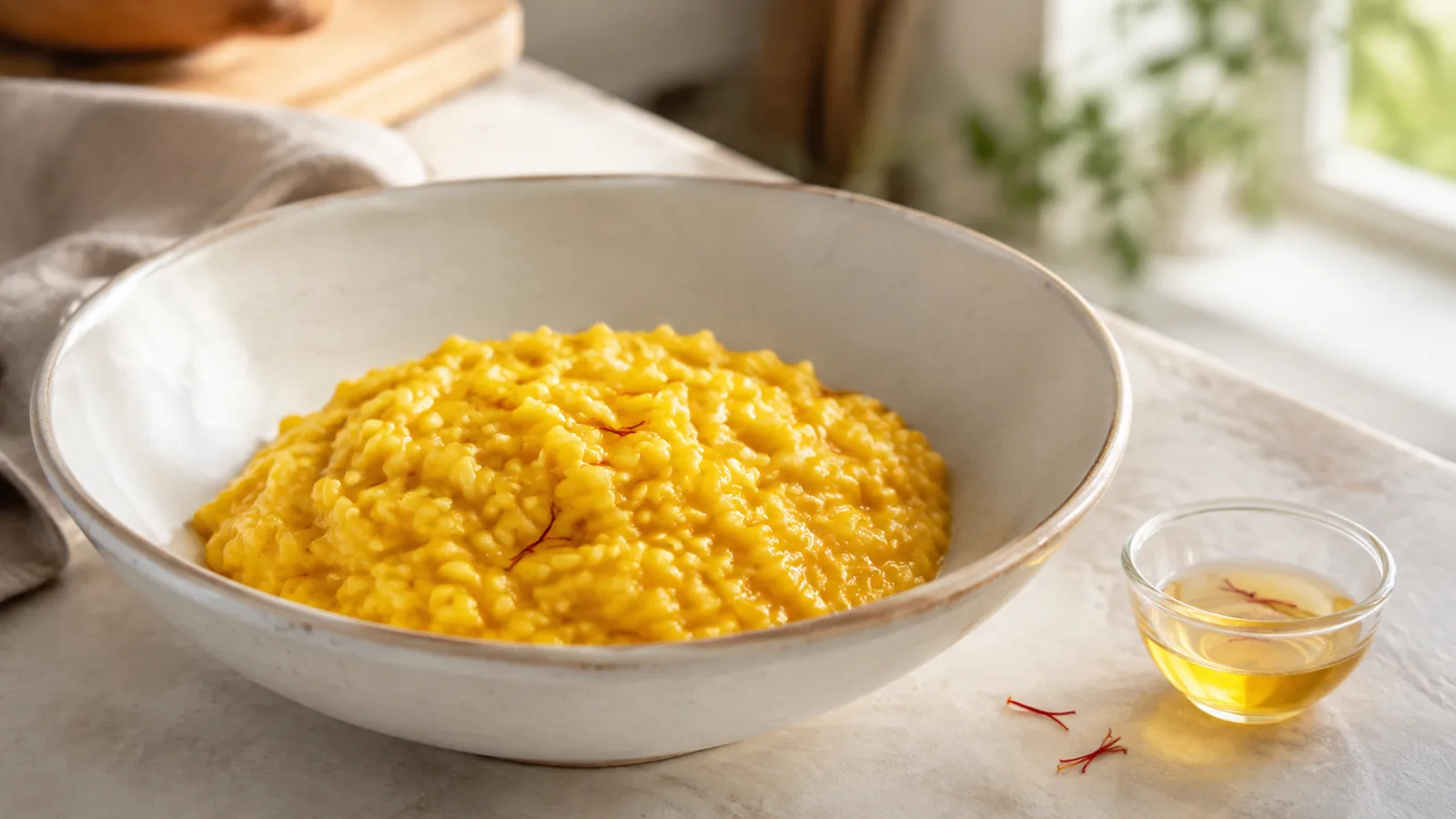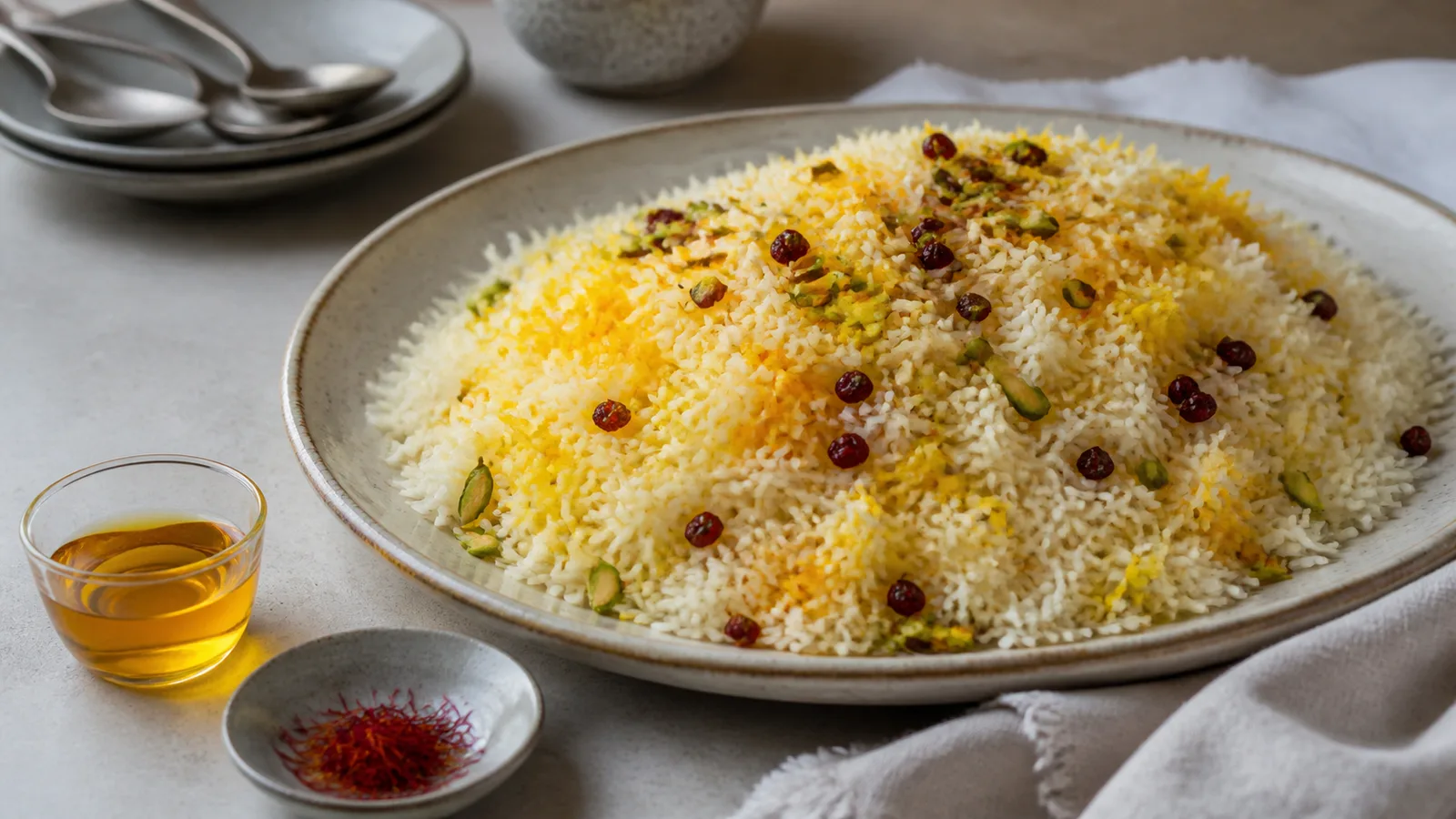
This saffron rice recipe makes six servings of fluffy basmati rice with a clear golden color and a warm saffron aroma. You can tint the whole pot or mix the infusion into a smaller portion for decorating Persian rice. Both versions start the same way: bloom the saffron separately, cook the rice until the grains are nearly tender, then finish it gently so the grains stay separate.
Saffron rice suits a weeknight meal, but it also looks at home beside khoresh, grilled chicken, kebabs, or a festive spread. The method below includes both a traditional drain-and-steam approach and a straightforward rice-cooker option.
Saffron rice recipe at a glance
- Serves: 6
- Preparation: 15 minutes, plus 30 minutes for soaking
- Cooking: 40–50 minutes
- Main method: parboil, drain, and steam
- Alternative: absorption method in a rice cooker
Ingredients
- 400 g (2 cups) basmati rice
- 30–40 saffron threads, approximately 0.08–0.1 g
- 3 tablespoons warm water
- 2 tablespoons butter, ghee, or neutral oil
- 1½ tablespoons salt for soaking and boiling, most of which drains away
- 2 tablespoons dried barberries or raisins, optional
- 2 tablespoons slivered pistachios or almonds, optional
A quarter teaspoon of loosely packed threads is a reasonable kitchen estimate, though a small scale is more consistent. Avoid increasing the saffron simply to make the rice darker. Too much can leave a pronounced bitter edge.
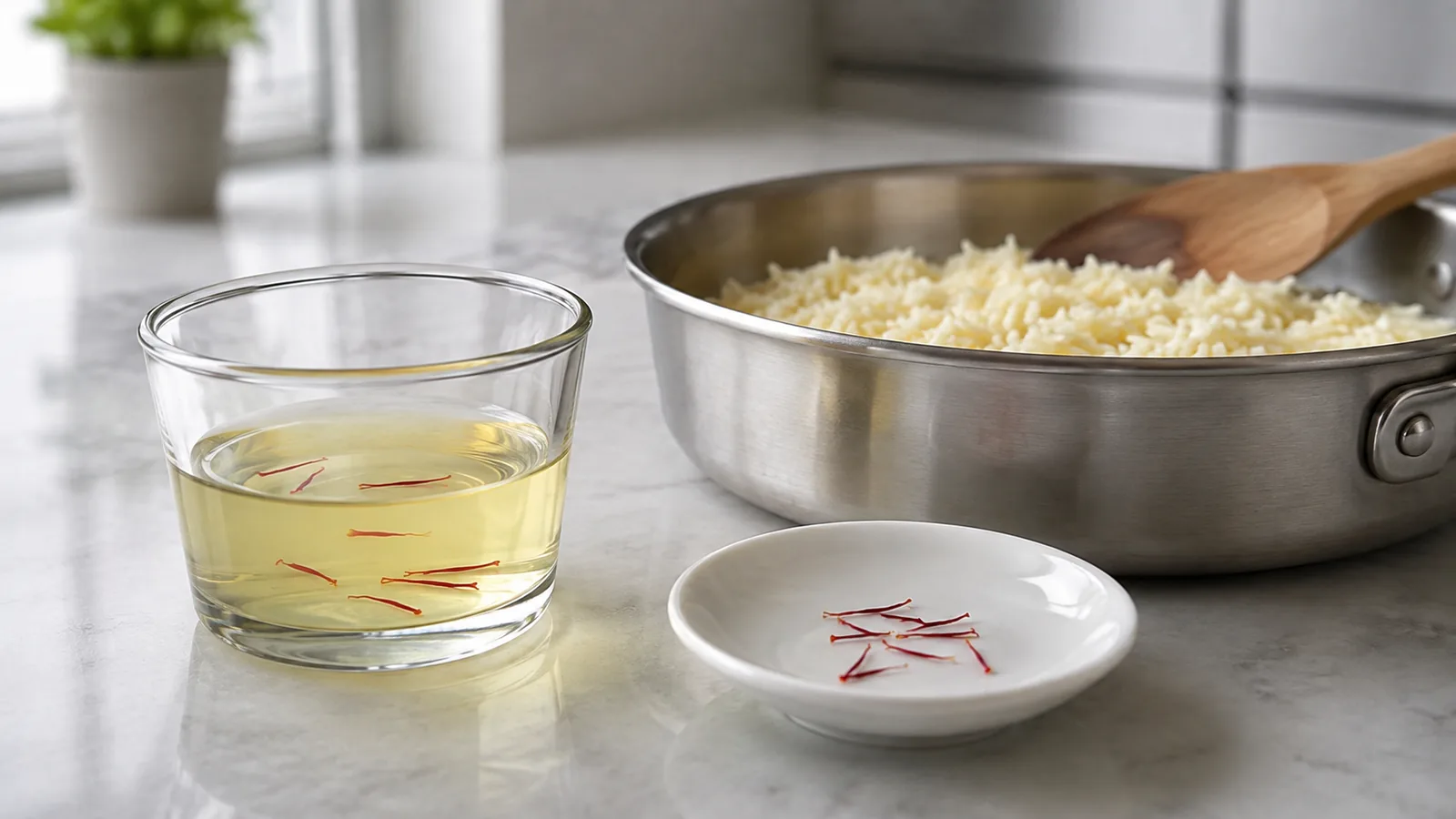
Bloom the saffron first
- Lightly crush the threads in a clean, dry mortar.
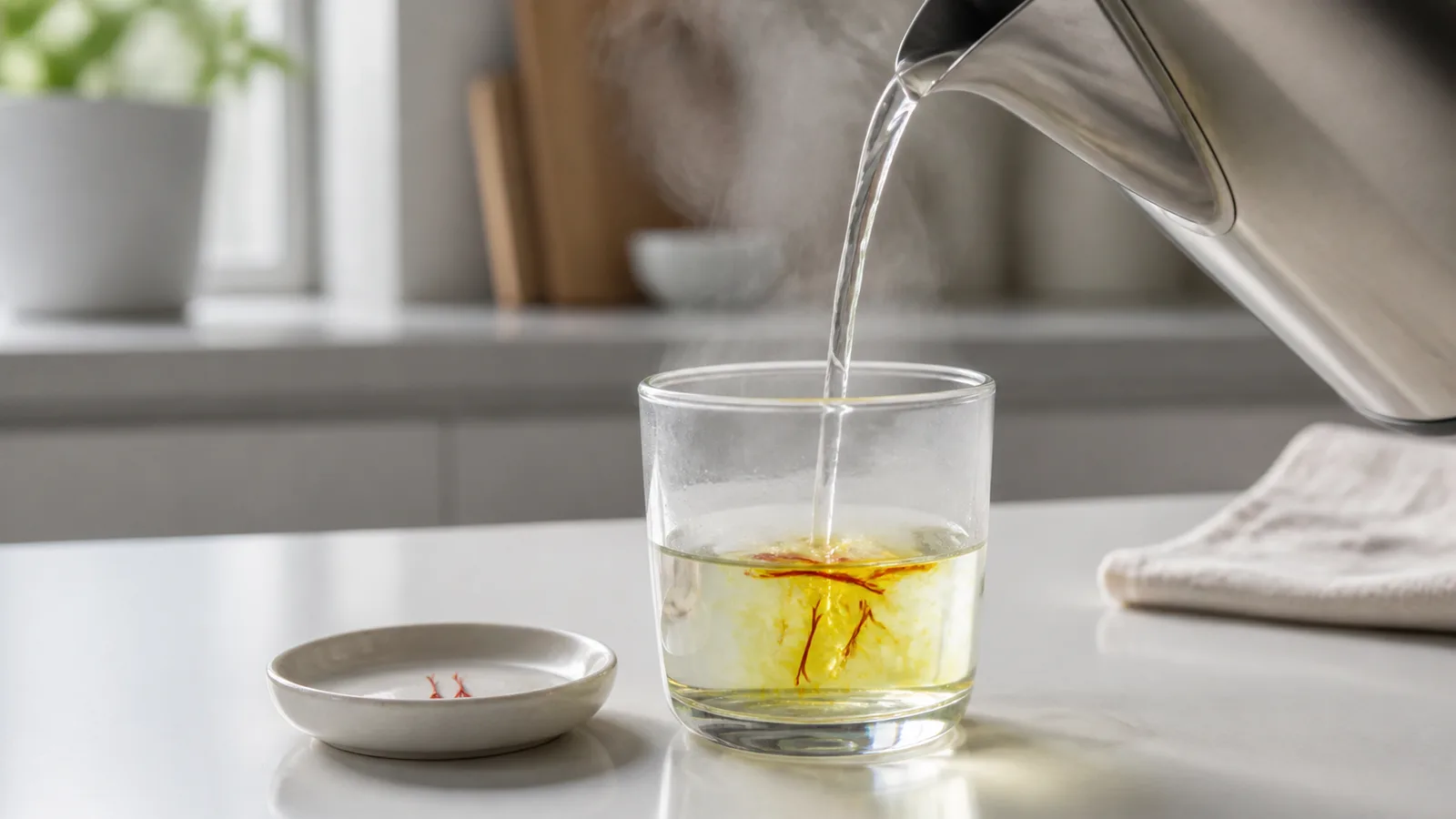
- Pour over 3 tablespoons of warm-to-hot water, roughly 60–80°C (140–176°F).
- Cover and leave for 15–20 minutes.
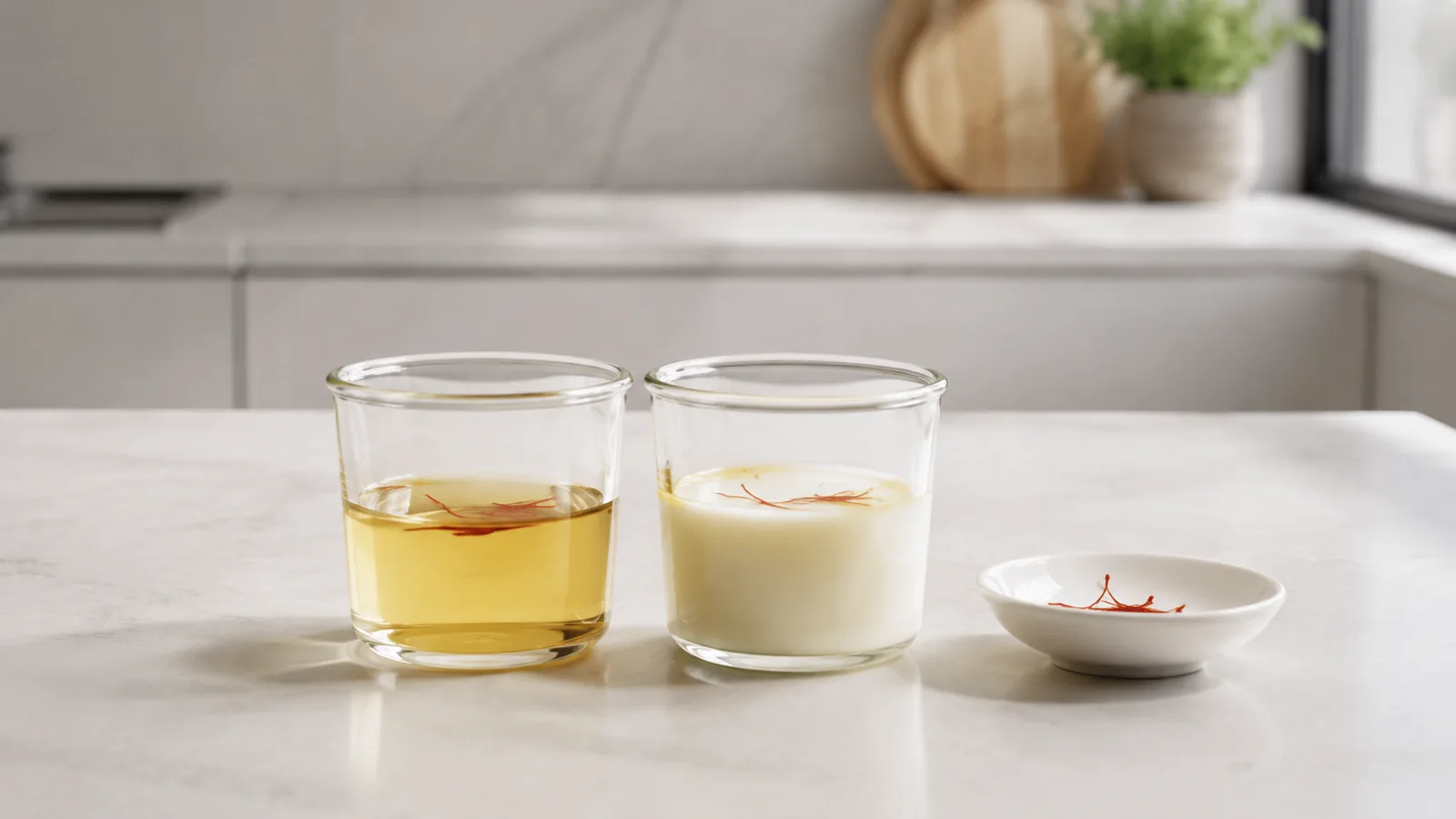
This small cup of concentrated liquid distributes the color more evenly than scattering dry threads into the pot. Our saffron infusion guide explains warm-water and ice methods in more detail.
How to make saffron rice by draining and steaming
1. Rinse and soak the rice
Rinse the rice in several changes of cool water until the water runs much clearer. Cover it with fresh lukewarm water, stir in 1 tablespoon salt, and leave it for 30 minutes. The original recipe suggested two to three hours; that longer soak is possible, but it is not required for most modern basmati rice.
2. Parboil the grains
Bring a large pot of water to a full boil and add the remaining salt. Drain the soaked rice, tip it into the pot, and stir once so it does not settle into a solid layer.
Boil for 5–7 minutes, checking early. A grain should be soft on the outside while retaining a small firm core. The old instruction to cook until all the water evaporates and then drain is contradictory: for this method, use plenty of boiling water and drain while the rice is still slightly underdone.
3. Drain and build the pot
Drain the rice immediately. Melt 1 tablespoon butter or oil in the clean pot, then return the rice in a loose mound. Make several holes through the rice with the handle of a wooden spoon; these give steam a path through the pot.
4. Steam gently
Wrap the lid in a clean kitchen towel and cover tightly, securing the towel well above the heat. Cook over medium heat for 5 minutes, then reduce to low for 30–35 minutes. Do not keep lifting the lid—the trapped steam finishes the center of each grain.
Two ways to add the saffron
For a fully golden pot
Mix the saffron infusion with the remaining tablespoon of melted butter. Drizzle it over the parboiled rice just before covering the pot. Fold the finished rice only once or twice, using a wide spoon, so it stays fluffy rather than compressed.
For Persian-style rice decoration
Steam the rice without saffron. When it is ready, place about 2 cups in a bowl and gently fold in the warm infusion. Spoon this golden rice over the white platter in broad streaks or a simple central pattern.
This smaller saffron portion is commonly used with stews such as ghormeh sabzi and gheymeh, or with chicken and jeweled rice. It gives the table contrast without turning every grain the same color.
How to make saffron rice in a rice cooker
Rinse 2 cups of rice and place it in the cooker with the amount of water specified for that rice and appliance. Add ½ teaspoon salt and 1 tablespoon butter or oil. Start the normal white-rice cycle.
When most of the water has been absorbed but the rice is still moist, drizzle in the saffron infusion. Close the lid promptly and let the cycle finish. If your cooker should not be opened during cooking, add the infusion at the beginning instead. Rest the rice for 10 minutes after the cycle, then fluff it with a rice paddle.
Rice cookers vary, so the machine’s water ratio takes priority over a universal measurement. Adding extra infusion liquid without subtracting it from the cooking water can make the rice soft.
Saffron rice with chicken
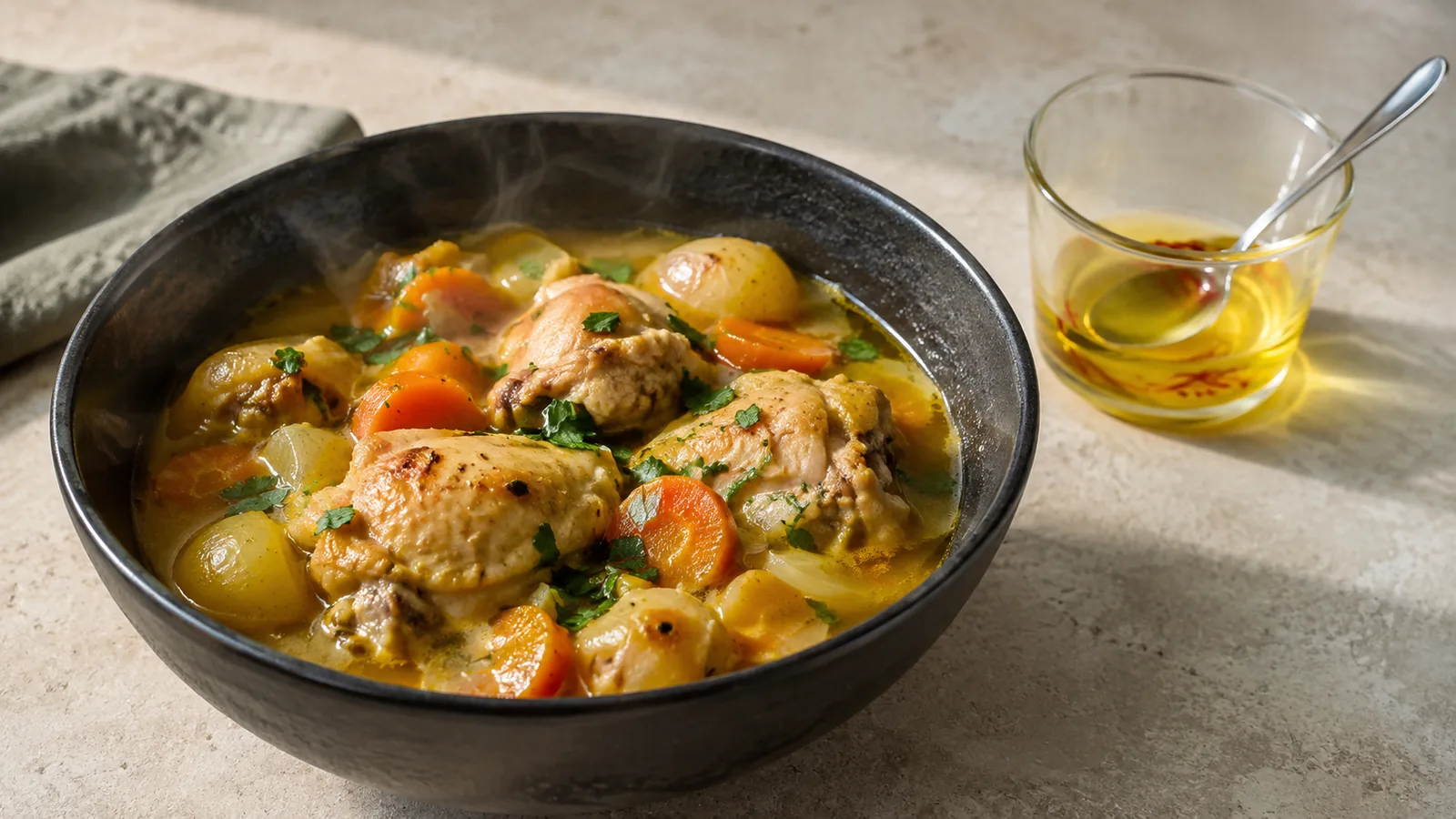
Saffron rice and chicken are usually prepared as separate components. Season chicken thighs or breasts with salt and pepper, brown them, and cook until the thickest part reaches 74°C (165°F). A spoonful of saffron infusion can be added to the pan near the end for color and aroma.
Arrange the chicken beside or over the rice rather than stirring it through the whole pot. This protects the grain texture and makes leftovers easier to portion. For a more elaborate meal, add sautéed onions, barberries, almonds, or pistachios just before serving.
Simple garnishes that work
- Barberries: rinse, drain, and warm for 30–60 seconds in a little butter. They scorch quickly.
- Raisins: use when barberries are unavailable or when a sweeter garnish suits the main dish.
- Almonds and pistachios: toast lightly, then scatter over the rice at the table.
- Dried fruit: use small pieces of apricot or orange peel rather than burying the rice under a heavy topping.
- Vegetables: roasted bell pepper or herbs can add color, though they change the dish from a classic saffron-rice presentation.
A heart-shaped mold or another decorative form can be fun for a celebration, but press gently. Packing hot rice tightly makes the grains clump and hides the texture you worked to create.
Why saffron rice sometimes goes wrong
The rice is sticky
It was probably boiled too long, stirred too often, or returned to the pot while very wet. Check the grains early and drain decisively. Rinsing well before cooking also removes loose surface starch.
The color is uneven
Use a concentrated infusion and drizzle it across several areas. Uneven color is attractive when the saffron rice is a garnish; it is only a problem when you want the whole pot uniformly golden.
The saffron aroma disappears
Old threads, prolonged high heat, or an uncovered infusion can all weaken the result. Keep the infusion covered and avoid boiling the finished saffron rice aggressively.
The rice tastes bitter
Measure the saffron and taste the finished dish before adding more. Bitterness can also come from burnt barberries, scorched butter, or an over-browned pot base.
What saffron rice does—and does not—promise
Saffron is used here for flavor, aroma, and color. The former article listed claims about cholesterol, heart disease, cancer, anemia, eye disease, depression, digestion, memory, and appetite as though eating this dish could treat or prevent them. A serving of saffron rice is food, not a treatment for those conditions.
Some saffron extracts have been studied in controlled trials, but those products and doses are not equivalent to the small culinary amount in a shared pot of rice. The recipe is worthwhile because it tastes good and makes a meal inviting; it does not need a medical promise attached to it.
Storing leftovers safely
Move leftover rice to shallow containers and refrigerate it within two hours. The USDA Food Safety and Inspection Service recommends using most refrigerated cooked leftovers within three to four days. Reheat only the portion you plan to eat until it is steaming hot throughout.
A dependable bowl of saffron rice
The best saffron rice is not complicated. Rinse the basmati well, stop the first cooking stage while the center is still firm, bloom the saffron separately, and let gentle steam finish the job. Use the infusion across the full pot when you want golden rice, or fold it into a smaller portion for a Persian-style garnish.
Serve it with a stew, grilled vegetables, chicken, kebabs, or the toppings you enjoy. The grains should remain separate, the saffron should be present without turning bitter, and the finished platter should look generous without feeling over-decorated.