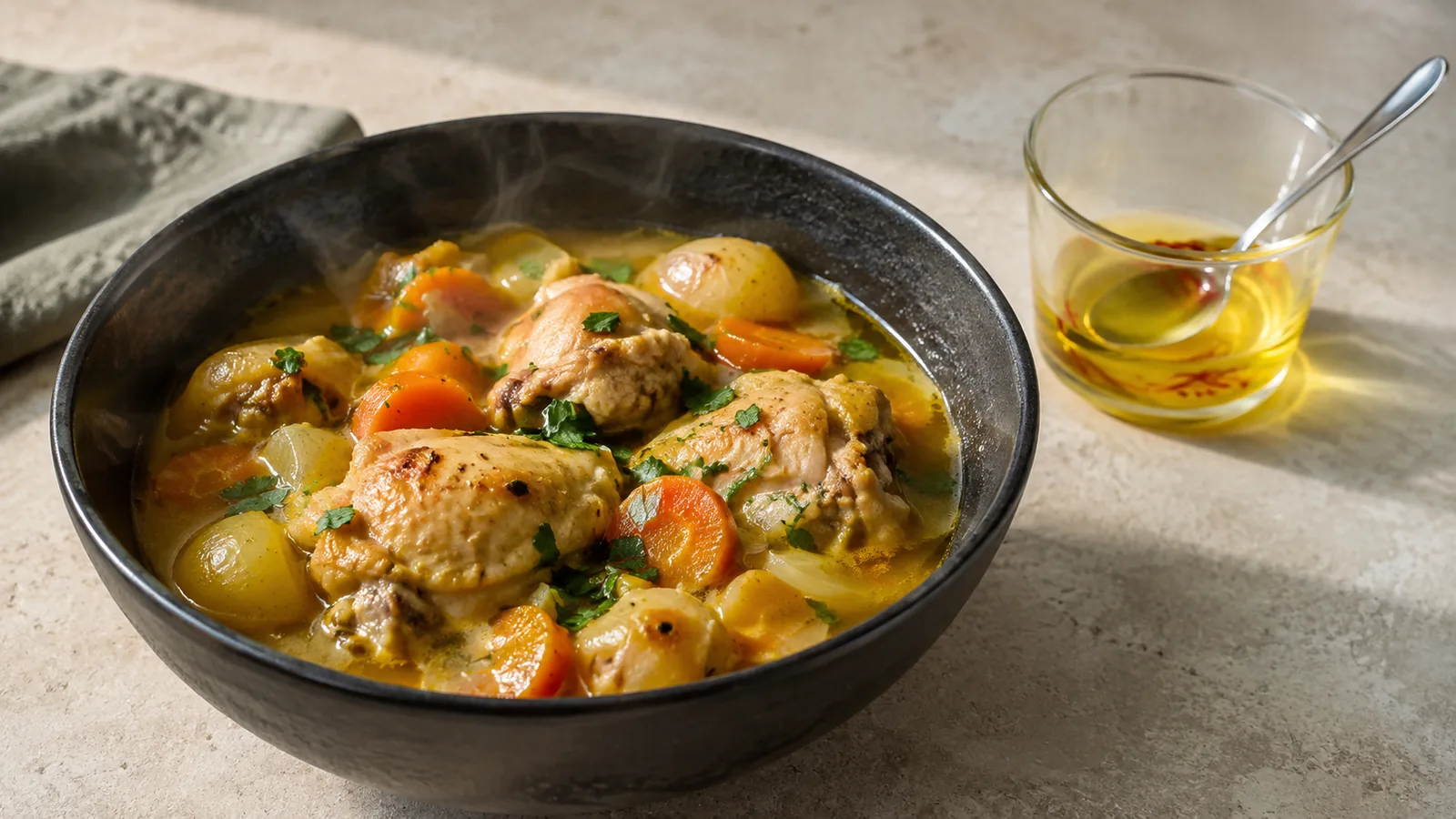
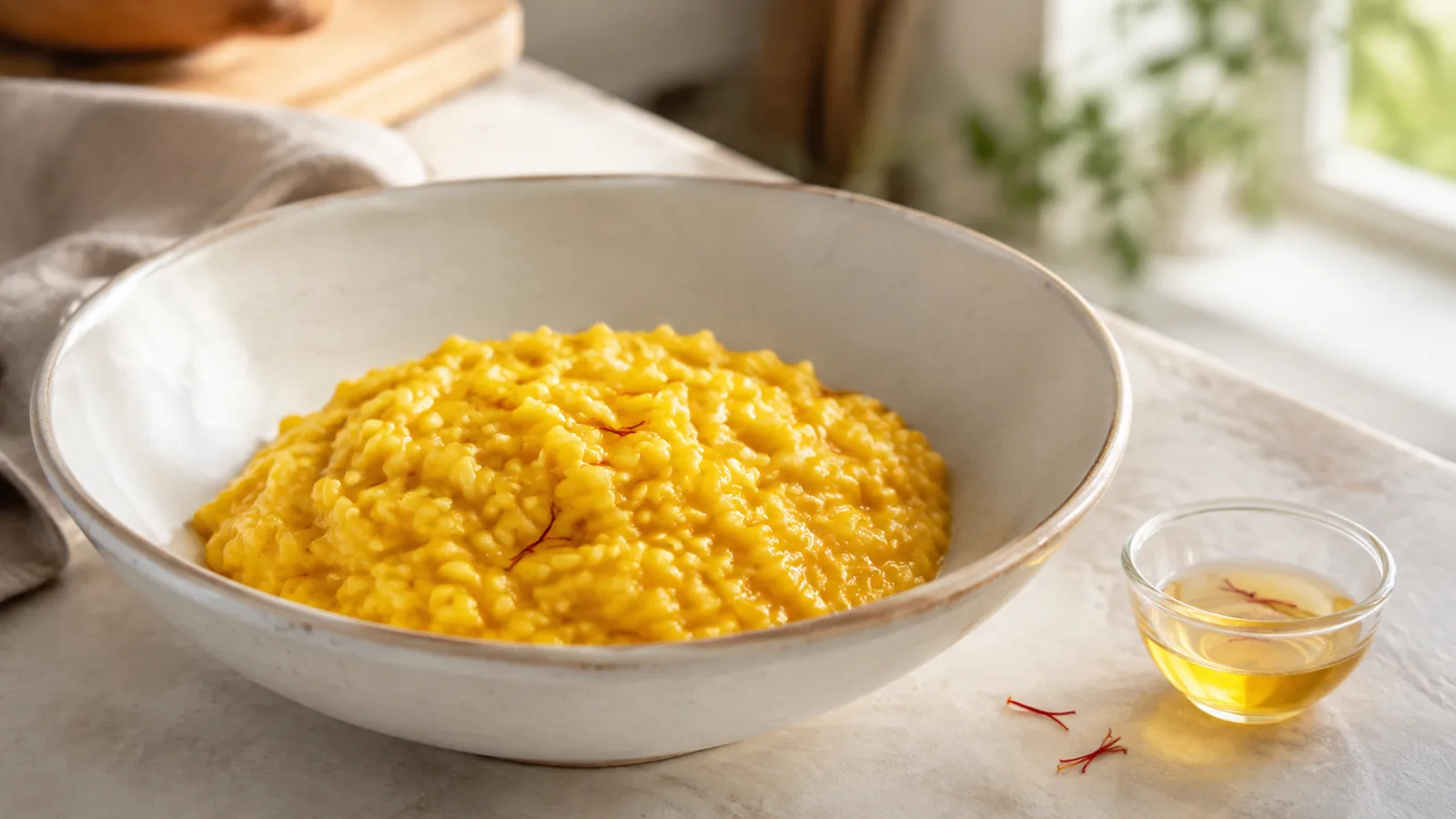
Three-flour saffron halva combines white flour, rice flour and chickpea flour in one smooth, aromatic dessert. The method is familiar if you have made traditional halva before, but the flours cannot all go into the pan at once: each browns at a different speed. Toasting them in stages gives the finished halva a warm colour and nutty flavour without scorching the chickpea flour.
What is three-flour halva?
This version uses equal weights of wheat, rice and chickpea flour. White flour builds the base, rice flour makes the texture more delicate, and chickpea flour adds a deeper roasted flavour. You may also see the dish described as halva three flours or find searches for “halva flour”; all refer to the same basic idea of combining the three flours before adding saffron syrup.
The original recipe makes a generous batch and prepares three cups each of water and sugar for the syrup. Flour absorbs liquid differently from one brand and batch to another, so treat that syrup as the available amount rather than a quantity that must all be poured in. Add it gradually and stop as soon as the halva reaches the right consistency.
Ingredients
- 125 g white all-purpose flour
- 125 g rice flour
- 125 g chickpea flour
- 3 cups granulated sugar
- 3 cups water
- Up to 200 g neutral liquid oil, added gradually
- 25 g butter
- ½ cup rose water
- 3 tablespoons strongly brewed saffron water
- Ground cardamom, optional
- Pistachio powder, almond flakes and desiccated coconut, for decoration
Use fine flours with a fresh smell and no signs of moisture. Sift each one separately before it reaches the pan. Flour is a raw food, so it should be cooked rather than tasted while raw; the US Food and Drug Administration’s flour-safety guidance explains why thorough cooking matters.
Prepare the saffron and rose-water syrup
- Combine the water and sugar in a saucepan. Stir over gentle heat until the sugar has dissolved.
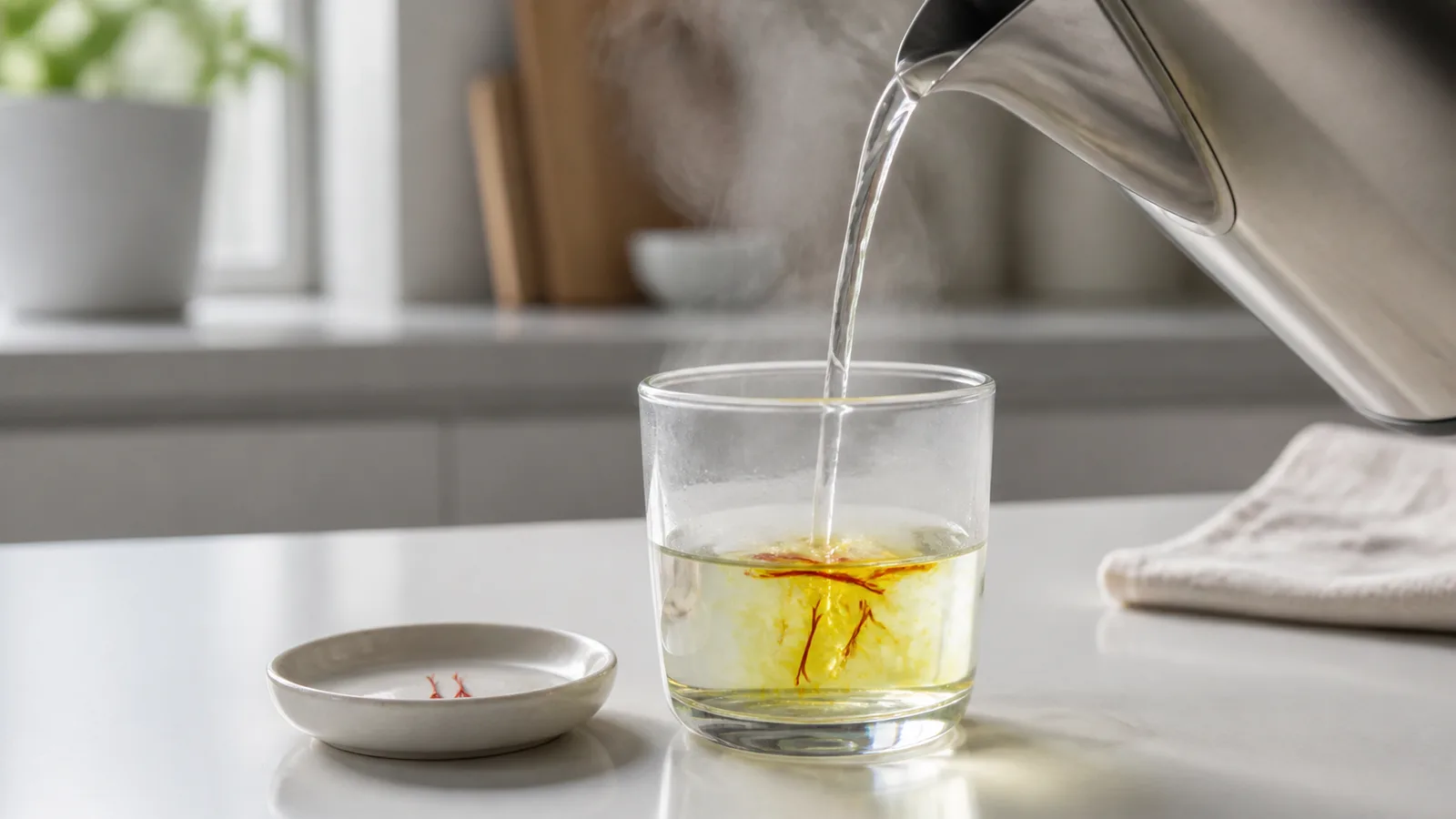
- Bring the mixture just to a boil. Add the rose water and brewed saffron, then simmer for one minute.
- Turn off the heat and keep the syrup warm. It should be fluid and lukewarm when it meets the flour mixture, not cold and not furiously boiling.
- If you enjoy cardamom, stir in a small pinch now. It should support the saffron rather than dominate it.
Toast the three flours in the right order
Choose a broad, heavy-based pan and keep the heat low. A wide surface makes steady stirring easier and gives you more control over the colour.
- Add the sifted white flour to the dry pan. Stir continuously for about 10 minutes, or until its raw smell disappears and it begins to colour lightly.
- Sift the rice flour into the pan and stir it through the white flour. Continue toasting until it smells cooked and takes on a little colour.
- Add the sifted chickpea flour last. It browns and burns faster than the other two, so stir closely and remove the pan from direct heat as soon as the raw aroma has gone. As a practical guide, the original method allows 10–15 minutes for the white and rice flours and 5–10 minutes for chickpea flour, but the pan and heat level matter more than the clock.
- For an especially smooth result, pass the warm toasted mixture through a sieve once more, then return it to the pan over low heat.
Add the oil and butter
Pour in the liquid oil a little at a time while stirring. The listed 200 g is an upper working amount; rice flour in particular can change how much fat the mixture accepts. Stop adding oil if the paste already looks smooth and glossy rather than loose or greasy.
Add the 25 g butter and continue stirring until the mixture is evenly golden to light brown. Work quickly enough to prevent hot spots. To preview the final colour, place a teaspoon-tip of the flour paste in a saucer and mix it with a little syrup. The moistened sample shows the colour more accurately than the dry mixture in the pan.
Combine the syrup and flour safely
- Lower the heat and add one ladle of lukewarm syrup. It can bubble and spit when it touches the hot flour and fat, so keep your face and hands clear of the pan.
- Stir until that addition is absorbed before adding the next. Continue in stages; you may not need all the syrup.
- Stop adding syrup when the mixture comes together as a soft paste. Keep stirring over low heat until it pulls away from the sides of the pan and falls slowly from the spatula.
- Do not keep cooking after it becomes cohesive. Excess heat makes halva dry and hard as it cools.
The traditional cradling finish
Remove the pan from the heat. Holding both handles firmly with oven gloves, move it from side to side so the warm halva rolls and folds against the curved sides. This “cradling” motion smooths the paste and helps it gather into one glossy mass. Use a sturdy pan and keep the movement controlled; if the pan is too full or heavy, finish with a spatula instead.
How to fix the texture
- Too loose: return it to low heat and stir until excess moisture evaporates.
- Too dry or crumbly: work in a spoonful of reserved warm syrup, then reassess before adding more.
- Greasy: continue stirring gently so the flour can take up the fat. Next time, stop short of the full oil amount.
- Raw flour aroma: the flours were not toasted long enough. Do not cover the taste with more saffron; extend the low, steady cooking before adding syrup.
- Bitter or very dark: chickpea flour or saffron has scorched. A burnt batch cannot be repaired reliably.
Shape, decorate and serve
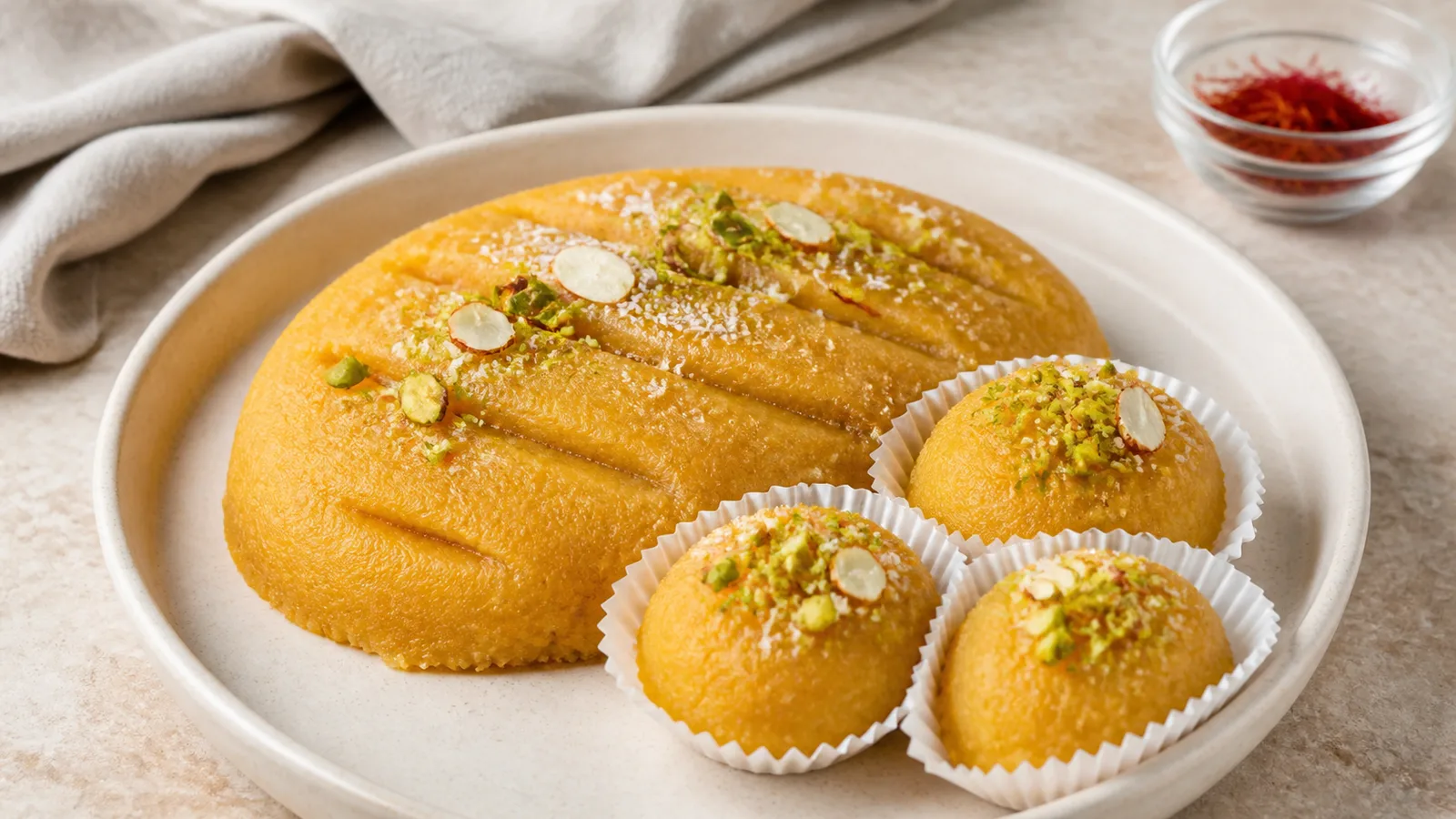
Spoon the warm halva into a shallow serving plate and smooth it with the back of a spoon. Make simple ridges or individual portions, then decorate with pistachio powder, sliced almonds and coconut. Small halva tart shells or paper sweet cups are useful when you want tidy portions that guests can pick up easily.
Let it cool until set before covering. Store it in a closed container in a cool place for short-term serving, or refrigerate it if your kitchen is warm. Bring chilled halva closer to room temperature before eating so the butter softens and the saffron and rose-water aromas are easier to notice.
If you would like to compare this three-flour technique with another regional version, see our local saffron halva recipe. The flour blend changes, but the same principles remain useful: toast patiently, control the syrup, and judge the finished texture in the pan.