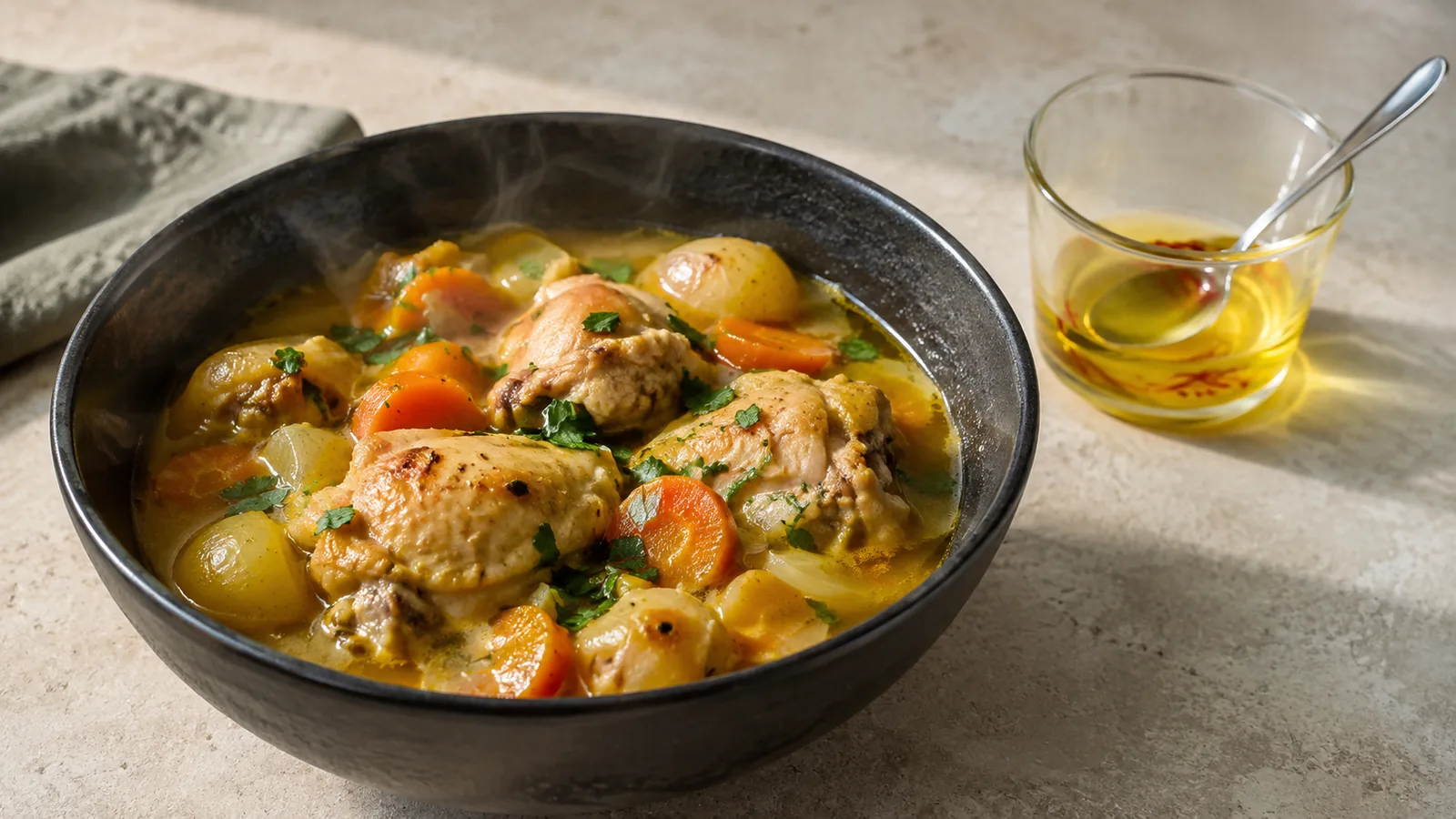
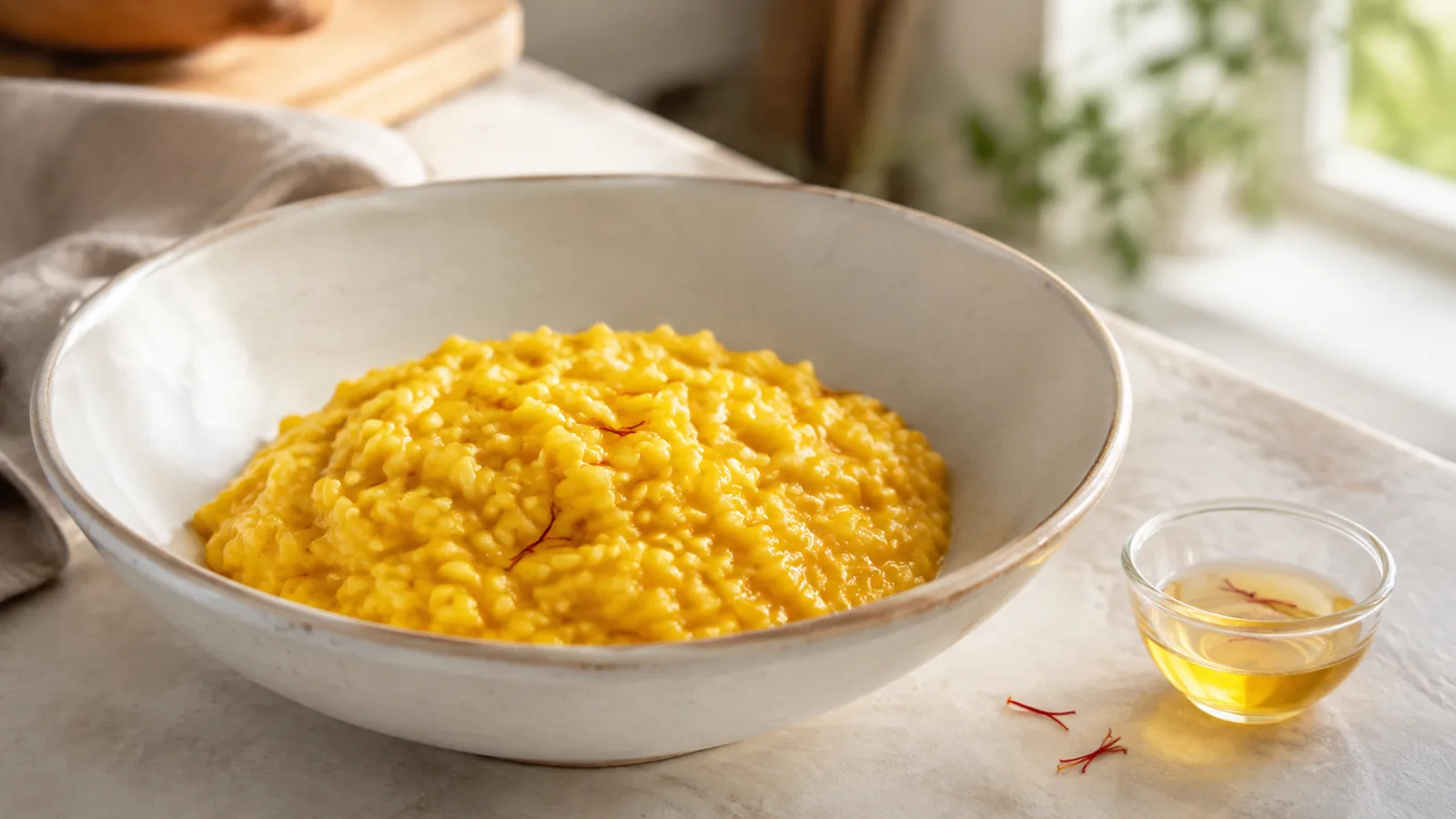
This honey halva with saffron is made from wheat flour, rice flour, butter, rosewater and cardamom. Honey provides the sweetness, while the two flours create a soft texture that still holds spooned or moulded shapes.
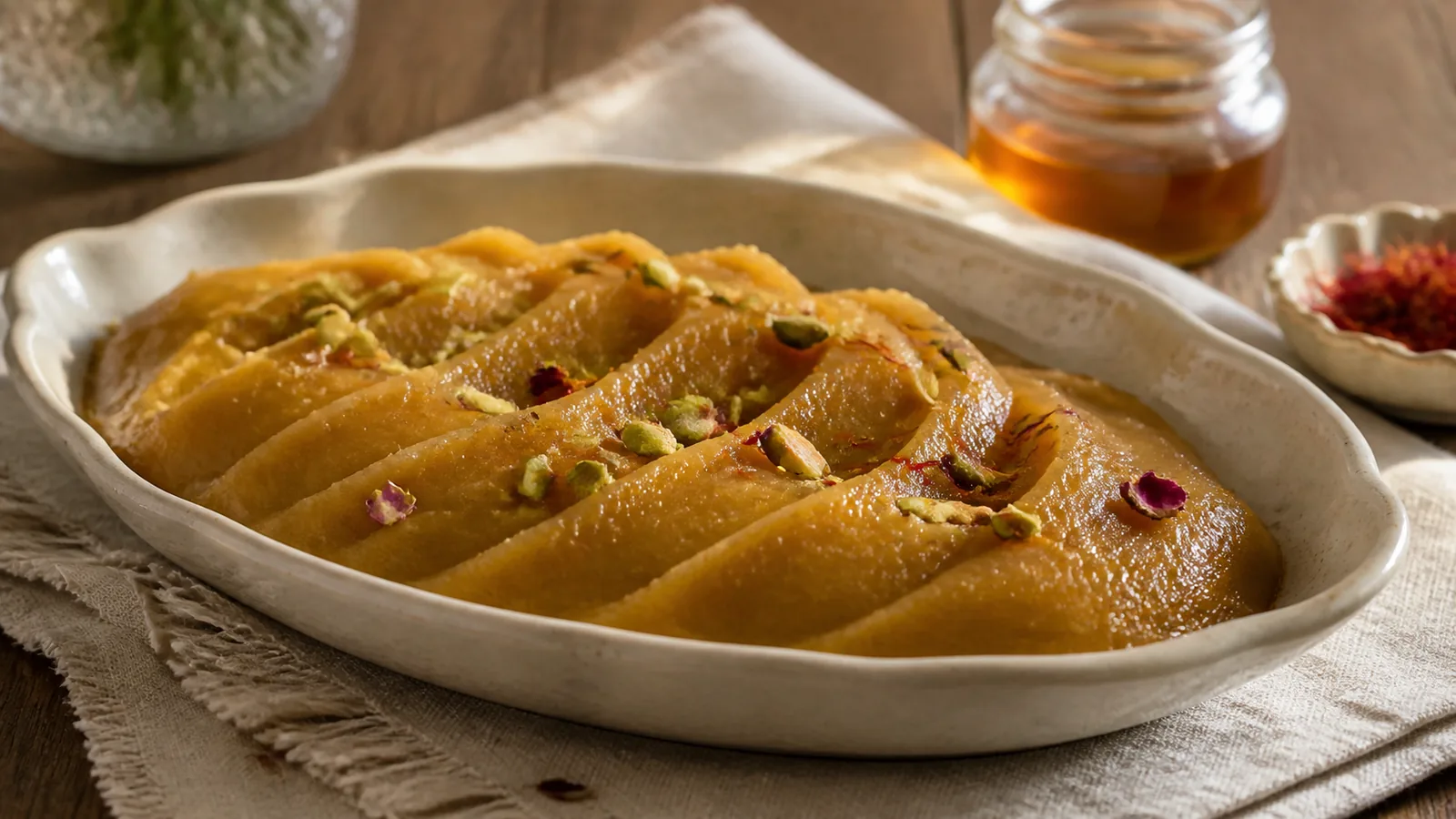
Honey changes the flavour, but it does not turn halva into a low-sugar food. This is still a rich dessert, so the useful reason to choose honey is its taste rather than a promise that it makes the recipe healthier.
What is honey halva?
In this recipe, honey halva means an Iranian-style flour halva sweetened with honey instead of granulated sugar. It is not the firm sesame-and-tahini confection also sold under the name halva.
The most natural English names are honey halva and halva with honey. Search results also use “halva honey,” “halva honey recipe,” “halva recipe honey,” “halva recipe with honey,” “halva with honey recipe,” “halvah recipe with honey,” “honey halva recipe” and “recipe for halva with honey.” Here, all of those wordings refer to the same flour-based dessert.
Honey halva ingredients
- 400 g wheat flour
- 100 g rice flour
- 500 g honey
- 500 ml water
- 200 g butter
- 50 g neutral oil
- 1/2 cup rosewater
- 1 teaspoon ground cardamom
- 1 teaspoon prepared saffron infusion
This makes a large, sweet batch suitable for sharing. If you reduce it, scale every ingredient by the same proportion rather than changing only the honey or flour.
Prepare the honey and saffron liquid
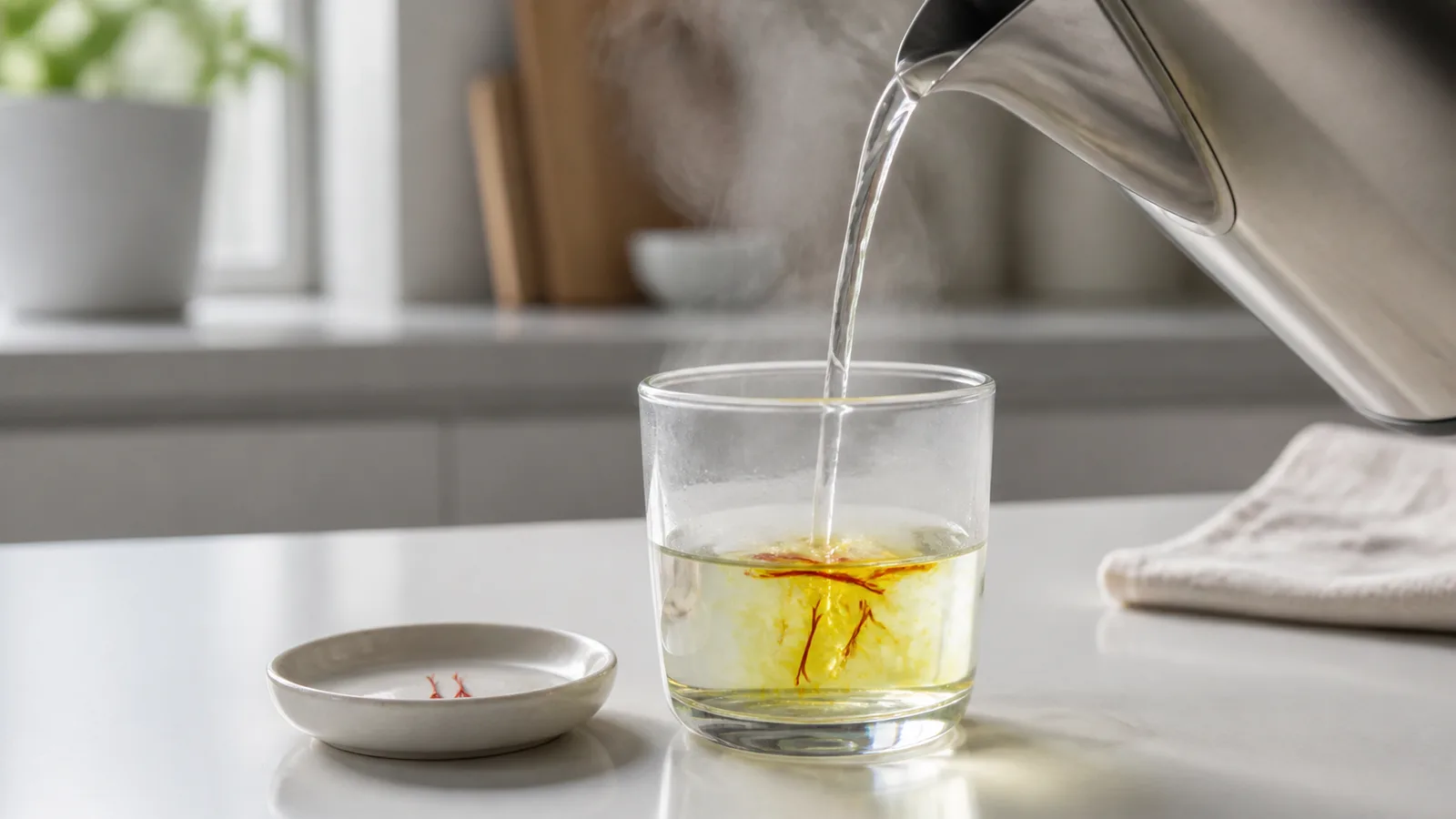
Put the water and cardamom in a saucepan and bring them to a brief simmer. Remove the pan from the heat, then stir in the rosewater and saffron infusion.
Let the liquid cool for a few minutes before whisking in the honey. It should be warm and fluid when added to the flour, but it does not need prolonged boiling.
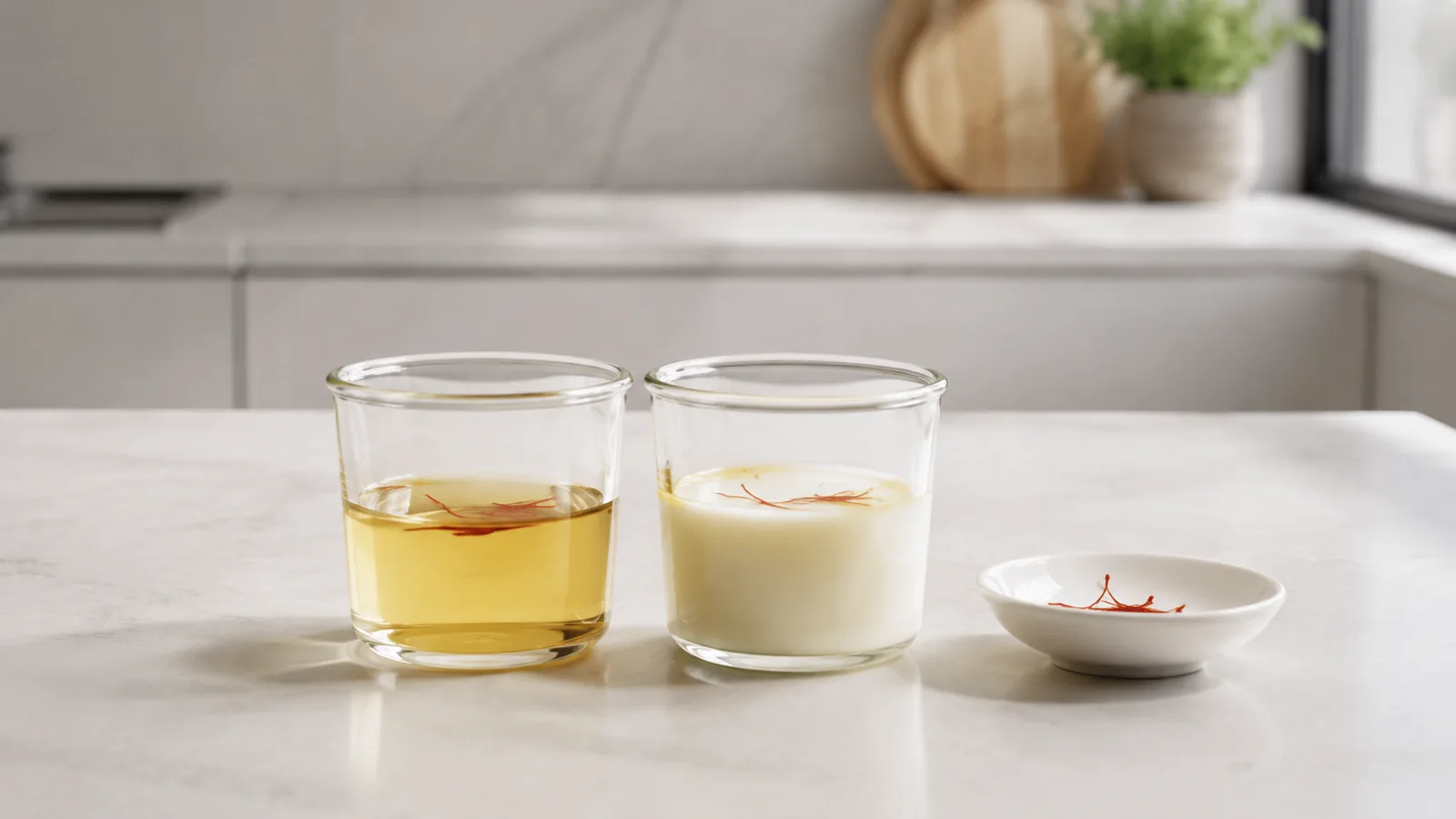
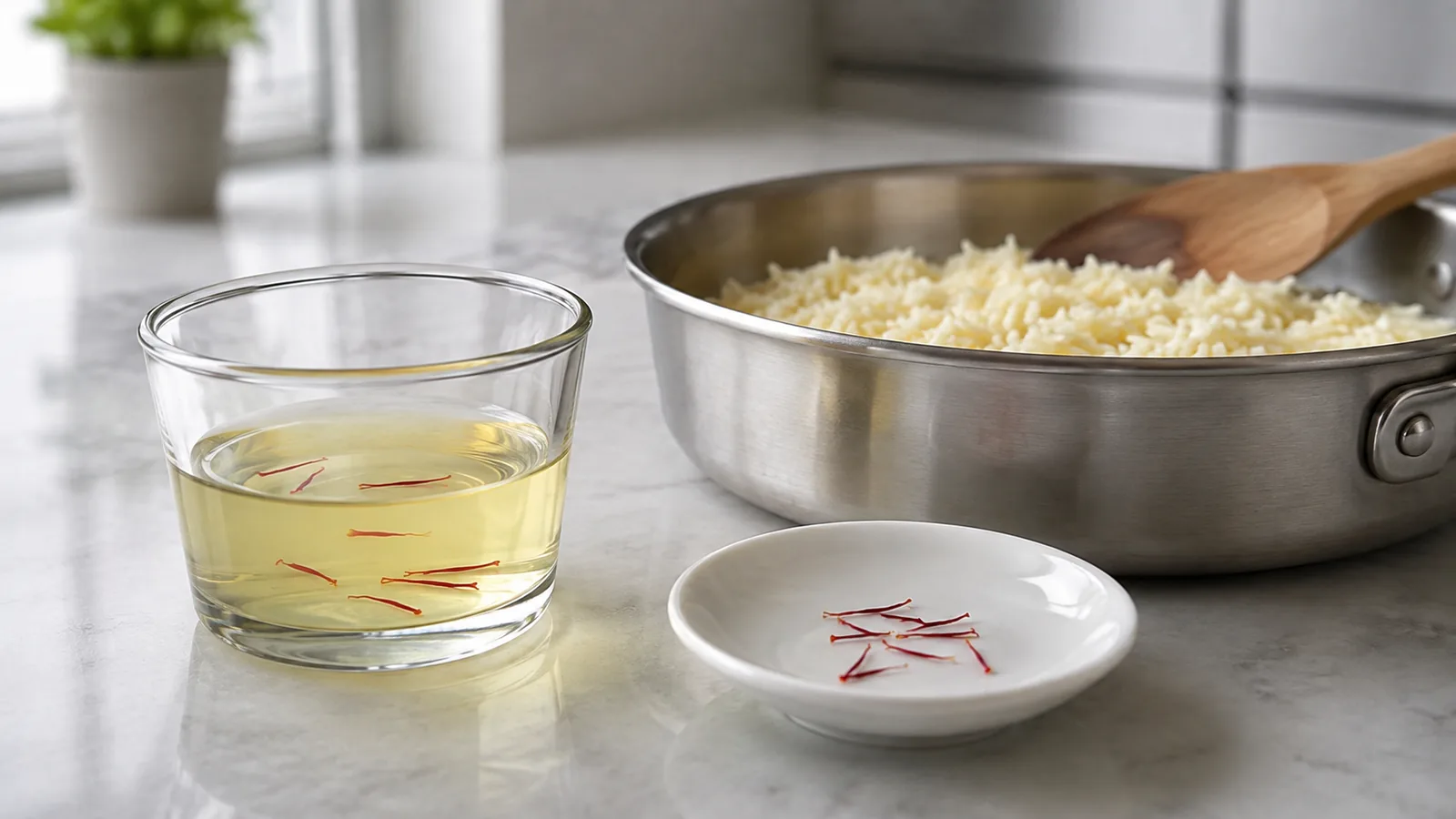
For a strong colour from a small amount of spice, prepare the infusion with our saffron brewing guide.
Toast the wheat flour
Melt the butter with the neutral oil in a wide, heavy pan over low heat. The oil helps moderate the butter, but the heat still needs to stay gentle.
Sift in the wheat flour. Cook, stirring continuously, until the raw flour smell disappears and the colour changes evenly.
For a pale honey halva, stop at a warm golden colour. For a deeper, nuttier result, continue a little longer. Do not rely on colour alone: dark specks or a sharp smell mean the flour is beginning to burn.
Add the rice flour
Sift the rice flour into the toasted wheat-flour mixture. Cook for only 1 to 2 minutes, stirring constantly. Rice flour colours quickly and can scorch before the wheat flour does.
Press out any remaining lumps with the back of the spoon. The paste should be smooth before liquid is added.
How to make halva with honey
Take the flour mixture off the heat. Add the warm honey liquid in two or three stages, stirring thoroughly after each addition. The pan may bubble and spit at first, so use a long-handled spoon.
Return the pan to very low heat. Fold the mixture until it gathers into one mass and comes away from the sides. It should be soft and glossy, not dry.
Flours absorb liquid differently. If the halva reaches a smooth, shape-holding consistency before all the liquid is used, stop adding it. If it becomes too firm, work in a spoonful of the warm liquid.
Finish the texture
Once the halva has gathered, hold the pan securely and rock it from side to side so the warm mixture rolls over itself. This traditional finishing motion helps draw separated butter back into the halva and smooth the surface.
If the pan is too heavy to move safely, fold the halva firmly with a spatula for a minute or two instead.
Serve and decorate
Spoon the honey halva into a shallow dish while it is warm. Shape ridges with a spoon or let it cool slightly before piping or moulding.
Chopped pistachios, almonds, a few dried rose petals or saffron threads are enough for decoration. The honey already brings a distinct flavour, so keep additional spices restrained.
Common problems
- Raw flour taste: toast the wheat flour longer before adding the rice flour.
- Bitter flavour: the pan was too hot or the flours browned unevenly.
- Oily halva: keep folding or rocking it while warm so the fat is absorbed.
- Dry texture: add a spoonful of reserved warm honey liquid and fold gently.
- Loose texture: cook over low heat for another minute, stirring constantly.
Serving during Ramadan
Honey halva can be served at iftar or suhoor, as the original recipe suggested, but it is a dessert rather than a nutritional treatment for fasting. Offer modest portions alongside a balanced meal and plenty of water.
Storage
Cover the cooled halva and keep it in the refrigerator for up to 4 days. Let it return toward room temperature before serving so the butter softens and the saffron, rosewater and cardamom aromas open again.