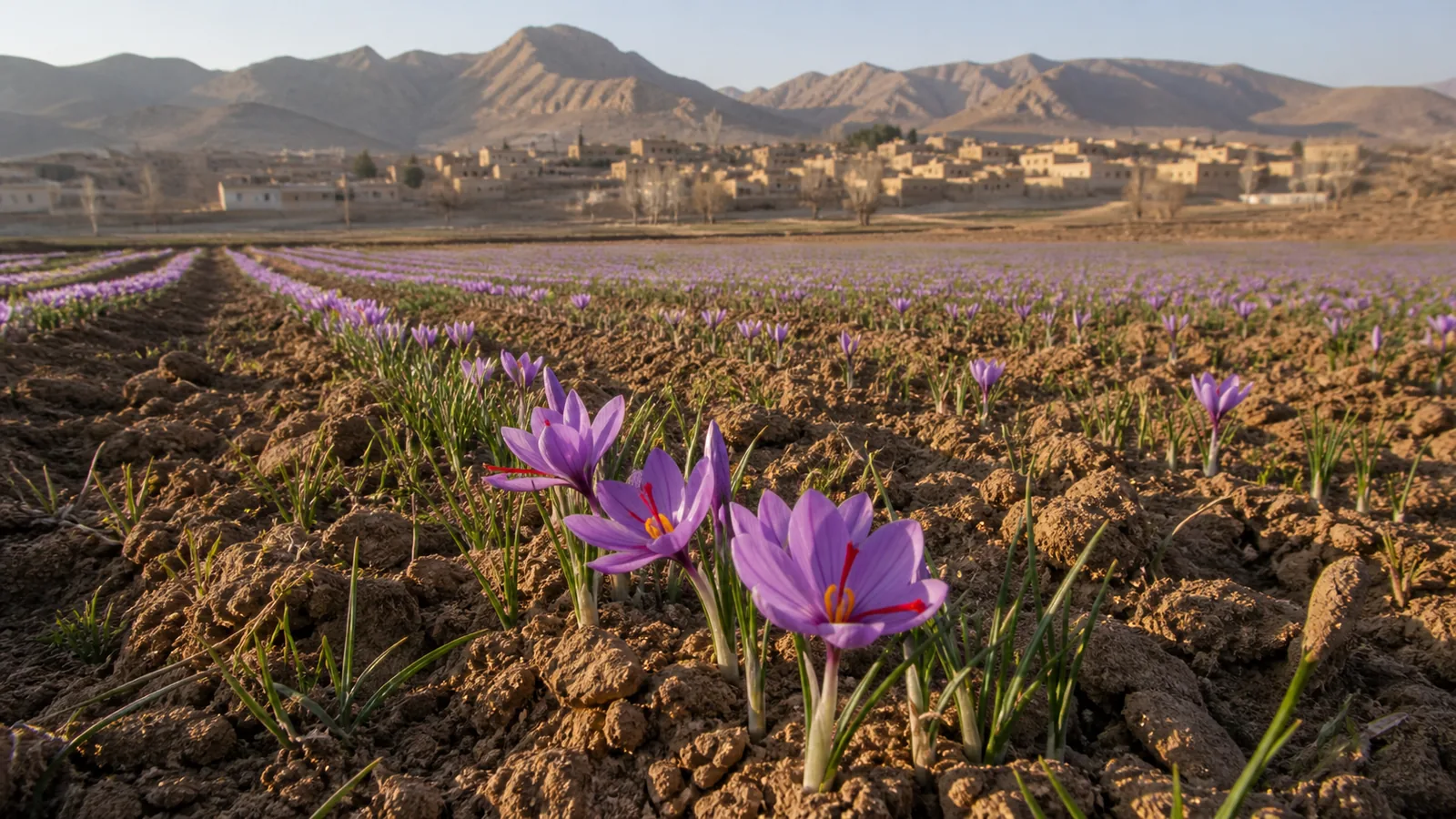
Saffron cultivation in the TorqRud area of Natanz city had a history of about 60 years when local cultural-heritage officials described it in 2020. The crop was becoming part of both the local agricultural economy and efforts to introduce TorqRud’s historic attractions to visitors.
This is a dated account. Its harvest estimate and festival details belong to the season reported in 2020 and are not current production figures.
Six decades of saffron cultivation in TorqRud
Hossein Yazdanmehr, then head of the Natanz Cultural Heritage Office, said saffron had been cultivated in TorqRud for around 60 years. He described TorqRud as part of the central district of Natanz in Isfahan province.
The account placed saffron within a longer local landscape rather than presenting it as a newly introduced crop. Farmers had accumulated practical experience, while the town was beginning to use the harvest as part of its public identity.
The TorqRud saffron festival
In the season covered by the report, TorqRud held its popular saffron festival for the second consecutive year. The event was planned with a tourism focus as well as an agricultural one.
Stalls introduced the area and offered local farm products, especially saffron. That gave growers a place to present the crop directly while giving visitors another reason to learn about the town.
Historic places named in the report
Yazdanmehr referred to TorqRud Castle, the TorqRud Grand Mosque and Sarv Mosque among the area’s historic sites. He argued that a saffron festival could draw attention to those attractions as well as to the harvest.
The connection was practical: a visitor arriving for a seasonal event could also spend time in the town and discover its built heritage. The crop and the historic setting therefore supported the same local-tourism story without being treated as the same thing.
Why saffron suited the Natanz area
The official said Natanz contained three different climatic zones and that saffron had performed well in the relevant growing areas. Farmers’ interest in planting the crop was also increasing.
The report did not provide a field-by-field agronomic study, so this should be read as a local official’s assessment rather than a universal recommendation. Soil, water, elevation and winter conditions still have to be considered before choosing a saffron site.
The 1,600-kilogram harvest estimate
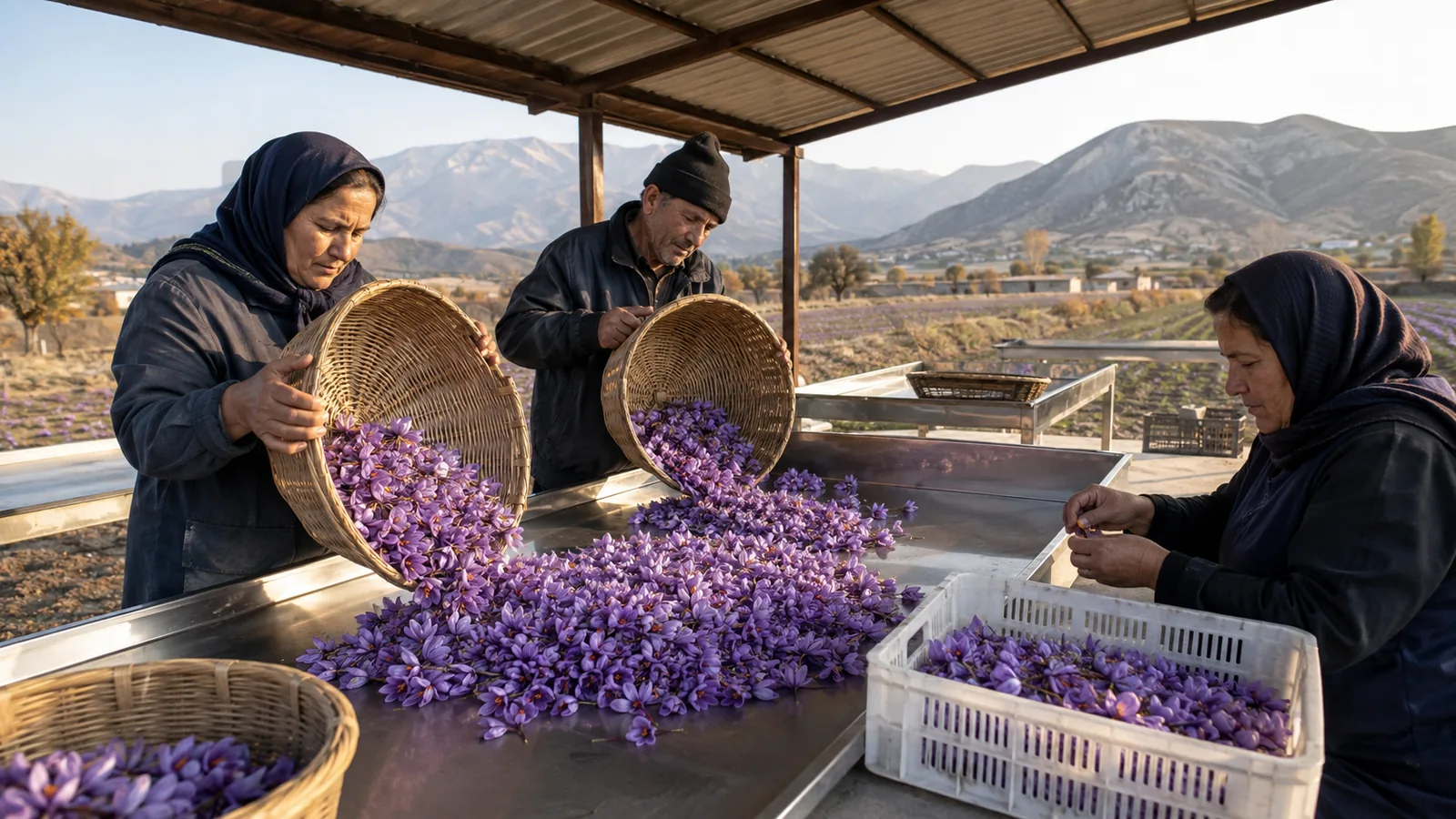
For that season, the report forecast more than 1,600 kilograms of dried saffron from Natanz, with most of it expected to come from TorqRud. This was a forecast, not a final audited harvest total.
Keeping the date attached to the figure avoids a common problem with old agricultural news: an estimate from one season can otherwise be mistaken for current annual production.
TorqRud’s place in Isfahan saffron production
Yazdanmehr described Natanz as an important saffron-production hub within Isfahan province and said the crop was creating local employment. The article did not quantify the number or duration of those jobs, so it would be unsafe to turn the statement into a specific employment claim.
The more durable point is that saffron linked several local activities. It involved cultivation and harvest work, gave farmers a product to sell, and provided a seasonal theme for promoting TorqRud’s history and landscape.
How to read the 2020 report today
The story records a particular stage in TorqRud’s development: roughly six decades of saffron experience, a second annual festival, a forecast above 1.6 tonnes and an effort to connect agriculture with cultural tourism.
Current planting, travel or trade decisions need newer local information. The historical value of the report is that it documents how saffron had already become part of TorqRud’s agricultural and civic identity by 2020.

![Exporting Saffron to Turkey + Price Guide [Complete 0 to 100]](https://img.rowhanisaffron.com/20260827003933/saffron-export-turkey-quality-inspection.webp)