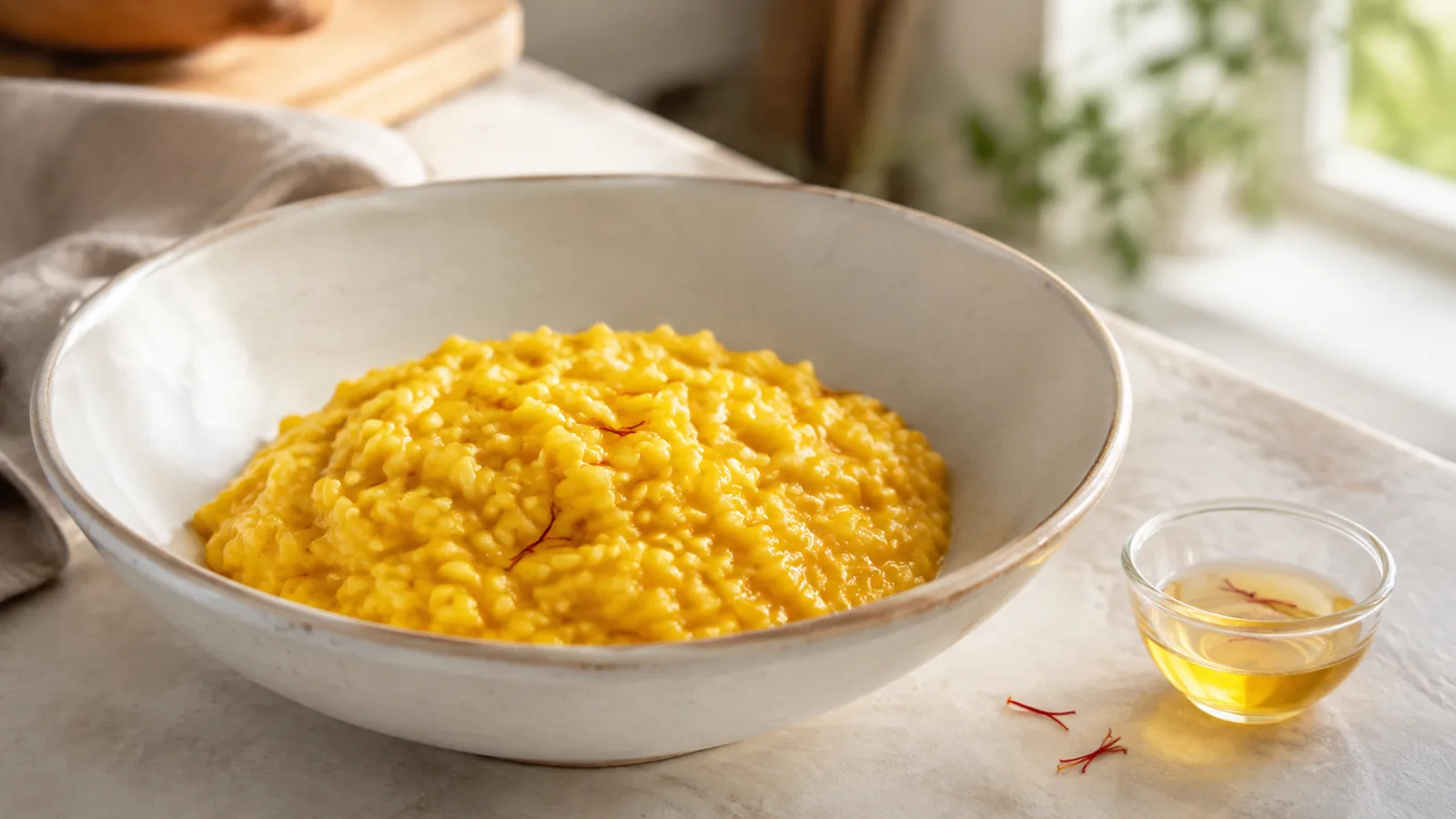
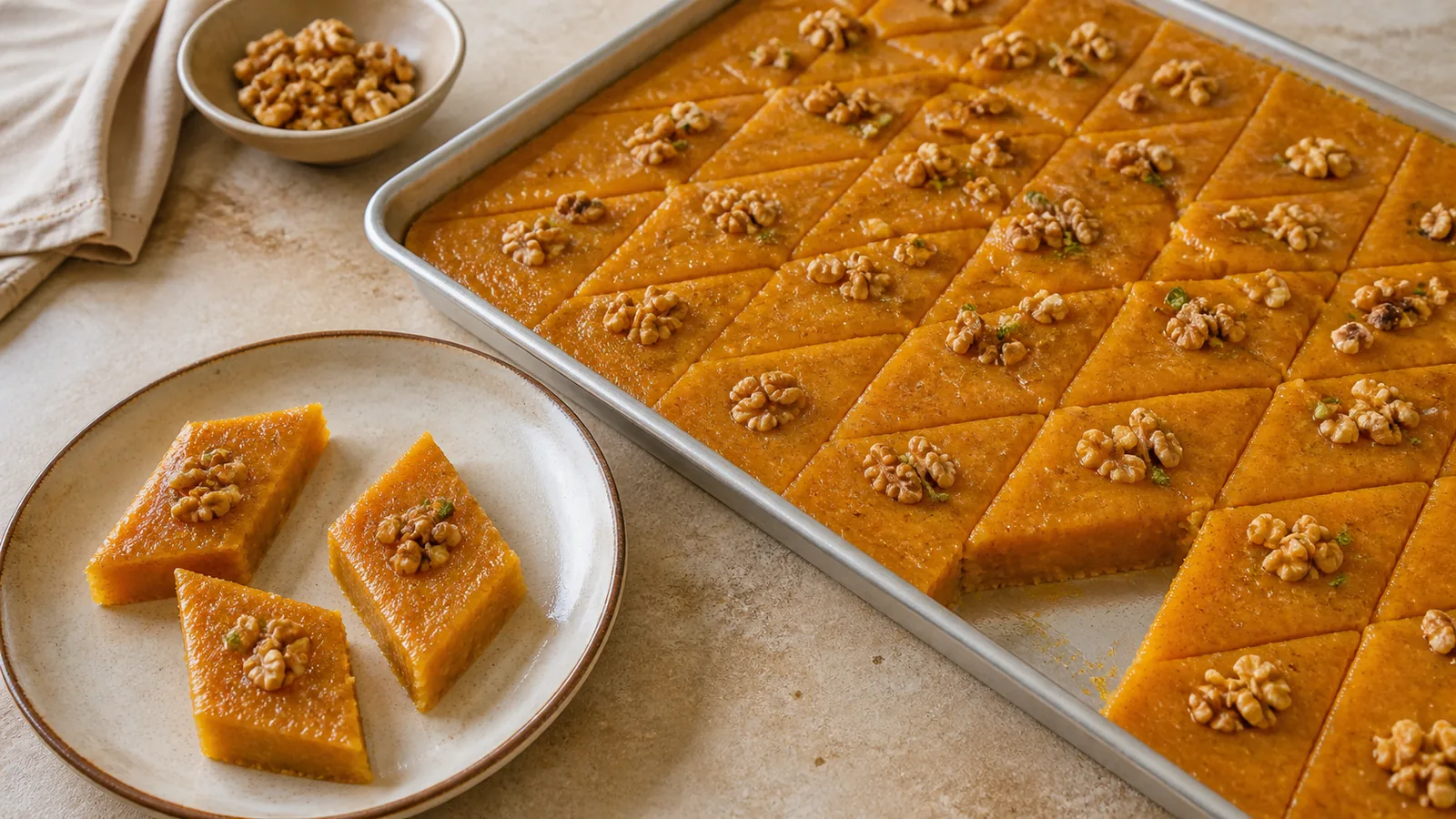
This Local Halva Saffron Recipe is a large-batch rice-flour halva enriched with butter, rosewater, saffron, walnuts, cinnamon and green cumin. It is spread in a tray while warm, left to set and cut into small pieces for serving with tea.
Ingredients
- 1 kg rice flour
- 800 g sugar
- 1/2 cup cardamom water
- 1 cup rosewater
- 1 cup diluted saffron infusion
- Neutral oil, as needed for roasting; start with 1 1/2 cups
- 200 g butter
- 100 g walnuts, chopped
- Ground cinnamon, for finishing
- Ground green cumin, for finishing
The old ingredient translated as “sweat” appears to mean an aromatic distillate; cardamom water fits the method’s later reference to cardamom. If yours is strongly concentrated, dilute it and taste before using the full half-cup.
This quantity fills a large tray. For a home-size batch, halve every ingredient and use a broad pan so the flour roasts evenly.
Prepare the saffron syrup
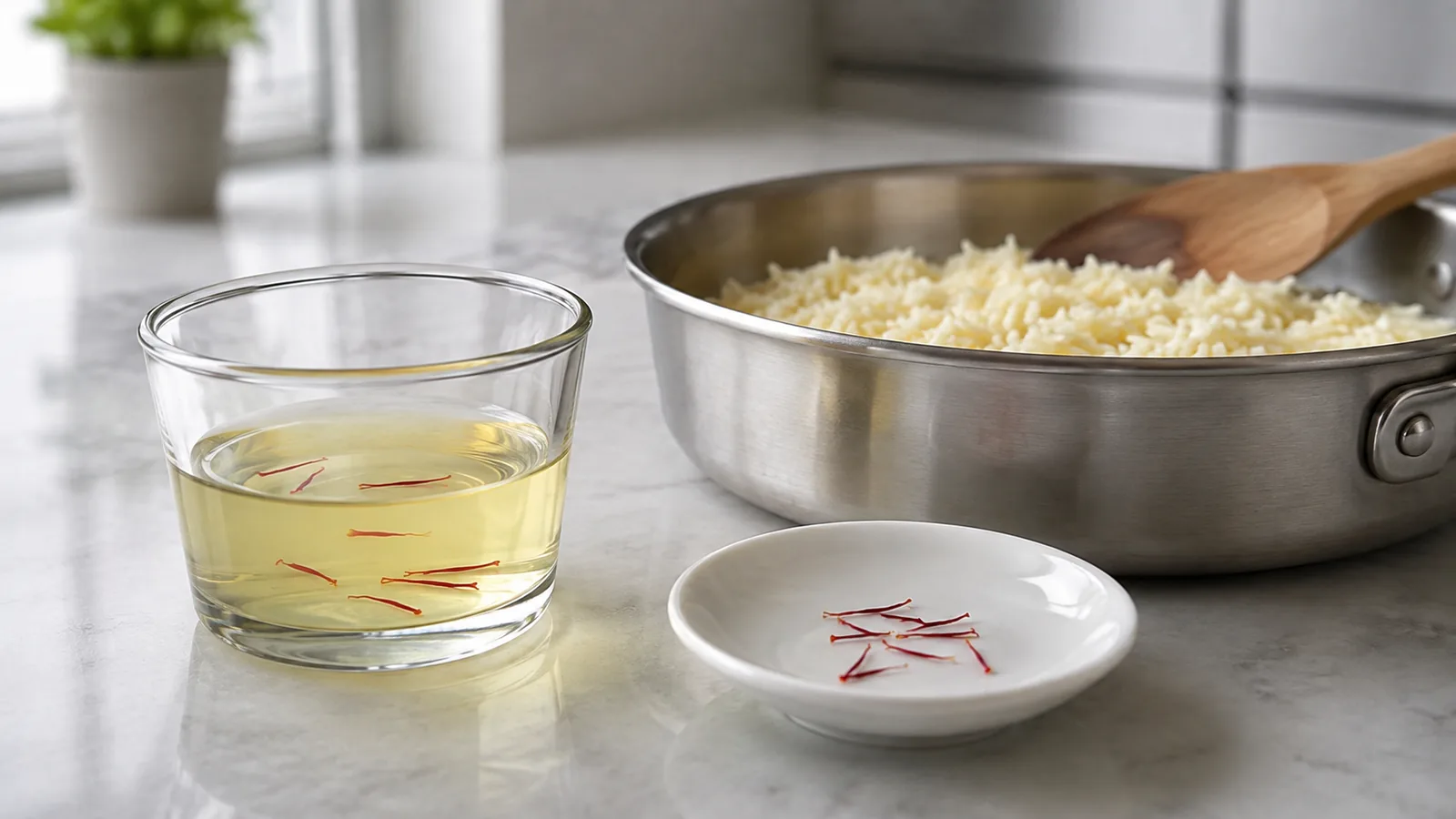
Put the sugar, cardamom water, rosewater and diluted saffron infusion in a saucepan. Warm over medium-low heat, stirring, until the sugar dissolves.
Do not boil the syrup down. The rice flour needs the liquid, and a reduced syrup can make the halva grainy and dry. Keep it warm while the flour roasts.
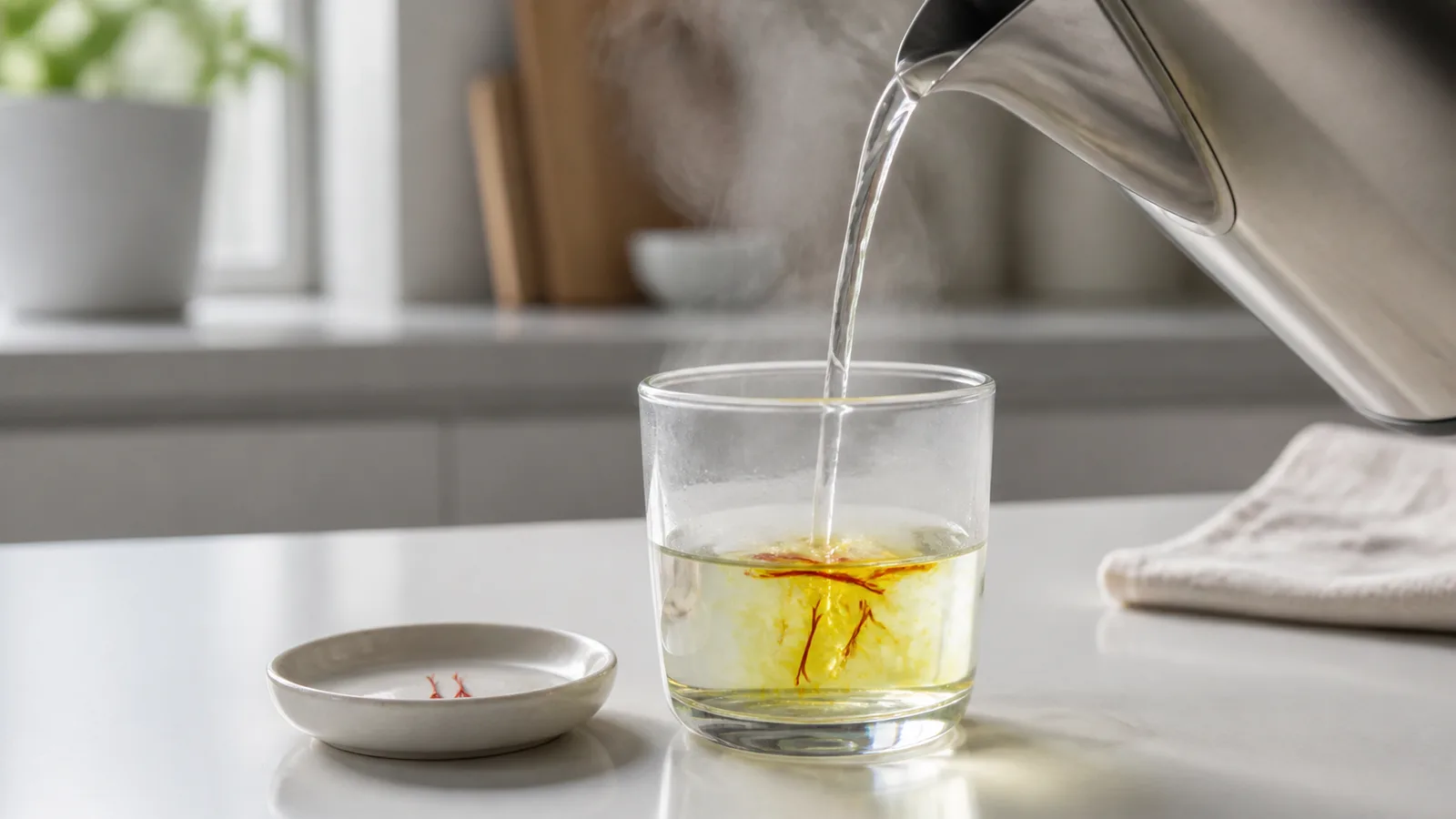
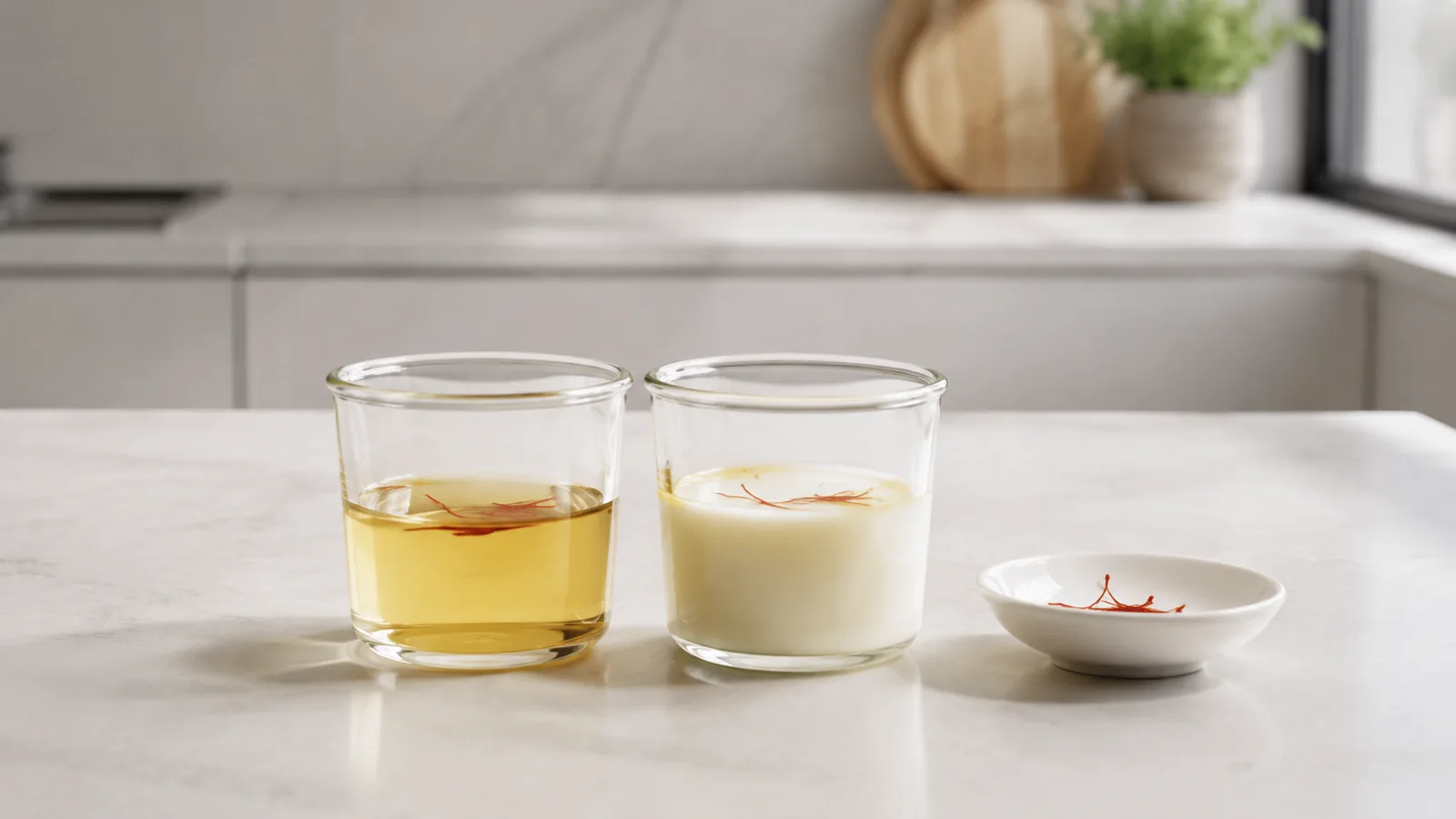
If you are starting from dry saffron, our guide to brewing saffron explains how to prepare an even infusion.
Roast the rice flour
Pour 1 1/2 cups oil into a large, heavy non-stick pan. Add the rice flour and stir before setting the pan over medium-low heat.
Roast slowly, scraping the base and corners without stopping. The mixture should move as a thick, smooth paste. If dry flour remains after several minutes, add more oil 1 tablespoon at a time.
Continue until the raw aroma disappears and the flour turns pale gold. Rice flour can move from toasted to bitter quickly, so lower the heat as soon as the colour begins to change.
Add the butter and syrup
Add the butter to the hot flour and stir until it melts completely. Take the pan off the heat and let it stand for 1 minute.
Pour in the warm syrup in several additions. Keep your hands and face back because the mixture releases strong steam. Stir each portion smooth before adding the next.
Return the pan to low heat and fold continuously until the halva is homogeneous, glossy and begins to pull away from the sides.
Judge when the halva is ready
Draw the spoon across the base. The track should remain open, and a lifted spoonful should settle slowly rather than run. Stop at that point; long cooking after the syrup is absorbed makes rice-flour halva dry and crumbly.
If the pan looks dry before the mixture comes together, add 1 tablespoon warm oil. If oil pools on top, keep folding over the lowest heat rather than adding flour.
Spread and decorate
Lightly oil a large tray. Transfer the warm halva and spread it in an even layer about 2 cm deep with the back of an oiled spoon.
Scatter over the chopped walnuts. Add cinnamon and green cumin sparingly; cumin is assertive, so a light pinch gives aroma without covering the saffron and rosewater.
Cool and cut
Leave the tray at room temperature until the halva is fully cool and firm enough to hold a cut. Mark small diamonds or squares with an oiled knife, then cut through cleanly.
Wipe and oil the blade as needed. Cutting while hot drags the surface; waiting until refrigerator-cold can make the edges crack.
Seasonal fat choices
The original notes suggest changing between liquid and solid oil according to the season. A neutral liquid oil gives the most predictable texture in any kitchen. If you use solid cooking fat, melt it first and add it gradually because it firms more as the halva cools.
Common problems
- Halva tastes bitter: the rice flour roasted too dark or the cumin was too generous.
- Texture is dry: shorten the cooking after adding syrup and correct with a little warm oil.
- Sugar feels grainy: dissolve it fully without reducing the syrup.
- Halva will not set: return it to low heat and fold until a spoon track remains visible.
Storage
Keep the cut halva in a covered container for up to 3 days at room temperature in a cool kitchen, or refrigerate for up to 5 days. Bring chilled pieces toward room temperature before serving. This recipe contains walnuts and dairy.