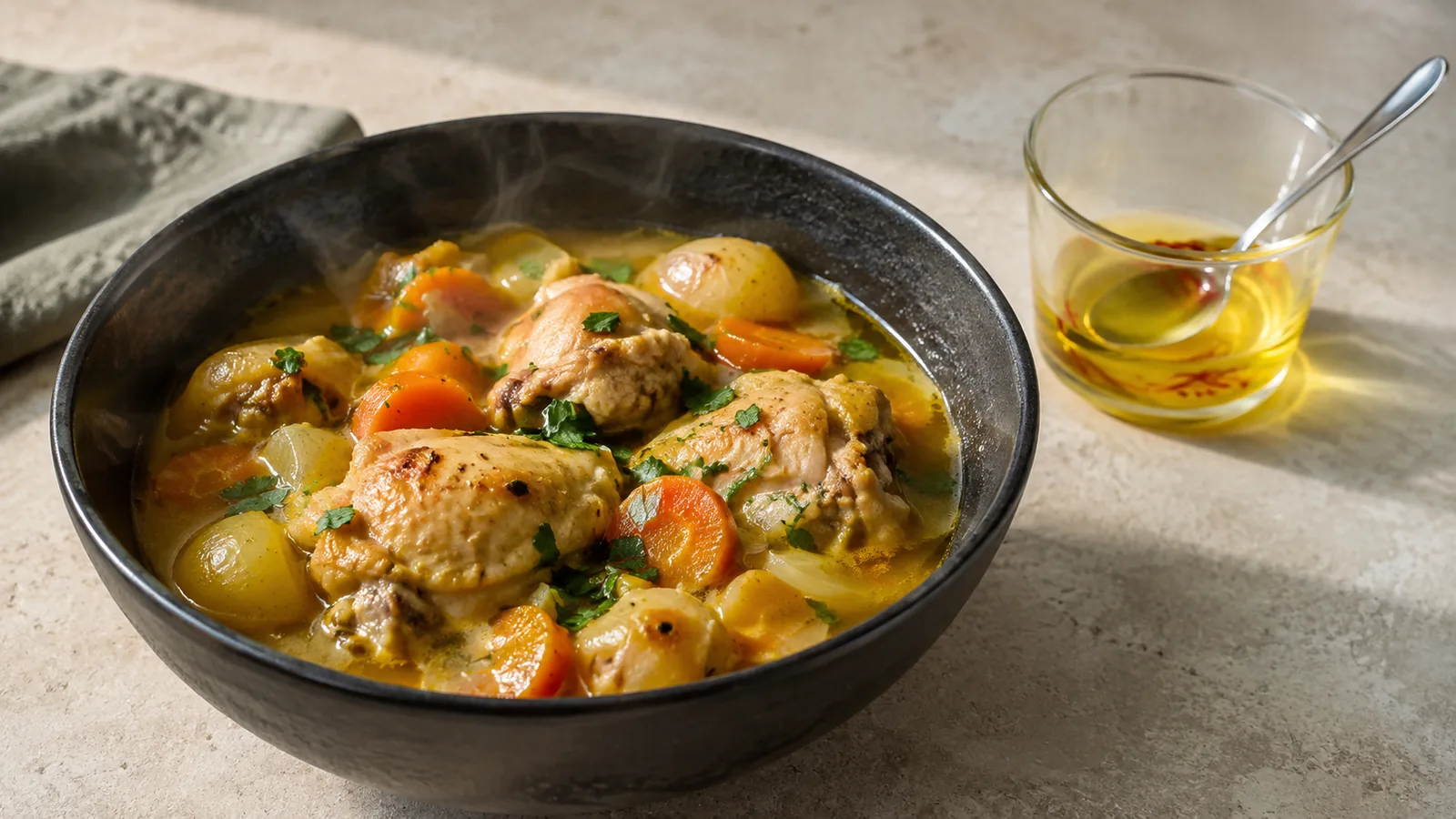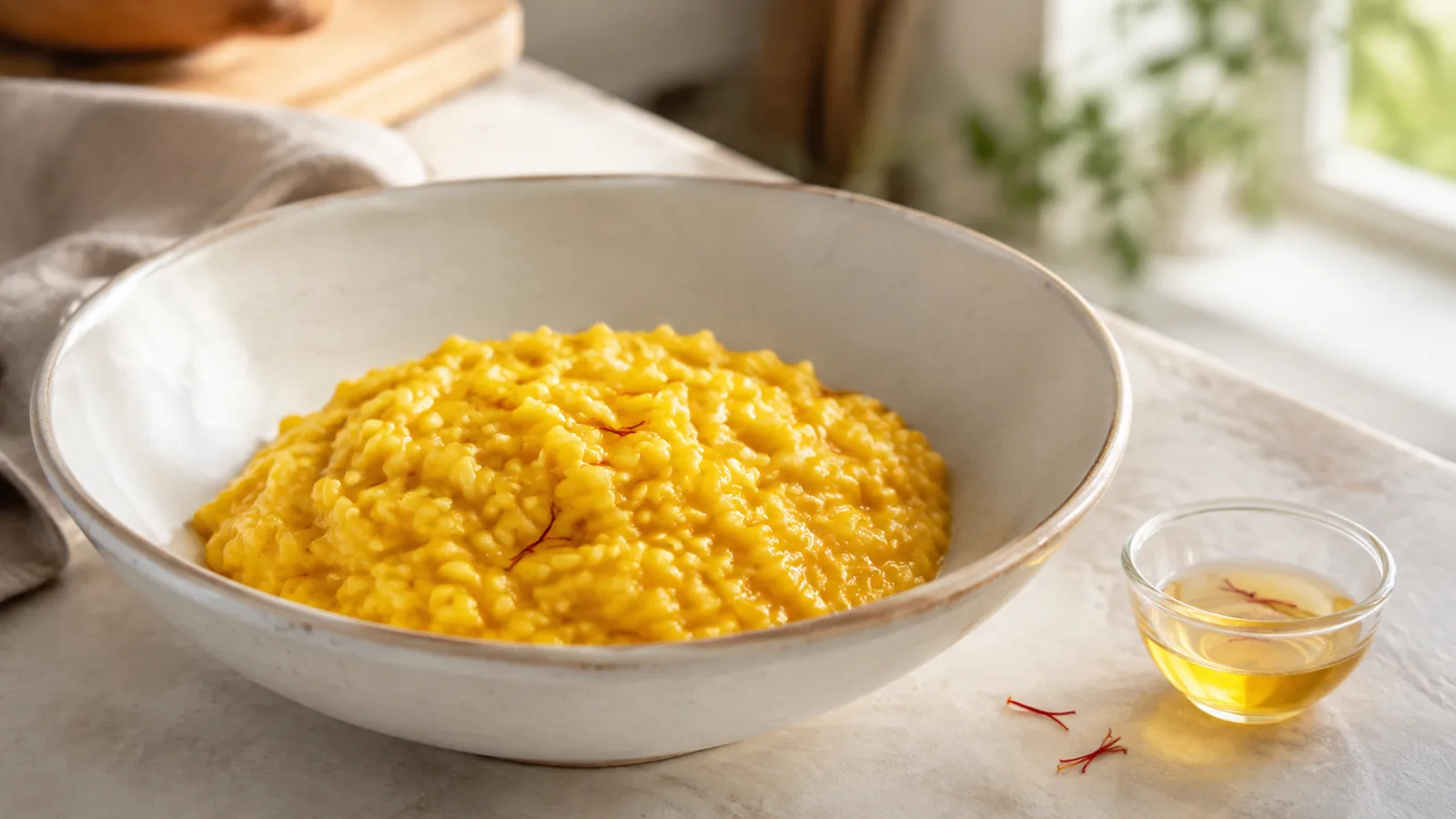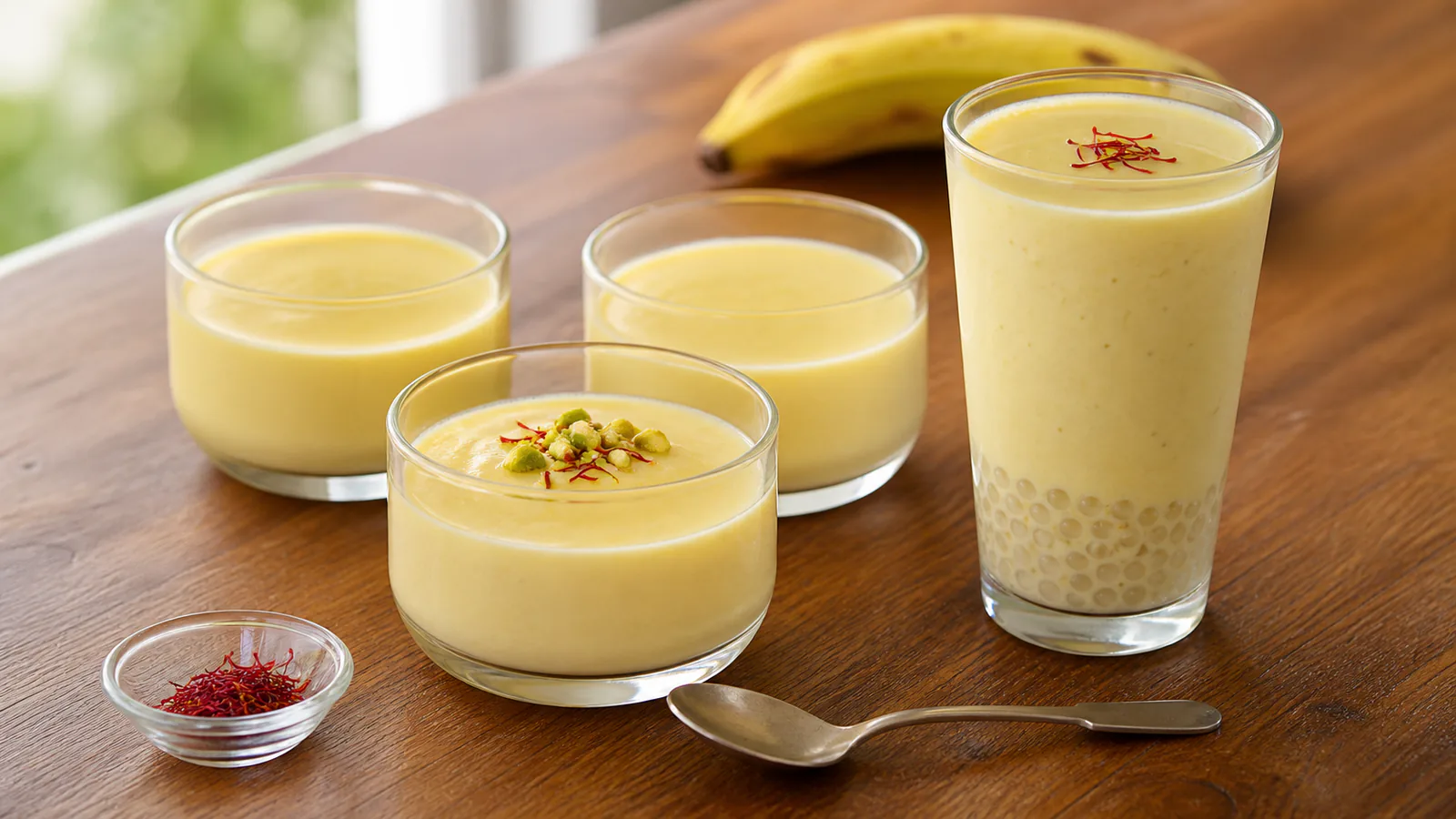
This saffron custard recipe makes a smooth, creamy dessert with milk, custard powder, cream and butter. The same article also shows how to make a cold saffron and banana milkshake with sago pearls. They belong together: both are simple milk-based treats, both need a well-dispersed saffron infusion, and both are served chilled.
Choose the custard when you want spoonable dessert cups that can be prepared ahead. Choose the milkshake when you want something lighter and freshly blended, with soft pearls at the bottom. Make either recipe on its own, or serve small portions of both for contrasting textures.
Prepare the saffron before either recipe
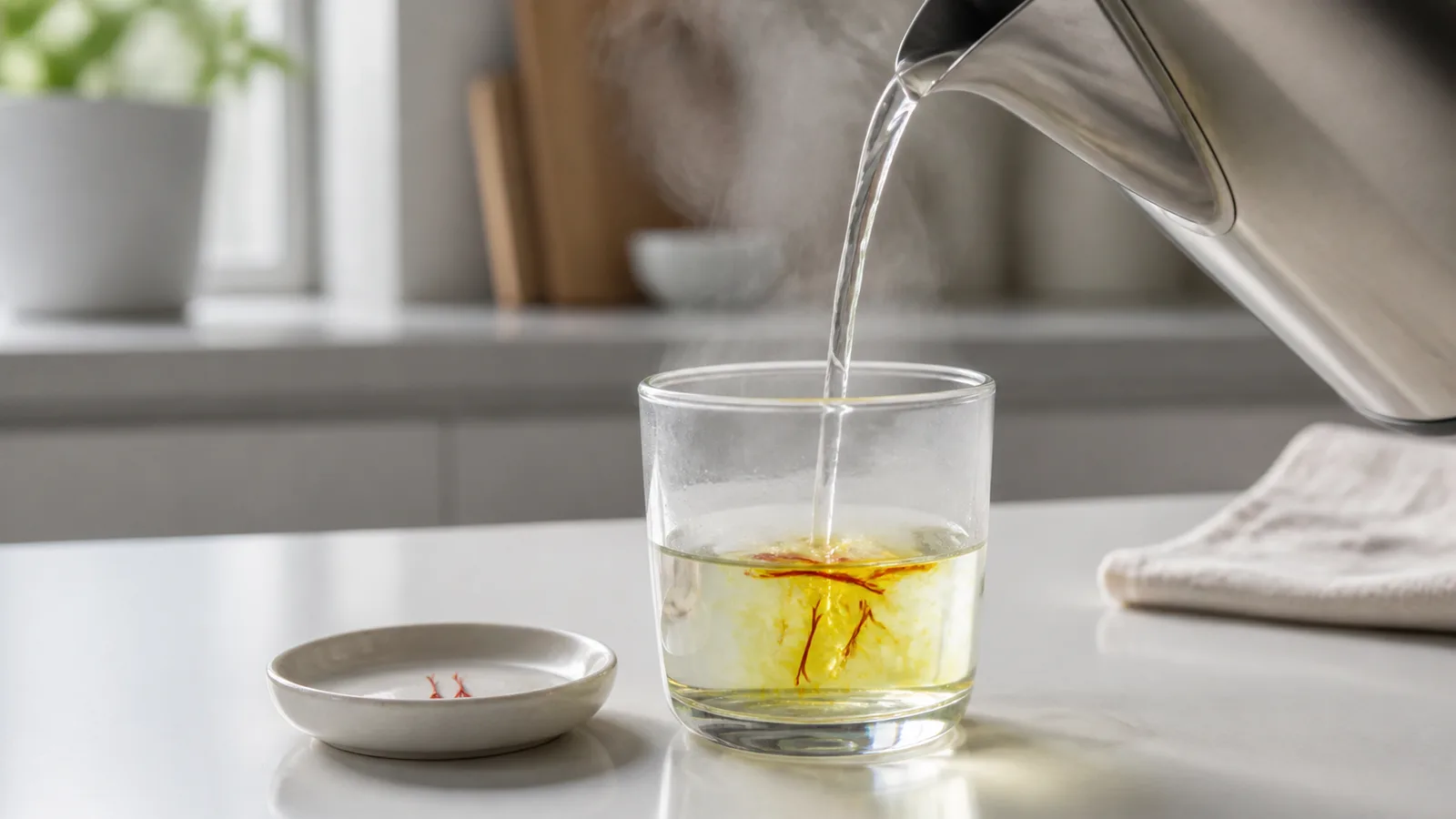
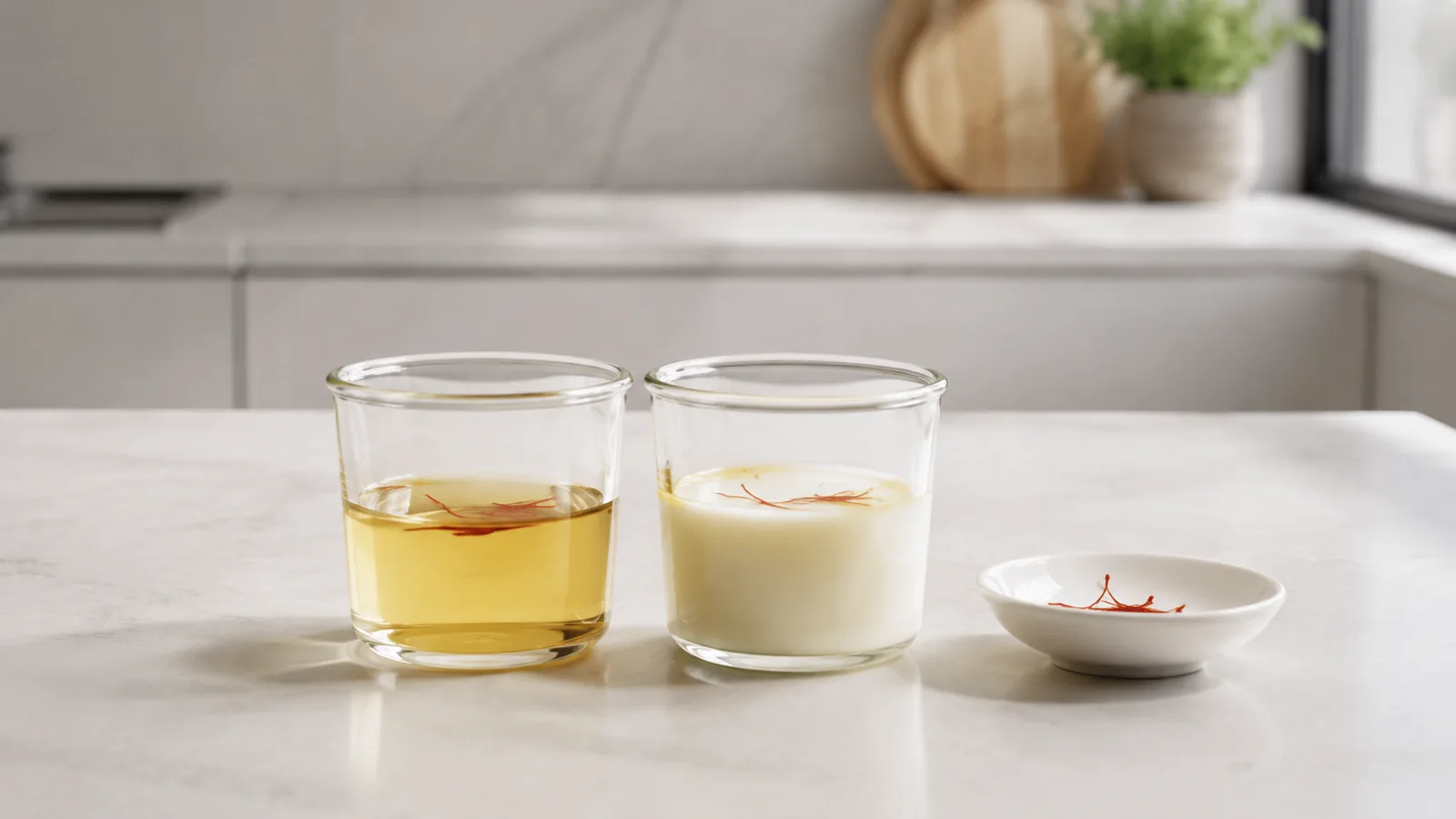
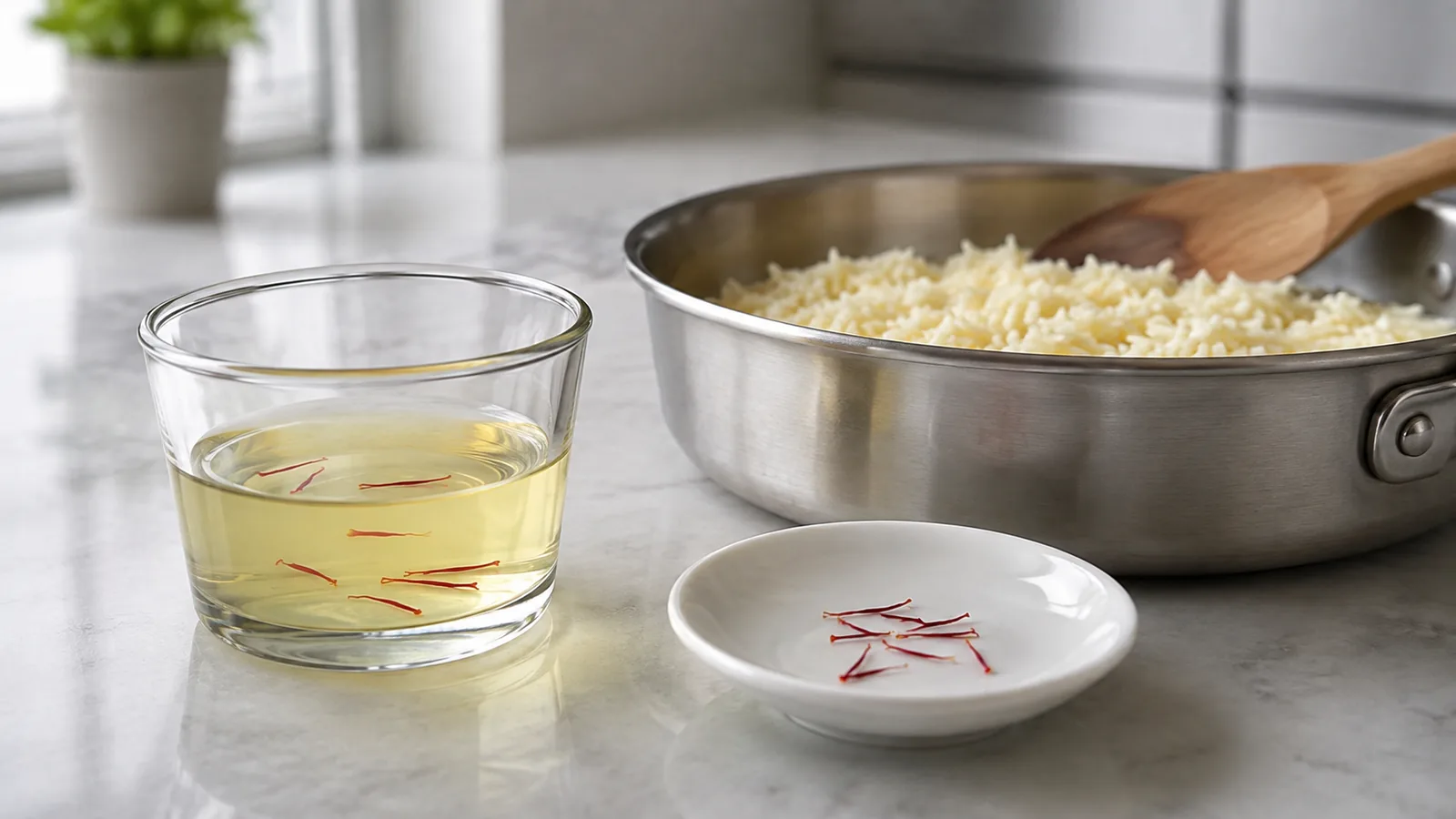
Lightly grind a small pinch of saffron threads. For the custard, steep it in two tablespoons of hot water until the liquid becomes fragrant and deeply coloured. For the milkshake, the saffron goes into the warm milk, so a separate water infusion is optional.
Do not rely on colour alone when measuring saffron. Some custard powders are already yellow, and adding more threads after the flavour is balanced can make the dessert bitter. A modest infusion is easier to strengthen than an over-concentrated one is to correct.
Saffron custard ingredients
This quantity makes about six small dessert cups. “Cup” means a standard measuring cup; using the same cup for the milk and cream keeps the ratio consistent.
- 3 tablespoons custard powder
- 3 cups (about 720 ml) milk, divided
- 3 tablespoons sugar
- 1 tablespoon butter
- 1/2 cup (about 120 ml) cream
- 2 tablespoons prepared saffron infusion
Custard powder brands can thicken differently. Check the packet as well as the quantities here, particularly if the product contains sugar or calls for a different liquid ratio.
How to make smooth saffron custard
- Make a cold slurry. Put the custard powder in a bowl and whisk in about half a cup of the cold milk. Keep whisking until no dry pockets remain.
- Warm the milk. Pour the remaining milk into a heavy saucepan, add the sugar and set it over low to medium-low heat. Stir as it warms; it does not need a hard boil.
- Thicken gently. Whisk the slurry once more, then pour it into the warm milk in a thin stream while whisking. Continue stirring, reaching the base and corners of the pan, until the mixture visibly thickens.
- Finish off the heat. Remove the pan from the heat. Whisk in the butter, followed by the cream and two tablespoons of saffron infusion. Adding these at the end gives the cream less chance to split and keeps the saffron aroma clear.
- Chill. Divide the custard among cups or one serving dish. Let the steam subside, cover and refrigerate for at least one hour, or until thoroughly cold and set to your liking.
How to avoid lumps or a scorched base
Custard powder disperses best in cold liquid. Adding it directly to a hot pan can seal dry clumps before the centre hydrates. Gentle heat and continuous movement matter more than speed; if the base is catching, move the pan off the burner briefly and keep whisking.
If the finished custard seems thicker than you like while it is still warm, whisk in a small splash of milk. If it is too loose, return it to low heat and cook a little longer. Remember that it will firm further as it cools.
Flavour and garnish options
Cardamom and rosewater both suit saffron, but use them lightly so the custard still tastes balanced. Add a small amount with the saffron infusion, taste, then decide whether it needs more.
Serve the cold custard with fruit, a little cream, cinnamon, pistachio kernels or ground pistachio. Nuts are optional and should be omitted for anyone who needs a nut-free serving.
For a custard that releases from a mould, the older recipe suggested one tablespoon of gelatine powder. Gelatine strengths and packet directions vary, so bloom and dissolve only the amount recommended for roughly 840 ml of dairy mixture. Add it while the custard is hot enough to dissolve it, then chill fully before unmoulding. Check the label if dietary suitability matters.
Saffron sago milkshake ingredients
The second recipe serves four. It uses frozen banana for body rather than ice cream.
- 100 g small sago pearls
- 4 cups water for cooking the pearls
- 2 cups milk
- 2 bananas
- 1 tablespoon honey or sugar, adjusted to taste
- a small pinch of saffron, adjusted to taste
True sago is starch from the pith of Metroxylon palms. A Codex regional standard for edible sago flour distinguishes it from cassava products that may also be called sago in some markets. Pearl size and starch source affect cooking time, so the packet instruction takes precedence when it differs from this method.
Freeze the bananas without making one solid block
Peel the bananas, slice them and arrange the pieces in one layer on a small tray or plate. Freeze until firm, then transfer them to a covered container if you are not blending immediately. Separating the pieces first lets the blender catch them evenly.
The source suggested using the same method with other fruits. That can work, but watery, seedy or very tart fruit changes the texture and may react differently with milk. Banana is the dependable base for this version.
Cook and cool the sago pearls
- Bring four cups of water to a steady boil in a saucepan.
- Add the sago pearls gradually and stir, especially across the base, so they do not settle into a single mass.
- Cook for about 15 minutes, or for the time on the package. The pearls should become mostly translucent; a tiny pale centre may finish softening while they rest.
- Drain through a fine sieve and rinse under cold water until the excess surface starch is gone. Leave the pearls to drain and cool completely.
The damaged older translation said “a quarter of a minute,” but the intended instruction was a quarter of an hour. Fifteen minutes is still a guide, not a guarantee: very small or quick-cooking pearls may be ready sooner.
Make the saffron banana milkshake
- Warm the milk with the saffron over gentle heat, stirring so it colours evenly. Take it off the heat before it reduces.
- Stir in sugar while the milk is warm. If using honey, let the milk cool slightly first, then stir it in. Refrigerate the saffron milk until cold.
- Put the frozen banana pieces in a blender, add the cold saffron milk and blend until smooth.
- Spoon cooled sago pearls into the lower part of four glasses. Pour in the milkshake and serve with a spoon or a wide straw.
Serve this drink soon after blending. The banana mixture is at its smoothest while cold and freshly aerated, while sago left in liquid for a long time continues to change texture.
Adjusting sweetness and texture
Ripe bananas may provide enough sweetness with less honey or sugar. Taste the cold saffron milk before blending; cold food can seem less sweet than warm food, and the banana will add sweetness of its own.
If the blender struggles, add a little more cold milk rather than letting the motor labour. If the drink is thinner than expected, use more frozen banana next time instead of adding uncooked starch. Keep the pearls as a separate layer so their soft chew remains distinct from the smooth drink.
Serving the two saffron desserts together
For a small gathering, make the custard first and leave it covered in the refrigerator. Cook and cool the sago while the custard sets, then prepare the saffron milk and freeze the banana. Blend the drink only when people are ready to eat.
A small custard cup with a half-size milkshake is usually more pleasant than two full portions. Use one restrained garnish—perhaps pistachio on the custard—and leave the milkshake simple so the saffron and banana remain clear.
For more ideas built around the spice rather than artificial colour, browse our collection of easy saffron recipes and our guide to saffron drinks.
Two recipes, one careful saffron base
The custard is creamy and make-ahead; the sago milkshake is cool, fruity and best blended at the last moment. What unifies them is technique: disperse the saffron, use gentle heat with milk, control the starch rather than rushing it, and chill each component before serving.
That approach protects the original character of both recipes while making their measurements and sequence easier to follow. Nothing needs to be elaborate. Good saffron, a saucepan, a whisk and a little patience are enough.