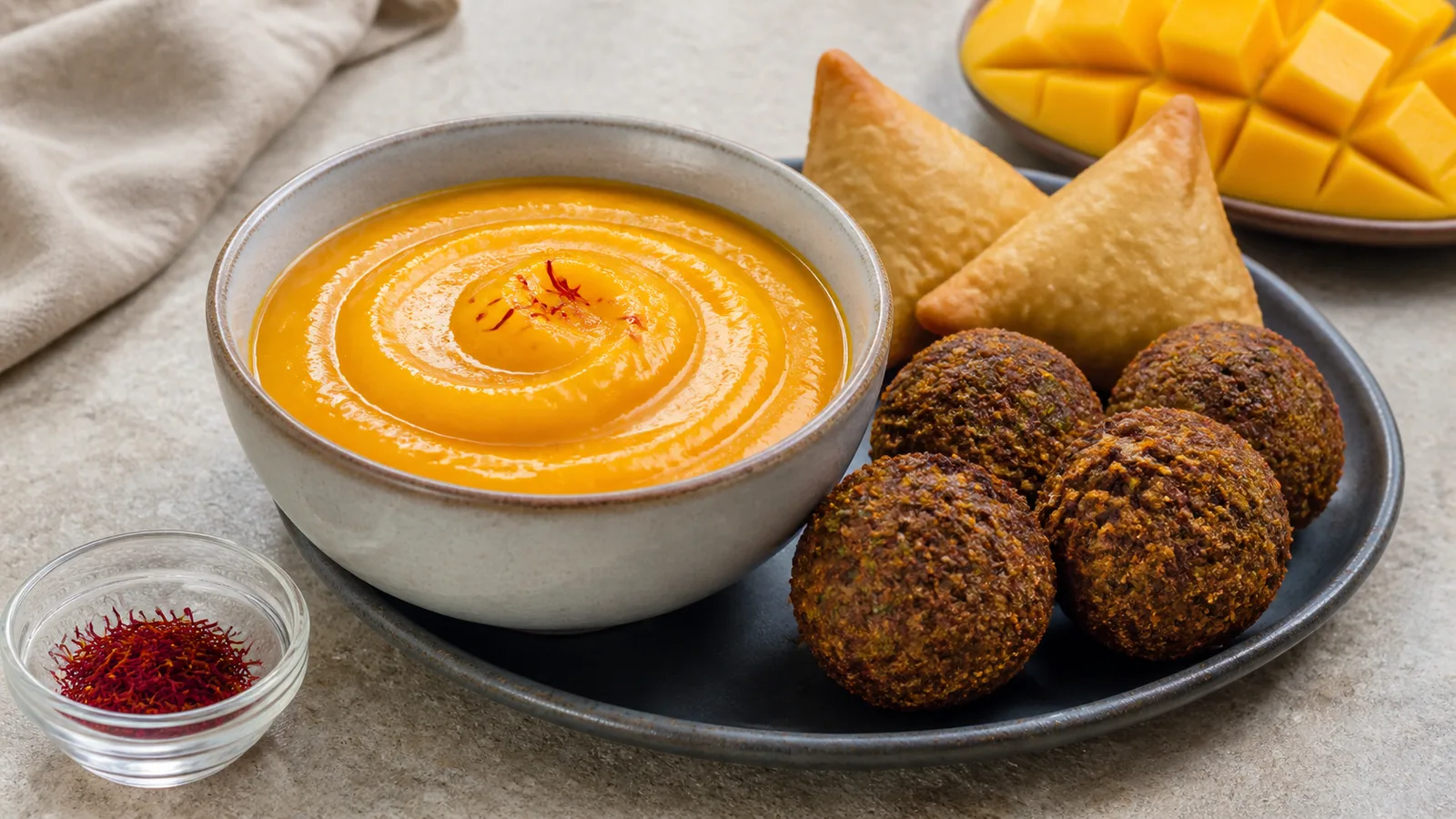
This recipe Of Mango sauce with Iranian saffron makes a bright, spoonable sauce with ripe mango, a small saffron infusion and enough pepper to balance the fruit. It is sweet, tangy and gently hot, so it works with falafel and samosas as readily as it does with grilled chicken, burgers or a toasted sandwich.
What kind of mango sauce is this?
Mango sauces can be sweet, sour, hot or all three. In southern Iran, especially around Abadan, the name mango sauce is closely associated with the sharp, spiced sauce served with falafel and samosas. Recipes vary from shop to shop; many use mango powder, vinegar and spices.
This is a fresh-mango variation from the original Rowhani recipe. Ripe fruit supplies the body, a little starch keeps the sauce from running out of a sandwich, and Iranian saffron brings a warm aroma. It is not a claim to be the single traditional Abadani formula.
Ingredients
- 1 ripe mango, about 250 g after peeling and removing the stone
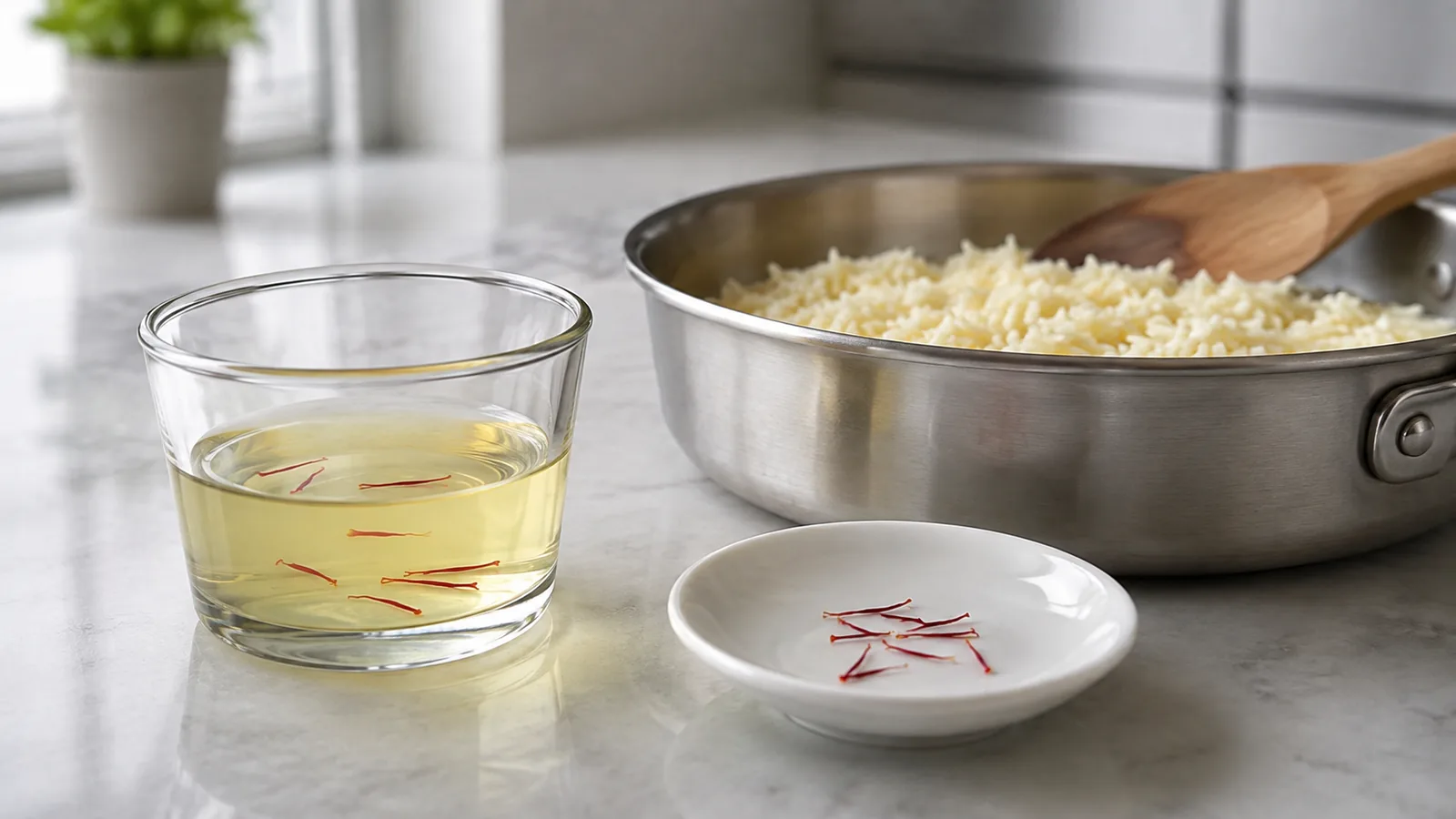
- 2 teaspoons concentrated brewed saffron
- 2 tablespoons sugar, or less if the mango is very sweet
- 1 tablespoon cornflour or cornstarch
- 2 tablespoons cold water, for the starch slurry
- 1 tablespoon lime juice or mild vinegar
- ¼ teaspoon fine salt, then more to taste
- ¼ teaspoon ground black pepper or chilli powder, adjusted to taste
The old recipe allowed either saffron or turmeric for colour. For a mango sauce with saffron, use the saffron infusion and let its aroma remain distinct. If you need to prepare it first, see our guide to brewing saffron.
How to make mango sauce with saffron
1. Prepare the mango
Wash the mango, slice the flesh away from the flat stone and scoop it out of the skin. Cut the flesh into pieces and place it in a blender or food processor. Do not include the skin or the hard stone.
2. Blend the flavourings
Add the brewed saffron, sugar, lime juice or vinegar, salt and pepper. Blend until smooth. Taste it now: the uncooked sauce should be a little more assertive than you want because the starch will soften the flavour. Add pepper for heat, acid for sharpness or a little sugar only if the mango needs it.
3. Make a cold starch slurry
In a small cup, stir the cornflour into two tablespoons of cold water until no dry lumps remain. Starting with cold water matters; adding dry starch directly to warm mango purée is likely to leave small clumps.
4. Cook until lightly thickened
Pour the mango mixture into a small saucepan and stir in the slurry. Cook over low to medium heat, stirring continuously, until it reaches a gentle bubble and lightly coats a spoon. This usually takes three to five minutes. Do not reduce it to a paste: it will thicken further as it cools.
5. Cool and adjust
Transfer the sauce to a clean bowl or jar. Once it has cooled, check the consistency. Whisk in a teaspoon of water if it is too thick. Taste once more and make small adjustments to salt, heat or acidity.
How to serve it
Serve this Iranian mango sauce as a dip for falafel, samosas or roasted vegetables. A thin layer also suits a chicken sandwich or burger, while a looser batch can be brushed over grilled chicken near the end of cooking. It can accompany pizza, but use it as a finishing sauce rather than replacing the tomato base.
For a smoother restaurant-style finish, press the cooked sauce through a fine sieve. For texture, leave it as blended. Either way, saffron should sit behind the mango rather than make the sauce bitter; adding more threads is not always an improvement.
Texture and flavour fixes
- Too thick: whisk in cold water one teaspoon at a time.
- Too thin: return it to low heat. If necessary, add a second, smaller cold-water slurry rather than dry starch.
- Too sweet: add lime juice or mild vinegar in small amounts, then recheck the salt.
- Too sour: add a little ripe mango or a small pinch of sugar.
- Too hot: blend in more mango. Water alone dilutes the body as well as the heat.
- Saffron tastes bitter: do not add more sugar to conceal an excessive dose; make a larger unsaffroned portion and combine the two.
Storage and food safety
This fresh sauce is not shelf-stable and should not be stored at room temperature. Put it in a clean covered container and refrigerate it promptly. The original article said it would keep for more than a week, but it gave no tested preservation method to support that advice.
A safer household rule is to use the refrigerated sauce within three to four days or freeze small portions. That follows the USDA guidance for cooked leftovers. Discard it sooner if it was left out for more than two hours or shows an unusual smell, mould or fermentation.
Made this way, mango sauce with Iranian saffron keeps the original recipe’s sweet, sour and spicy character while giving the quantities and cooking steps enough precision to repeat it.