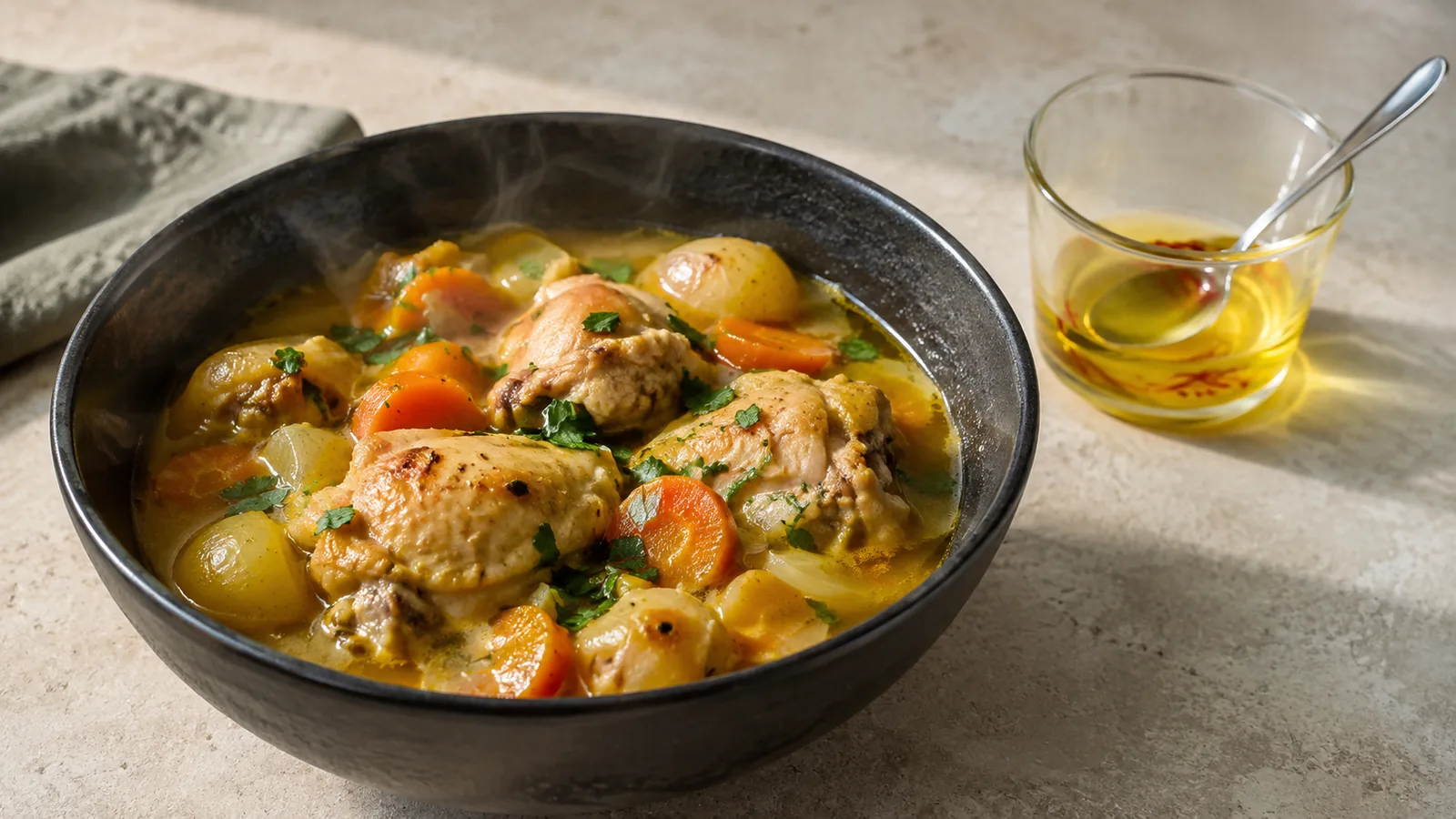
This halva cake with saffron combines a rosewater-cardamom sponge, a light honey syrup and a soft layer of rice-flour halva. It is rich enough for small slices and makes a fitting dessert for Ramadan and an iftar table, although it can be served at any gathering.
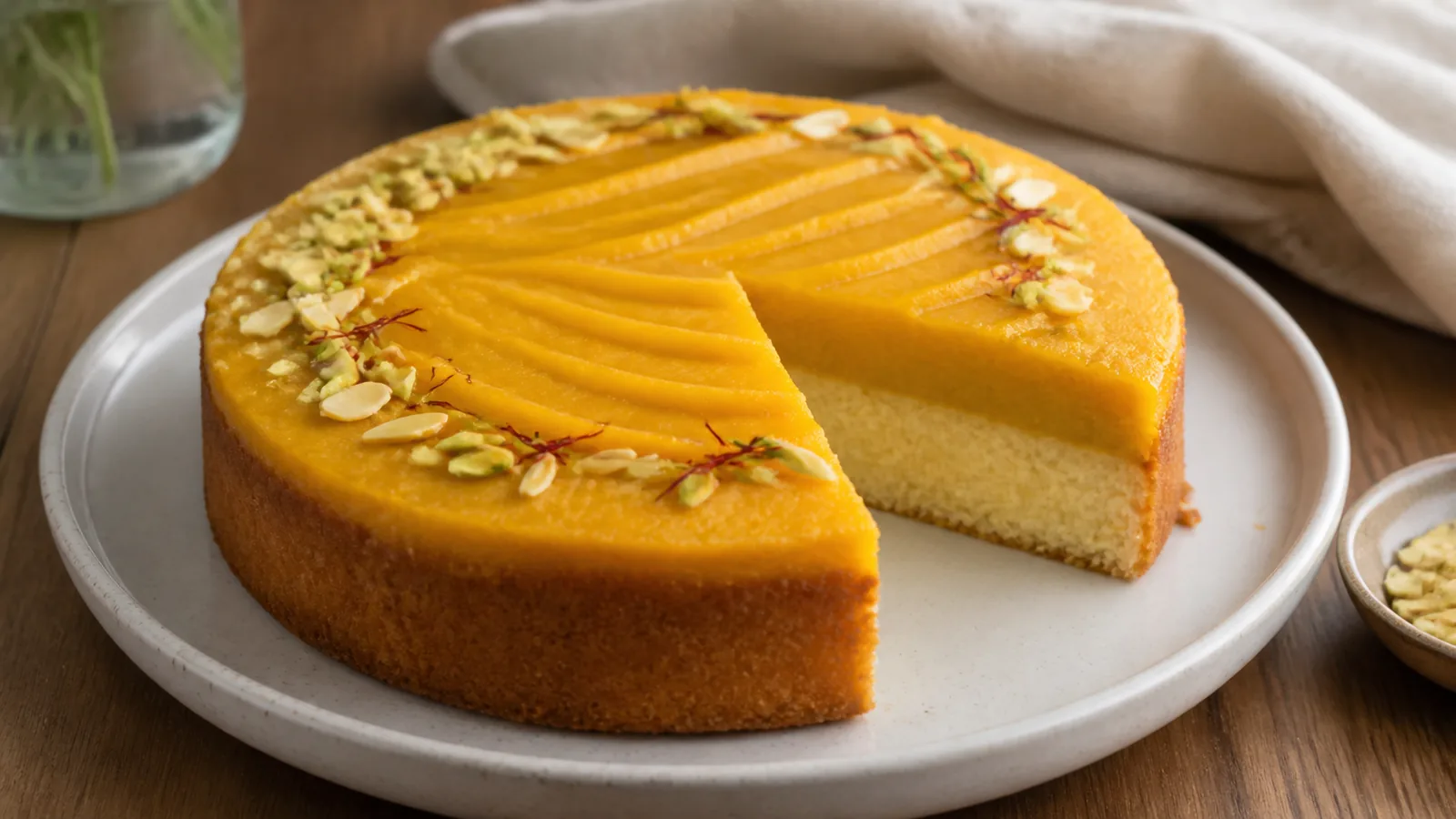
The cake needs to cool before it is brushed with syrup, and the halva should be warm and spreadable when it goes on top. Planning those stages in that order keeps the sponge moist without making the finished dessert heavy or difficult to cut.
Ingredients for the cake
- 125 g sugar
- 3 eggs, at room temperature
- 2 tablespoons rosewater
- 125 ml neutral oil
- 150 g plain flour
- 1 teaspoon ground cardamom
- 1 teaspoon baking powder
Ingredients for the cake syrup
- 1/3 cup water
- 200 g sugar
- 1 tablespoon honey
- 1/4 cup rosewater
Ingredients for the saffron halva topping
- 500 g rice flour
- 150 g butter
- 1 cup neutral oil
- 2 1/2 cups water
- 400 g sugar
- 1 cup rosewater
- 1/2 cup prepared saffron infusion
- Sliced pistachios or almonds, for decoration
This quantity makes a generous amount of halva. Spread the cake to the thickness you prefer and serve any extra separately rather than forcing an oversized layer onto the sponge.
Bake the rosewater and cardamom cake
Heat the oven to 180°C/350°F. Grease a medium round cake tin and line the base with parchment paper.
Beat the eggs and 125 g sugar until pale, thick and increased in volume. Add the oil and 2 tablespoons rosewater, mixing just until combined.
Sift the flour, cardamom and baking powder together. Fold the dry ingredients into the egg mixture in two or three additions, stopping as soon as no flour pockets remain.
Pour the batter into the tin and level the surface. Bake for about 25 to 30 minutes, until the centre springs back lightly and a skewer comes out without wet batter. Let the cake cool in the tin for 10 minutes, then turn it onto a rack.
Make the cake syrup
While the cake bakes, combine 1/3 cup water and 200 g sugar in a small saucepan. Warm gently until the sugar dissolves, then bring it to a brief simmer.
Stir in the honey and 1/4 cup rosewater. Remove the syrup from the heat rather than boiling away the floral aroma. Let it cool.
Once the cake and syrup are both cool, brush syrup evenly over the top in several light passes. Pause between passes so the sponge can absorb it. You may not need every drop.
Prepare the rice-flour saffron halva
Put the rice flour in a wide heavy pan over low heat. Stir continuously until its raw aroma disappears and the colour changes only slightly; rice flour should not be browned as deeply as wheat flour.
Add the butter and oil. Keep stirring over gentle heat until the mixture is smooth and lightly golden.
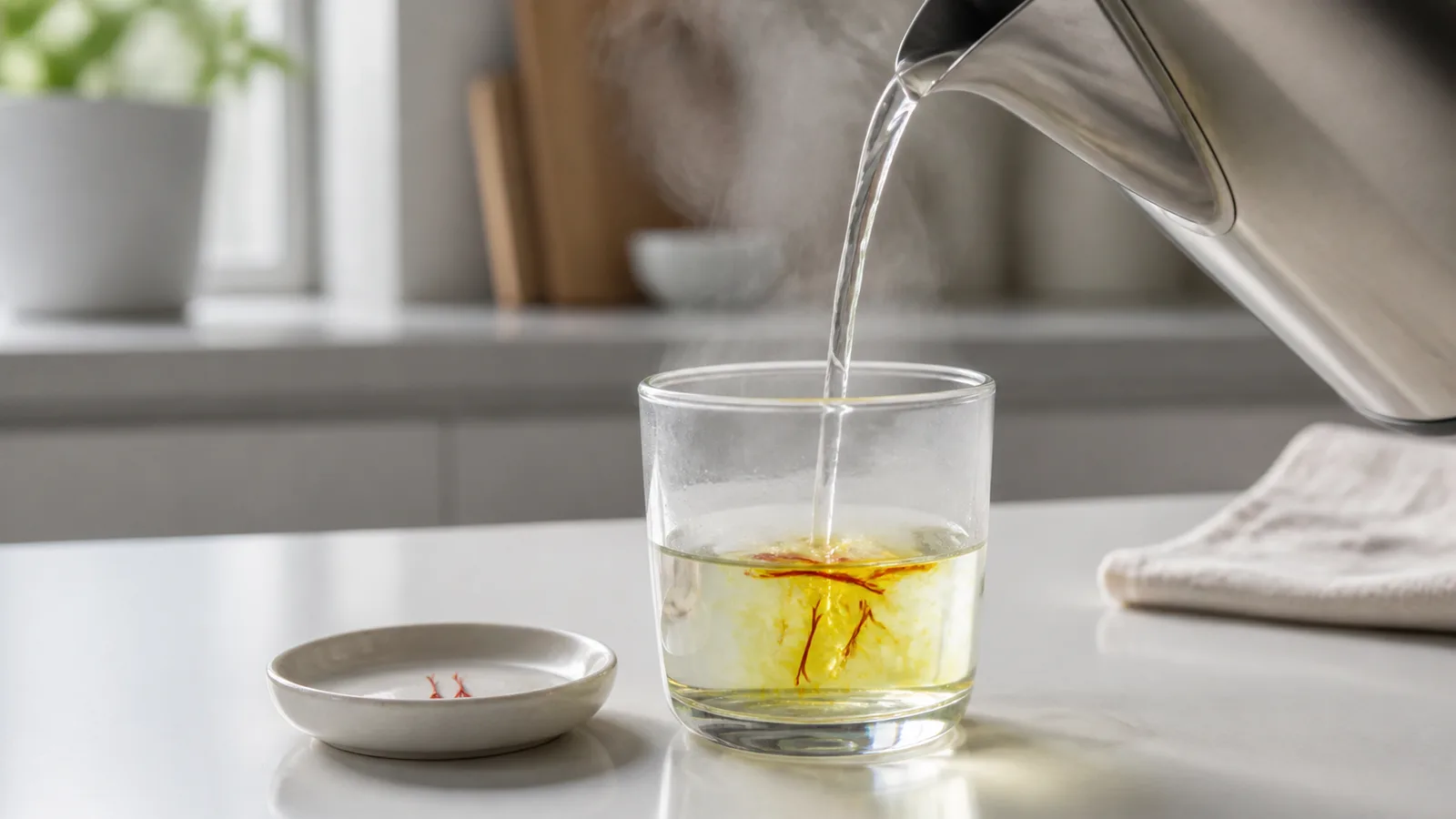
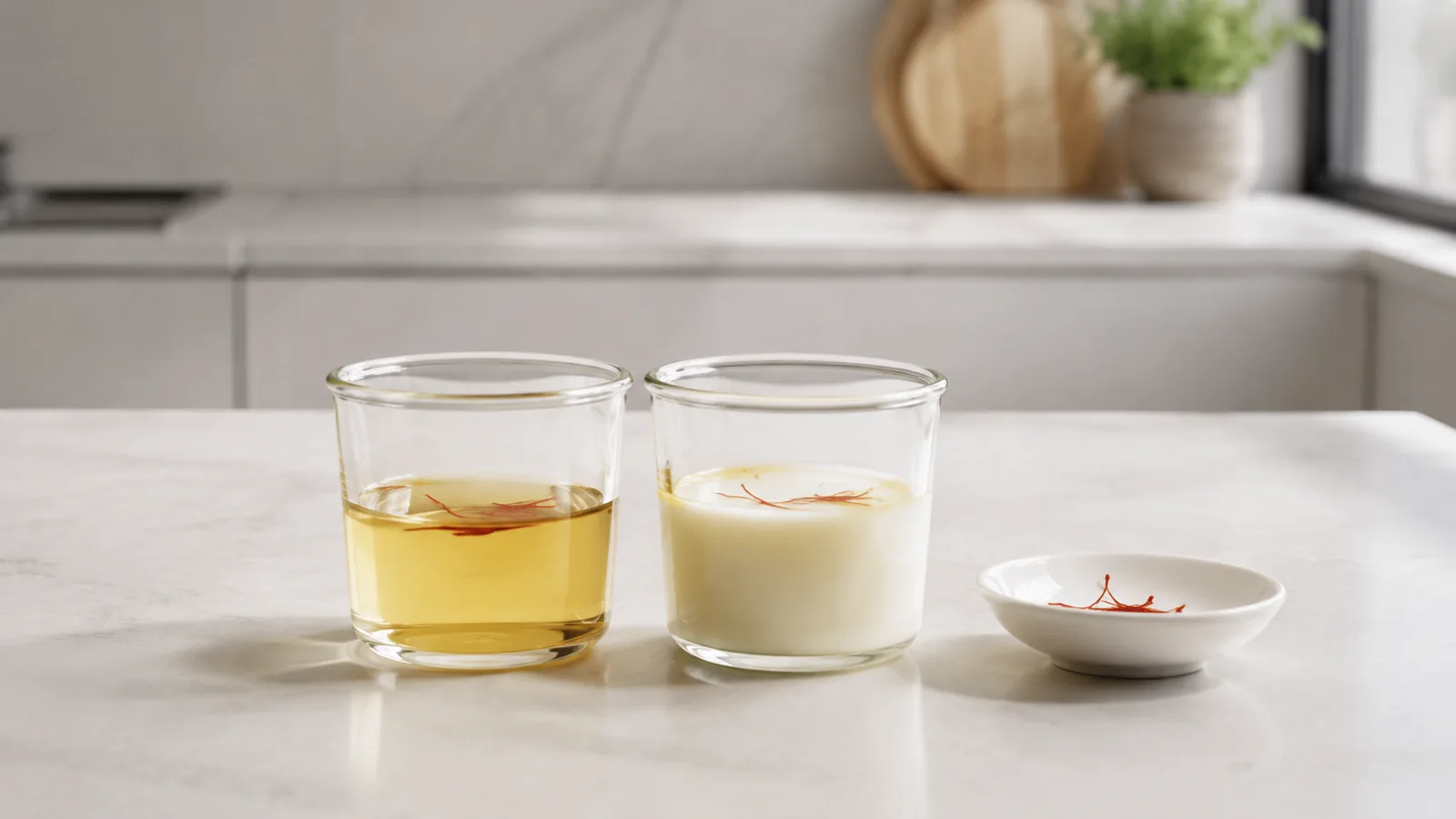
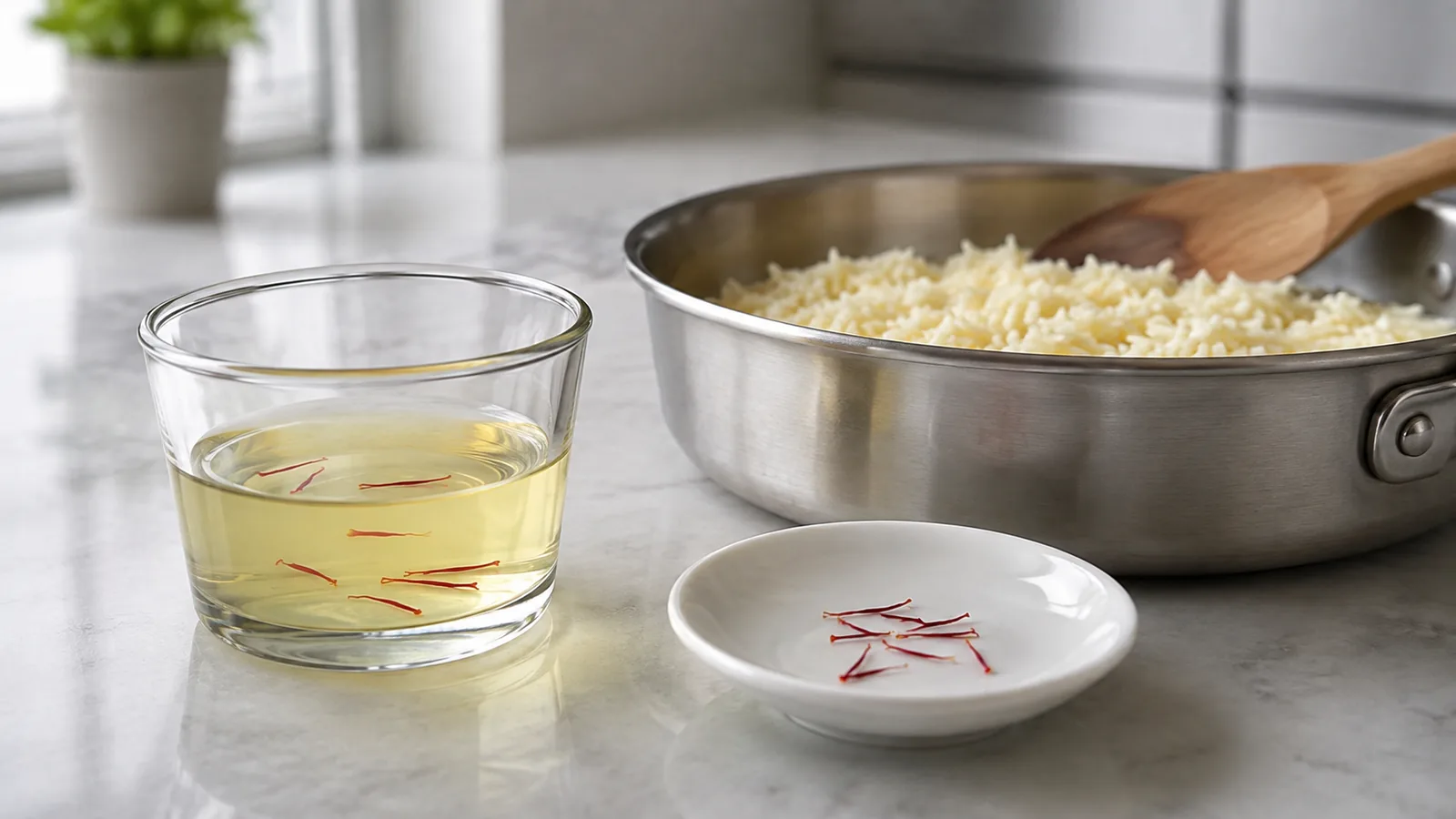
In a separate saucepan, dissolve 400 g sugar in 2 1/2 cups water. Bring it just to a simmer, then add the rosewater and saffron infusion and remove it from the heat. If you need help extracting the colour first, use our saffron brewing guide.
Take the flour mixture off the heat. Add the warm syrup gradually, stirring after each addition. Stop when the halva is smooth, cohesive and firm enough to hold a layer on the cake; flour can vary in how much liquid it absorbs.
Assemble the halva cake
Place the cooled, syrup-brushed cake on its serving plate. Spoon warm halva over the surface and spread it gently with the back of a spoon or an offset spatula.
For clean slices, keep the halva layer even and slightly firmer than halva served on its own. Decorate with pistachio or almond slices, then let the topping settle before cutting.
Other halva toppings
The rice-flour layer can be replaced with a different soft halva, including Persian saffron halva or carrot halva. Avoid a dry, crumbly mixture: the topping needs enough syrup to spread smoothly and stay attached to the cake.
Common problems
- Dense cake: beat the eggs until genuinely thick, then fold the flour gently.
- Soggy sponge: cool both cake and syrup and apply the syrup gradually.
- Runny topping: stop adding syrup once the halva reaches a spreadable, shape-holding consistency.
- Halva tears the cake: spread it while warm with light pressure rather than pressing down.
Storage
Cover and refrigerate the assembled cake for up to 3 days. Bring each slice toward room temperature before serving so the butter in the halva softens and the cardamom, rosewater and saffron aromas are easier to notice.