Can I use 10 year old saffron? If its storage history is uncertain, the sensible answer is no: replace it. Dry saffron does not suddenly become unsafe on an anniversary, but ten years is long enough for moisture, contamination and severe loss of aroma or colour to become realistic concerns. A smell or bloom test can reveal poor quality; it cannot prove an old jar is microbiologically safe.
Quick answer: use it or replace it?
Replace ten-year-old saffron if the package was opened, moved between containers, stored near heat or steam, or left without a reliable date. Also discard it immediately if you see moisture, mould, insects, webbing, clumps, an unusual surface film or damaged packaging.
An unopened commercial pack with an intact seal and a documented cool, dry storage history is a different case. Passing the checks below may show that it is still dry and capable of colouring water, but it will probably be much weaker than fresh saffron. For a meal where the spice matters, replacement is the better choice.
Does saffron expire or just lose quality?
Does saffron go bad? People use “expire” to describe two different things. The first is quality: does the saffron still produce its characteristic colour, aroma and slightly bitter taste? The second is food safety: has moisture, poor handling or damaged packaging allowed contamination?
Dried spices are shelf-stable because their low moisture limits microbial growth. The USDA includes spices among shelf-stable foods, but that does not mean any spice remains good forever. The condition of the package and the way it was handled still matter.
Saffron’s useful qualities also change in storage. Crocin contributes colour, picrocrocin contributes taste, and safranal is central to aroma. A one-year study of dried saffron stored away from light found significant changes in these compounds, including a marked loss of crocins in some samples. It does not set a universal expiry date, but it shows why “still dry” and “still excellent” are not the same conclusion.
Check the package before opening the jar
Start with what you know, not with the threads. Look for a purchase, packing or best-before date. Check whether the original seal is intact and whether the container has protected the saffron from light, air and kitchen humidity.
If somebody decanted it into an unlabelled jar years ago, you no longer know the original cleanliness, moisture level or age. Do not taste an unknown ten-year-old spice to investigate it. The cost of a fresh culinary portion is small compared with the uncertainty.
The refrigerator is not an automatic solution. A tightly sealed pack can be kept cool, but repeatedly opening a cold container in a humid kitchen encourages condensation. For everyday household storage, a small airtight container in a cool, dark, dry cupboard is simpler and safer for quality.
A three-step quality check for old saffron
These checks help decide whether properly stored old saffron still has culinary strength. They are not laboratory safety tests.
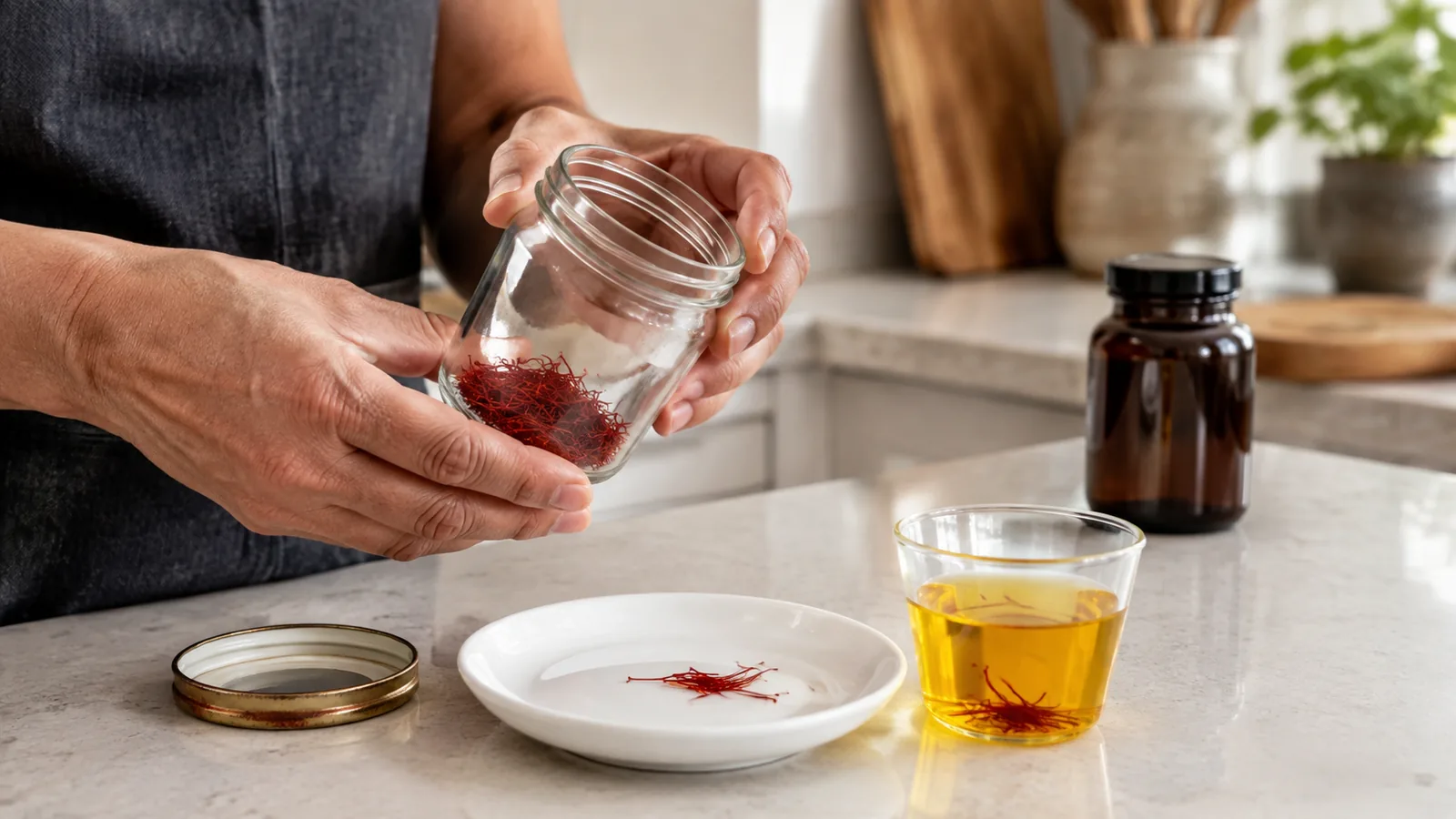
- Look closely: genuine threads are usually deep red, often with some orange-red variation. Age can dull them, but visible moisture, fuzzy growth, insects, webbing or unfamiliar debris means discard the whole container.
- Smell without tasting: healthy saffron has a distinctive warm, hay-like, honeyed aroma. A musty, damp, sour or rancid smell is a reason to throw it away. Very little aroma usually means the spice will add little to a dish.
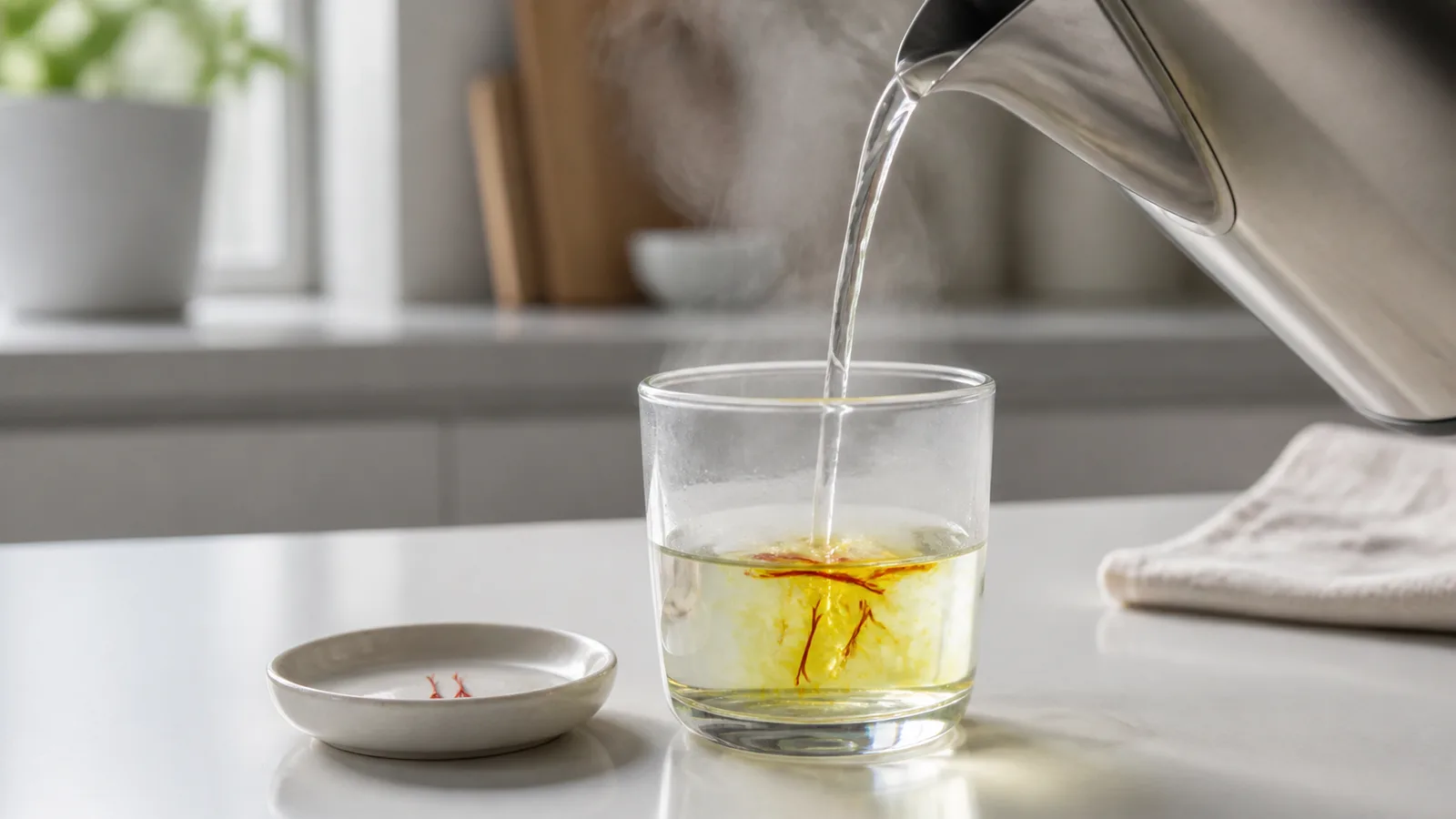
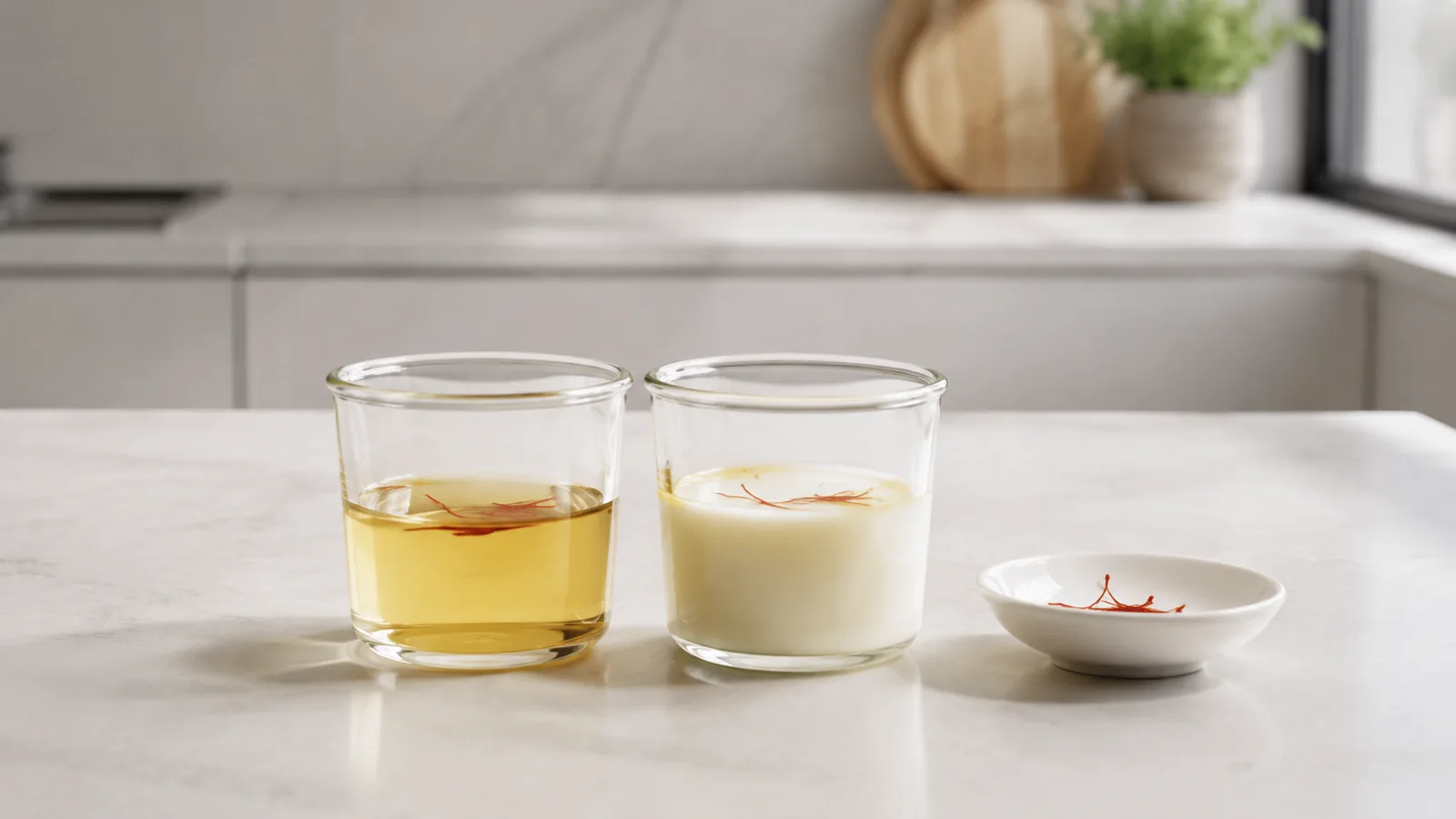
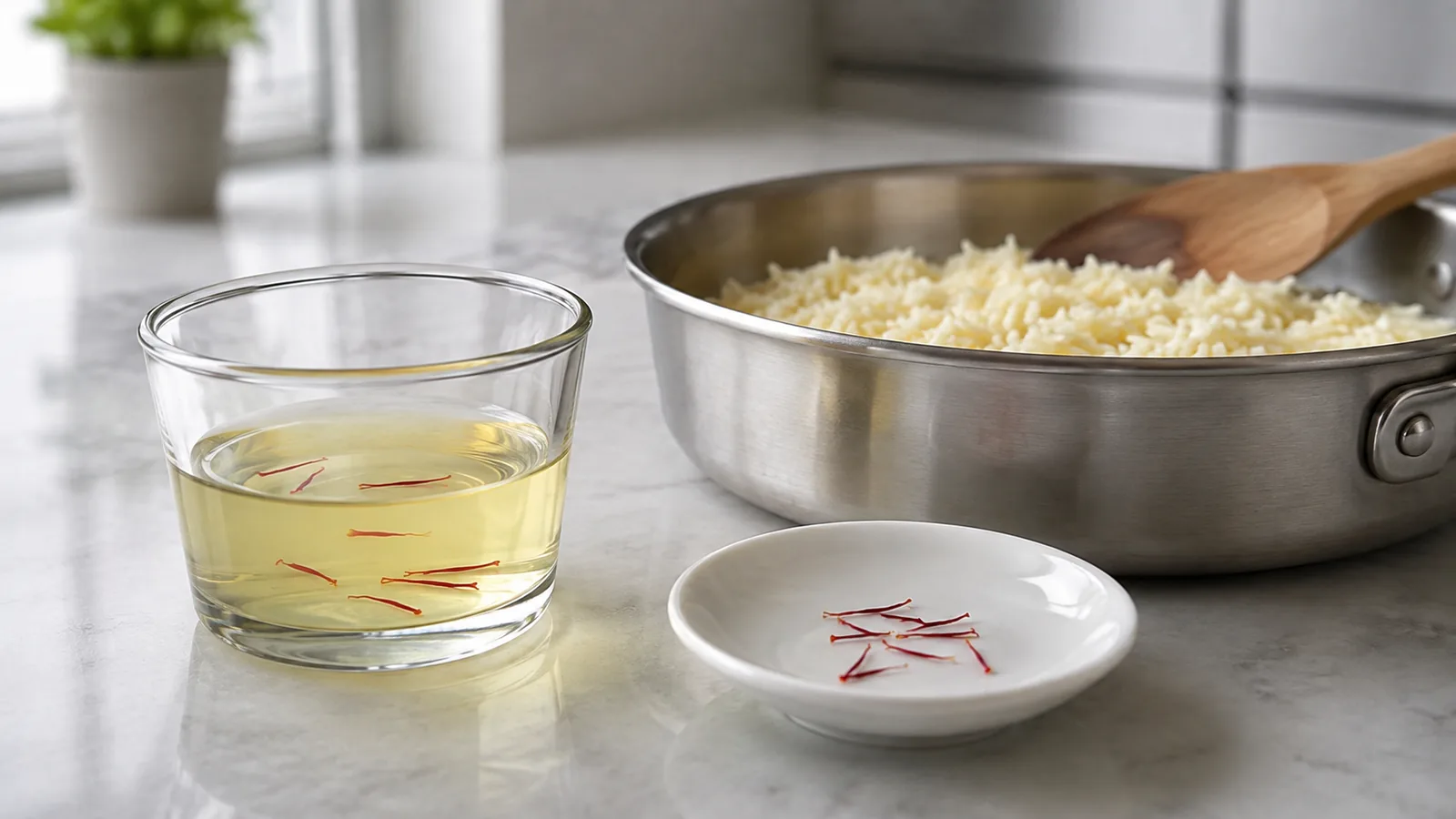
- Run a small bloom test: only if the package history and first two checks are satisfactory, crush a few threads and place them in warm—not boiling—water for 10 to 15 minutes. Usable saffron should release a clear golden-yellow colour and recognisable aroma. A flat, murky or unpleasant infusion should not be used.
A pale bloom is mostly a quality warning. A bright bloom is not proof that a very old sample is safe or authentic. Colour can survive unevenly, and appearance does not reveal every contaminant.
What “going bad” looks like
Old saffron can fail quietly by losing strength, or it can show signs of poor storage. Treat these as different outcomes.
- Faded aroma and weak colour: the spice has lost culinary value, even if no spoilage is visible.
- Clumping or dampness: moisture has entered; do not dry it and return it to the jar.
- Mould or a musty smell: discard it. The FDA advises discarding mouldy food rather than trying to rescue it.
- Insects, larvae or webbing: discard the contents and clean the cupboard before storing a replacement.
- Unknown material mixed with the threads: do not assume it is harmless age-related change.
FDA’s risk assessment for spices notes that poor packaging or storage can expose spices to contamination and that moisture can permit pathogens or mould to grow. That is why a ten-year-old jar with an unknown history deserves more caution than a recently opened, properly sealed pack.
How long does dried saffron last?
There is no honest single number for every jar. Whole threads generally retain quality better than powder because less surface area is exposed, but harvest quality, drying, moisture, light, oxygen, temperature and packaging all affect the result. Follow the producer’s stated date and storage directions when they are available.
Research on saffron storage consistently shows that heat and light accelerate change. A peer-reviewed packaging study explains that crocin stability is affected by light, oxygen, moisture and other storage conditions. This supports a practical rule: buy an amount you will use while it is still fragrant, then protect it from those exposures.
Questions such as “how long will saffron keep?” and “what is the shelf life of kesar?” therefore need two answers. If you are asking “does kesar expire?”, the same distinction applies: it may remain physically dry for a long time in a sound container, while the sensory quality needed for cooking declines much sooner. A 20-year-old saffron sample is an interesting keepsake, not a sensible pantry ingredient.
How to use expired saffron—and when not to
Can expired saffron be used in cooking? Only when “expired” means recently past a quality date, the seal and storage history are sound, and the checks below reveal no warning sign.
In that limited situation, a small bloom test can tell you whether useful colour and aroma remain. Use it only in an ordinary cooked dish, and accept that the result may be mild.
If it is ten years old, has no reliable date, or was exposed to moisture, replacement is the right decision. Adding a larger dose does not solve contamination and can waste the rest of the recipe. Do not use suspect old saffron in milk, tea, supplements or any preparation taken for a supposed health benefit.
When a sound but merely weak sample passes the checks, grind only what you need and bloom it first. Our guide to the best way to brew saffron explains how warm water releases colour and aroma without boiling the threads.
How to store the replacement
Good storage begins with buying whole threads in a small quantity. Keep them in a food-safe, airtight container that blocks light, or place a clear inner jar inside a closed cupboard. Choose a dry spot away from the cooker, dishwasher, sink and sunny window.
Use a clean, dry spoon or take out the threads with dry fingers. Close the container promptly. Write the purchase or opening date on the outer package, and avoid topping an old jar up with a new batch; mixing them makes age and quality harder to judge.
If you decide to restock, check the current saffron price for the amount and grade you need. A modest fresh pack is usually a better purchase than a large container that sits open for years.
The practical verdict on 10-year-old saffron
Can you use 10 year old saffron? In most home situations, you should not. If you cannot document how it was packed and stored, discard it. Even an intact, dry sample is likely to have lost much of the colour and fragrance for which saffron is bought.
Use the look, smell and bloom checks to understand the condition of old saffron, not to overrule obvious warning signs. Then store the replacement in a small, dated, airtight container so the next decision is easy.