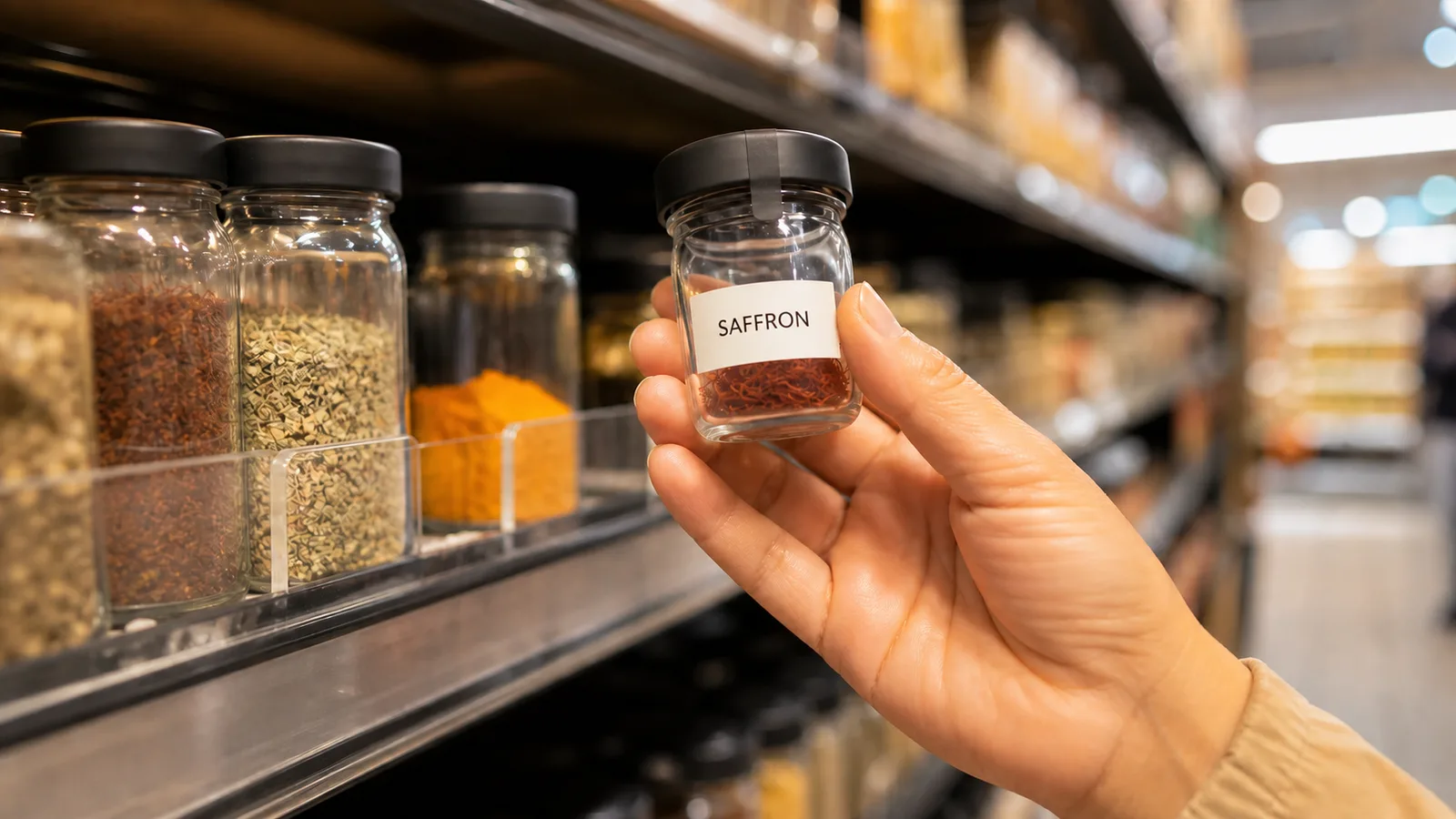
Yes, you can buy saffron in a supermarket. Larger grocery stores, international-food markets and well-stocked premium branches are the most likely to carry it. Buying saffron in a supermarket can be convenient for an occasional recipe, but stock, pack size and grade vary by location.
Look for a small jar, tin or foil envelope rather than a large spice bottle. Saffron is expensive and used in tiny quantities, so supermarket packs are often easy to miss.
Where is saffron in a grocery store?
Start in the spice aisle, near vanilla, cardamom, nutmeg or other premium seasonings. If it is not there, try the international-food section, especially the Persian, Middle Eastern, Indian, Spanish or Mediterranean shelves. Some stores keep high-value spices in a locked display, behind a service counter or beside gourmet baking ingredients.
Ask a member of staff to search the stock system if you cannot see it. “Where to find saffron in a grocery store” does not have one universal aisle answer because layouts differ between chains and even between branches.
A note for shoppers in Italy
Whether you ask “Dove si trova lo zafferano al supermercato?” or “Dove trovo lo zafferano al supermercato?”, check the reparto spezie and the area for risotto or baking ingredients. Italian supermarkets often sell zafferano in small sachets, frequently as powder, while larger stores may also offer threads. Read the ingredient panel so you know exactly which form you are buying.
How to find saffron near me
A search for “buy saffron near me” or “where can I get saffron near me” is most useful when combined with a store’s own stock checker. Select your branch, search both “saffron” and “zafferano,” and call before travelling if the listing does not show local availability. A product can appear on a chain’s website without being on the shelf in every shop.
Search terms such as “saffron grocery store,” “saffron in grocery store,” “saffron in supermarket” and “where to buy saffron near me” often surface chain pages or map results. Confirm that the result is for the branch you intend to visit rather than a national catalogue or an unrelated restaurant.
If the nearest saffron supermarket has no stock, try a Persian, Middle Eastern, Indian or specialist spice shop. These retailers may offer more than one grade and are often better placed to explain origin and intended culinary use. A trusted online seller is another option when you can verify the business, net weight, product form and delivery terms.
Threads or saffron powder?
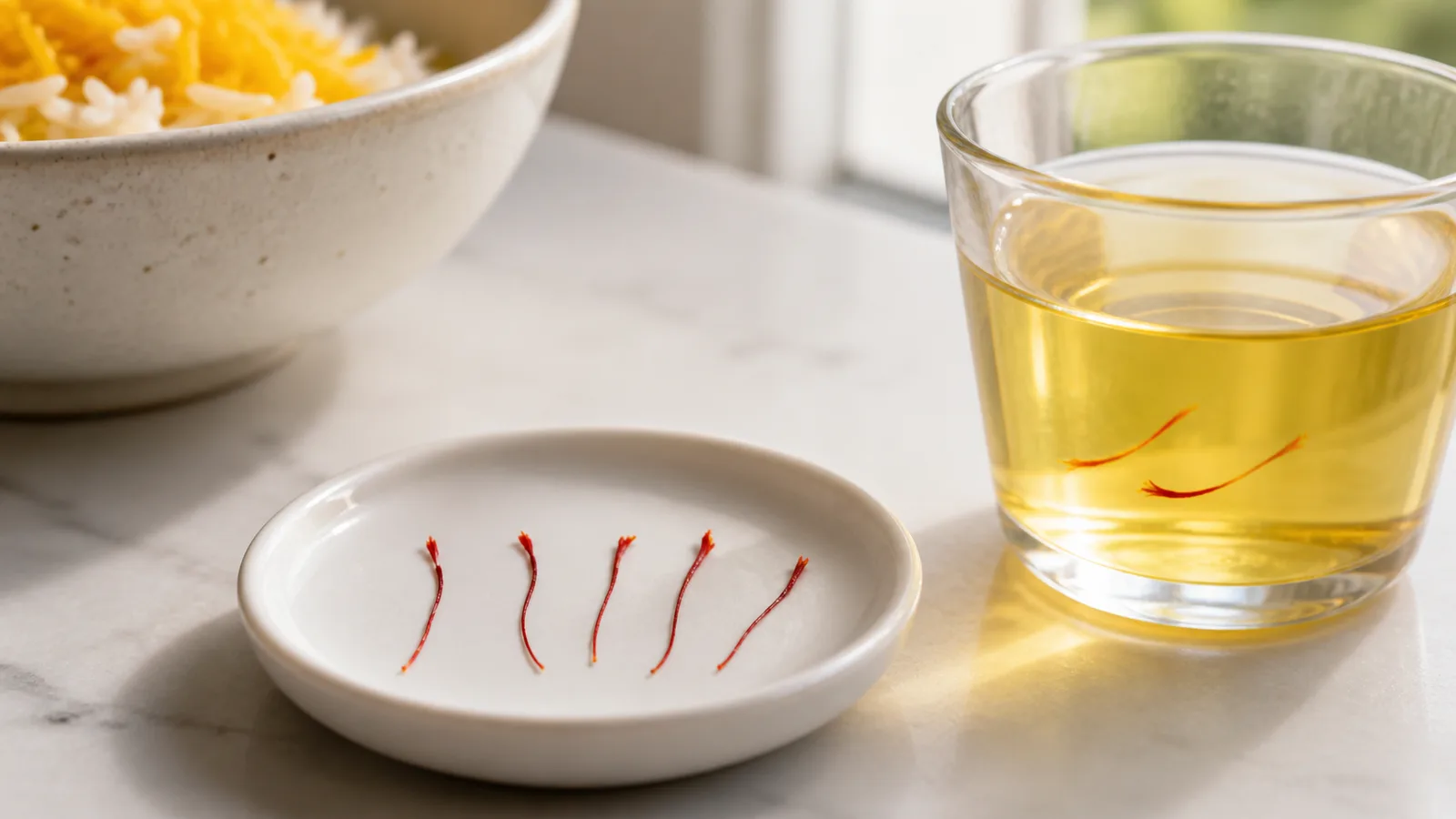
Whole or cut threads are easier to inspect. Genuine saffron consists of dried Crocus sativus stigmas, so the pieces should look like fine, irregular red filaments rather than uniform red dust. Thread length alone does not prove quality, but threads make other plant material harder to conceal.
Powder is not automatically fake. It is convenient and common in grocery stores, but you cannot inspect its structure. Check that the ingredient list says saffron without colourants, salt, turmeric, safflower or unspecified spice blends unless you deliberately want a blended product. Avoid assuming that a very strong colour is proof of quality.
The current ISO 3632-1:2025 specification covers saffron filaments, cut filaments and powder. It sets requirements for the product; a casual ISO reference on a label is not the same as seeing a relevant, traceable laboratory result for the lot in your hand.
How to judge supermarket saffron
- Read the net weight. Compare price per gram, not the apparent size of the jar.
- Check the ingredient list. It should clearly identify saffron if a pure product is being sold.
- Look for traceability. A lot or batch code, responsible food-business name, origin information and best-before date are more useful than vague luxury wording.
- Inspect the package. It should protect the spice from moisture and unnecessary light and should be intact.
- Match grade to use. Long presentation threads can cost more, while a sound shorter-thread grade may suit everyday cooking.
Supermarket saffron is not inherently lower quality, and specialist saffron is not automatically superior. The difference is the evidence attached to the particular product. High value does create an incentive for adulteration; a recent systematic review describes the problem and the laboratory methods used to detect it.
Is saffron more expensive in a supermarket?
Sometimes, but not always. Small consumer packs can have a high price per gram because packaging, distribution and retailer costs are spread across very little spice. A supermarket promotion may also make a small pack competitive. Compare the same form, grade, net weight and origin before deciding.
For a current reference, the saffron price page lets you compare thread grades and price per gram. Do not treat an old article price or an undated shelf photo as a current offer.
Information for supermarket buyers
A saffron supplier for supermarkets must answer a different set of questions from a consumer buying one envelope. Retail buyers need agreed specifications, food-safety and importer documentation, lot traceability, analysis, packaging formats, shelf-life information, lead times and consistent quantities. A sample should be tied to the same specification as the delivered stock.
Trade buyers can use the wholesale saffron enquiry route rather than relying on consumer pack prices.
The practical answer
Can you buy saffron at the grocery store? Often, yes. Check the spice aisle first, then international or gourmet sections, and ask staff if high-value products are kept separately. For “where to buy saffron” and “where can I get saffron,” the best answer is the seller that can show a clear product form, net weight, traceable lot and suitable grade—not simply the closest shelf or the most ornate package.