This bread jam flowers Saffron Recipe makes a soft, lightly sweetened yeast bread shaped into seven twisted petals. Each petal holds marmalade or jam, while saffron egg wash gives the finished flower a warm golden surface.
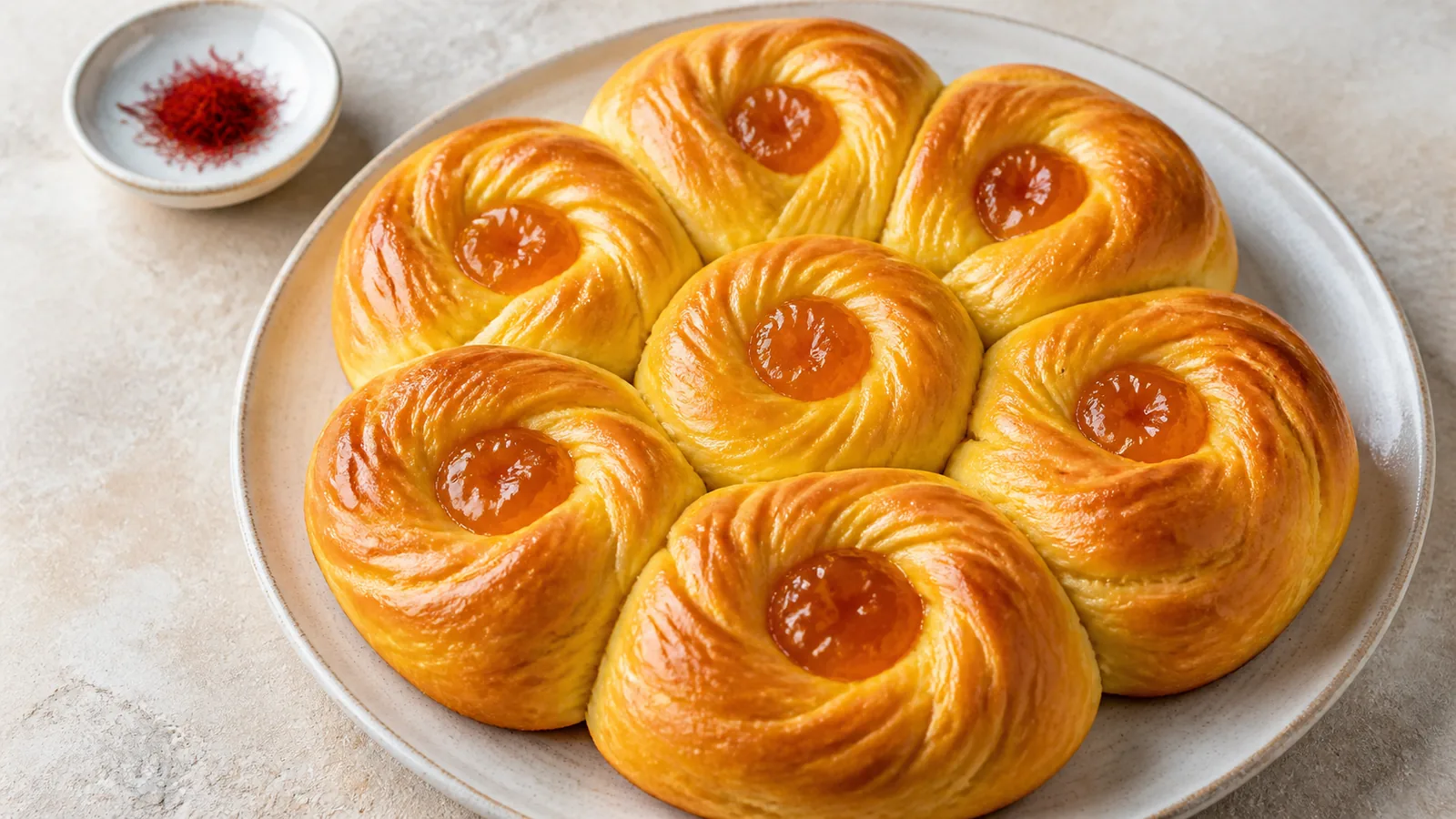
The shaping looks elaborate, but it begins with 14 simple ropes of dough. Pair and twist the ropes, join each pair into a ring, then arrange the seven rings together before the second rise.
Ingredients for saffron jam flower bread
- 400 g plain flour, plus a little for kneading
- 10 g active dry yeast
- 1 tablespoon sugar
- 1/4 cup lukewarm water
- 1/2 cup lukewarm milk
- 1 large egg
- 35 g neutral oil, plus a little for the bowl
- 1/4 teaspoon salt
- 1/2 teaspoon vanilla, optional
- Thick marmalade or jam, as needed
For the saffron egg wash
- 1 large egg yolk
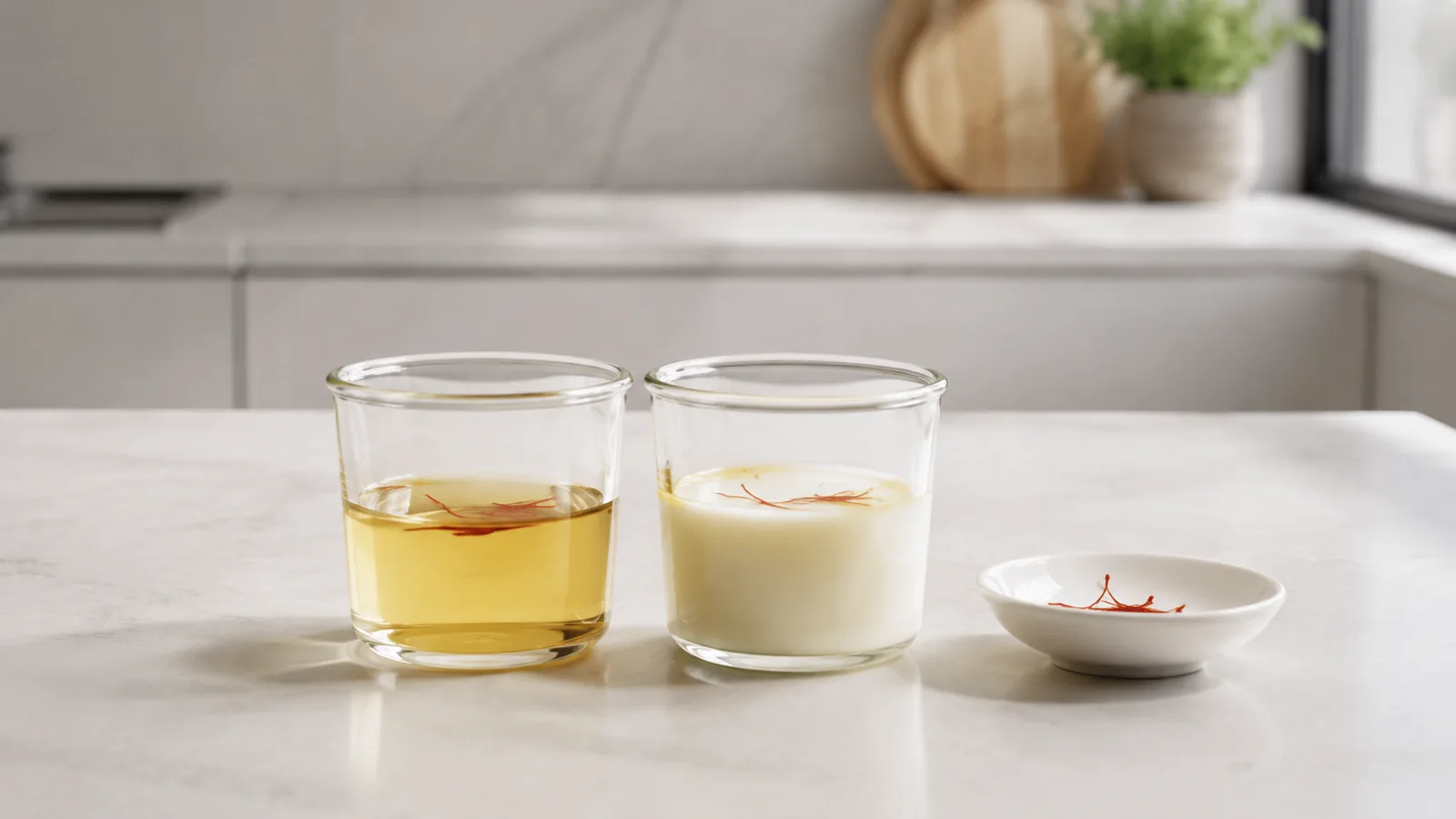
- 1 teaspoon concentrated saffron infusion
- 1 teaspoon milk or water
Activate the yeast
Stir the yeast and sugar into the lukewarm water. Leave it for 5 to 10 minutes, until a foamy layer appears. The water and milk should feel comfortably warm, not hot; excessive heat can damage the yeast.
Mix and knead the dough
Whisk the egg, milk, oil, salt and optional vanilla in a large bowl. Add the activated yeast mixture.
Work in the flour gradually. Stop adding flour as soon as a soft dough forms; the exact amount can vary slightly with the flour and the size of the egg.
Turn the dough onto a lightly floured surface and knead for about 10 minutes. It should become smooth and elastic, with only a slight tackiness. Adding too much flour will make the baked bread dry.
Let the dough rise
Place the dough in a lightly oiled bowl and turn it once to coat the surface. Cover the bowl and leave it in a warm, draught-free place for about 90 minutes, or until the dough has roughly doubled in size.
Use the dough’s volume rather than the clock as your guide. A milk-enriched dough may rise more slowly in a cool kitchen.
Shape the seven-petal bread flower
Line a large baking tray with baking paper. Gently press the air from the risen dough and divide it into 14 equal pieces. A kitchen scale helps the petals bake evenly.
Roll each piece into a narrow rope of equal length. Take two ropes, twist them together, then join the ends to make a ring. Repeat until you have seven twisted rings.
Arrange the rings close together on the tray so they form a flower, with the open centres facing upward. Place the seventh ring in the centre and the other six around it. Cover loosely with a clean cloth and leave for another 30 minutes, until visibly puffy.
Fill and glaze the petals
Heat the oven to 180°C. Choose a thick preserve rather than a runny one, which can spill as it heats. Spoon a modest amount of marmalade or jam into the centre of each risen ring. The site’s saffron apricot jam recipe is one suitable filling.
Mix the egg yolk, saffron infusion and milk or water. Brush this glaze over the exposed dough without pressing out the rise.
Bake until golden
Place the tray on the middle rack and bake for about 25 to 30 minutes. The bread is ready when the top is evenly golden and the centre no longer looks damp or doughy.
If the edges colour too quickly, cover them loosely with foil for the final few minutes. Transfer the bread to a wire rack so the base does not become soggy as it cools.
Alternative date and walnut filling
For a less fruity version, replace the jam with a thick paste of soft dates and chopped walnuts. Keep the filling below the rim of each petal so it stays in place during baking.
Serving and storage
Serve the flower bread slightly warm or at room temperature, pulling apart one petal at a time. It is best on the day it is baked.
Once completely cool, keep it covered at room temperature for up to 2 days. Warm individual pieces briefly before serving; refrigerating the bread can make it stale more quickly.