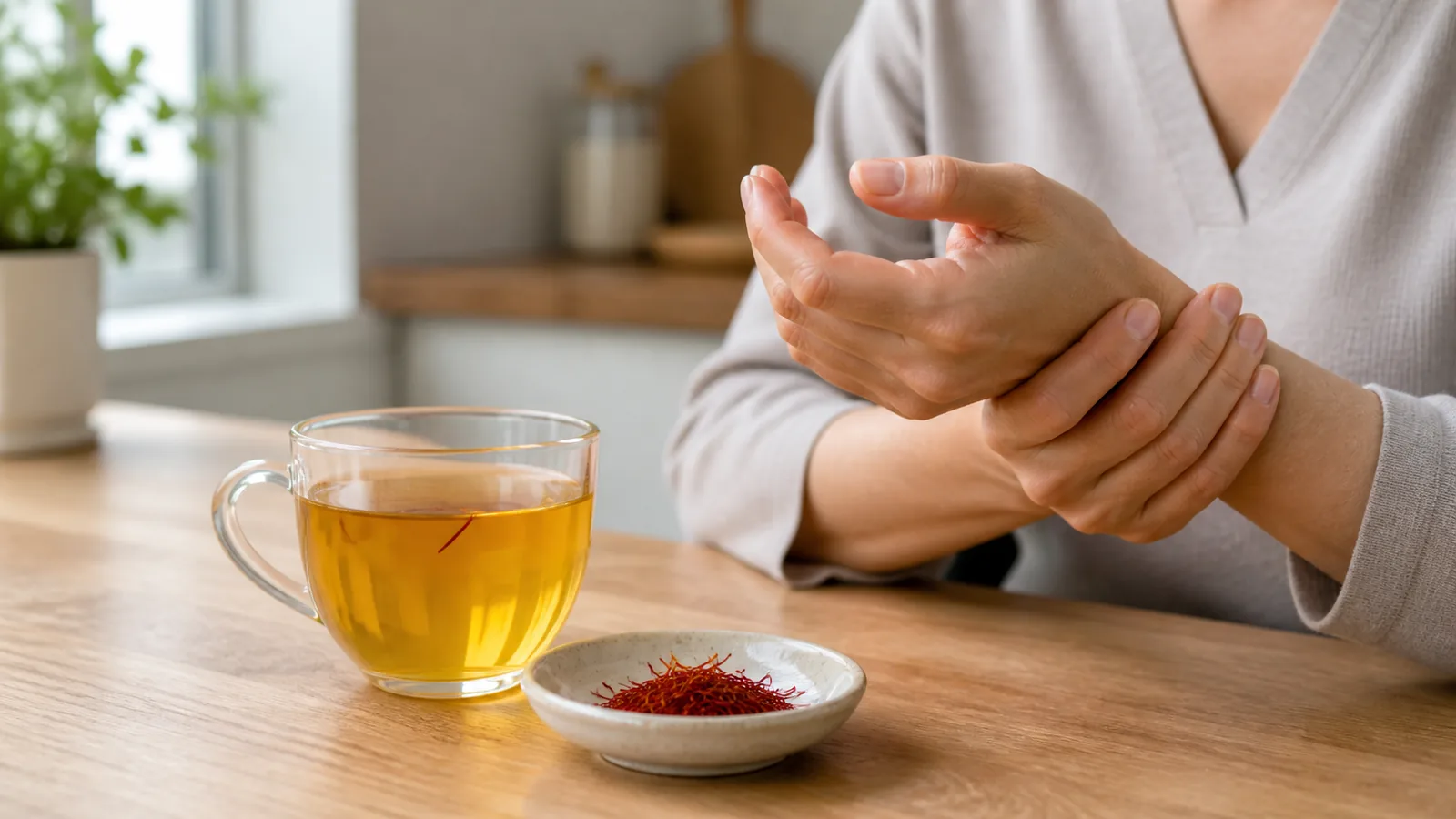
Antioxidants in saffron include crocin, crocetin and several related plant compounds. In laboratory tests they can interact with reactive molecules and influence markers associated with oxidative stress. That is a real and interesting property of the spice, but it does not mean a pinch of saffron prevents cancer, reverses ageing or “detoxifies” the body.
The useful question is not whether saffron contains antioxidants—it does—but what that fact can tell us about food and health. The answer depends on the compound, the amount, and whether the evidence comes from a test tube, an animal model or a human trial.
What are the main antioxidant compounds in saffron?
The red stigma threads of Crocus sativus contain apocarotenoids, a family of compounds made when the plant modifies carotenoids. A review of saffron bioactives and oxidative stress identifies crocin, crocetin and safranal as the compounds studied most often.
Crocin and crocetin
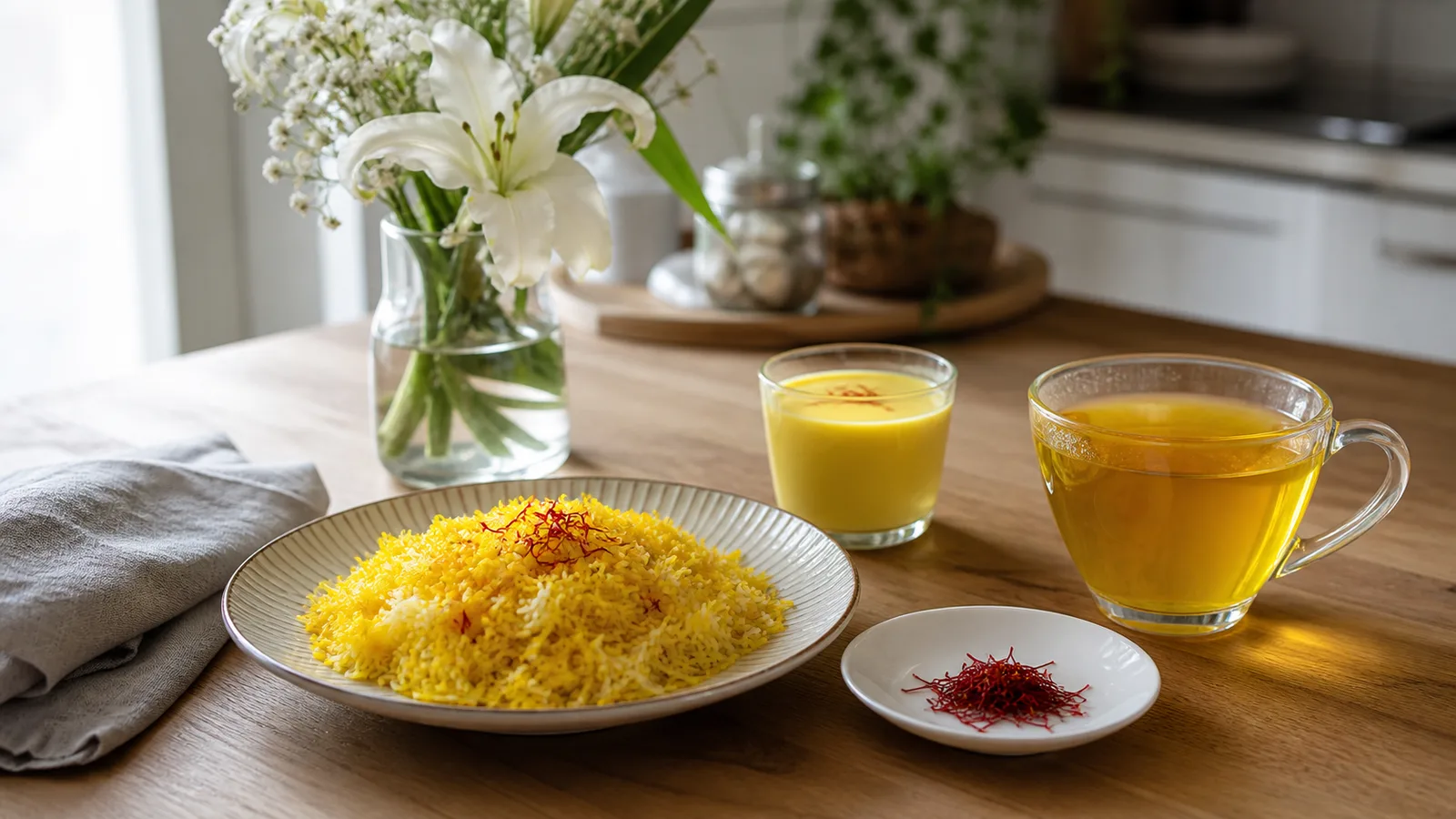
Crocins are water-soluble pigments responsible for the golden colour released when saffron is bloomed. Crocetin is the underlying carotenoid structure to which sugars are attached to form different crocins. Both are examined in chemical, cell and animal research for antioxidant and other biological activity.
Colour release is easy to see in a cup or saucepan. A health outcome is not. Absorption, metabolism, dose and the rest of a person’s diet all stand between a laboratory result and an effect in the body.
Safranal and picrocrocin
Safranal is central to saffron’s aroma and is also studied for antioxidant activity. Picrocrocin contributes the characteristic bitter taste and is a precursor of safranal as the spice is dried and stored. These compounds help explain why genuine saffron has colour, aroma and flavour rather than colour alone.
Other carotenoids and phenolic compounds
Analyses may also identify smaller amounts of carotenoids and phenolic compounds. The exact profile changes with cultivar, growing conditions, drying, storage and the analytical method. It is therefore misleading to attach a single universal milligram figure to every gram of saffron.
Older lists sometimes group lycopene, lutein, beta-carotene, vitamins A and C, and selenium together as “saffron antioxidants.” Some of those substances can be found in plants or contribute to antioxidant systems generally, but a normal culinary amount of saffron should not be sold as a meaningful vitamin or selenium supplement.
Free radicals, reactive oxygen species and oxidative stress
A free radical is an atom or molecule with an unpaired electron, not simply a molecule “missing an electron.” That unpaired electron makes many radicals reactive. Hydrogen peroxide is often discussed in the same context: it is a reactive oxygen species, although it is not itself a free radical.
The body produces reactive species during ordinary metabolism and immune activity. They are not always enemies; at controlled levels they take part in signalling and defence. Trouble can arise when their production overwhelms protective systems, a state called oxidative stress.
Antioxidants do not all work by carrying a spare electron around. Depending on their chemistry and location, they may donate an electron or hydrogen atom, interrupt a chain reaction, bind a metal, or support enzyme systems. The body also makes its own antioxidant defences.
What laboratory antioxidant activity does—and does not—prove
Researchers can expose a saffron extract or isolated compound to a reactive chemical and measure radical-scavenging capacity. Cell and animal studies can go further by measuring lipid oxidation, glutathione or antioxidant enzymes. These experiments are valuable for finding mechanisms and deciding what should be tested next.
They cannot show by themselves that eating saffron prevents a disease. Extract concentration may be far higher than a culinary serving, isolated crocin is not the same exposure as whole threads, and a marker changing in a short experiment may not translate into a meaningful long-term outcome.
This distinction matters most around cancer. The US National Cancer Institute’s antioxidants and cancer fact sheet notes that human trials of antioxidant supplements have not established the broad preventive benefit suggested by laboratory work, and some high-dose supplements have caused harm in particular groups. Saffron should not be described as an anticancer remedy on the strength of cell studies.
What does human saffron research show?
Human trials have studied saffron preparations for several outcomes, including mood and selected metabolic measures. A meta-research review of saffron clinical evidence found potentially useful signals in some areas but also uneven review quality and gaps in the evidence base.
Those results do not prove that “antioxidants” are the reason for every observed effect. Saffron compounds may act through several pathways, and many studies use standardised extracts or capsules rather than the small amount added to food. The preparation and dose should always be checked before applying a study’s conclusion to an ordinary meal.
Can saffron protect the skin, liver, heart or digestion?
Laboratory and early clinical work has explored all of these areas. It is reasonable to say saffron compounds are under investigation; it is not reasonable to promise clear skin, liver protection, better breathing, cancer prevention or digestive treatment from culinary saffron.
“Antioxidant” is a chemical description, not a blanket medical approval. Someone with liver, heart, respiratory or digestive disease still needs care directed at that condition. Saffron must not replace medicine, screening or a clinician’s advice.
How to use saffron as part of an antioxidant-rich diet
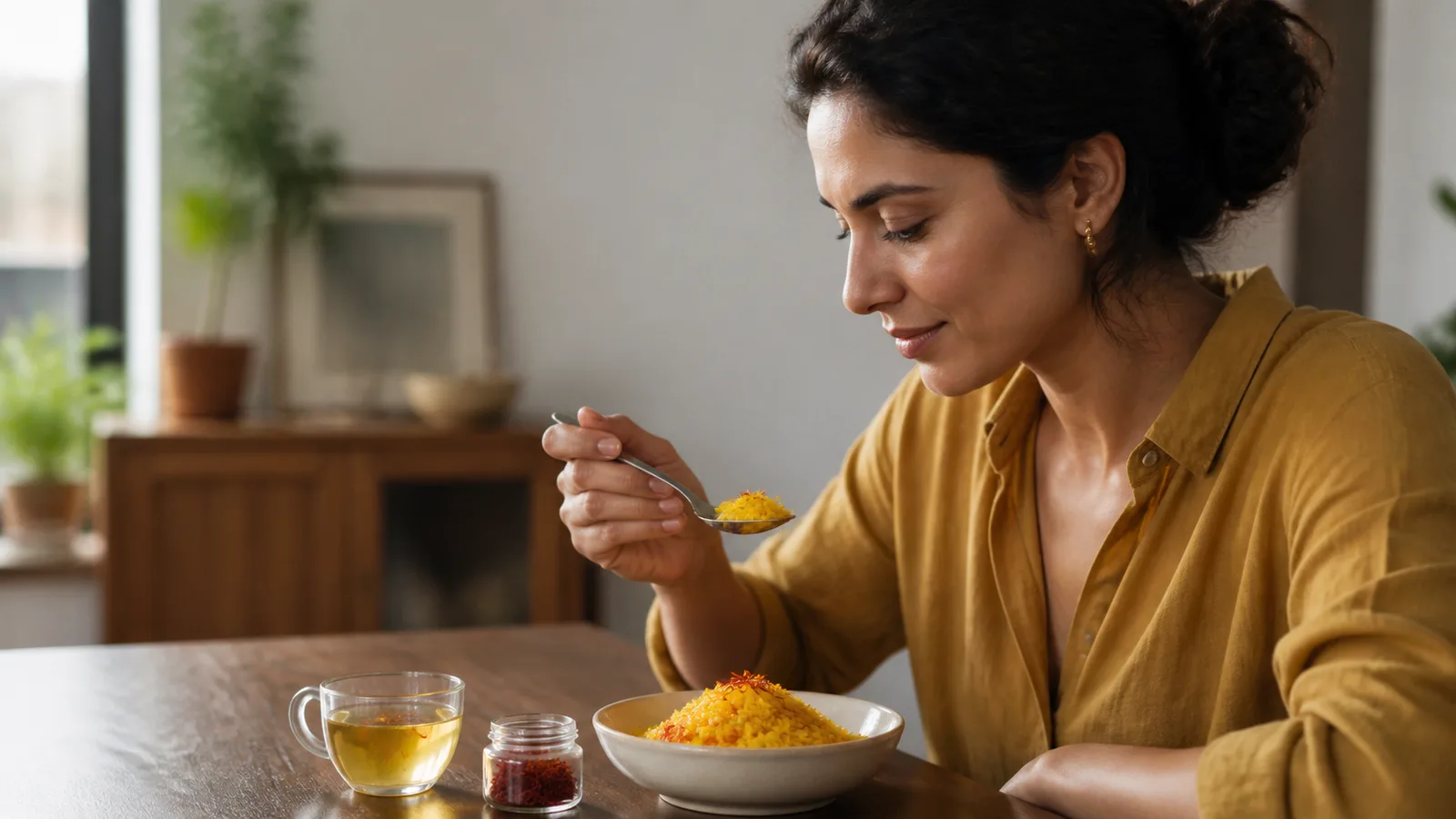
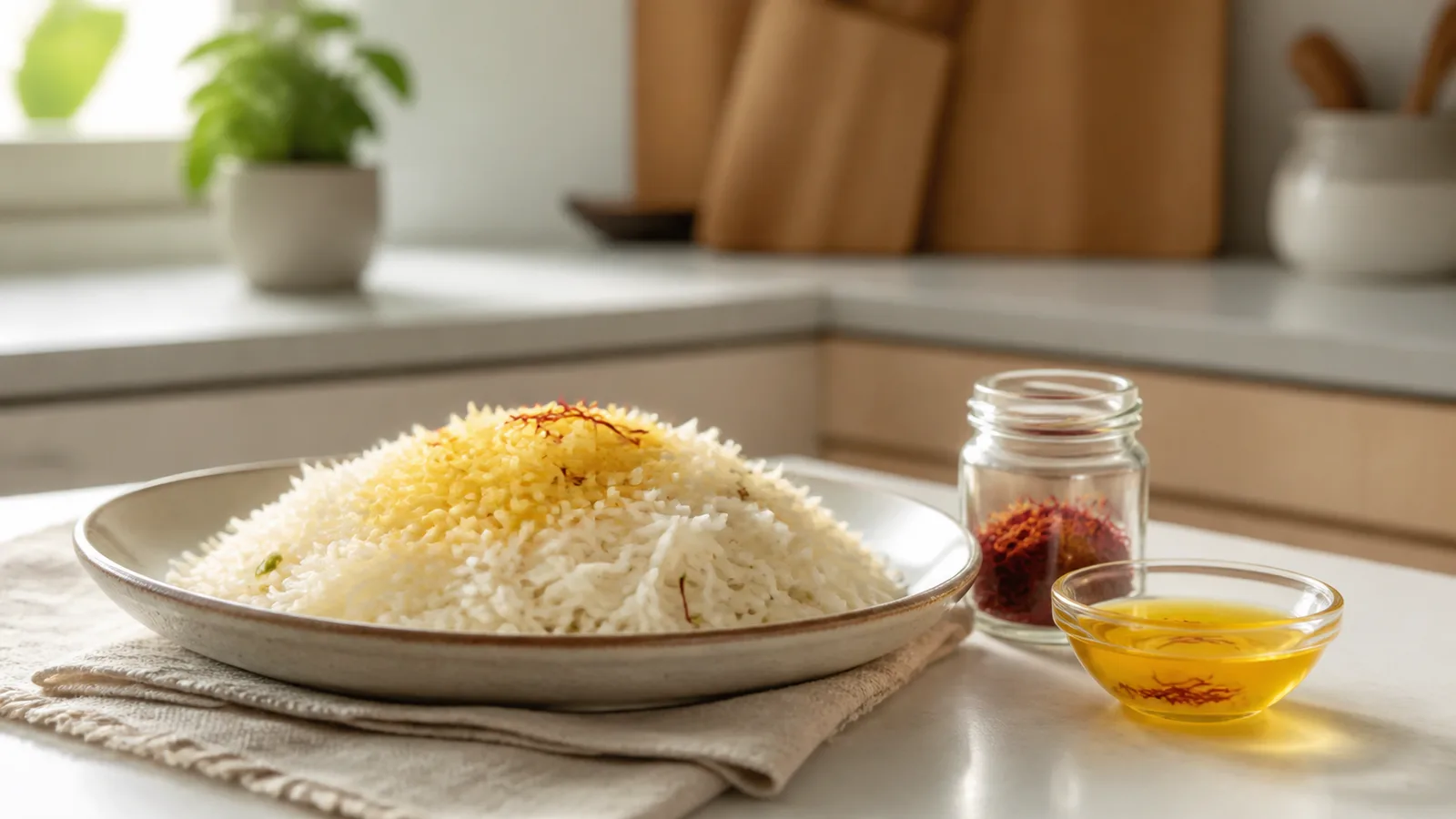
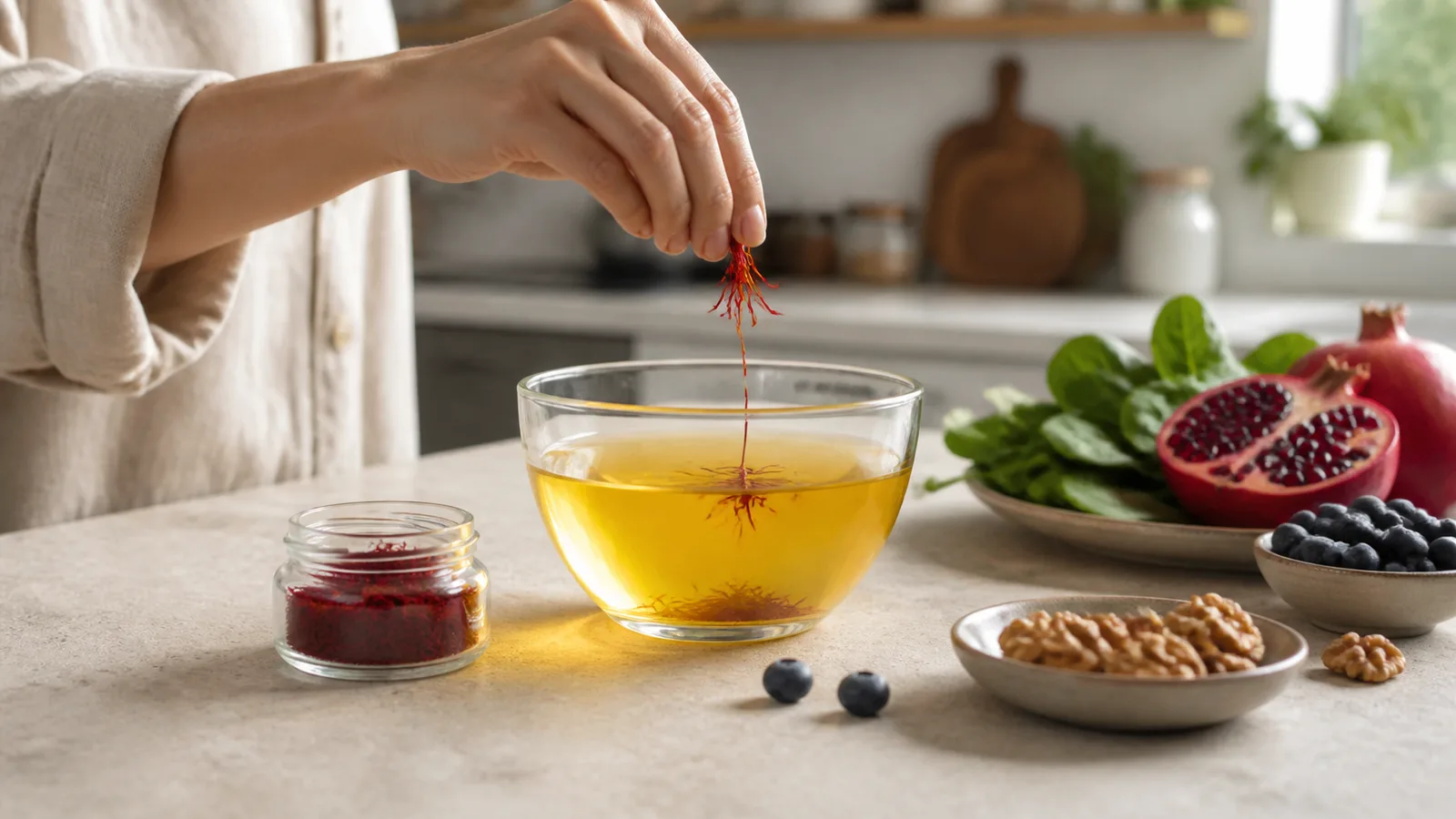
Use saffron first as a spice. Crush a small culinary pinch, bloom it in warm water for 10–15 minutes, and add the liquid to rice, soup, vegetables, yoghurt or a lightly sweetened drink. Blooming releases the water-soluble crocins and distributes the colour evenly.
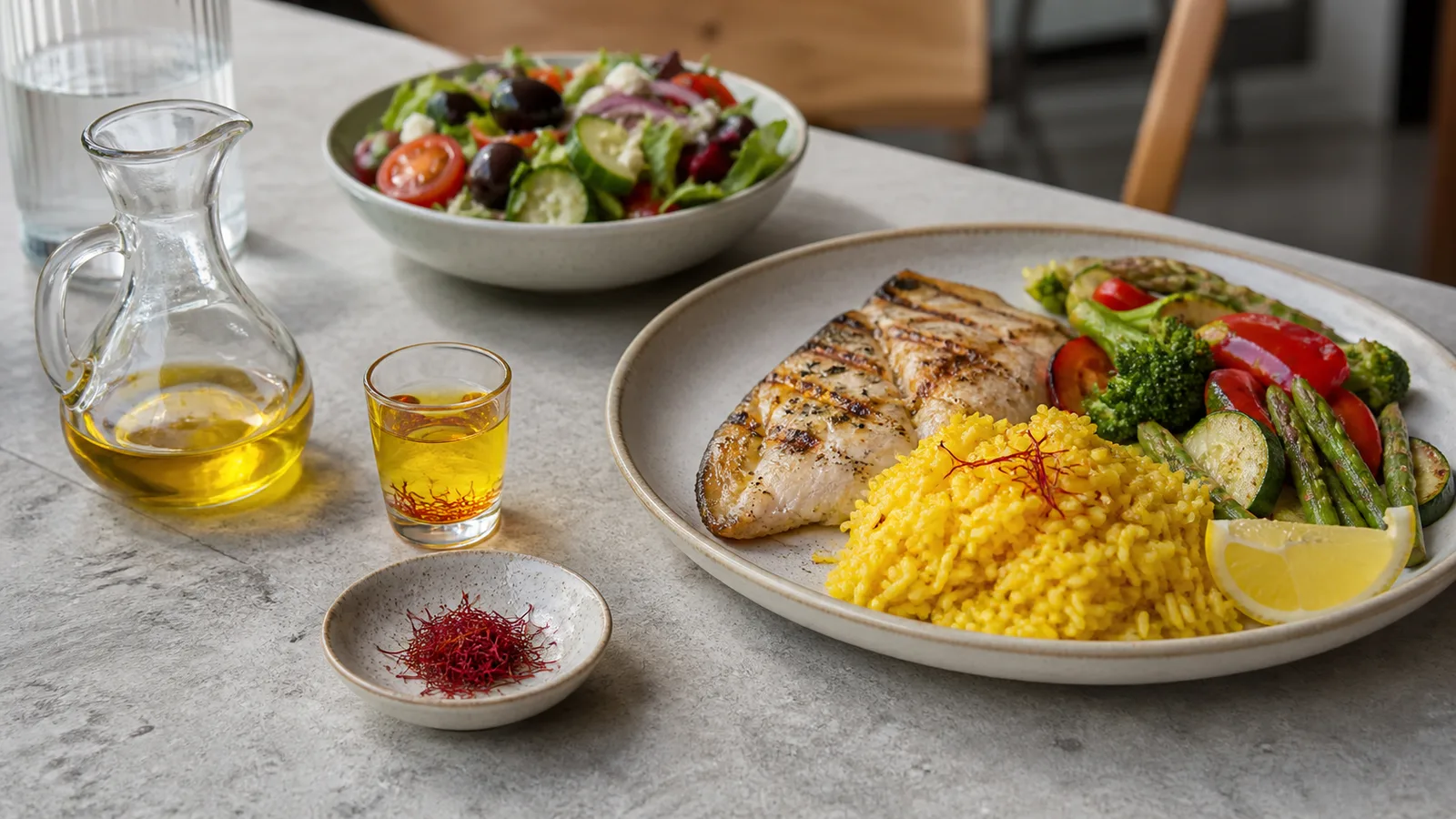
A varied eating pattern contributes far more than one costly ingredient. Vegetables, fruit, beans, whole grains, nuts, herbs and spices provide different fibres and plant compounds. The National Center for Complementary and Integrative Health advises that antioxidant supplements should not replace a healthy diet or conventional care.
Keep dry saffron airtight, away from heat, light, moisture and strong odours. Our guide to storing saffron explains how those conditions protect aroma, colour and flavour. Long storage or poor drying can alter the same compounds discussed here.
Are saffron petals the same as the red threads?
No. The purple floral parts contain their own phenolic compounds and pigments, while the red stigmas are the culinary spice rich in crocins, picrocrocin and safranal precursors. Research on a petal extract cannot automatically be used to describe a stigma infusion, or vice versa.
Only use floral material sold and handled as food. Decorative flowers may be treated with chemicals not intended for consumption. Our article on saffron petals and their uses explains this distinction in detail.
A practical conclusion
Saffron contains compounds that show antioxidant activity, particularly crocin, crocetin and safranal. That chemistry helps researchers understand the spice and may lead to useful clinical questions. It is not evidence that saffron alone can neutralise an unhealthy lifestyle, stop ageing or prevent cancer.
Enjoy genuine saffron for the colour, aroma and flavour it brings to food. Treat its antioxidant content as one small part of a varied diet, and judge any medical claim by the human evidence, preparation and dose behind it.