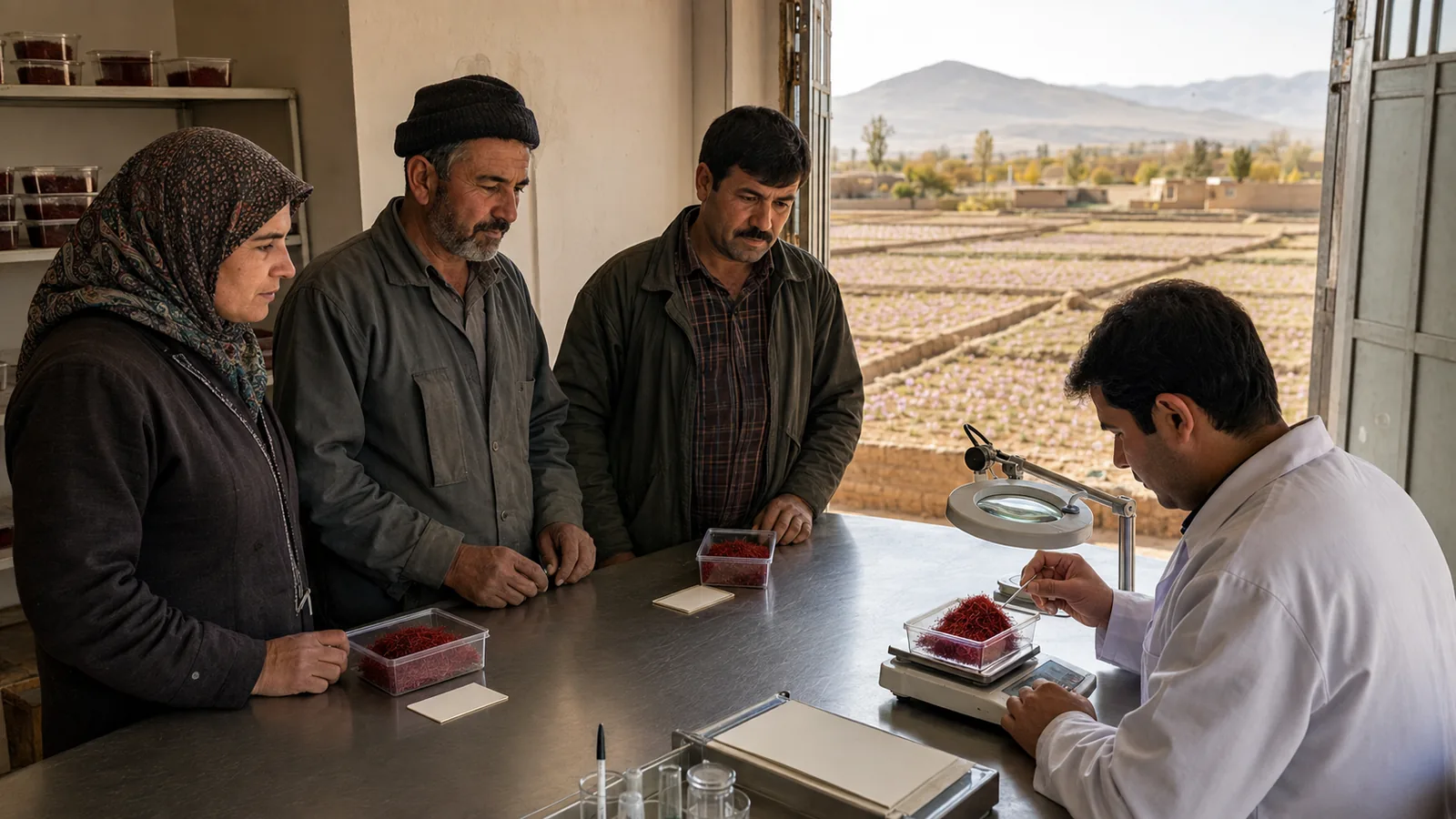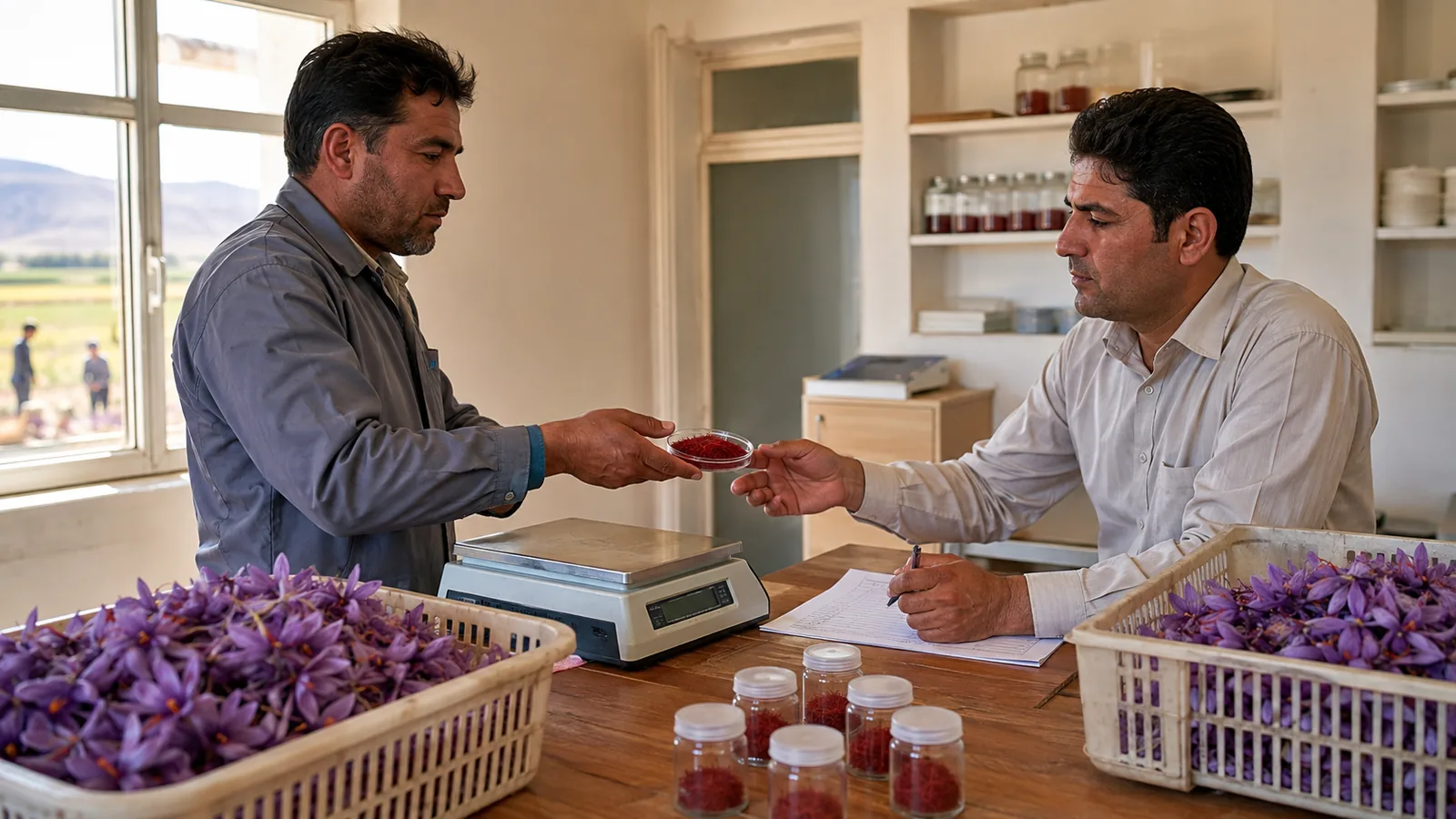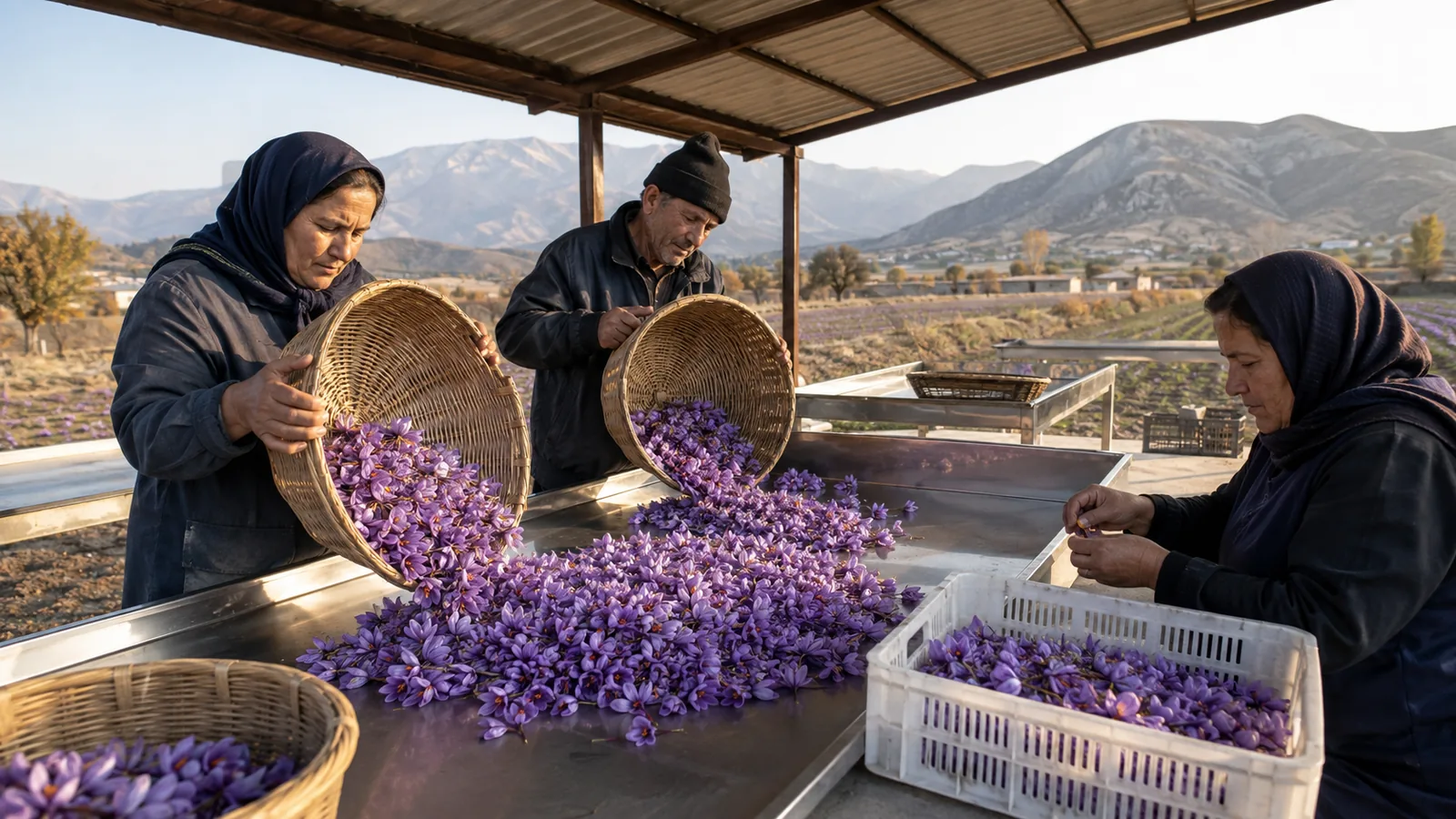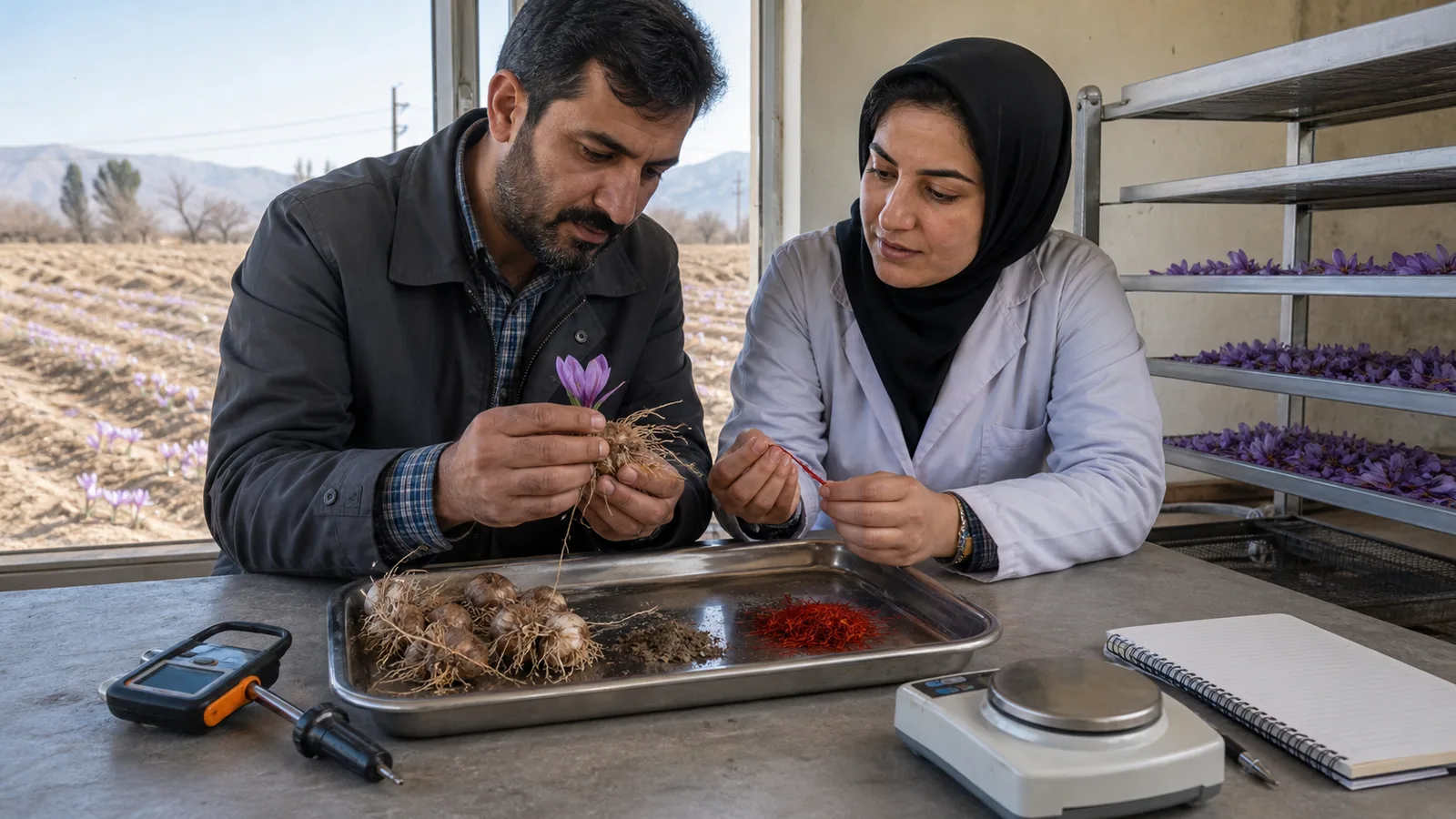


Farms in Gonabad suffered a weaker saffron harvest after low rainfall, summer heat and sudden cold-weather events, according to a local report published on 12 February 2016. Early frost, ice, rain and hail were said to have damaged emerging buds, with upland villages around Kakhk among the affected areas.
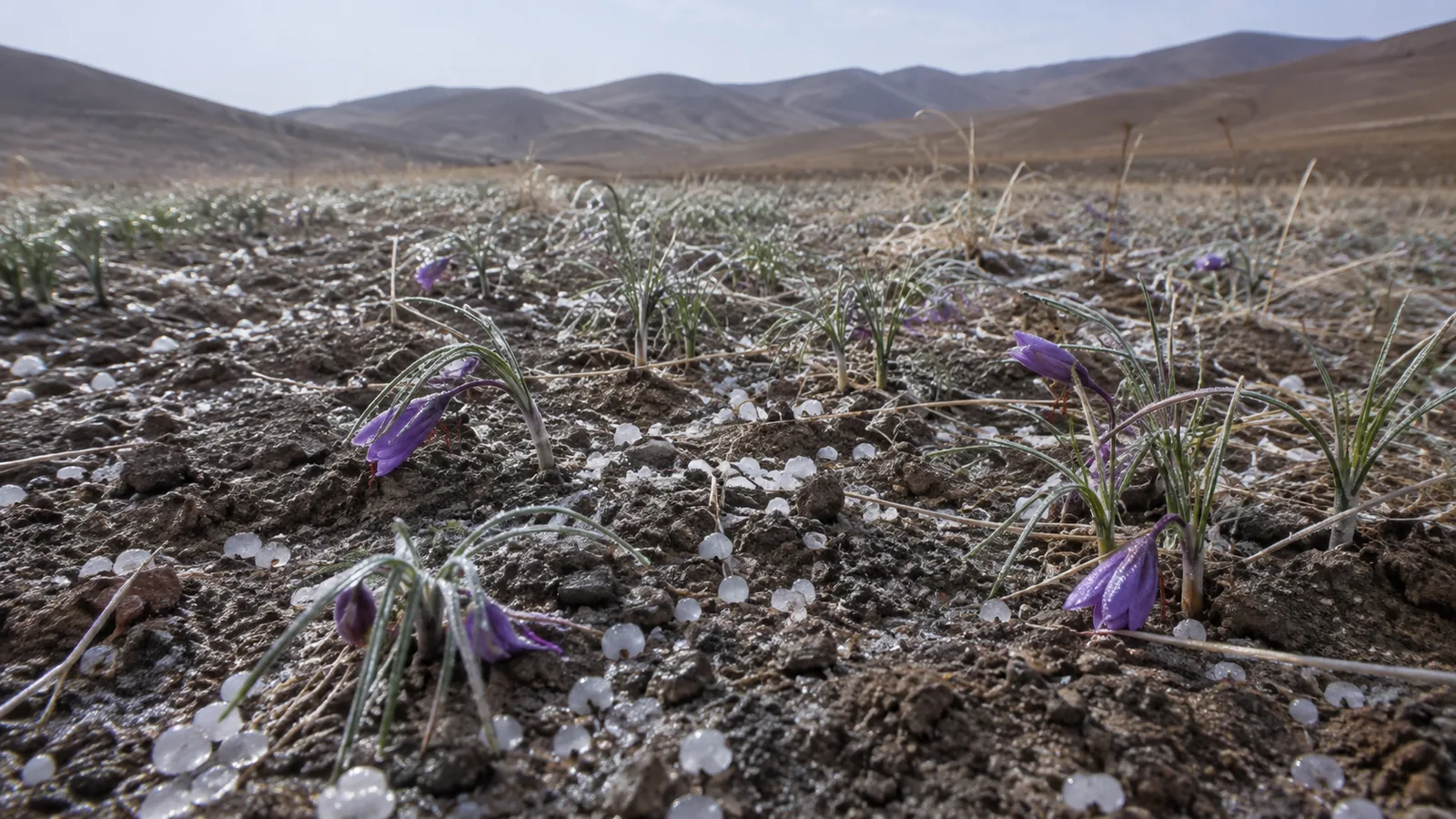
What happened to saffron farms in Gonabad?
The report quoted a local observer working with the United Nations Industrial Development Organization (UNIDO) project in the area. The person’s name is corrupted in the surviving English translation, so it is not repeated here as if it were certain.
With the flower harvest complete, the observer described noticeably less flowering than in the previous season. Saffron fields in Gonabad and surrounding counties had produced less, while the decline was particularly visible in colder villages in the upland part of Kakhk.
A difficult sequence of weather
The article connected the reduced crop with several stresses rather than one isolated storm:
- low rainfall during the preceding crop year;
- unusually hot summer conditions;
- early frost and ice during a sensitive stage;
- sudden rain and unexpected hail around budding and flowering.
The old translation contradicts itself in one sentence about seasonal rainfall. Its consistent meaning is that insufficient water and later weather shocks affected the crop. No rainfall total, temperature record or measured percentage loss was included, so the article cannot support a more precise claim.
Why timing matters to a saffron crop
Saffron spends much of the year below ground as a corm. The visible crop is concentrated into a short autumn flowering period, and the valuable stigmas must be collected from those flowers. Conditions that reduce budding or damage open flowers can therefore affect the harvest quickly.
Cold is not always harmful to a dormant saffron field, and rain is not automatically a problem. The risk depends on timing, intensity, drainage and the condition of the plants. A sudden frost or hail event when buds are emerging is different from ordinary winter weather after flowering has finished.
Drought and heat can carry over
The report also placed the immediate frost damage in a longer seasonal context. Weak rainfall and high summer heat can influence soil moisture, irrigation demand and the condition in which corms enter the next growth cycle. Local soil and field management determine how much of that stress reaches the plant.
Growers cannot control the weather, but they can reduce avoidable pressure through suitable field selection, healthy planting material, drainage, timely irrigation and careful handling after harvest. Our practical saffron cultivation tips cover those decisions without treating one method as suitable for every farm.
Calls for support after the damage
The UNIDO observer called for grants or other assistance to help growers absorb part of the loss. The report does not say that a particular compensation programme was approved. It records a proposal made after the harvest, not a confirmed payment to every affected farmer.
That distinction matters because crop damage reaches households differently. A grower may lose flowers, incur the same seasonal labour costs and still need to maintain the field for another year. Short-term help can address cash pressure, while recovery also depends on corm condition and the next season’s weather.
The proposed saffron bank
The article then moved from weather to marketing. It suggested establishing a saffron bank in the province and purchasing product through a production network. The intended purpose was to give growers a more organised route to market, reduce the share captured by brokers and improve coordination of exports.
A bank or warehouse system can only serve farmers when grading, weighing, storage, ownership and payment rules are transparent. The name alone does not guarantee a fair price. Our history of Iran’s first saffron bank explains how storage, grading and grower receipts fit into that model.
Production figures were still pending
The observer said that Gonabad’s saffron production statistics were being compiled and would be released later. No final tonnage or verified loss percentage appears in the surviving article. That is why this page describes the direction of the decline but does not attach a number to it.
Local estimates made immediately after harvest can still be useful, especially for identifying affected villages. For comparison across seasons, however, readers need a defined area, consistent measurement method and final data rather than a preliminary impression.
UNIDO’s role in the original report
A short explanatory note in the 2016 article described UNIDO as the United Nations agency concerned with inclusive and sustainable industrial development in developing economies. It also referred to cooperation between UNIDO’s Iran office, government ministries, public and private institutions, civil society and research organisations.
That background helps explain why the interview covered both farm damage and market structure. Saffron production begins in a field, but growers’ income is also shaped by processing, finance, storage and access to organised buyers.
What the 2016 report establishes
The evidence preserved here is specific and limited. A local observer reported reduced flowering and harvests around Gonabad after dry, hot and abruptly cold weather, including damage in villages near Kakhk. The speaker requested farmer support and argued for a saffron bank and production network.
The report does not establish the final scale of the loss or prove that its proposed support measures were implemented. Read as a dated field account, it documents how closely weather risk, farm finance and the structure of the saffron market were connected for growers in that season.