


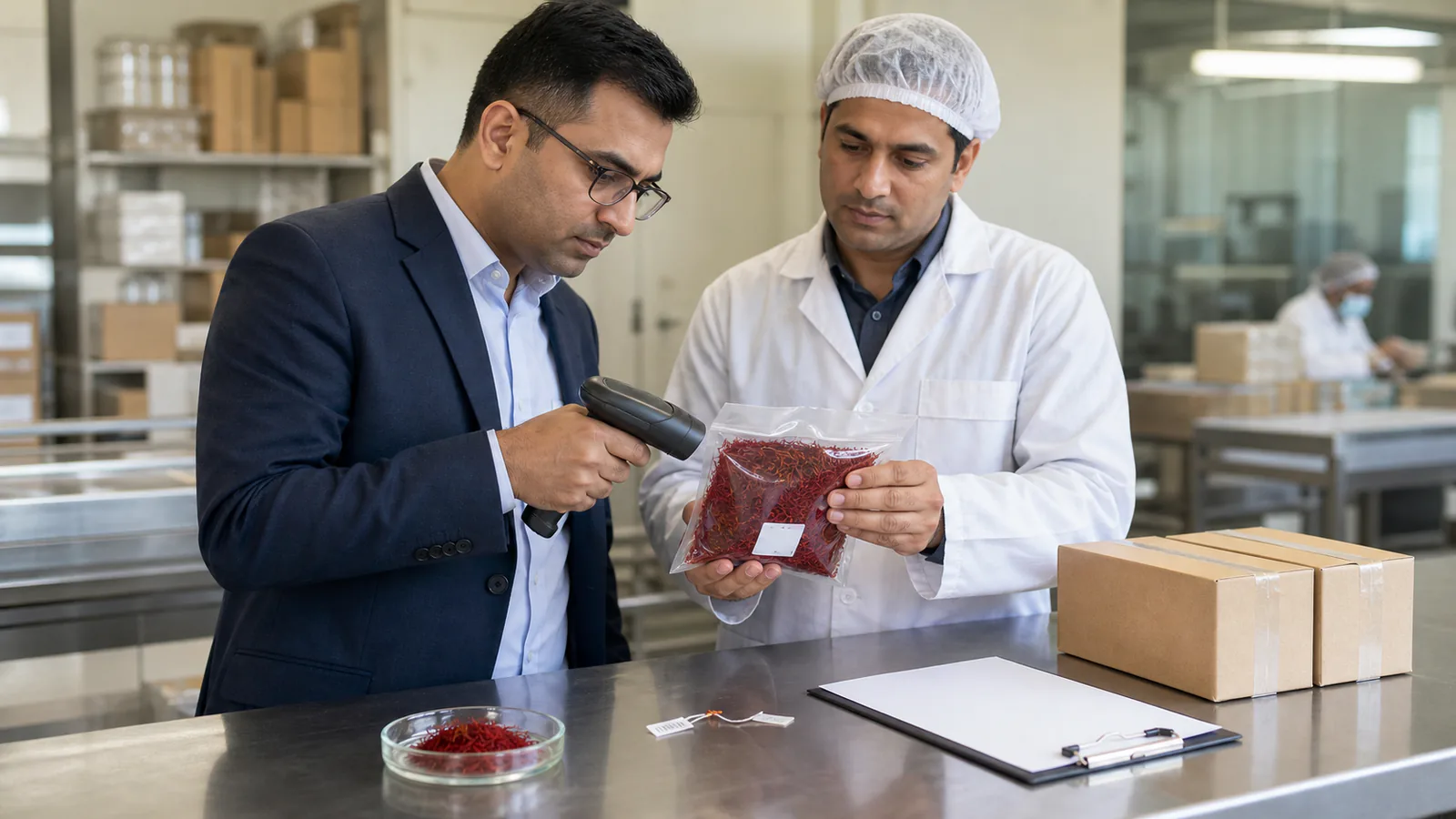
The phrase “pulse pounding saffron market in the hands of speculators” came from a 2015 interview about an unsettled period in Khorasan Razavi. Gholamreza Miri, then head of the province’s Saffron Exporters Union, argued that unlicensed brokers had enough influence to shape short-term trading while carrying fewer compliance, insurance and financial costs than registered businesses.
This is a historical report, not a claim that every intermediary is harmful or that the saffron market works the same way today. Brokers, laboratories, processors, warehouses and distributors can all provide necessary services. The concern was narrower: opaque dealing made it hard to identify who was responsible for a lot, why its price moved and whether the seller operated under meaningful oversight.
What Miri said about the saffron market
In the archived ISNA interview, Miri said speculators were “setting the pulse” of the market. His criticism focused on operators who were not answerable to a regulator and did not face the same overheads as licensed producers and sellers. In his view, weak action against underground trading amounted to indirect support for it.
The report included a striking local estimate: for every 100 licensed saffron businesses in well-known Mashhad markets, Miri said there were 150 dealers. That figure was his contemporary assessment, not a census and not a current statistic. It is retained because it explains the scale of the problem he believed regulators faced.
He also argued that production and sale needed clearer rules. Manufacturers, he said, should hold the applicable approvals from standards and food-and-drug authorities. The old translation turned this into an almost unreadable reference to “under bridges” production; the intended contrast was between accountable businesses and informal, under-the-stairs operations.
Why an untraceable seller changes more than the price
A low quote can look attractive until the buyer asks what it covers. If the grade, moisture, net weight, laboratory method, storage history and payment terms are unstated, two prices may describe very different products and risks.
An untraceable lot also leaves basic questions unanswered. Who dried and packed it? Can the sample be connected to the delivered saffron? What happens if testing finds foreign matter or a different grade? A buyer may save money at the first transaction yet lose far more through rejection, inconsistent production or a customer complaint.
Licensing does not prove that every lot is excellent, and a certificate should never replace product testing. It does establish a responsible business identity. Lot codes, invoices and retained samples then build a record around the actual saffron rather than around a seller’s promise.
What a buyer can verify before agreeing a saffron price
The safest response to an opaque market is not to guess which trader is honest. It is to make the transaction inspectable. Before accepting a quotation, a commercial buyer can ask for:
- the legal name and contact details of the seller;
- a lot or batch identifier that appears on the sample and final package;
- the stated saffron form and grade, with the applicable test report;
- net weight, packaging format and delivery terms;
- the laboratory name, report date and sample identity;
- confirmation that the delivered lot will match the approved sample; and
- a written process for rejection or resolution if it does not.
These checks do not freeze the saffron market or remove every risk. They make a price comparable. Our guide to Iranian saffron standards explains the quality measurements in more detail.
Where ISO 3632 fits—and where it does not
ISO 3632-1:2025 specifies requirements for dried saffron in filament, cut-filament and powder forms. The companion test-method standard describes how laboratories assess relevant characteristics. That framework gives buyers and sellers a common technical language.
ISO publishes standards; it does not police individual traders or set a daily saffron price. Compliance also needs to refer to a real sample and a real report. A line on a sales page is weaker evidence than a traceable lot whose documentation identifies the laboratory, date, method and result.
For post-harvest handling before packing, ISO 21983:2019 covers harvesting, flower transport, stigma separation, drying and storage. Those stages matter because poor handling can change the product before it ever reaches a broker or exchange.
The proposed saffron master plan
Miri pointed to a broader national plan that was supposed to address several parts of the market together. The archived interview mentioned defining the role of intermediaries, creating a saffron bank and assigning codes to products. At that time, he said, the programme was still waiting for a dedicated budget allocation.
A “saffron bank” should be understood here as a proposed organised storage and documentation mechanism, not as proof that a particular current institution offers deposits or guarantees. Such a system would only improve accountability if its rules covered sampling, ownership, withdrawals, storage conditions and price reporting.
The report also said that export barriers had been addressed during Iran’s eleventh administration and that curbing opaque intermediation would help domestic production and price stability. Both comments belong to that political and market period. They are not current regulatory advice.
Shortage rumours and market pressure
Miri disputed talk of a serious saffron shortage. He warned that unsupported production and price claims could have consequences for exports and domestic consumption. The surviving article did not provide crop data that could settle that disagreement, so the shortage claim should be read as his judgement rather than as a verified production result.
That caution remains sensible. A forecast should identify its reference year, growing area, source and method. Without those details, a dramatic claim can move expectations without helping a farmer, buyer or exporter understand the crop.
How this report differs from the companion market account
A separate article, Pulse beating at the hands of speculators saffron market, examines the same period through price volatility, stockholding and short-lived quotations. This page keeps a different purpose: it records Miri’s licensing and oversight concerns, then turns them into concrete checks a buyer can apply to a seller and lot.
The related discussion of organised trading belongs in our article on how a saffron exchange can improve transparency. An exchange can help compare documented lots, but it does not replace sound grading, storage or seller accountability.
The enduring lesson
Removing every middleman is neither realistic nor useful. The saffron supply chain needs people who collect, test, store, process, pack and distribute the crop. The real dividing line is whether each participant adds a visible service and can be held responsible for it.
That is how buyers reduce the power of opaque speculation: compare like with like, require a traceable lot, verify the evidence behind the grade and put the terms in writing. A market built on those habits can still move, but its pulse is easier to understand.
Sources and scope
- The archived 2015 ISNA interview reproduced in the original version of this post, with statements attributed to Gholamreza Miri.
- ISO 3632-1:2025, Spices — Saffron (Crocus sativus L.) — Part 1: Specification.
- ISO 21983:2019, Guidelines for harvesting, transportation, separation of stigma, drying and storage of saffron before packing.

![Exporting Saffron to Turkey + Price Guide [Complete 0 to 100]](https://img.rowhanisaffron.com/20260827003933/saffron-export-turkey-quality-inspection.webp)



