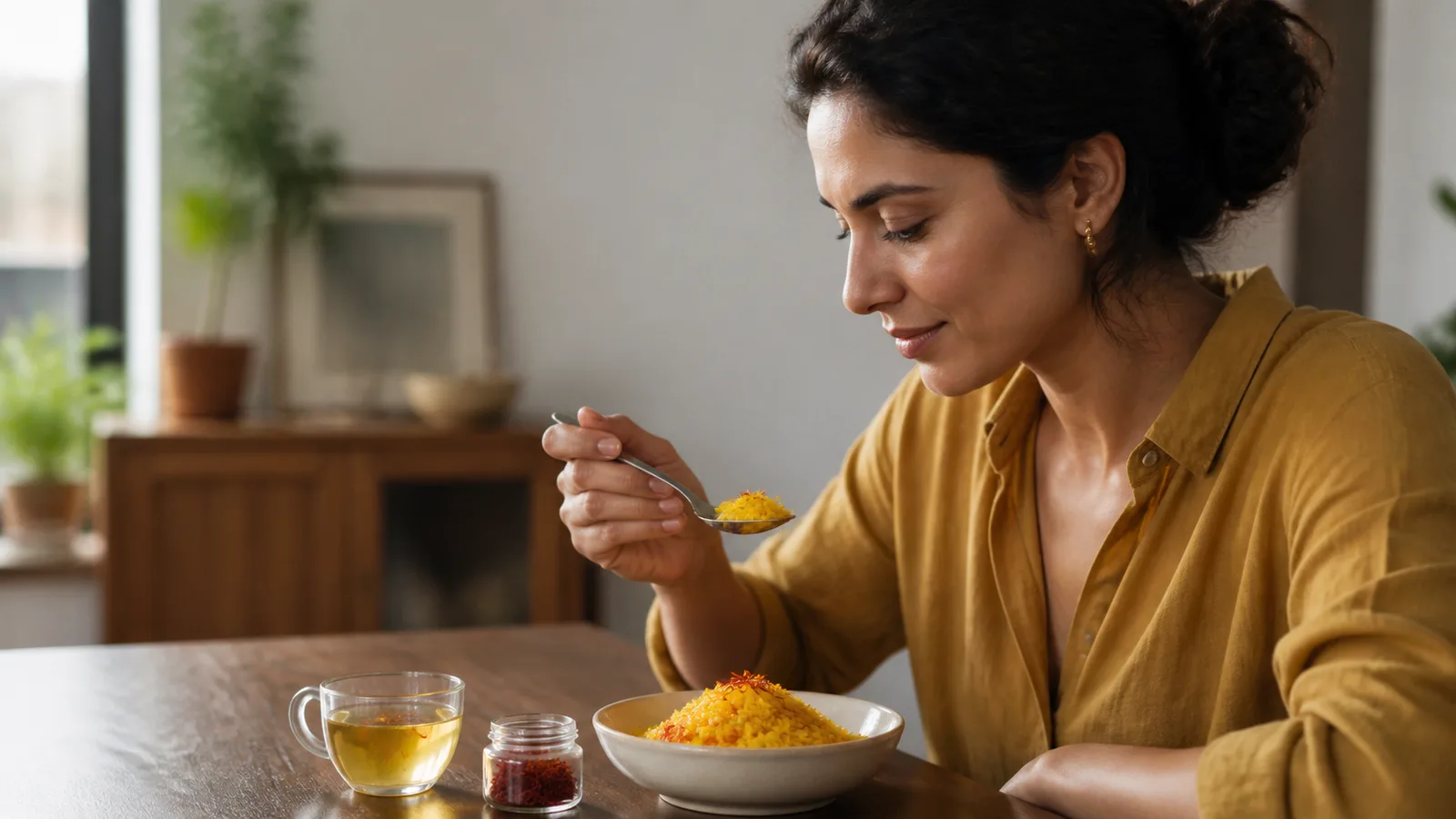
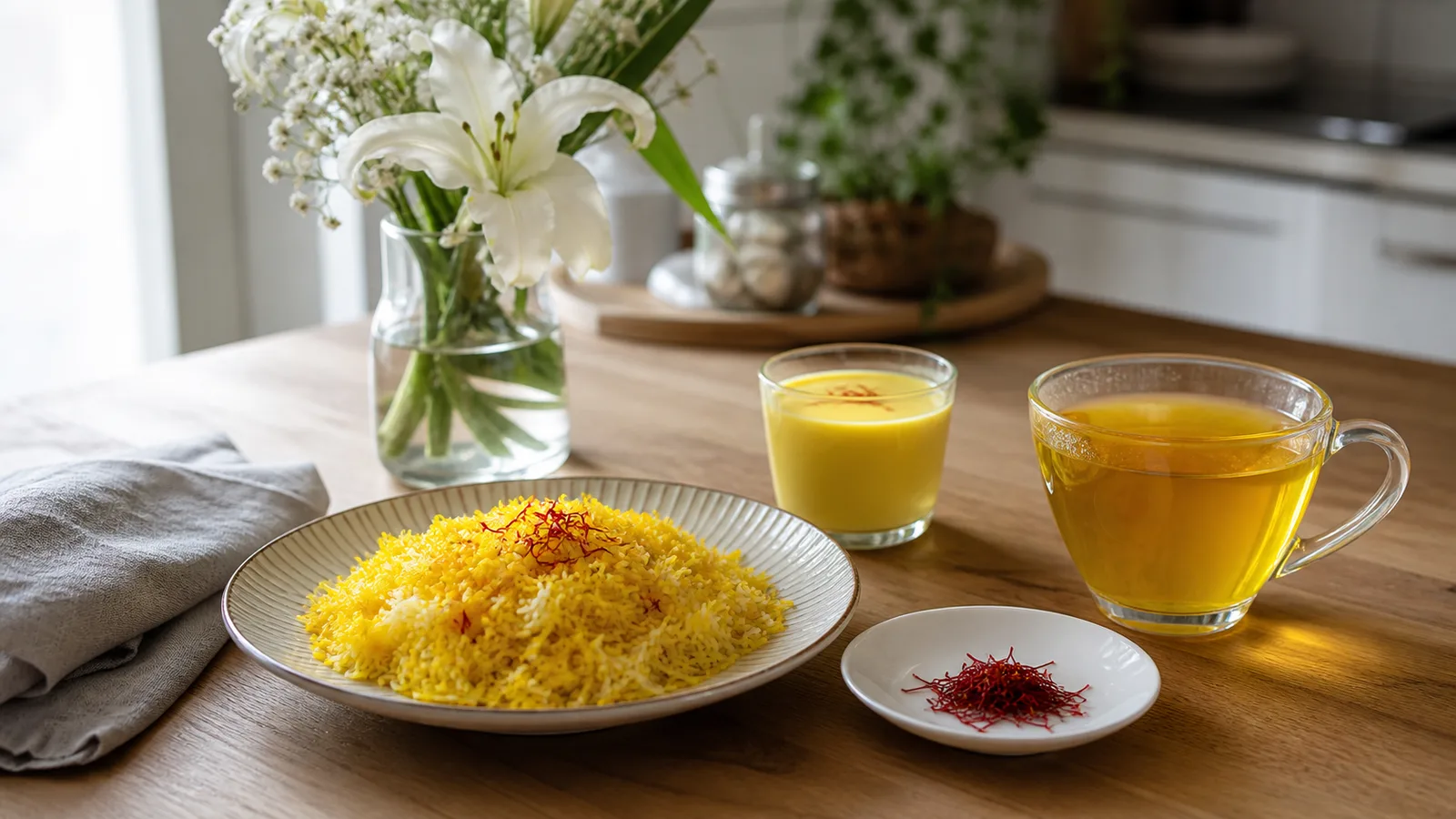
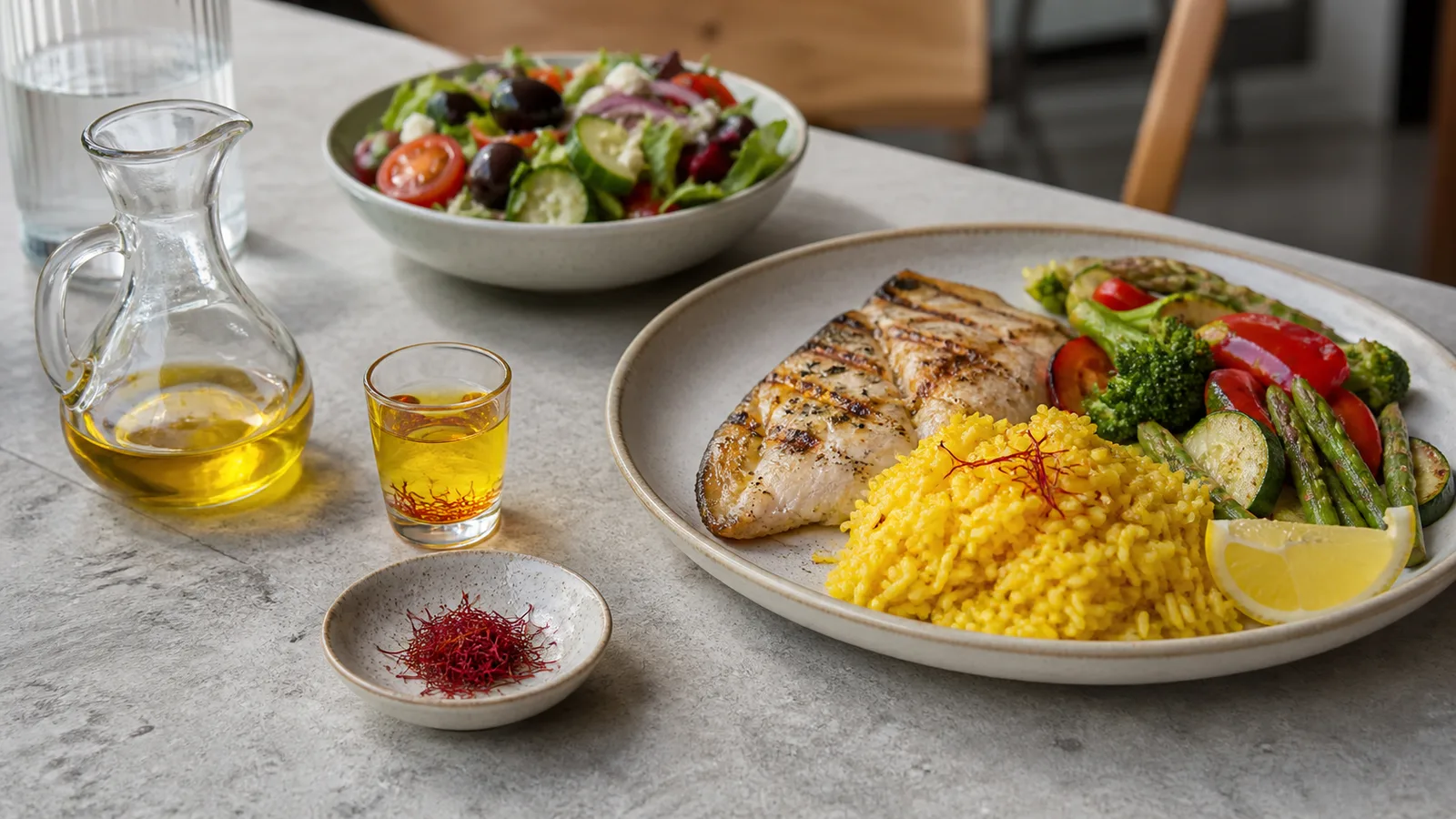
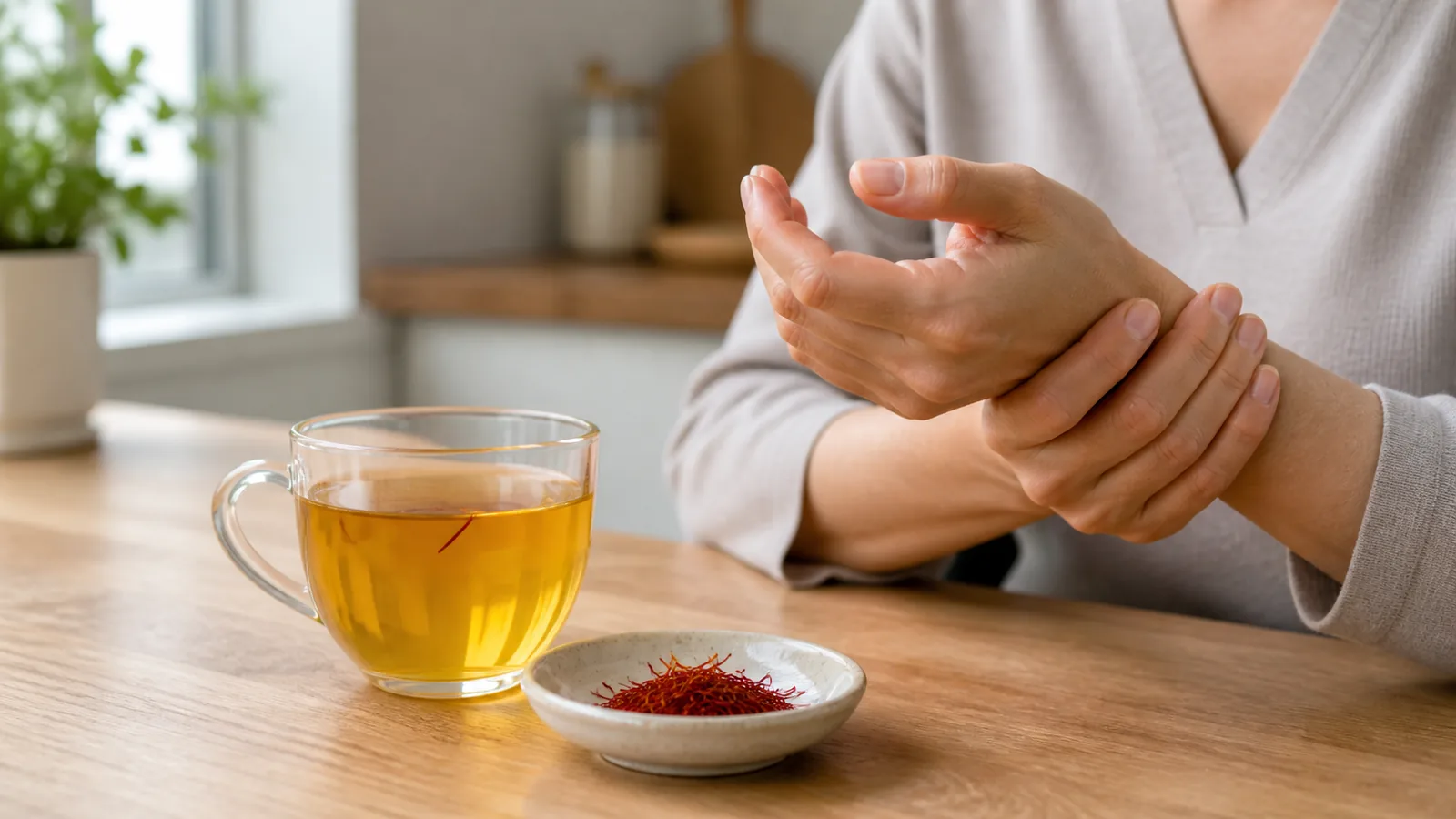
Saffron benefits and safety are easiest to understand when the spice is separated from the claims that surround it. Saffron is valued first as a food: a small amount gives rice, desserts, sauces, and drinks a distinctive aroma, a gently bitter edge, and a deep golden colour. Researchers have also studied concentrated saffron preparations, but those studies do not turn a culinary spice into a treatment for disease.
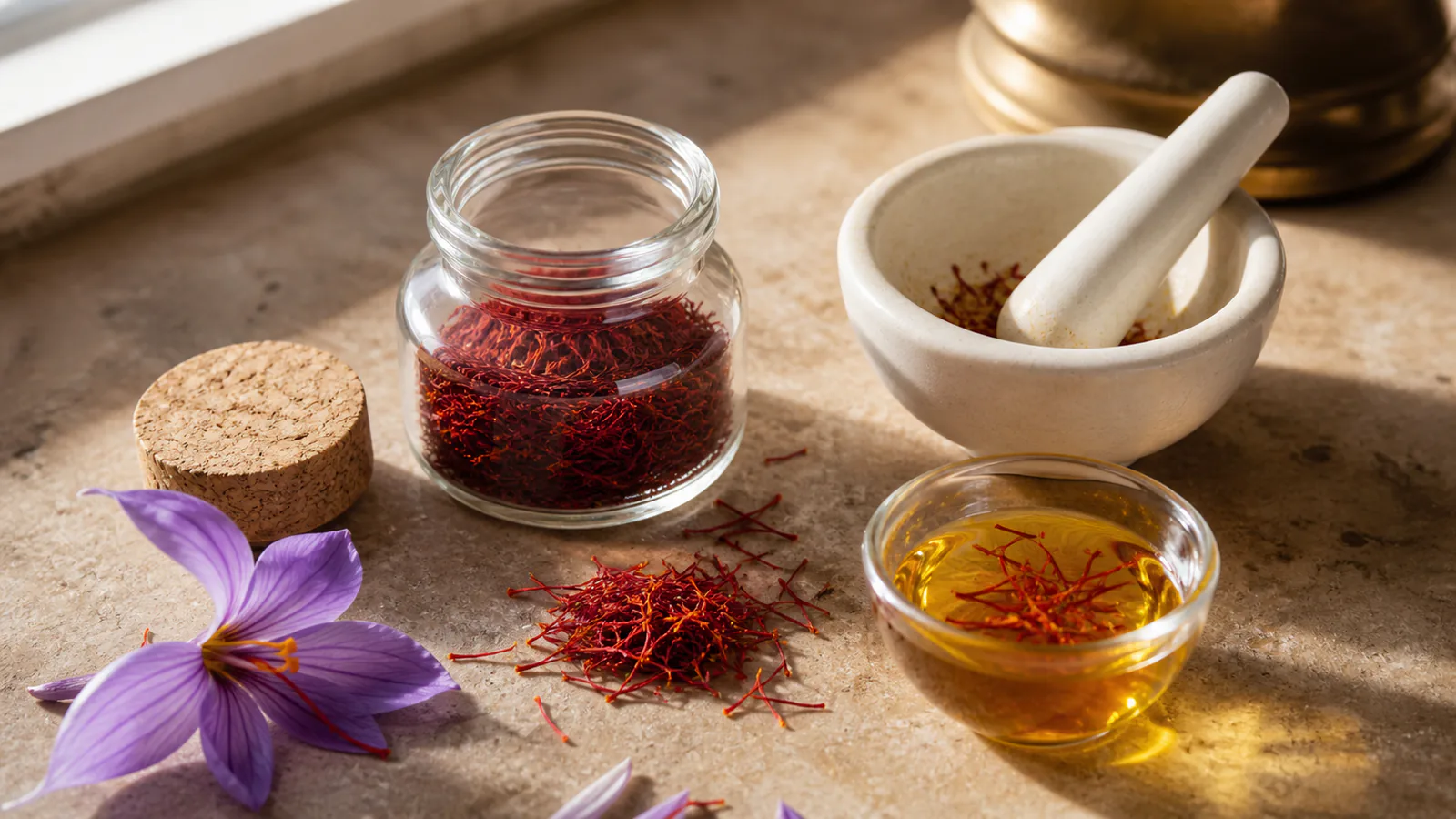
This guide explains what saffron is, how to prepare and store it, what modern research can and cannot tell us, and how to recognise common authenticity problems. It also covers the precautions that matter when saffron is taken in amounts beyond ordinary cooking.
What saffron is
Saffron comes from the dried red stigmas of Crocus sativus. Each purple flower produces only three stigmas, which are separated and dried after harvest. That small yield and the amount of careful hand work involved help explain why genuine saffron is expensive.
Three groups of compounds shape the spice’s character. Crocins create much of its colour, picrocrocin contributes bitterness, and volatile compounds led by safranal produce its aroma. A 2023 review of saffron chemistry and quality control describes these compounds and the ISO 3632 methods used to assess commercial saffron. For a closer look at the flower itself, see our guide to the anatomy of saffron.
How to use saffron in food
Whole threads keep their character better than pre-ground saffron, so grind only what you need. A mortar and pestle gives good control. A small pinch of sugar can provide extra friction, but it is optional and should not be mistaken for part of the saffron.
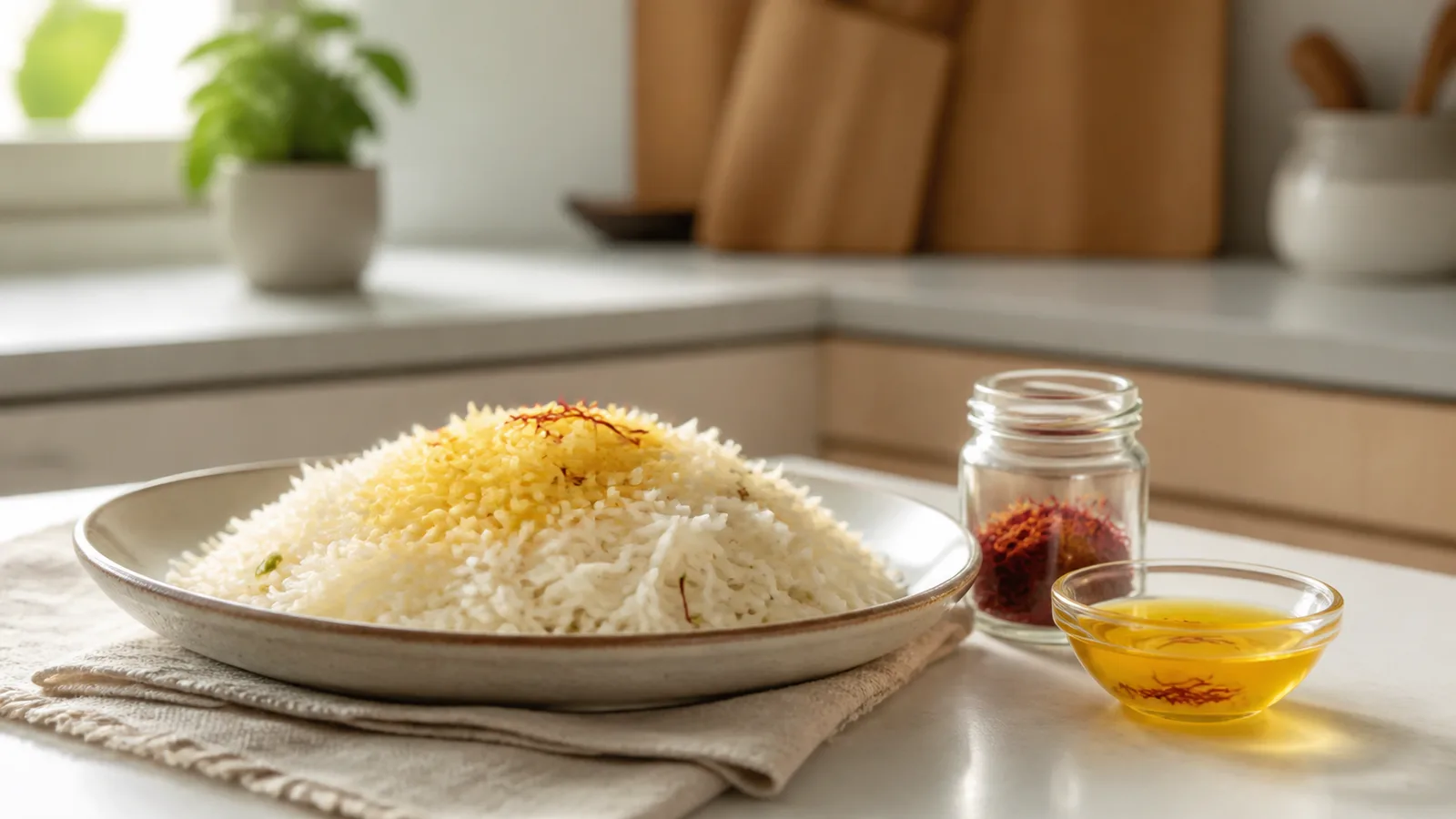
After grinding, steep the saffron in a little warm water for several minutes. The liquid should become strongly coloured and aromatic. Add both the infusion and the softened particles to the dish. This distributes the spice more evenly than dropping dry threads into a large pot.
There is no universal number of threads for every recipe. Thread size, quality, serving size, and the food around it all change the result. Start modestly: saffron should give a clear aroma and colour without making the food harsh or needlessly expensive. Our practical guide to using saffron in cooking covers several preparation methods.
Saffron benefits and safety: what the evidence really says
The dependable benefit of culinary saffron is sensory. It adds colour, fragrance, and flavour while allowing a cook to create a recognisable dish with a very small quantity of spice.
Clinical researchers have also tested standardised saffron supplements, especially in studies of mood. A 2026 systematic review and meta-analysis of 34 randomised trials found improvement on some self-reported depression and anxiety scales, but not on several clinician-rated measures. The authors rated the evidence as moderate and called for better trials. That is an interesting research signal, not proof that ordinary saffron in food treats depression or anxiety.
Older articles sometimes give saffron a long list of effects on cancer, cholesterol, blood pressure, pain, or sexual function. The quality of evidence is not uniform across those subjects, and laboratory or animal findings cannot be presented as established benefits in people. Saffron should not replace medical assessment, prescribed treatment, or a clinician’s advice.
Saffron safety and sensible precautions
The quantity used to flavour food is different from a concentrated extract or repeated supplement dose. A 2026 systematic review of adverse events in human saffron studies found that saffron preparations were generally well tolerated, while also recording side effects, most often minor gastrointestinal problems. The reviewers advised clinical monitoring for medicinal use at higher amounts or over longer periods.
Avoid treating old online dose figures as instructions. The composition of supplements varies, and a number copied from an unsourced article cannot account for a person’s health, medicines, pregnancy, or the form of saffron used.
- Use culinary saffron as a spice, not as a substitute for medicine.
- Do not take concentrated saffron products to manage a health condition without discussing them with a qualified clinician.
- If you are pregnant, breastfeeding, preparing for surgery, or taking prescription medicine, ask your clinician before using a saffron supplement.
- Stop using a supplement and seek medical advice if it causes a concerning reaction.
- Keep saffron and supplements away from children and follow the product’s labelled storage instructions.
How to store saffron without losing its character
Light, heat, moisture, oxygen, and time can change the compounds behind saffron’s colour, flavour, and aroma. Research comparing fresh and stored samples shows that the chemical profile shifts as saffron ages. A study of storage time and saffron quality found clear differences between freshly dried and two-year-stored samples.
Keep the threads in a clean, dry, airtight container in a cool, dark cupboard. Dark glass or a well-sealed metal tin protects the spice from light; an opaque, food-safe package can also work when it closes properly. The important points are limiting light, humidity, excess heat, and repeated exposure to air.
Store saffron as threads when practical and grind a small amount shortly before use. Ground spice exposes more surface area, so its aroma is easier to lose. Never put a damp spoon into the container, and do not keep saffron over a cooker, beside a sunny window, or in a humid refrigerator door.
Authenticity: saffron, safflower, and adulteration
Safflower is a real plant and a useful ingredient in its own right, but it is not saffron. Its dried petals can resemble red or orange threads from a distance and are sometimes used as a substitute. Other forms of adulteration include mixing in different plant material, coloured fibres, non-stigma parts of the crocus, or undeclared powders.
Visual checks can reveal obvious problems, but they cannot certify a sample. Genuine threads are irregular botanical material rather than perfectly identical pieces, and their colour should release gradually when steeped. Instant colour, an artificial-looking uniformity, or a suspiciously low price deserves caution, yet none of those signs is a laboratory result.
A 2024 study of 104 market samples used morphology, chromatography, and DNA barcoding to identify adulteration. This is why reputable sourcing, traceable packaging, and appropriate laboratory testing matter more than viral home tests. Buyers who need documented grade or purity should ask the supplier what testing standard and batch records support the product.
A practical way to buy and use saffron
- Choose a supplier that identifies the product and its origin clearly.
- Prefer intact threads when you want to inspect and store the spice yourself.
- Check that the package is dry, sealed, and protected from light.
- Buy an amount you can use while its aroma is still vivid.
- Grind and steep only what the recipe needs.
You can compare available formats in our saffron collection. Whatever form you choose, the useful standard is simple: genuine saffron should be traceable, properly stored, and used for what the evidence supports. That approach preserves the pleasure of the spice without turning uncertain claims into promises.