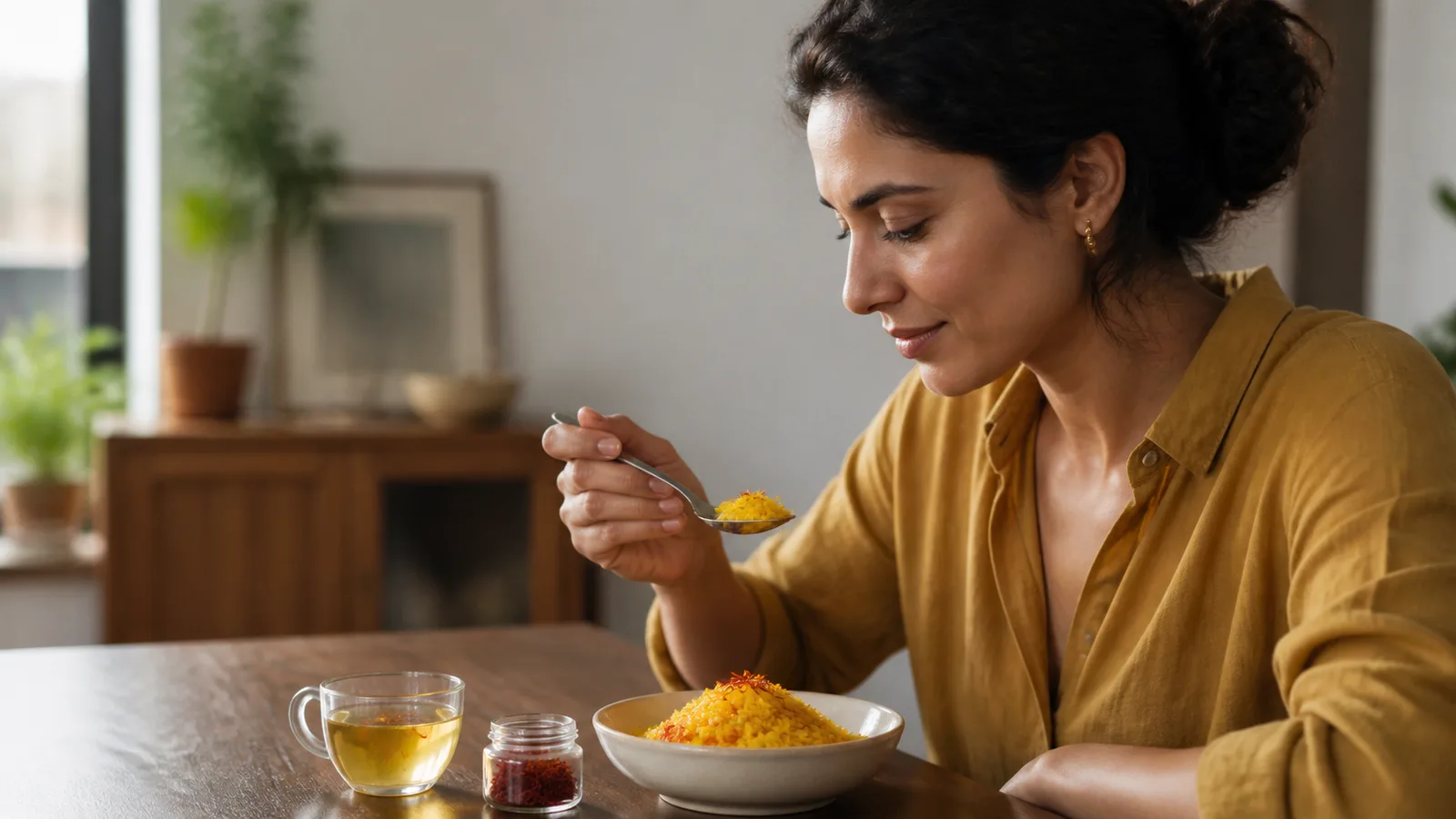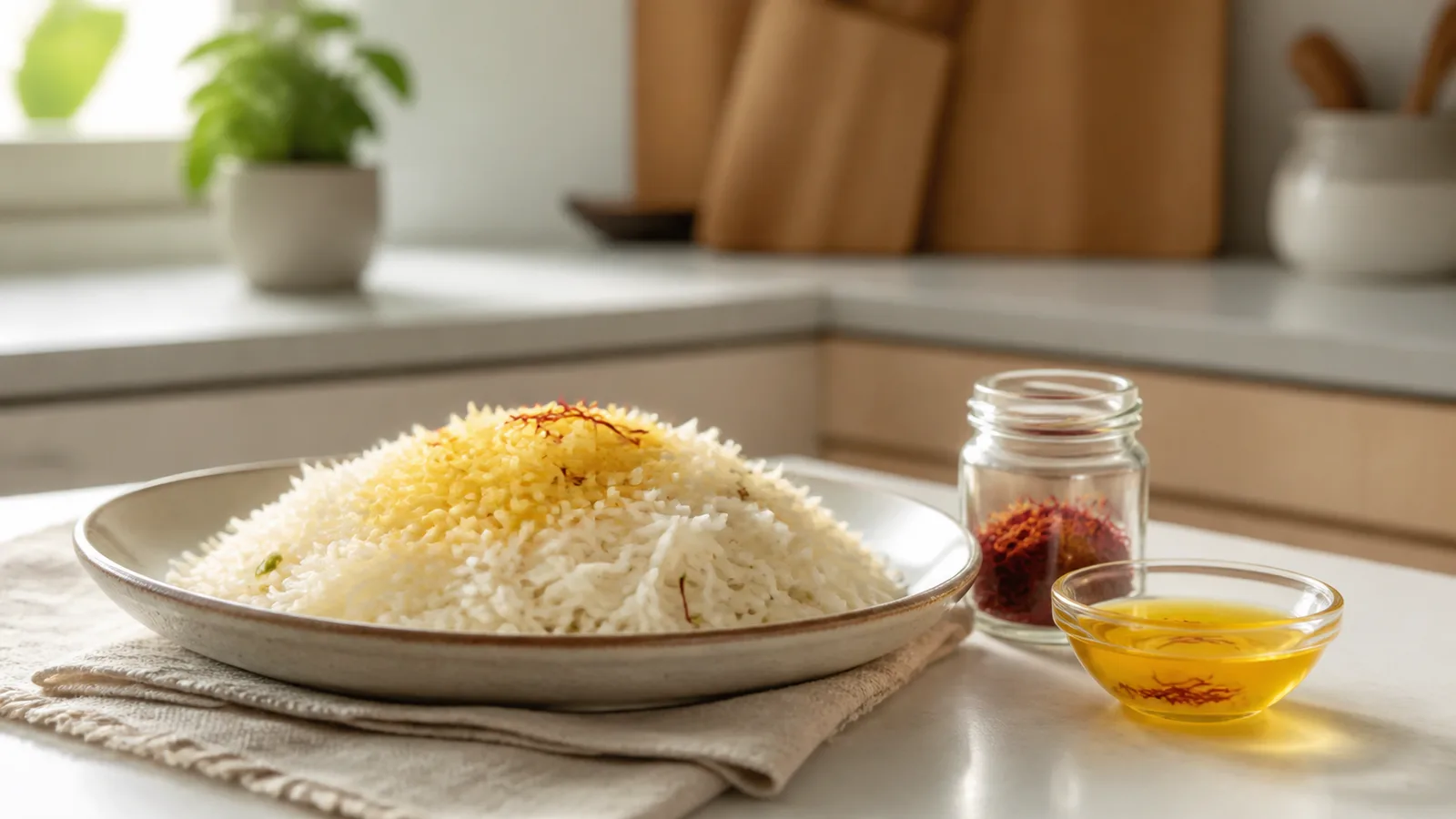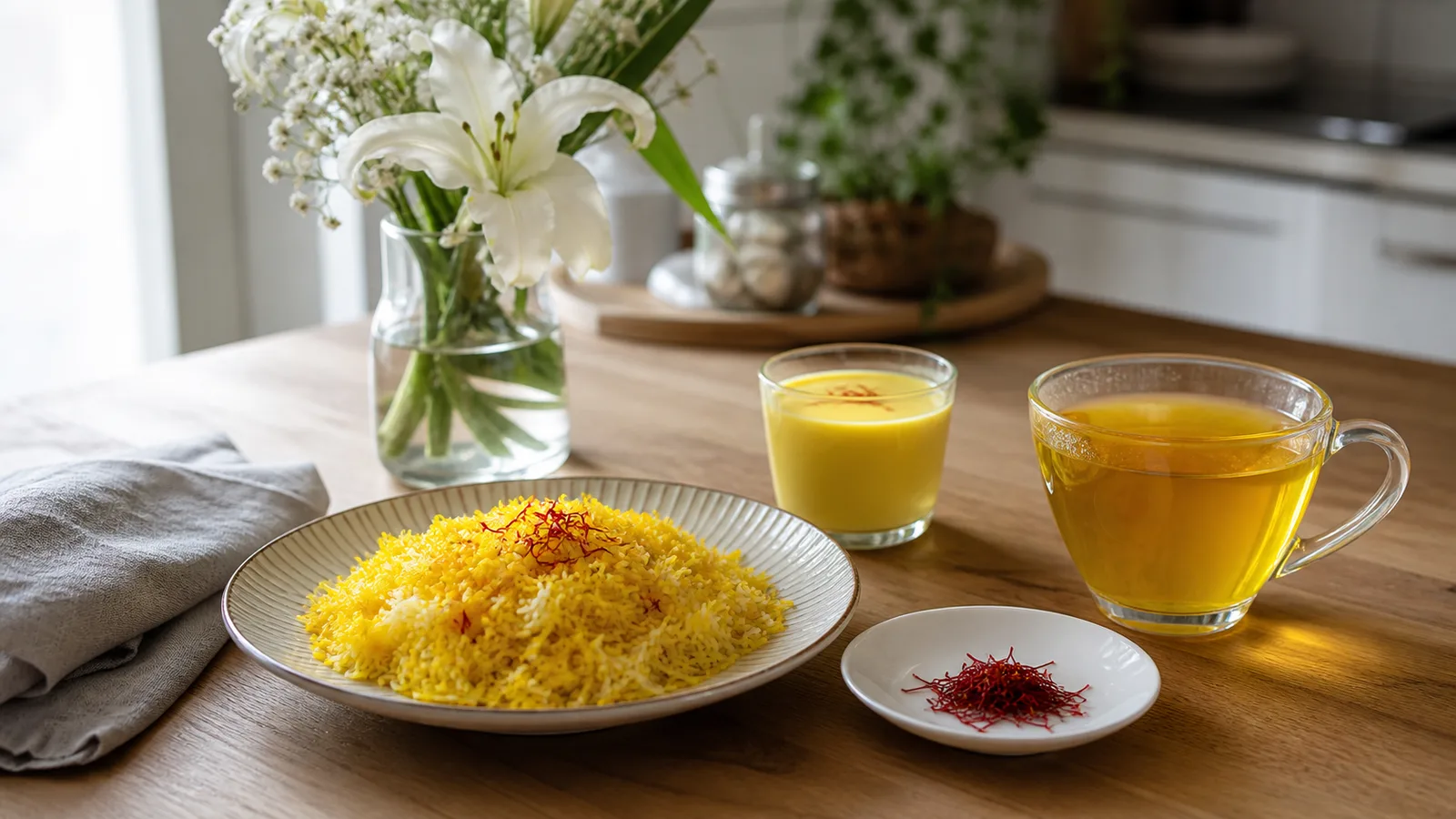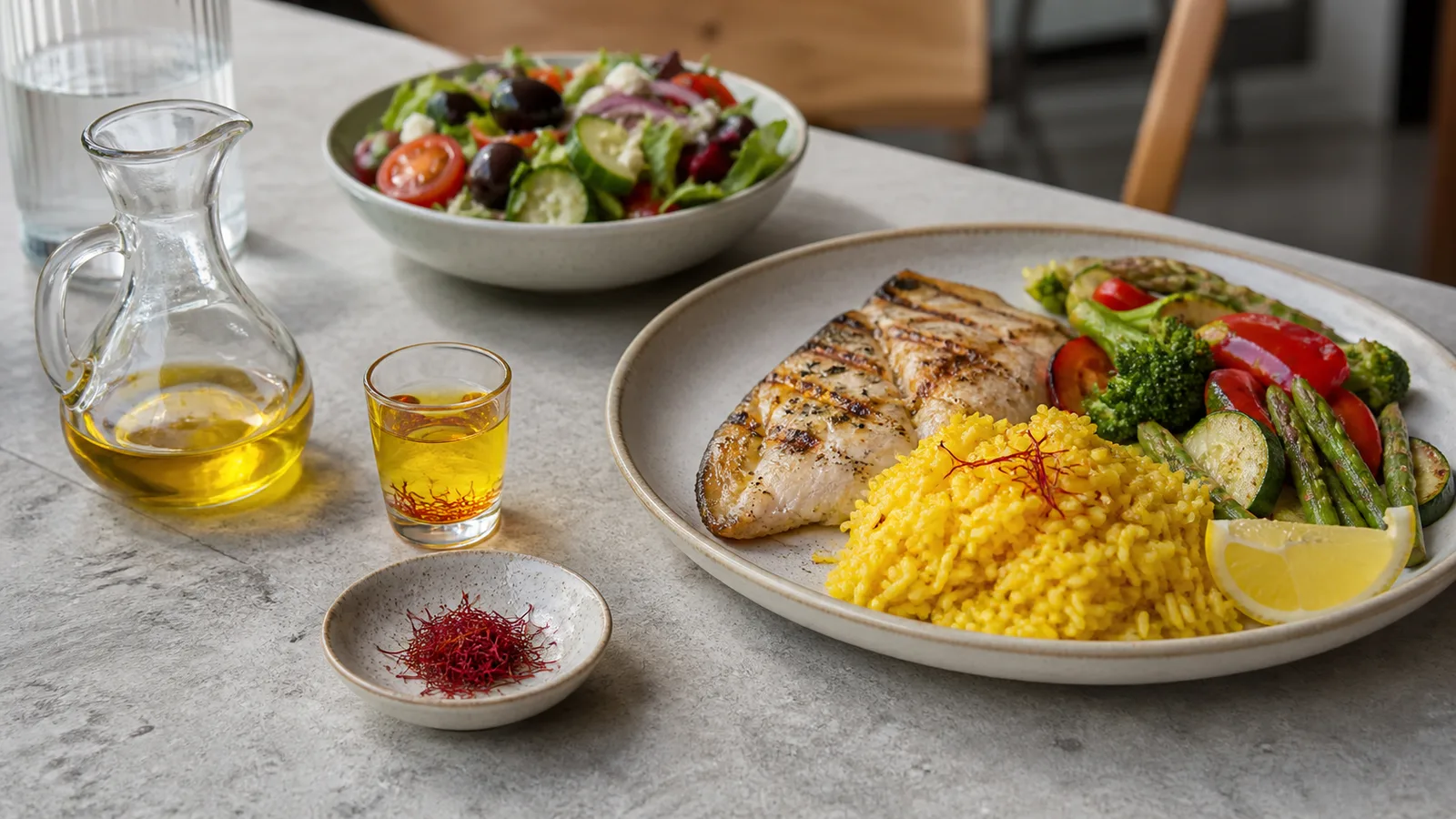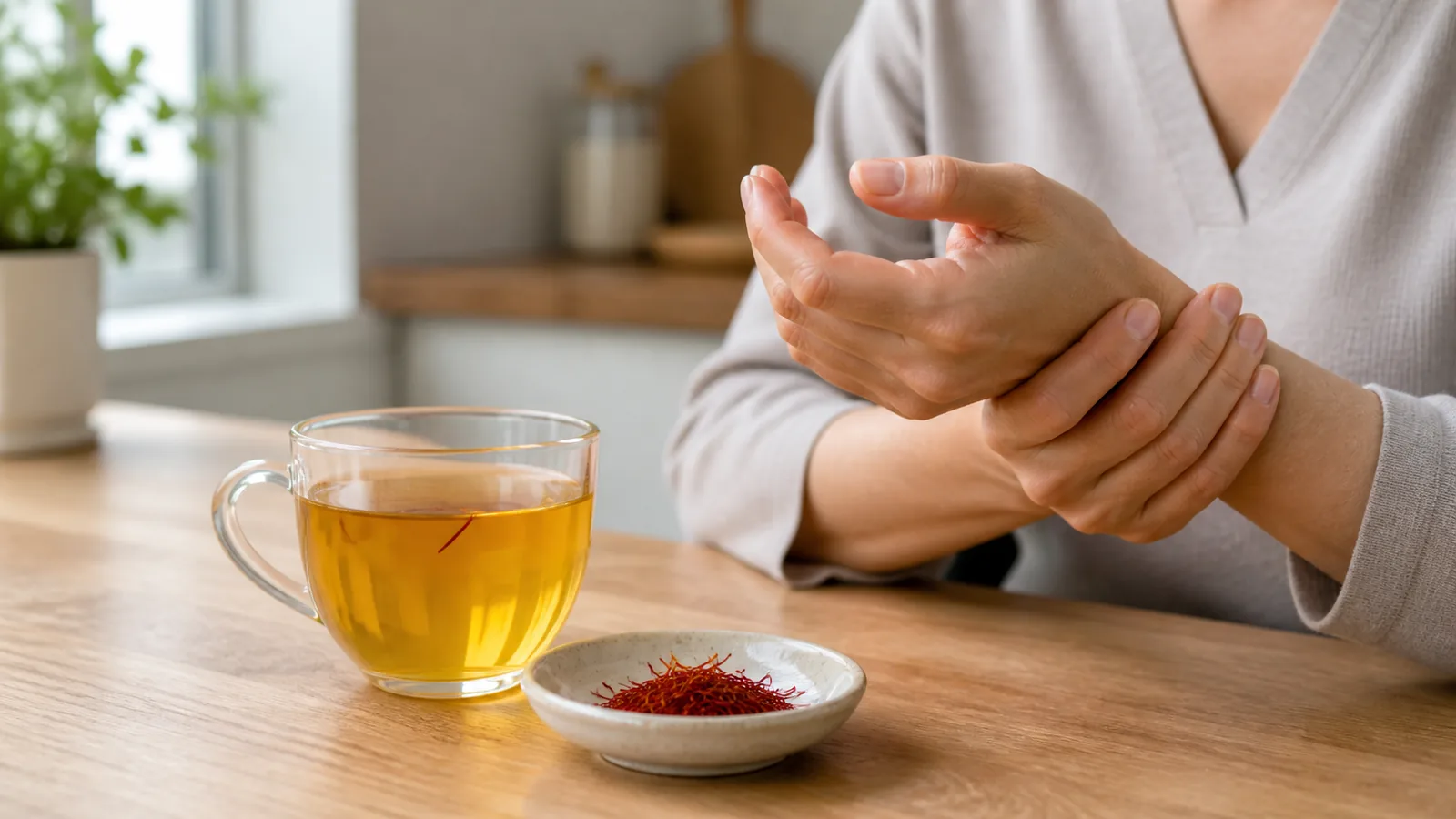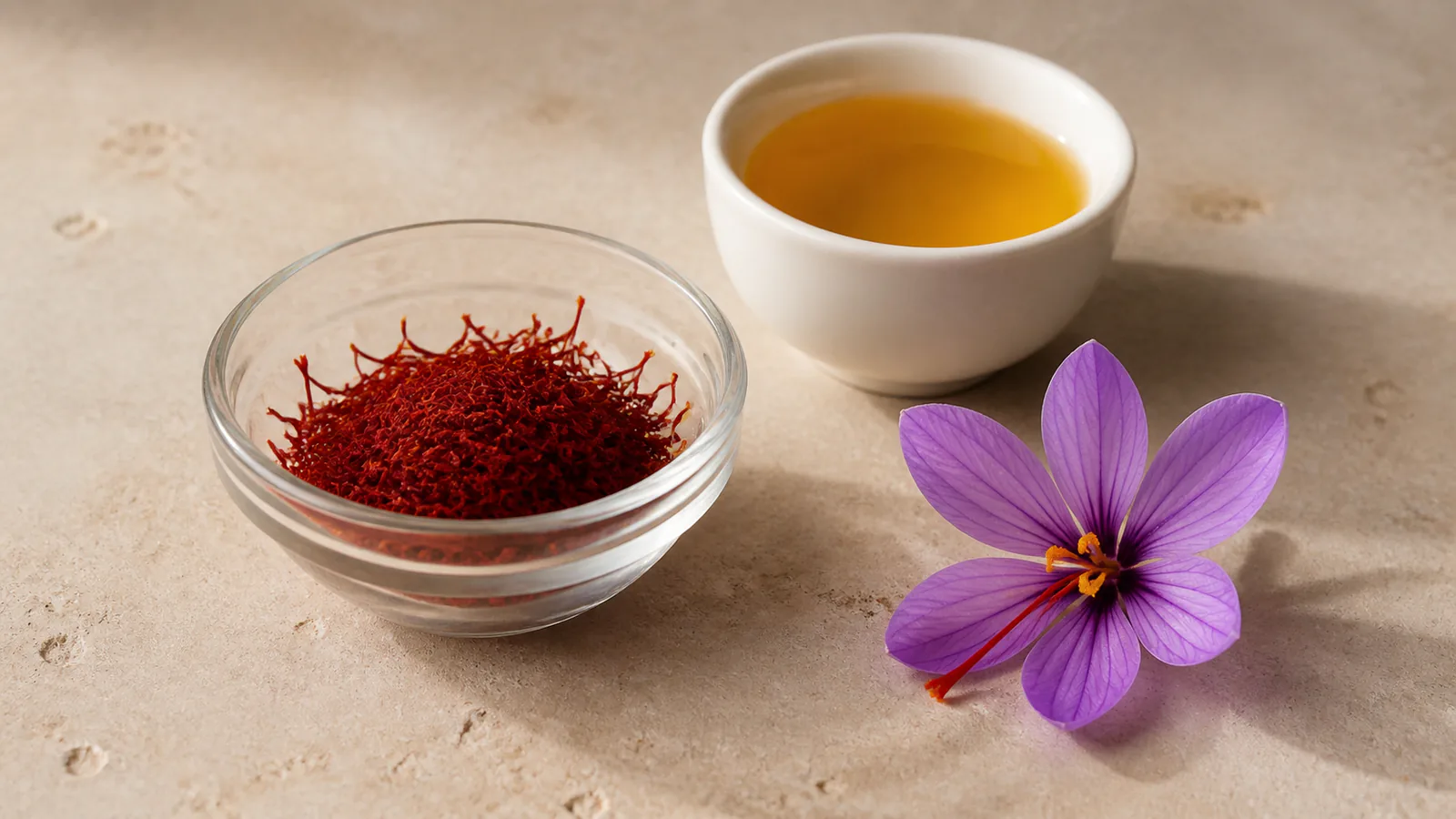
The virtue of saffron is that a very small amount can give food a distinctive aroma, a warm golden colour and a gently bitter, honeyed flavour. Its value also comes from the care required to grow, pick and dry it. Saffron has a long history in cooking and traditional practice, but its culinary qualities are better established than many of the medical promises made about it.
That distinction matters. Saffron is a remarkable spice, not a cure-all. Understanding what it is, why it behaves as it does and what human research actually shows lets us appreciate it without repeating exaggerated claims.
What saffron really is
Saffron comes from Crocus sativus, a perennial plant in the iris family. The usable spice is not the whole flower. It is made from the dried red stigmas, usually with a small part of the style attached. Each flower carries only three stigmas, and harvesting is still largely done by hand.
The plant is commonly propagated by underground corms rather than seed. Flowers are purple, while the valuable stigmas are deep red. These details may sound small, but they help distinguish real saffron from loose descriptions, substitutes and adulterated products.
The international Codex standard for saffron likewise defines the spice as dried floral parts from the stigma and part of the style of Crocus sativus.
Why saffron has colour, aroma and flavour
Three groups of natural compounds help explain saffron’s sensory character:
- Crocins are water-soluble carotenoid pigments responsible for much of the golden colour.
- Picrocrocin contributes saffron’s characteristic bitter taste.
- Safranal is an important volatile compound associated with its aroma.
Drying and storage influence the balance among these compounds. Good saffron should smell clean and complex, not damp or musty. When steeped, genuine threads release colour gradually through the water; they should not behave like material coated in an instant red dye.
The virtue of saffron in cooking
Saffron’s most dependable benefit is culinary. A modest pinch can season an entire rice dish, stew, sauce, bread, dessert or drink. Its aroma is delicate, so technique matters as much as quantity.
Bloom it before adding it
Gently crush the threads and steep them in a small amount of warm water or milk. This spreads the colour and aroma more evenly than dropping dry threads into a large pot. Let the infusion stand for several minutes, then add both the liquid and the softened threads.
Very high heat and prolonged cooking can flatten the aroma. In a long-cooked dish, add some infusion during cooking and reserve a little for the final stage. Our guide to using saffron in cooking covers the practical method in more detail.
Use enough, but do not chase colour
More saffron does not always make a dish better. Too much can push its pleasant bitterness to the front. If a recipe needs an unnaturally vivid colour, extra saffron is not the answer; the aim is balanced aroma, flavour and a natural golden tone.
Why saffron is valuable
The price reflects concentrated labour and a small yield per flower. Flowers must be collected during a short harvest period, then the fragile stigmas are separated and dried with care. Poor handling at any stage can reduce aroma, introduce contamination or damage the colour.
Value should still be judged by quality, not by a high price alone. Whole threads make visual inspection easier than powder. Look for mostly deep-red filaments, a characteristic aroma, dry texture and traceable packing. Large amounts of yellow style, dust, moisture or a suspiciously uniform powder deserve caution.
What health research does and does not establish
Saffron contains crocin, picrocrocin, safranal and other compounds studied in laboratories, animals and humans. Those layers of evidence are not interchangeable. An antioxidant effect in a test tube does not demonstrate that eating saffron prevents cancer, heart disease, eye disease or Alzheimer’s disease.
Mood research
Among saffron’s proposed health uses, mood has one of the larger bodies of human research. A 2026 systematic review and meta-analysis of 34 randomised controlled trials found improvements in some self-reported depression and anxiety scales, but not all clinician-rated outcomes. The authors rated the evidence as moderate and reported substantial variation between studies.
That is a promising research signal, not permission to replace diagnosis or treatment. Study extracts and doses are also different from the small quantity used to flavour food. Anyone experiencing depression or anxiety should speak with a qualified health professional rather than self-treating with saffron.
Claims about cancer, memory, vision and the heart
Research continues into saffron compounds and these areas, but much of the evidence is preliminary, condition-specific or based on extracts rather than ordinary food use. It is not accurate to say that saffron prevents cancer, repairs DNA, restores damaged eye cells, cures nerve pain or prevents heart disease.
The US Food and Drug Administration explains that dietary supplements are not approved to diagnose, treat, cure or prevent disease and advises consumers not to substitute them for prescribed medicine. Its consumer guidance on dietary supplements is a useful check whenever a product makes a dramatic health promise.
Food use and concentrated supplements are different
The quantity of saffron used in a meal is not the same as a concentrated capsule or extract. A supplement may deliver a standardised amount repeatedly and can interact with a person’s health conditions or medicines. Product quality also varies.
Pregnant people, people taking prescription medicine, and anyone managing a medical condition should ask a clinician before using saffron supplements or unusually large amounts. Normal culinary use is the sensible context for most readers. If a food or supplement causes an unwanted reaction, stop using it and seek appropriate advice.
How to preserve saffron’s best qualities
- Keep it in an airtight container away from light, heat and moisture.
- Buy an amount you can use while the aroma remains lively.
- Handle threads with a dry spoon or clean, dry fingers.
- Grind only what you need, because exposed surface area speeds aroma loss.
- Judge the spice by aroma, flavour, colour release and traceability together.
Stored well and used with restraint, saffron can transform a dish without overpowering it. That is its clearest virtue: a tiny, carefully produced part of a flower brings colour, fragrance and character that no single substitute reproduces exactly.