People with a confirmed saffron allergy should not take saffron. For several other groups—particularly during pregnancy, with low blood pressure, or while using prescription medicine—the right advice is usually to avoid concentrated supplements until a clinician has reviewed them. That is not always the same as banning the small amount of saffron used in a shared meal.
Saffron is the dried stigma of Crocus sativus. A few threads in food, a strong homemade infusion, and a standardised extract can create very different exposures. When asking who cannot take saffron, identify the form, amount, reason for using it, medicines, and health conditions before deciding.
Who Should Avoid Saffron: Health Risks and Precautions
Who should avoid saffron? These are the clearest situations:
- Anyone who has had an allergic reaction to saffron should avoid it unless an allergy specialist advises otherwise.
- People who are pregnant should not start high-dose or concentrated saffron products without obstetric advice.
- People with low blood pressure, fainting episodes, or blood-pressure treatment should have supplements reviewed first.
- People taking anticoagulant or antiplatelet medicines should ask their prescriber or pharmacist before using an extract.
- Children should not be given adult saffron supplements unless a paediatric clinician specifically recommends the product and dose.
- Anyone preparing for surgery should tell the surgical team about every supplement and follow its stop instructions.
Who should not use saffron is therefore not a single all-or-nothing category. The concern often applies to a supplement or medicinal amount, while normal food use may require a different judgement. Do not use this article to stop prescribed medicine or to replace individual advice.
Who should not take saffron? A person with a confirmed allergy should not take it. Who should not take saffron extract? Until individually reviewed, that includes people in the higher-risk groups above, because an extract is more concentrated than ordinary seasoning.
Pregnant Women
Pregnancy is often discussed too broadly. Saffron used as a seasoning and a concentrated product are not equivalent. It is sensible to avoid deliberately high or medicinal amounts during pregnancy, but a blanket statement that every trace in food causes miscarriage is not supported.
A recent review of saffron use in pregnancy found a limited and varied evidence base. Product, dose, timing, and outcome all need careful interpretation. Someone who is pregnant or trying to conceive should show the actual supplement label to their obstetric clinician rather than relying on a traditional recipe or a generic milligram number.
The same caution applies while breastfeeding because concentrated-product safety information is limited. If saffron is already part of your normal food culture, ask about that culinary context separately from capsules, extracts, or very strong saffron water.
People With Saffron Allergies or Sensitivities
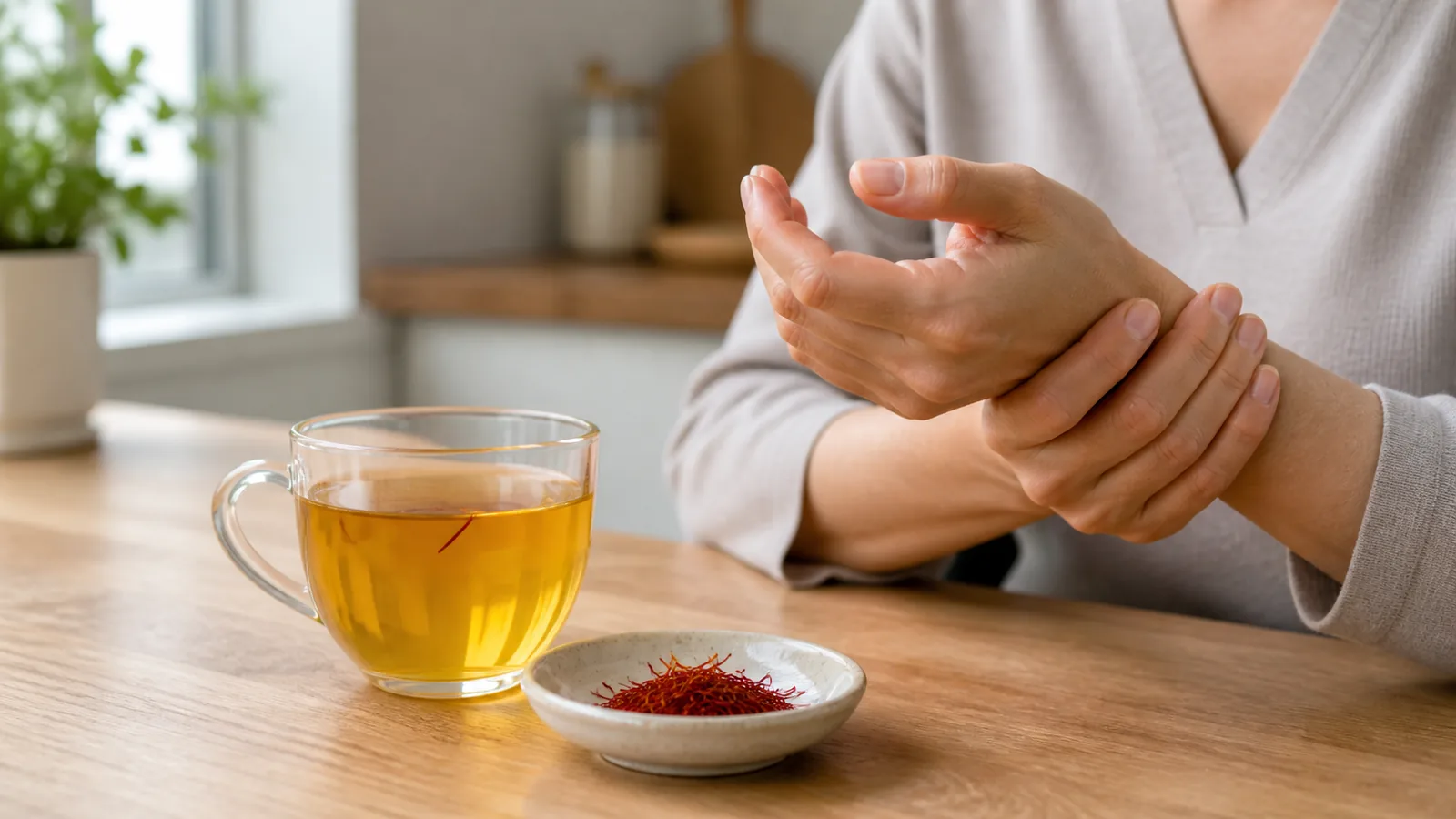
Can you be allergic to saffron? Yes. A saffron allergy is uncommon but possible. Reported reactions can include itching, hives, swelling, wheezing, breathing difficulty, or other symptoms after eating or handling the spice. A mild stomach upset without immune symptoms may be intolerance or may come from another ingredient, so the pattern deserves careful assessment.
Stop using the suspected product if a reaction occurs. Seek emergency help for trouble breathing, swelling of the lips, tongue or throat, fainting, or rapidly spreading symptoms. Keep the package because a clinician may need to consider added colourants, fillers, cross-contact, or a different plant sold as saffron.
Fake or false saffron can complicate the picture. Safflower, dyed fibres, and mixed powders are not botanically the same as Crocus sativus. A reaction to an adulterated product does not identify which ingredient caused it. Buy identifiable threads from a traceable seller, but remember that authenticity does not remove the possibility of a genuine allergy.
Saffron and Low Blood Pressure
Questions about saffron and blood pressure need a measured answer. Some trials have found small reductions with saffron supplementation. A systematic review and dose-response meta-analysis reported modest average changes that the authors said may not reach clinical importance. That does not make saffron a reliable treatment for high blood pressure, nor does it prove that ordinary cooking amounts will noticeably lower it.
Can saffron lower blood pressure? A concentrated product might affect some people, but the size and relevance are uncertain. Can saffron raise blood pressure? It is not established as a dependable pressure-raising agent either. Blood pressure changes from hydration, illness, other supplements, medicine timing, and measurement technique can easily be misattributed to one spice.
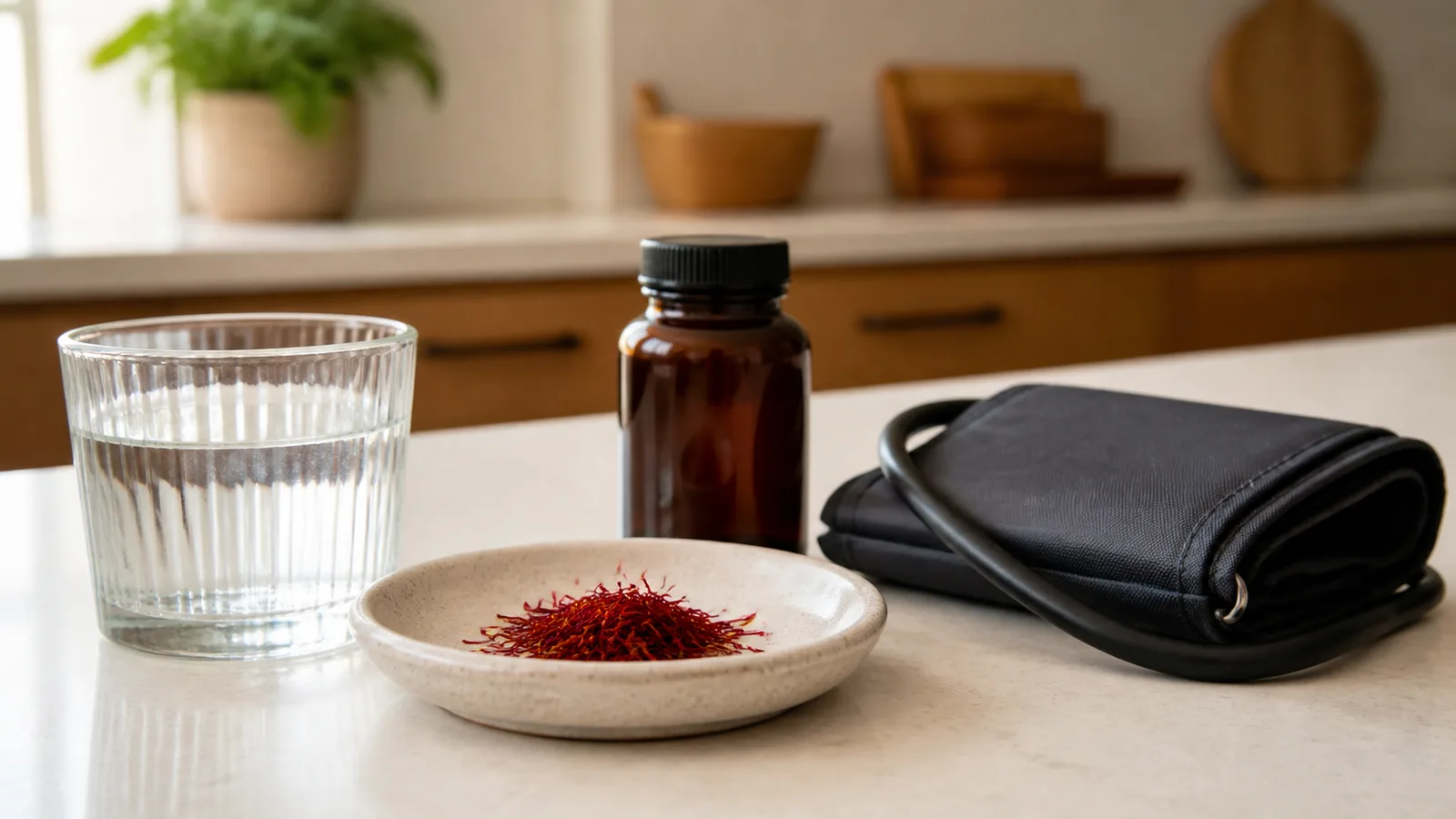
People who already have low readings, dizziness on standing, fainting, or several blood-pressure medicines should not add a saffron supplement without review. Monitor symptoms and use a properly fitting cuff if a clinician asks for readings. Seek urgent care for fainting, chest pain, severe shortness of breath, weakness on one side, or another medical emergency.
Saffron and blood pressure medication should be reviewed together rather than judged in isolation. Do not skip, reduce, or move a prescribed dose to make room for a supplement; ask the prescriber whether monitoring or avoiding the extract is appropriate.
People on Blood-Thinning Medication
Is saffron a blood thinner? It should not be described as one on the strength of laboratory findings or traditional use. A small randomised study in healthy volunteers found no significant change in the coagulation measures tested after one week of saffron tablets, but that does not establish safety with anticoagulant medicines or in people at high bleeding risk. The study did not answer every dose, duration, drug, or patient situation.
If you take warfarin, apixaban (Eliquis), rivaroxaban, dabigatran, heparin, clopidogrel, daily aspirin prescribed for a condition, or another medicine affecting bleeding, ask your prescriber or pharmacist before taking saffron extract. “Saffron and blood thinners” is an interaction question, not a reason to stop the prescribed drug. Bring the supplement facts panel and disclose other herbs as well.
Saffron and Eliquis have not been established as a safe self-managed combination. The absence of a proven interaction is not proof that every extract, dose, and patient circumstance is safe, so the person who prescribed apixaban should make that judgement.
The same review is sensible for a bleeding disorder, a history of unexplained bleeding, or an upcoming procedure. Get urgent help for vomiting blood, black stools, blood in urine, severe unexplained bruising, a head injury while anticoagulated, or bleeding that will not stop.
What should you not take with saffron? There is no complete universal list. Prescription medicines, over-the-counter drugs, and other supplements must be checked against the actual saffron product and your health history. The US Food and Drug Administration advises discussing supplements with healthcare professionals because they can interact with medicines, interfere with tests, or pose added risks around surgery.
Do not smoke saffron. It is a food ingredient, not a smoking product, and inhaling burned plant material exposes the lungs to irritants without a demonstrated benefit. Raw saffron threads can be eaten in culinary quantities, although steeping distributes their flavour more evenly. Do not use old or poorly stored saffron if it smells musty or shows moisture or mould.
For ordinary cooking, use a modest amount from a traceable source. For a capsule, tablet, extract, strong daily infusion, or health goal, treat the decision like any other supplement choice: check the product, reason, medicines, conditions, pregnancy status, and planned procedures. That is the safest way to answer who cannot take saffron without turning a useful precaution into an unsupported blanket ban.
These saffron contraindications and saffron health risks are context-dependent except for a known allergy. The safest answer comes from matching the exact product and exposure to the individual, not from labelling all culinary use harmless or dangerous.
To learn how we identify and source culinary saffron, visit our About Us page.