If you grow saffron, you can sell it directly to local customers, chefs and specialist food shops, or in larger lots to spice companies, importers and distributors. Online marketplaces can widen your reach, but the best route depends on how much you produce, where the buyer is located and whether your product is ready for legal food sale in that market.
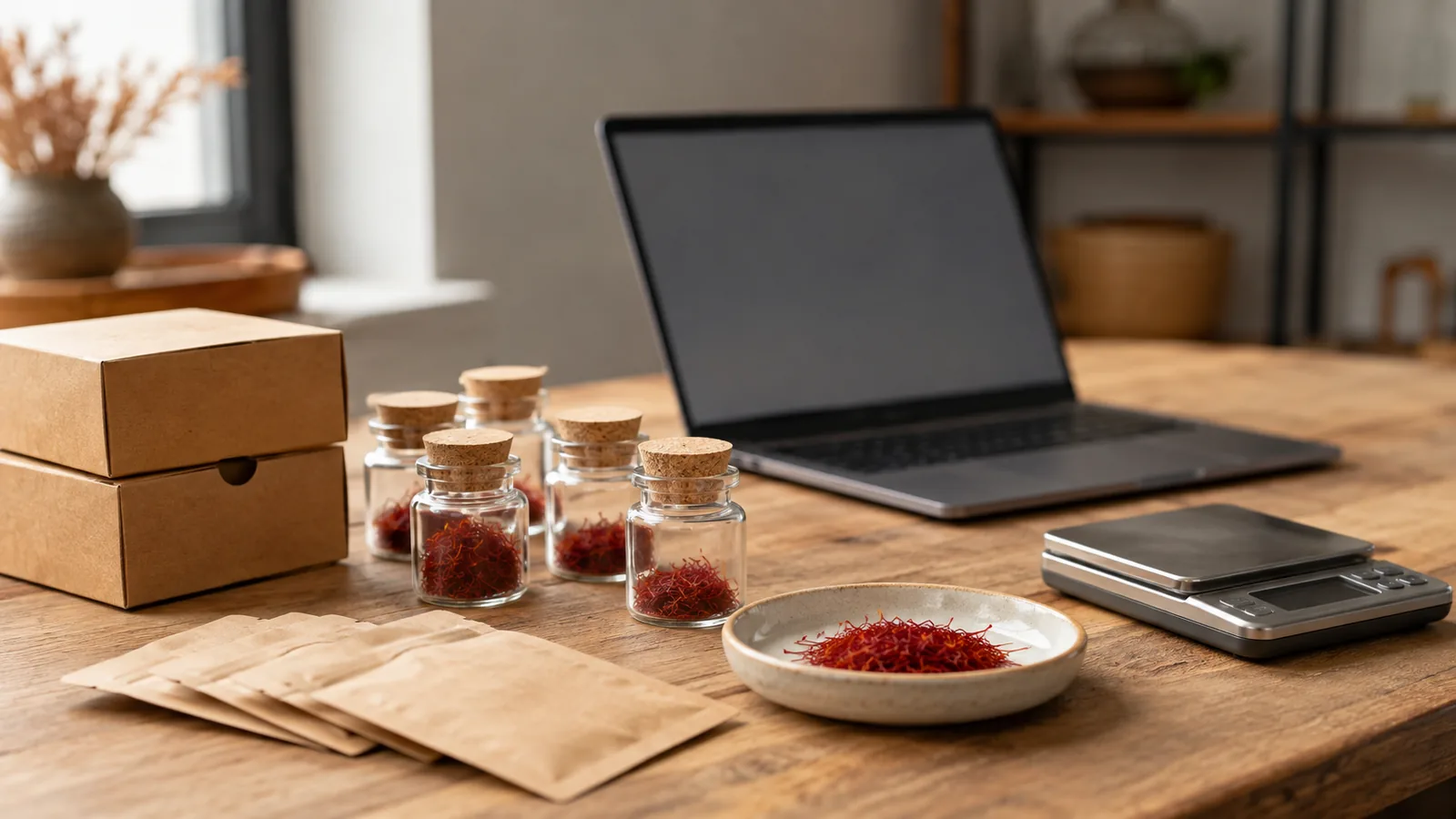
Where can I sell saffron?
Start with the channel that matches your harvest. A small grower with a few carefully packed jars may do well at farmers’ markets, through a compliant online shop or with nearby restaurants. A producer offering repeat harvests and consistent lots is more likely to suit a wholesaler, importer or established saffron supplier.
That distinction matters when deciding where to sell saffron. Individual consumers want a finished product, clear instructions and convenient delivery. Trade buyers usually ask about lot size, origin, test results, packaging, lead time and pricing at a particular delivery point. Trying to present one offer to both audiences often makes it less convincing to either.
Prepare the saffron before approaching buyers
A buyer needs more than a photograph and a claim that the saffron is “premium.” Prepare a short, factual sales pack for each lot. It should state what you can verify, including:
- the country and region of origin;
- the harvest year and lot or batch identifier;
- whether the product is whole stigma, cut threads or powder;
- the available quantity and minimum order;
- the retail or bulk packaging options;
- the price, currency, delivery basis and payment terms;
- storage conditions and best-before information where required; and
- an independent certificate of analysis when one is available.
Only describe a grade or test result that the specific lot has earned. The international reference points commonly used for saffron include the ISO 3632-1:2025 specification and the Codex standard for saffron. Naming a standard without a report for the lot is not evidence of compliance.
Sell directly in your local market
Farmers’ markets and direct customers
For a small harvest, local sales can keep the route between grower and customer short. Farmers’ markets, community food events and a producer’s own compliant website give you space to explain origin, storage and how to use a modest quantity. Before booking a stall or accepting an online order, check local rules for food-business registration, hygiene, packaging, labelling, tax and distance selling.
Build the price from real costs: corms and field work, harvesting, separation, drying, laboratory analysis, packaging, platform or payment fees, tax, rejected stock and delivery. A high retail price is not the same as a high profit.
Gourmet shops and specialist food stores
Independent gourmet shops and specialist grocers may take a small wholesale case or agree to a trial order. Bring a sealed sample, a wholesale price list and the documents behind your origin and quality statements. Ask how quickly the store turns comparable products and who owns unsold inventory; consignment and an outright wholesale sale carry different risks.
Restaurants and catering companies
Chefs usually care about repeatable aroma, colour, flavour and supply more than decorative packaging. Approach restaurants that already cook rice, seafood, desserts or regional dishes in which saffron has a real role. Offer a properly labelled sample from the same lot you intend to supply, then discuss pack size, reorder time and consistency. Do not promise year-round volume unless you can deliver it.
Use online marketplaces with the rules in view
Amazon, eBay and Etsy can put saffron in front of more consumers, but none is simply an open noticeboard. Eligibility, fees, permitted products and documentation vary by marketplace and selling country, and the rules can change.
- Amazon: its current grocery-selling guidance says that category or product approval may be required and that sellers may be asked for invoices, licences or safety and compliance documents. Read the official Amazon grocery guide for the market in which you plan to list.
- eBay: its official food policy requires food to be packaged and stored safely, to show applicable expiry information and to comply with the law.
- Etsy: food is generally permitted, but sellers remain responsible for government rules and shipping restrictions. Its food policy and seller policy also require an accurate account of the item, its provenance and the people involved in making it.
Check the current policy immediately before listing. Calculate commission, fulfilment, advertising, returns and payment-processing costs before deciding that a marketplace price is profitable. Clear photographs and useful cooking information help a genuine product; keyword stuffing and unsupported superlatives do not.
Find wholesale and business buyers
B2B marketplaces
Alibaba and TradeIndia can introduce producers to wholesalers, distributors and manufacturers seeking larger quantities. Treat them as lead-generation channels, not as proof that a buyer is genuine. A polished profile or a large enquiry does not replace due diligence.
Confirm the company’s registered name, physical address, tax or import identifiers where relevant, and whether the person contacting you is authorised to buy. Put the product specification, quantity, price basis, inspection terms, payment method, delivery responsibilities and dispute process in a written order or contract. Start with a manageable transaction rather than extending substantial credit to an unknown buyer.
Some enquiries may concern food production, while others mention cosmetics, supplements or different industries. Those uses can be governed by different rules. Do not assume that saffron prepared and labelled as a food ingredient is automatically compliant for another category.
Spice companies, suppliers and distributors
An established saffron supplier, spice blender or regional distributor may be the best fit for regular harvests. These buyers often value consistency across lots, traceability and reliable delivery. Send a concise introduction rather than a generic mass email: state where the saffron was grown, what form it is in, the quantity available now, expected future capacity and which supporting documents you can provide.
A long-term relationship should follow successful samples and orders; it should not be assumed at the first enquiry. Agree who pays for laboratory testing and samples, what happens if the delivered lot differs from the approved sample, and when ownership and shipping risk pass from seller to buyer.
Trade shows and food events
Trade shows bring growers, processors, suppliers and buyers into the same place. Choose an event whose visitors actually buy spices or speciality foods, arrange meetings beforehand and prepare sample packs that meet the venue and destination rules. Record the lot behind every sample. After the event, send the promised specification and quotation to the named contact instead of relying on a handshake or a business card alone.
Food law still applies when the sale happens online
The seller is responsible for the requirements of the destination market. In the European Union, mandatory information for prepacked food generally includes the food’s name, ingredients where applicable, allergen information, net quantity, durability date, storage instructions, responsible food-business operator and required origin information. The EU also explains that, for food sold at a distance, required information must be available before the purchase is concluded, apart from the durability date. The European Commission’s food-labelling overview is a useful starting point, but national requirements can also apply.
For food imported into the United States, the FDA says the importer is responsible for food that is safe, sanitary and truthfully labelled. Depending on the operation, food-facility registration and prior notice may apply. Review the FDA’s current importing guidance before offering a shipment; it is not enough to assume that a courier will handle every obligation.
These examples are not a complete legal checklist. Rules differ by product form, business model and destination, so obtain advice from the relevant food authority or a qualified adviser before selling.
Set a defensible price
Retail and wholesale prices answer different questions. A retail jar carries small-pack packaging, customer service and fulfilment costs. A wholesale quotation covers a larger lot and may change with testing, packaging, payment timing and delivery terms. Compare offers for the same cut, quality evidence, weight, currency and point of delivery.
Our saffron price page provides market context, but it cannot set the value of an unseen harvest. Your minimum acceptable price should come from the documented cost of producing and delivering your lot, not from the highest number found in an unrelated retail listing.
Protect the first transaction
Before sending a valuable shipment, match the buyer’s bank or payment details to the contracting business, verify delivery instructions independently and keep written records. Be cautious if a new contact pressures you to ship immediately, changes the receiving account at the last moment or offers a price far above the market without examining the product.
For a new wholesale relationship, a smaller paid trial can test the buyer, the paperwork and the delivery route. If an inspection or laboratory condition is part of the agreement, name the method, laboratory and acceptable result in advance. A payment screenshot by itself is not confirmation that cleared funds have arrived.
Choose the route that fits your harvest
If you are asking, “I grow saffron—where can I sell it?”, begin close to the scale you can reliably supply. A small seasonal harvest may fit local chefs, gourmet stores, farmers’ markets or direct customers. Repeat commercial lots may suit a spice company or distributor. Export-scale production requires a buyer able to import food legally, along with dependable testing, documentation and logistics.
Whichever route you choose, make the first offer specific: identify the lot, state the quantity, show the evidence you have and explain the terms. That gives a serious buyer something concrete to assess—and gives you a better basis for comparing one sales channel with another.