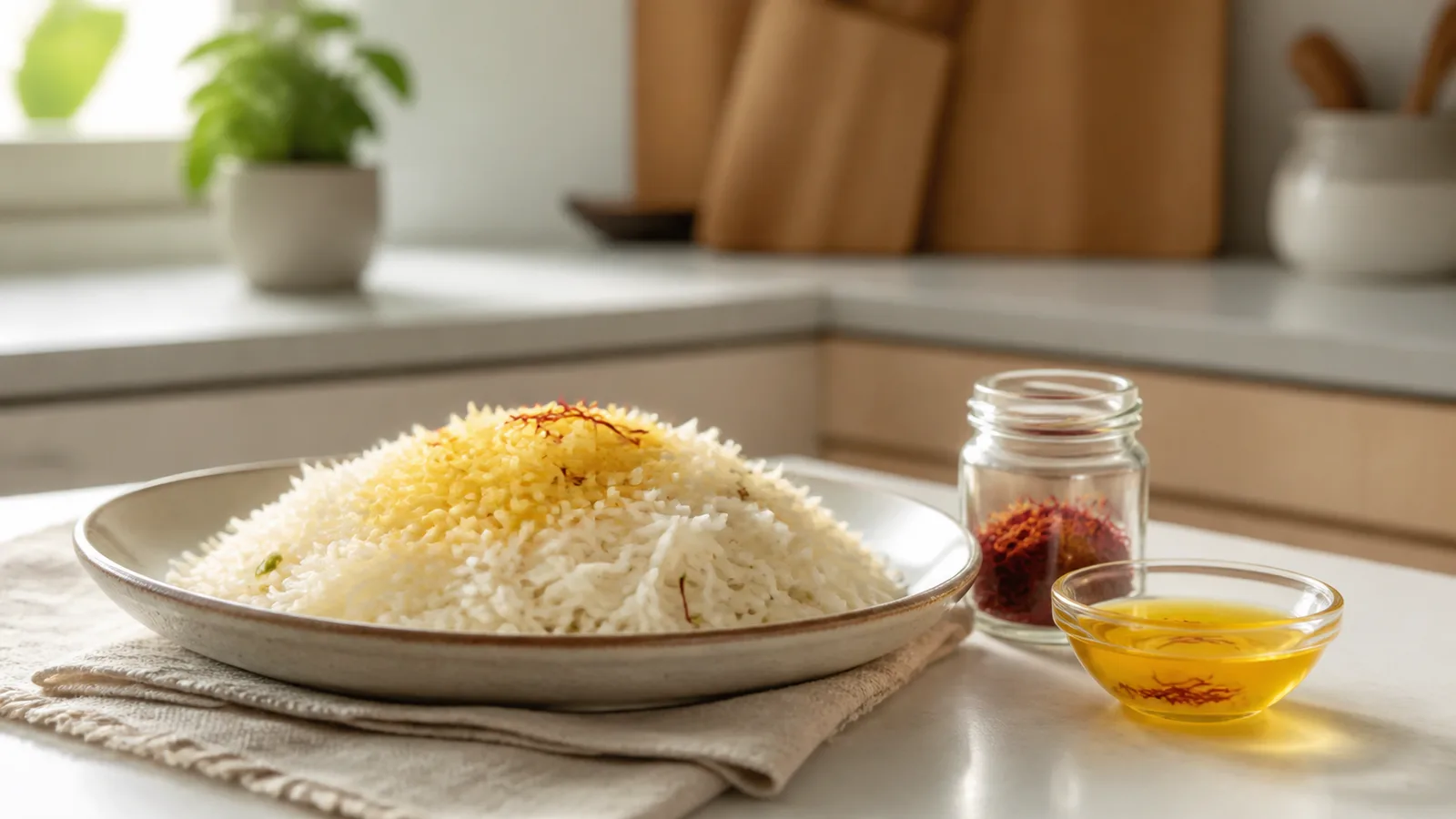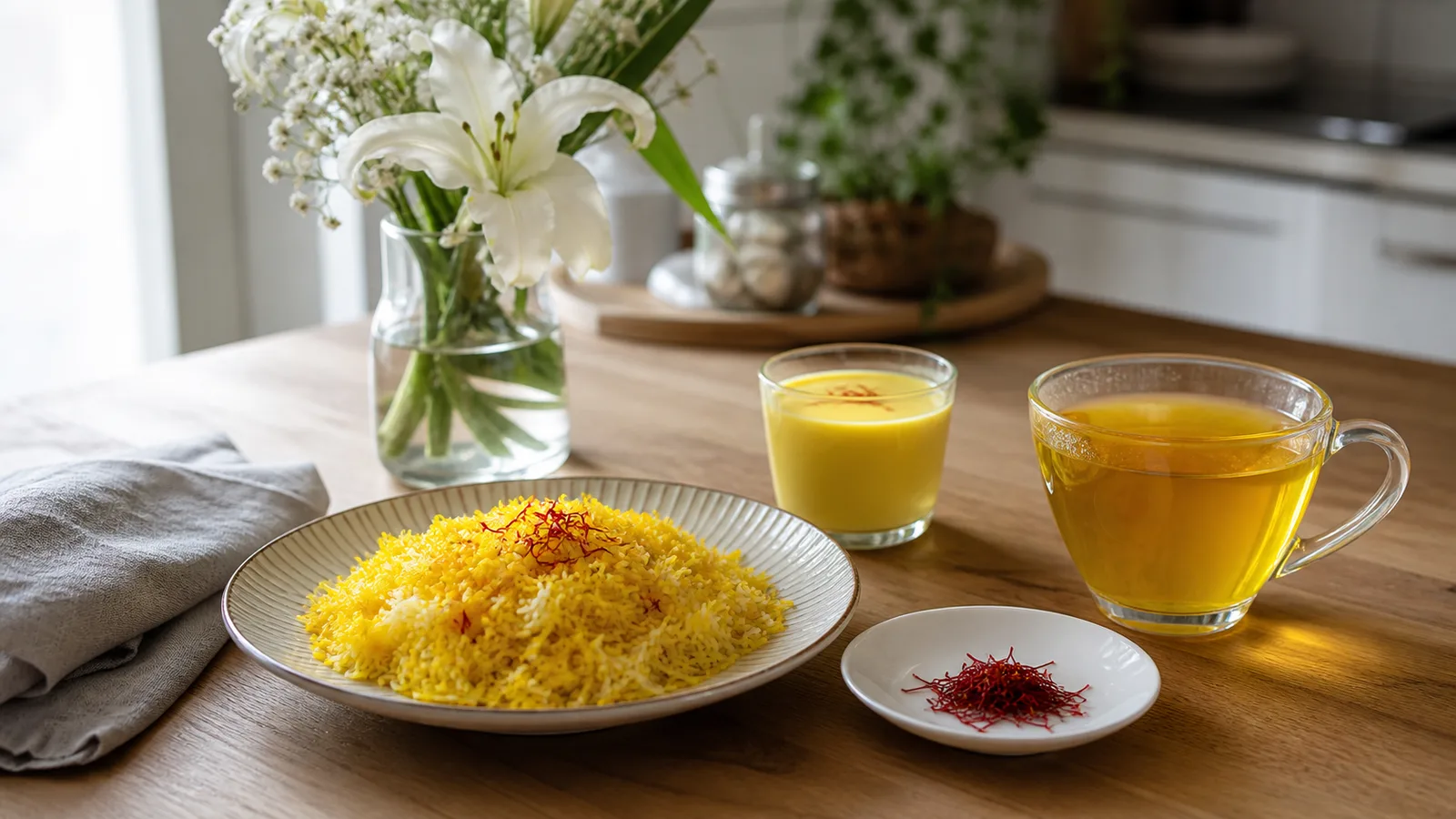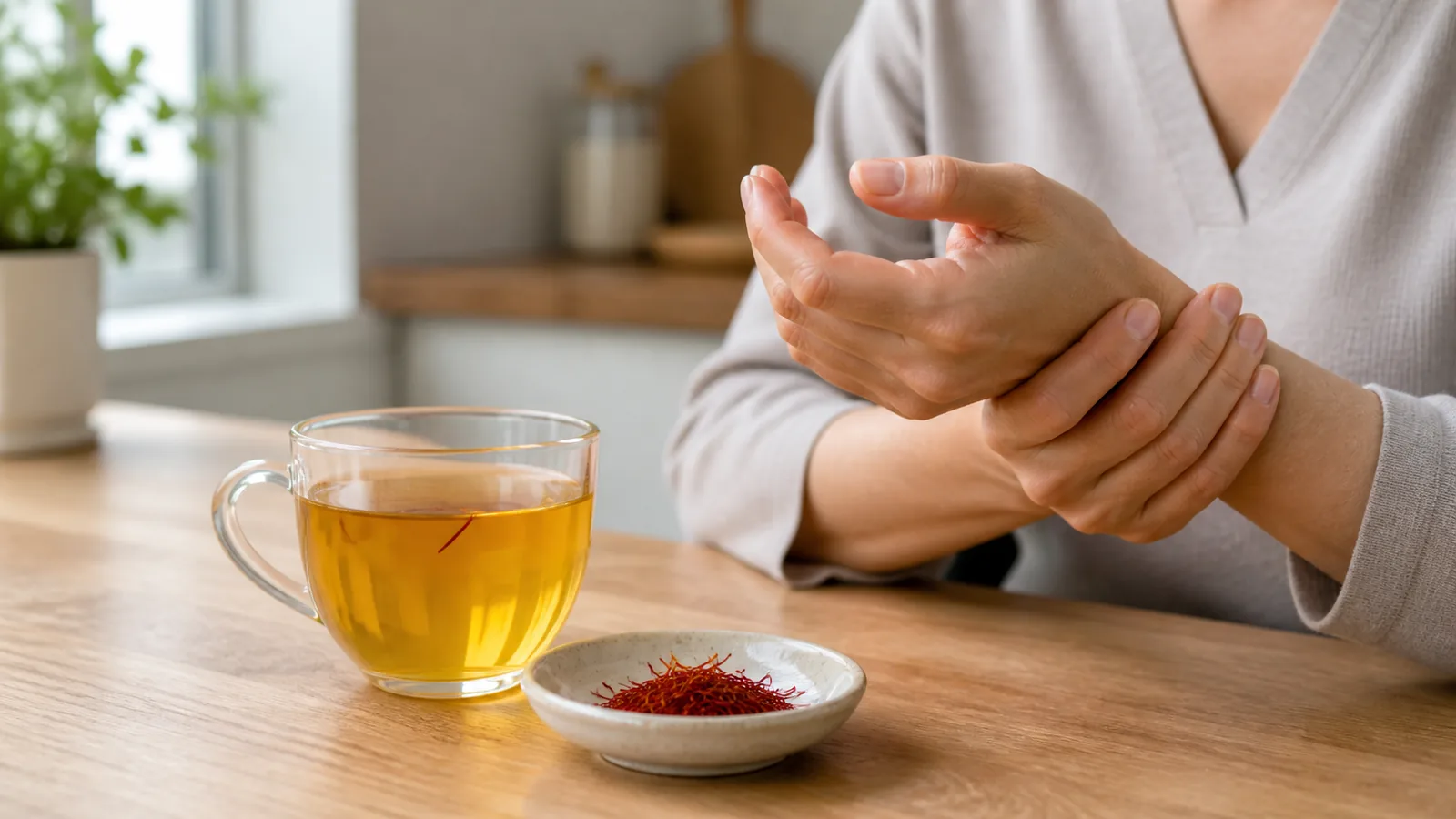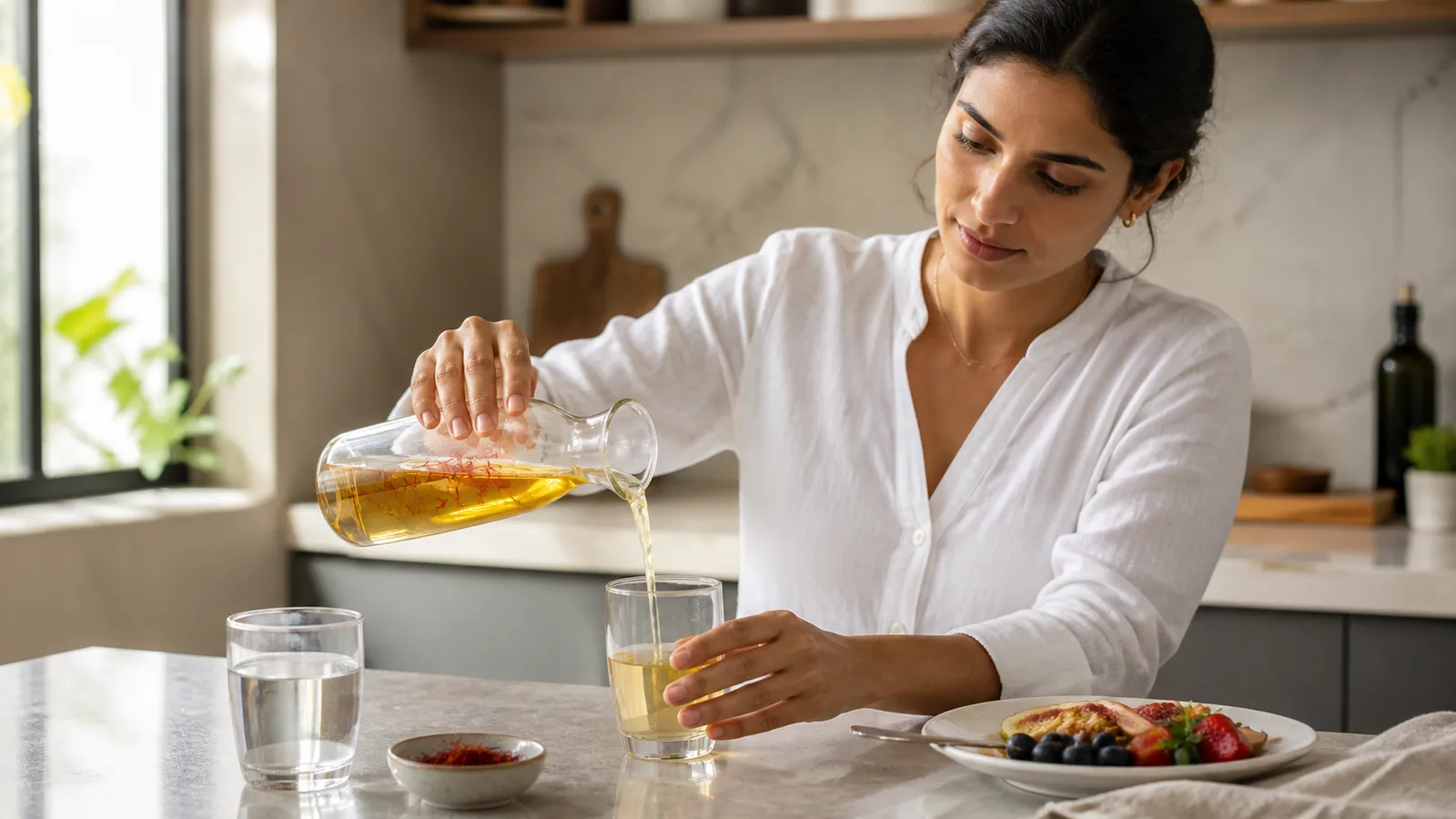
If you drink saffron water every day, the most predictable effects are simple ones: you take in fluid, taste saffron, and may find plain water more appealing. There is not good human evidence that an ordinary saffron-and-water infusion brightens the complexion, fades dark spots, clears acne or eczema, prevents wrinkles, or heals skin. Those promises run ahead of the research.
That does not make saffron water pointless. It can be an enjoyable unsweetened drink, and replacing a sugary drink with water may be a sensible choice. It simply should not be treated as a skin therapy. The saffron water benefits for skin are often inferred from saffron’s laboratory antioxidant activity, but a compound acting in a test tube is not the same as a visible result in human skin.
Questions about the benefits of drinking saffron water, including the benefits of drinking saffron water daily, come back to that same boundary: enjoying a lightly infused drink is reasonable, but a daily skin result has not been demonstrated.
What will happen if I drink saffron water every day for skin?
Your result will depend on the amount used, the rest of your diet, your skin condition, and whether the drink replaces something else. A lightly infused glass may contribute to your normal fluid intake. Adequate fluid matters to the body, but drinking extra water does not target pigment, acne, eczema, scars, or fine lines.
Does saffron water brighten or even out skin tone?
No clinical trial has established that drinking household saffron water daily reduces dark spots, hyperpigmentation, or uneven skin tone. Crocin, crocetin, and safranal are among saffron’s studied constituents, but their presence does not prove a skin-brightening result after a few threads are steeped and swallowed.
If uneven pigmentation is the concern, daily broad-spectrum sunscreen is a more evidence-based starting point because ultraviolet light can deepen many types of discoloration. New, changing, or persistent patches are worth showing to a dermatologist. “Brightening” should never mean bleaching healthy skin.
Inflammation, acne, and eczema
Saffron is widely described as anti-inflammatory. Studies of extracts and particular health outcomes may help researchers ask useful questions, but they do not show that saffron water calms an acne breakout or an eczema flare from inside the body. Acne and eczema are different conditions with different causes and treatments.
Do not replace prescribed care with the drink. If the skin is painful, infected, spreading, or leaving scars, seek appropriate medical advice. A beverage can sit alongside treatment as food; it should not be promoted as the treatment itself.
Oxidative stress and premature ageing
Saffron contains compounds studied for antioxidant activity. That is not evidence that daily saffron water neutralizes enough “free radicals” in a person to prevent skin ageing or erase fine lines. The strength and composition of a home infusion also vary from cup to cup.
For visible ageing, the dependable habits are less glamorous: protect the skin from the sun, avoid smoking, cleanse without scrubbing, and use a moisturizer suited to your skin. These measures do not promise a permanently youthful complexion, but they have a clearer basis than a detox claim.
Hydration and “detoxifying” the skin
Saffron water hydrates in the same basic sense that other drinking water does. If you were not drinking enough and the infusion helps you drink normally, that is useful. Adding saffron has not been shown to give the water a special ability to improve elasticity or texture.
It also does not cleanse toxins from the skin. The liver and kidneys process and remove many waste products; “detoxifies the skin” is not a defined result that this drink has been shown to deliver. Clearer skin after replacing a high-sugar beverage with plain saffron water could reflect the overall change, not a cleansing action by the spice.
Skin healing, blemishes, and scars
There is no sound basis for saying that drinking saffron water accelerates the healing of a minor wound, acts as an internal antibacterial treatment, prevents acne scars, or minimizes existing scarring. A wound needs ordinary first aid and, where appropriate, professional care. A red, warm, swollen, draining, or slow-healing area should not be managed with a drink.
Topical and oral use should not be confused either. A study of a formulated saffron-extract cream cannot demonstrate what happens after drinking a homemade infusion.
How to prepare saffron water
For a culinary drink, place a small pinch—a few genuine threads—in a cup of warm or hot water. Let the colour and aroma develop, then drink it warm or chilled. Our guide to whether saffron should be soaked in cold or hot water explains the practical brewing differences.
You can soak the threads overnight, but refrigeration is the sensible choice if the prepared drink will stand for hours. A longer soak may change the colour and flavour; it has not been shown to make the infusion more potent for skin. Prepare a fresh amount rather than keeping a homemade drink indefinitely.
Honey is optional for taste, not required for a health effect. It also adds sugar. If you buy saffron bubble water or another bottled saffron drink, check the full label for sugar, sweeteners, caffeine, other botanicals, serving size, and saffron quantity. The health effects and side effects of a mixed commercial drink cannot be attributed to saffron alone.
Empty stomach, warm water, or the best time to drink saffron water?
The claimed benefits of drinking saffron water empty stomach have not been established. Nor has hot water, warm water, morning use, or an overnight infusion been shown to produce glowing skin more effectively. Choose a temperature and time that feel comfortable and fit your meals.
If the drink makes you nauseated on an empty stomach, have it with food or stop. It is a beverage, not a test of discipline. If you prepare saffron water overnight for a chilled drink, refrigerate it rather than leaving it at room temperature.
Possible saffron water side effects
A few threads used as a culinary flavouring are not the same exposure as a standardized extract, powder, capsule, or repeatedly concentrated drink. Human saffron studies have most often reported digestive symptoms; reviews also mention nausea, dry mouth, reduced appetite, and headache. Individual products and doses differ, so those findings cannot provide a universal daily dose for saffron water.
Stop and seek advice if you develop an allergic reaction or troubling symptoms. Speak with a doctor or pharmacist before using saffron in supplement-like amounts if you take medication, are pregnant or breastfeeding, are preparing for surgery, have a medical condition, or plan to give it to a child. The U.S. Food and Drug Administration cautions that botanical supplements can have strong effects and interact with medicines; “natural” does not guarantee safety.
How to drink saffron water for glowing skin realistically
Use the drink for flavour and hydration, not as a promise of a glow. A practical skin plan gives more attention to the things that match the problem:
- use a gentle cleanser rather than harsh scrubs;
- apply a moisturizer suited to dry, oily, combination, or sensitive skin;
- wear broad-spectrum SPF 30 or higher when exposed to daylight;
- eat a varied diet rather than relying on one spice or “detox” drink;
- get persistent acne, eczema, pigmentation, wounds, or scarring assessed properly.
If you enjoy drinking saffron water, keep the infusion lightly culinary and pay attention to how you feel. You can select genuine threads in our saffron shop. The honest expectation is a fragrant drink. Better-looking skin, if it occurs alongside a healthier routine, cannot automatically be credited to saffron water.
Sources
- American Academy of Dermatology: a simple cleansing, moisturizing, and sun-protection routine
- U.S. Food and Drug Administration: dietary supplement benefits, risks, labels, and interactions
- U.S. Food and Drug Administration: mixing medicines and botanical supplements
- Meta-research review and evidence map of saffron health outcomes
- Systematic review of adverse events reported with saffron monopreparations