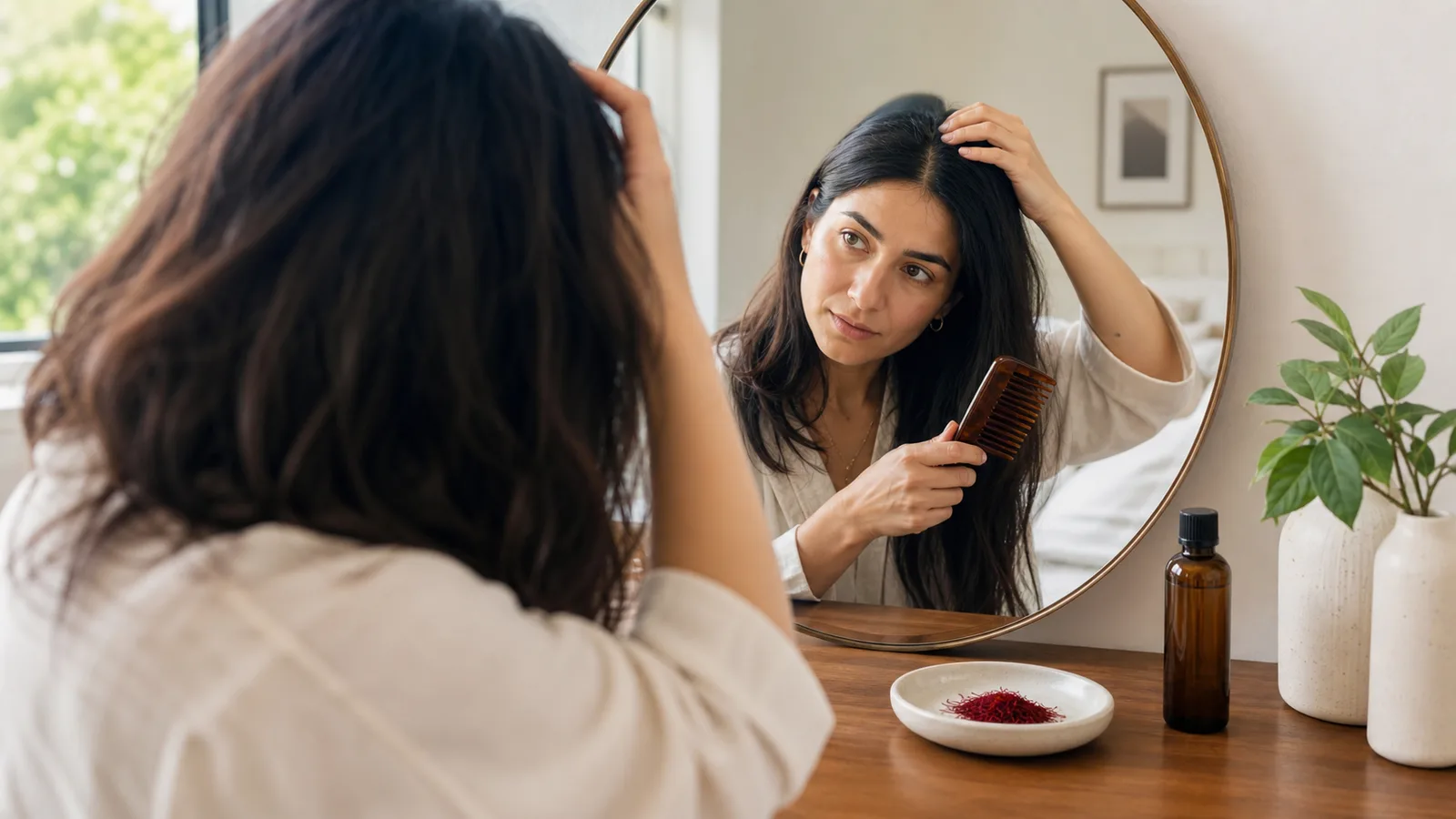
There is no good human evidence that saffron makes scalp hair grow. No randomized clinical trial has shown that eating saffron, applying threads in oil or using a saffron mask increases hair count, density or growth rate in people with hair loss.
That does not mean every saffron hair product is useless. A well-formulated oil or conditioner may make dry strands feel smoother and reduce breakage. It does mean that cosmetic feel should not be described as new follicle growth.
Saffron for hair growth: does it really work?
To answer this properly, a study would need a defined saffron preparation, an appropriate comparison group, enough participants and objective measurements over several months. Searchable phrases such as “Crocus sativus extract hair growth study” or “saffron topical hair growth study” do not themselves identify such a human trial.
One 2023 experiment often surfaced in this topic tested a mixed extract containing saffron, Nardostachys jatamansi and basil. It included laboratory work and an orally dosed animal model. Because the ingredients were combined and the work was not a human scalp trial, it cannot show that saffron threads or saffron oil regrow human hair.
In short, a saffron hair growth evidence review finds an evidence gap, not an emerging human treatment. A patent, ingredient-supplier claim or saffron extract hair care formula is not a substitute for a controlled clinical trial.
How saffron is claimed to promote hair growth
Saffron contains crocin, crocetin, safranal and other compounds studied for antioxidant and anti-inflammatory activity. Marketing explanations often say crocin stimulates blood circulation to the scalp, delivering more oxygen and nutrients to hair follicles. Human research has not established that chain of events or shown that it produces stronger hair.
Oxidative stress and inflammation can be relevant to some hair and scalp conditions, but reducing a laboratory marker is not the same as treating alopecia. Nor is saffron a useful multivitamin for hair: culinary servings are too small to supply meaningful protein, iron, zinc or other nutrients required when a true deficiency exists.
Saffron benefits for hair versus hair follicles
A product can change the appearance or handling of the hair shaft without changing the follicle beneath the skin. Oil may add slip and reduce friction. Conditioner can make strands look shinier. Gentle handling can prevent snapping. These are valid hair-care benefits, but they do not reverse hereditary thinning, alopecia areata, a scalp infection or scarring hair loss.
This distinction explains why before-and-after impressions are unreliable. Less breakage can make hair look fuller, while lighting, styling and the length of the hair cycle can alter photographs. Objective growth evidence requires more than shine or a weekly impression.
The benefits of saffron for hair are therefore unproven beyond what a complete cosmetic formula may do for the shaft. Lists of “saffron hair benefits” should say whether they mean softness and shine or actual new growth.
How to use saffron for hair growth safely
There is no evidence-based recipe or frequency because saffron is not an established hair-growth treatment. Mixing saffron strands with coconut oil or olive oil and massaging the scalp for 30 minutes has not been clinically shown to improve circulation or regrow hair. Honey, yogurt and homemade saffron-infused masks are also unstandardized and can irritate, cause allergy or be difficult to rinse out.
If you are asking how to apply saffron on hair, the old advice to use a homemade mask once a week cannot promise a result. A finished product with clear directions is easier to assess than raw threads mixed at home.
If you want to try a finished saffron hair-care product for cosmetic conditioning:
- Choose one with a complete ingredient list and directions rather than a homemade or unlabelled mixture.
- Patch-test it as the label instructs, particularly if it contains fragrance, essential oils or colourants.
- Do not apply it to an inflamed, scratched or infected scalp.
- Stop if burning, itching, redness, swelling or increased breakage develops.
- Judge it by the claim it can reasonably meet—conditioning or shine—not by an assumed follicle effect.
What are saffron oil benefits for hair?
A “saffron oil” is usually saffron material infused into or fragranced within another oil, so the carrier oil and complete formula matter. It may soften the hair shaft or reduce friction when used sparingly, but there is no clinical evidence that saffron oil prevents hair loss or creates new growth.
Heavy oils can weigh down fine hair, build up on the scalp or aggravate irritation in some people. More oil and longer contact are not signs that more active saffron has reached the follicle.
Does saffron cause hair loss?
Ordinary culinary use has not been shown to cause hair loss. A topical saffron product could indirectly increase shedding or breakage if it causes dermatitis, scratching, harsh washing or damage from other ingredients. If a new product and increased loss appear together, stop the product and keep its label for review.
Saffron for hair loss also should not delay assessment of hair thinning or premature hair loss. The pattern, speed and condition of the scalp matter more than whether the shedding began during a “natural” routine.
Saffron hair blackening spray, saffron blackening hair spray and saffron hair colour are product descriptions, not evidence that the colour comes from saffron. They may contain conventional dyes or other cosmetic ingredients. Follow the complete label and the FDA hair-dye precautions, including a patch test each time; do not use a colour spray as a growth treatment.
Find the cause before treating hair loss
Hair can shed after illness, childbirth, major stress, rapid weight loss or a nutritional deficiency. Gradual thinning may be hereditary. Patchy loss, scale, pain, redness or broken hairs can point in other directions. Some medicines and tight hairstyles also contribute.
The American Academy of Dermatology’s guide to hair-loss causes explains why an accurate diagnosis changes the treatment. Early assessment is especially important for sudden, patchy, painful or scarring loss. Do not stop a prescribed medicine because you suspect it; ask the prescriber.
What supports healthier, stronger hair?
Use a gentle shampoo, condition the lengths, limit heat and chemical damage, and avoid hairstyles that pull. Eat enough protein and a balanced diet with genuine variety. Iron, zinc or other supplements help when a real deficiency is found; unnecessary high-dose supplements can be harmful and some excess nutrients can worsen hair loss.
For diagnosed pattern hair loss, evidence-based options such as topical minoxidil may be appropriate. The AAD treatment overview stresses that no single treatment works for every cause and that results take time. A dermatologist can distinguish breakage, shedding and follicle loss before recommending treatment.
The practical answer
Is saffron good for hair growth? It has not been shown to regrow human hair. A formulated saffron oil, mask or conditioner may improve softness, texture or shine, but those are shaft effects. If you enjoy saffron, our saffron products are intended for cooking; they are not proven scalp treatments. Persistent thinning or loss deserves a diagnosis instead of months of untested masks.