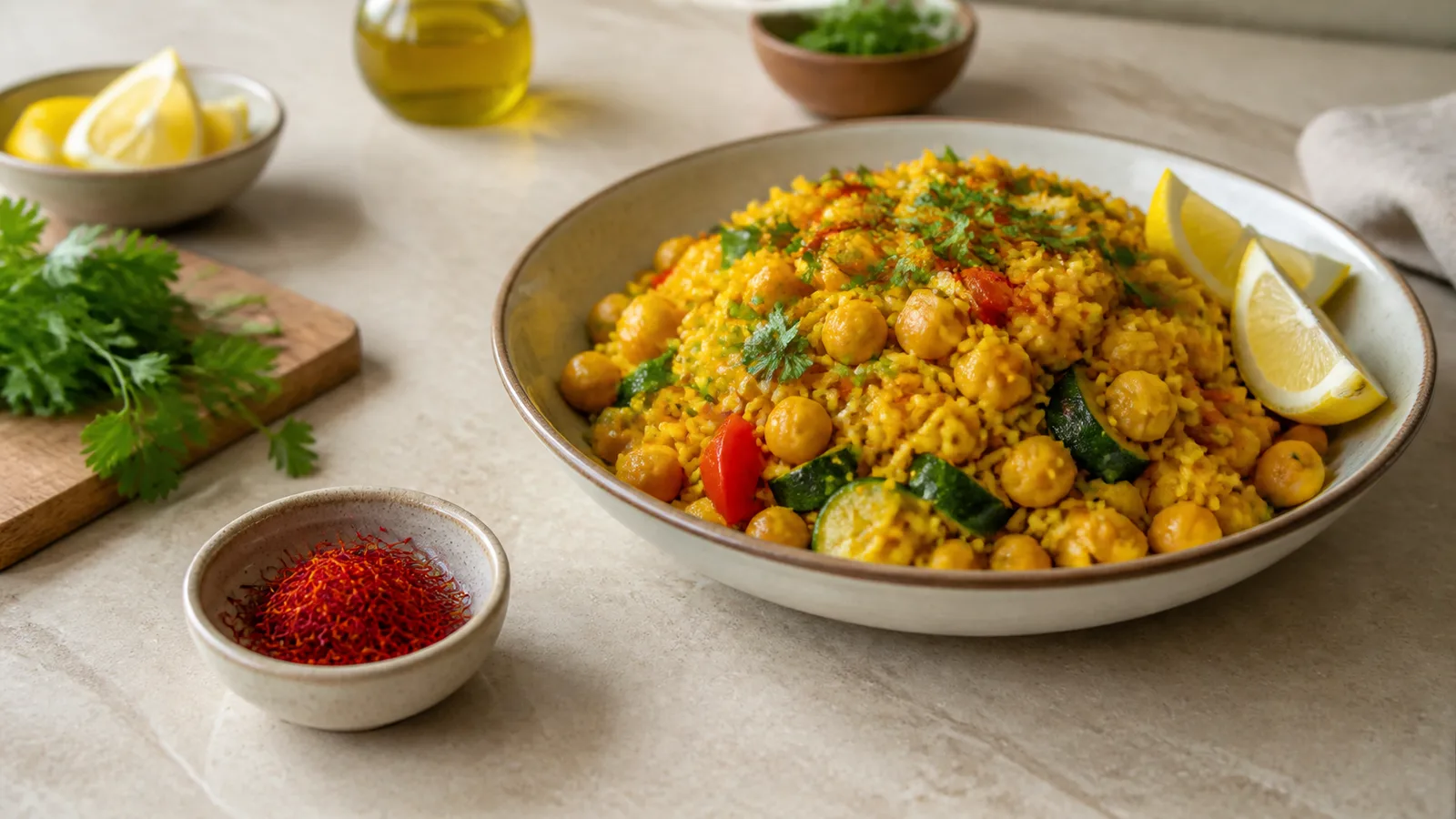
Saffron contains measurable amounts of several vitamins when it is analysed by weight, including vitamin C, vitamin B6, riboflavin, thiamin, niacin, folate and a small amount of vitamin A. The important detail is portion size. We use saffron by the pinch, not by the bowlful, so it contributes very little of those nutrients to an ordinary meal. The most honest way to describe the saffron nutritional benefits is this: saffron is a flavouring spice with interesting plant compounds, not a practical vitamin supplement.
Is saffron a vitamin?
No. Saffron is the dried stigma of the Crocus sativus flower. It is a food and spice, not a vitamin. The threads contain nutrients and naturally occurring compounds such as crocin, crocetin, picrocrocin and safranal, but those compounds are not vitamins either.
This distinction matters because “contains a vitamin” and “provides a useful serving of that vitamin” are different claims. A spice can show a respectable number in a laboratory report expressed per 100 grams, while the amount used in dinner supplies only a tiny fraction of it.
Which vitamins are in saffron?
The USDA FoodData Central entry for saffron reports vitamin C, vitamin B6, riboflavin (B2), thiamin (B1), niacin (B3), folate (B9) and vitamin A in a 100-gram reference amount. It reports no vitamin B12 or vitamin D.
Vitamin C
The USDA figure is 80.8 milligrams of vitamin C per 100 grams of saffron. That sounds substantial until it is scaled to a culinary portion. If a recipe happened to use 0.05 gram, the same calculation would give about 0.04 milligram of vitamin C. For comparison, the NIH Office of Dietary Supplements lists an adult daily requirement of 75 to 90 milligrams, depending on sex, with different needs in pregnancy, lactation and for people who smoke.
So saffron does contain vitamin C, but it should not be described as a meaningful source at normal cooking quantities. Fruit and vegetables do that job far more effectively.
Vitamin A
FoodData Central lists 27 micrograms of vitamin A activity, expressed as retinol activity equivalents, per 100 grams. Again, only a minute share reaches a normal serving. Saffron’s golden colour comes mainly from crocin rather than from a dose of vitamin A large enough to support a nutrition claim. It would be misleading to credit a pinch of saffron with noticeable benefits for vision, skin or immunity on the basis of this number.
Vitamin B6 and the other B vitamins
The 100-gram figures include 1.01 milligrams of vitamin B6, along with smaller amounts of thiamin, riboflavin and niacin, plus 93 micrograms of folate. In a 0.05-gram example, the vitamin B6 contribution works out at about 0.0005 milligram. The NIH vitamin B6 fact sheet lists 1.3 milligrams a day as the recommended allowance for most adults aged 19 to 50.
Vitamin B6 helps the body carry out many enzyme reactions, but the presence of B6 in saffron does not make saffron a “good source” in the nutritional-label sense. Nor does a culinary pinch supply enough to justify claims about energy, red blood cells or brain function.
What about saffron’s minerals?
Saffron nutrition data also include manganese, magnesium, iron, potassium, calcium, zinc and copper. Manganese is especially prominent when the food is presented per 100 grams. The serving-size lesson does not change, however: the mineral contribution from a few threads is small.
That does not make the spice nutritionally pointless. It simply puts the numbers in their proper place. Saffron can help make nourishing foods more appealing through aroma, colour and flavour. The rice, vegetables, legumes, dairy, eggs, fish or meat around it will usually supply much more of the meal’s protein, vitamins and minerals.
Do crocin and safranal count as nutrients?
Crocin and crocetin are carotenoid-related pigments; picrocrocin contributes bitterness; safranal helps create saffron’s aroma. Researchers study these compounds for possible biological effects, but they do not have established daily requirements and should not be presented as replacement vitamins. Research on concentrated extracts also cannot be applied automatically to the much smaller amount used in food.
This is one reason a list of saffron nutrients should not turn into a list of promised health outcomes. A composition analysis tells us what was measured in the spice. It does not prove that a serving prevents illness, corrects a deficiency or produces a clinical benefit.
How to use saffron as part of a nutritious meal
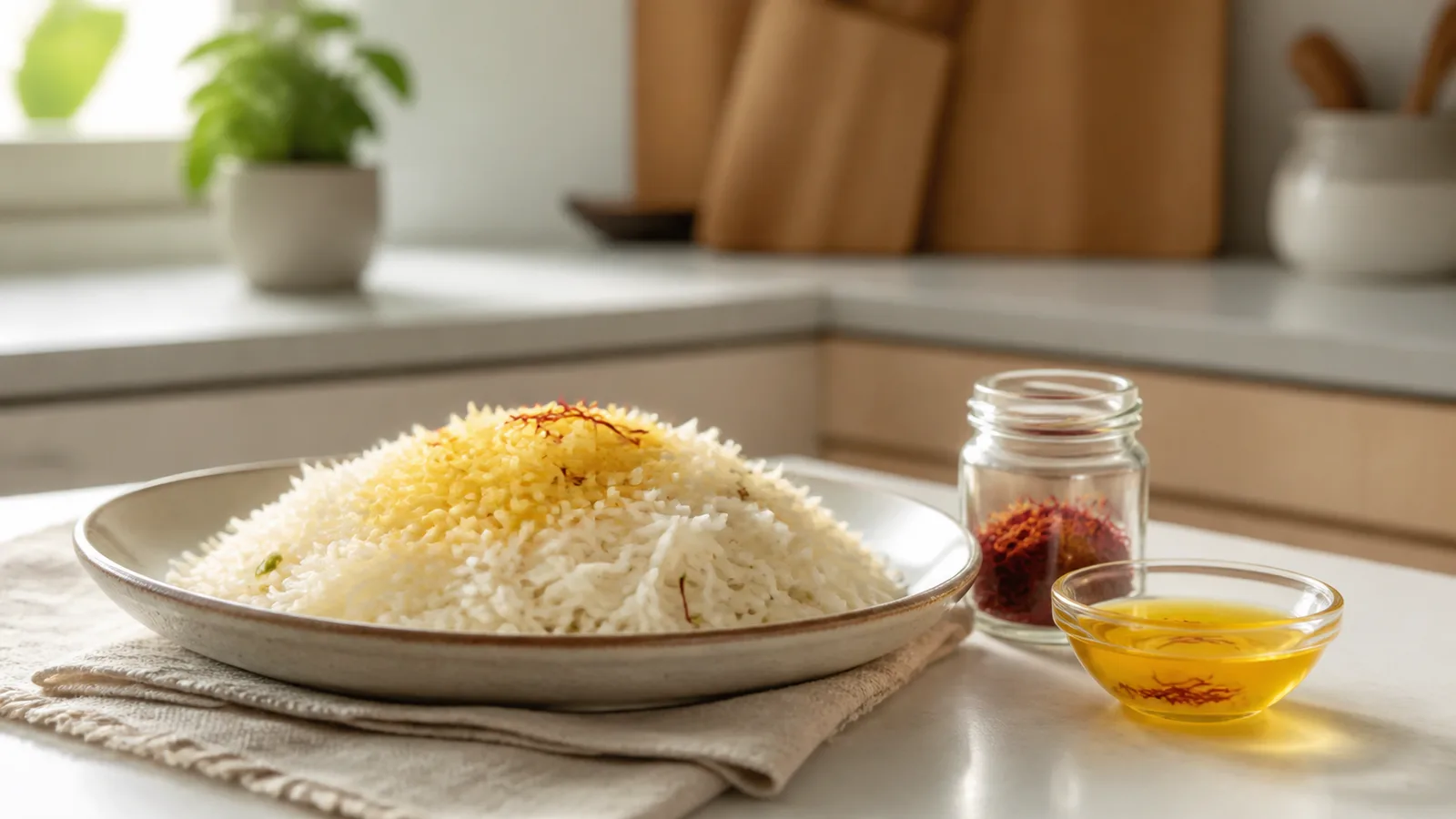
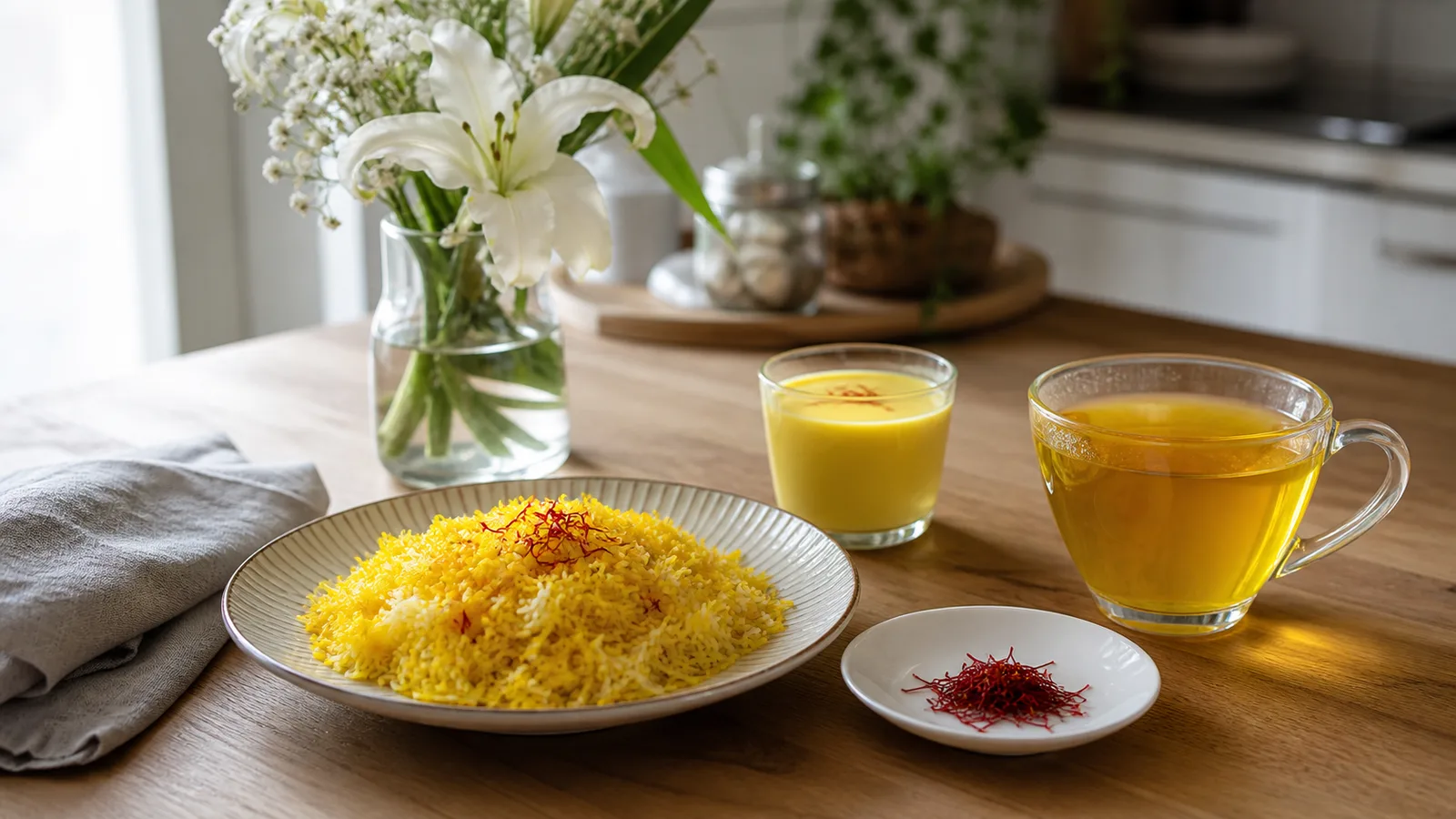
Use saffron for what it does exceptionally well: bringing a distinctive aroma, warm colour and gently bitter depth to food. A simple approach is to crush a small amount of the threads, steep them briefly in warm water or milk, then distribute that infusion through the dish. Our guide to how many saffron threads to use explains why thread counts and weights should not be treated as universal medical doses.
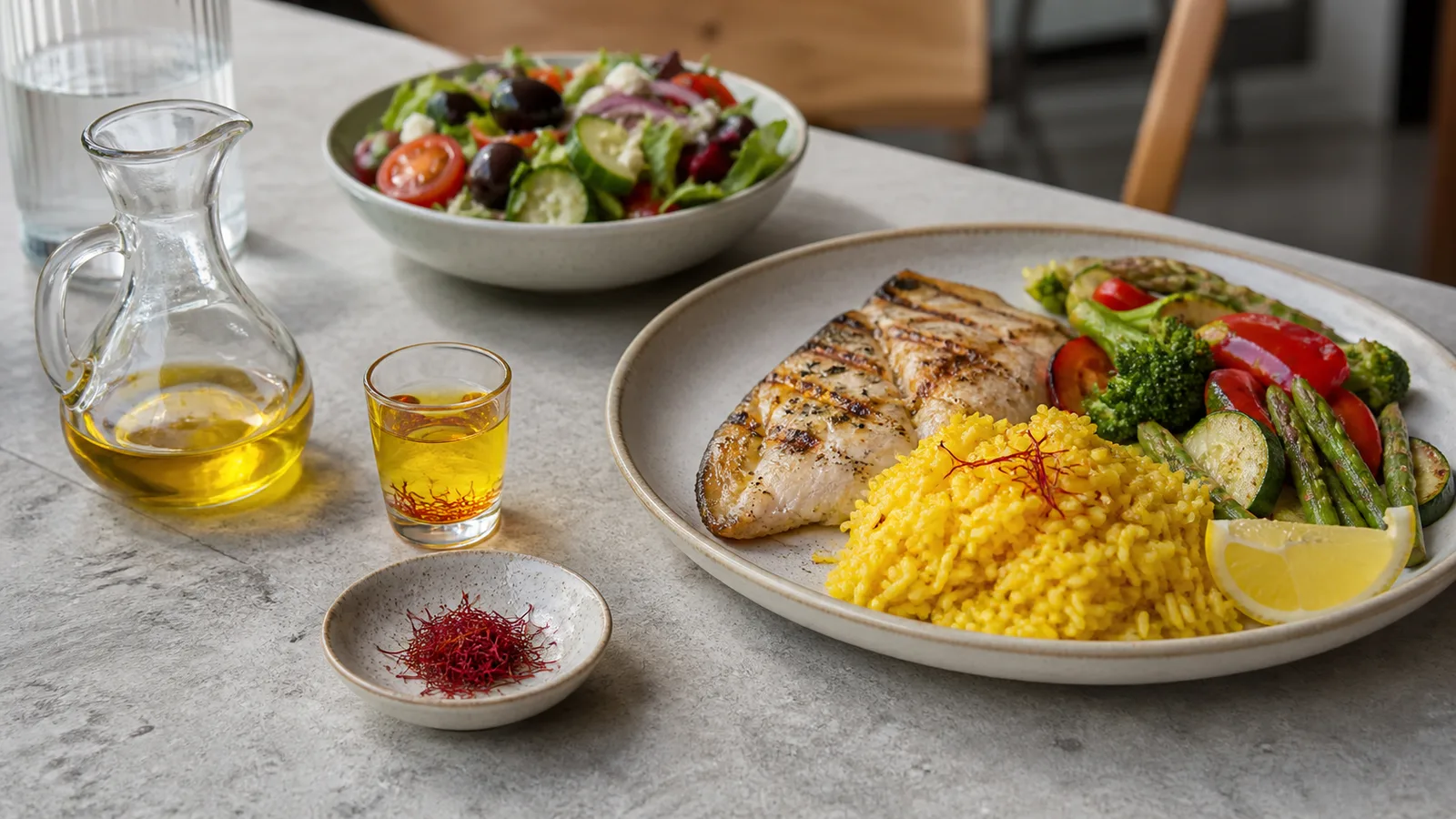
For a meal with genuine nutritional substance, combine saffron with foods that naturally provide the nutrients you need. Beans or lentils add protein, fibre and folate; vegetables contribute vitamin C and other micronutrients; dairy or fortified alternatives can contribute calcium; and eggs, fish or meat can add protein and vitamin B12. The exact combination depends on your diet.
Buying intact, aromatic threads also makes it easier to judge quality than buying an unknown powder. If you are choosing saffron for cooking, see our saffron products and use the spice to enhance a balanced dish rather than expecting it to act like a multivitamin.
The practical answer
The vitamins in saffron include vitamin C, vitamin B6 and several other B vitamins, with a small amount of vitamin A recorded in standard composition data. Yet ordinary recipes use so little saffron that the vitamin and mineral contribution is negligible. Enjoy it for its flavour, colour and culinary character. Rely on a varied diet—and professional advice when a deficiency is suspected—for meaningful vitamin intake.