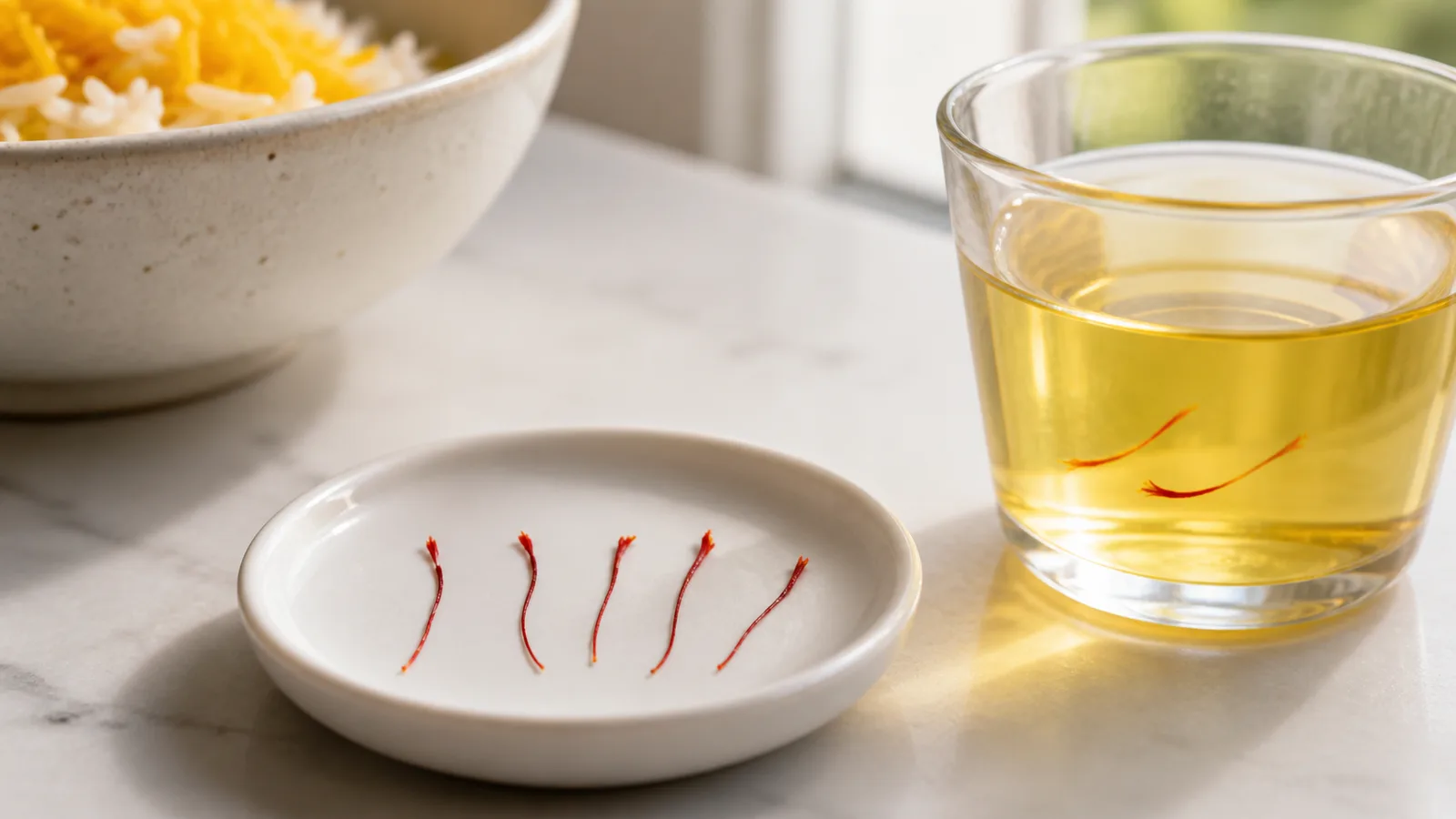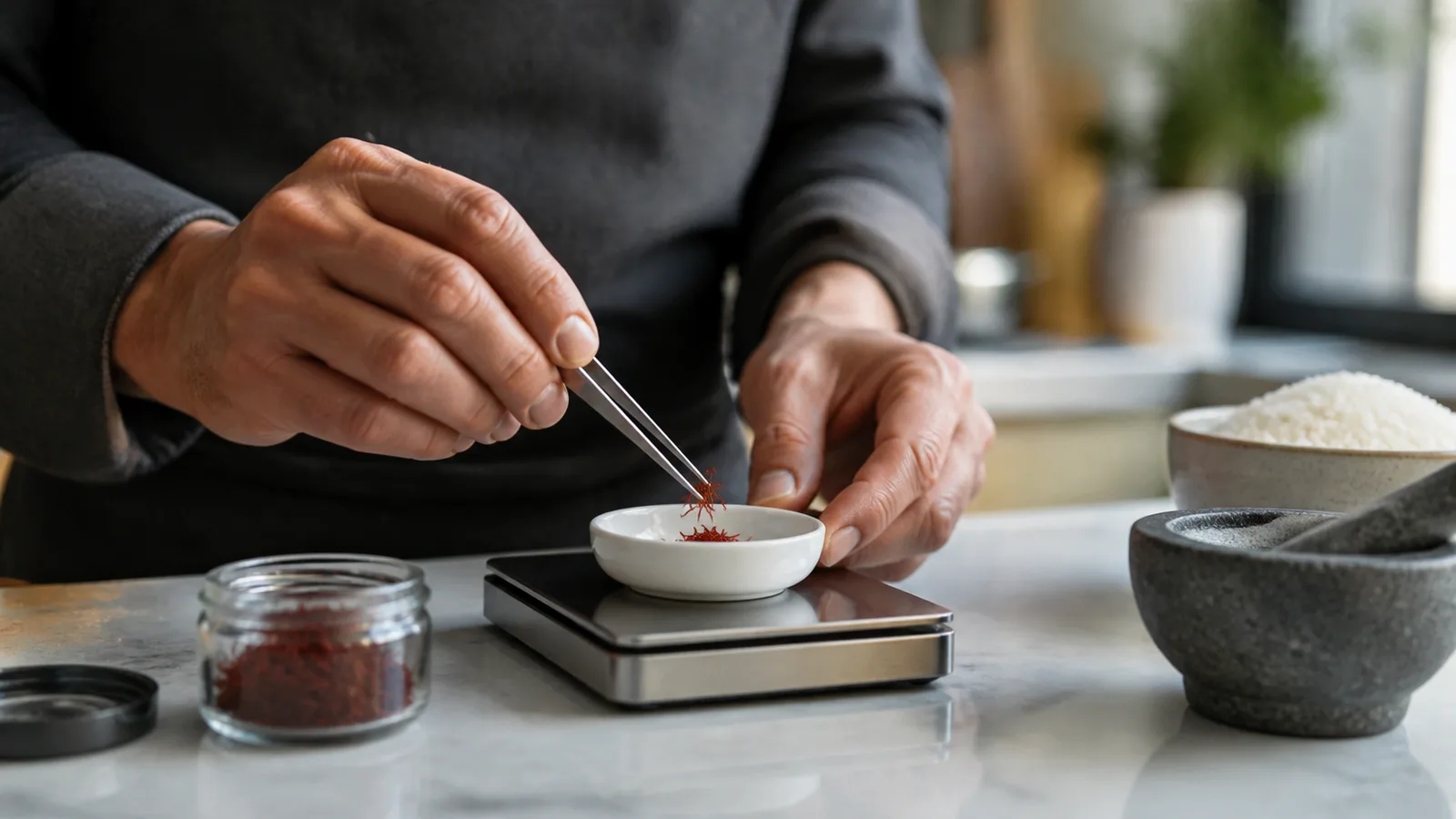
How many pieces of saffron should you use per day? There is no reliable universal thread count. Saffron filaments vary in length, thickness, moisture, breakage and whether one “piece” is a complete stigma or a fragment. For cooking, use the small amount the recipe needs and share it across the dish. For a supplement or health goal, use the exact labelled product only after checking whether it is appropriate.
Saffron Consumption per Day: Why Pieces Are a Poor Measure
The old answer of 20 to 30 threads, supposedly equal to 0.1 to 0.3 grams, was too confident and the conversion was unreliable. Counting visually similar threads does not produce a dependable mass. It also encourages a culinary ingredient to be treated like a standardised medicine.
An ISO explainer once gave an approximate mass of 2 milligrams for a stigma, while also noting that each flower has three stigmas. That estimate illustrates the scale; it does not turn “pieces” into a precise serving. Current ISO 3632-1:2025 covers saffron as filaments, cut filaments and powder and specifies product requirements—not a daily health dose.
What Counts as a Saffron Thread?
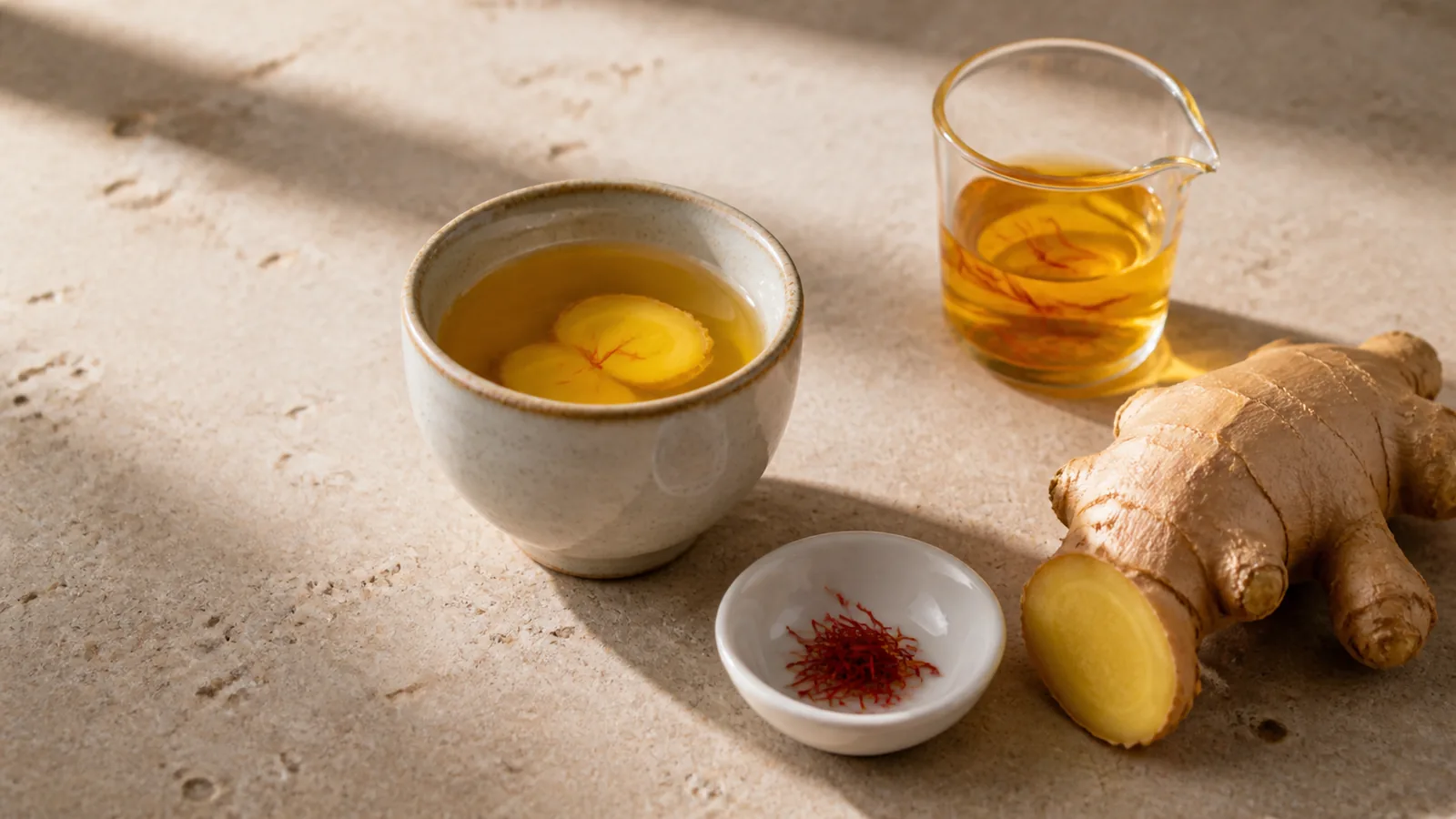
Dried saffron comes from the stigma of Crocus sativus. A long intact filament, a cluster still joined near the pale end and a short broken red fragment may all be called a thread by a seller or cook. Powder cannot be counted at all.
Even a kitchen scale may struggle with a tiny pinch unless it is designed for very small weights. For a recipe, distribution and flavour are more useful guides. For medical or supplement use, a household count is not an acceptable substitute for product-specific measurement.
The Ideal Daily Intake of Saffron Is Context-Dependent
There is no official recommended daily allowance for saffron. It is a spice, not an essential nutrient with a required intake. You do not need to consume it every day to obtain normal nutrition.
Clinical trials use defined preparations: stigma powder, extracts standardised in different ways, or isolated constituents. The studied amount belongs to that product and research protocol. It cannot be converted safely into a number of loose threads from another jar.
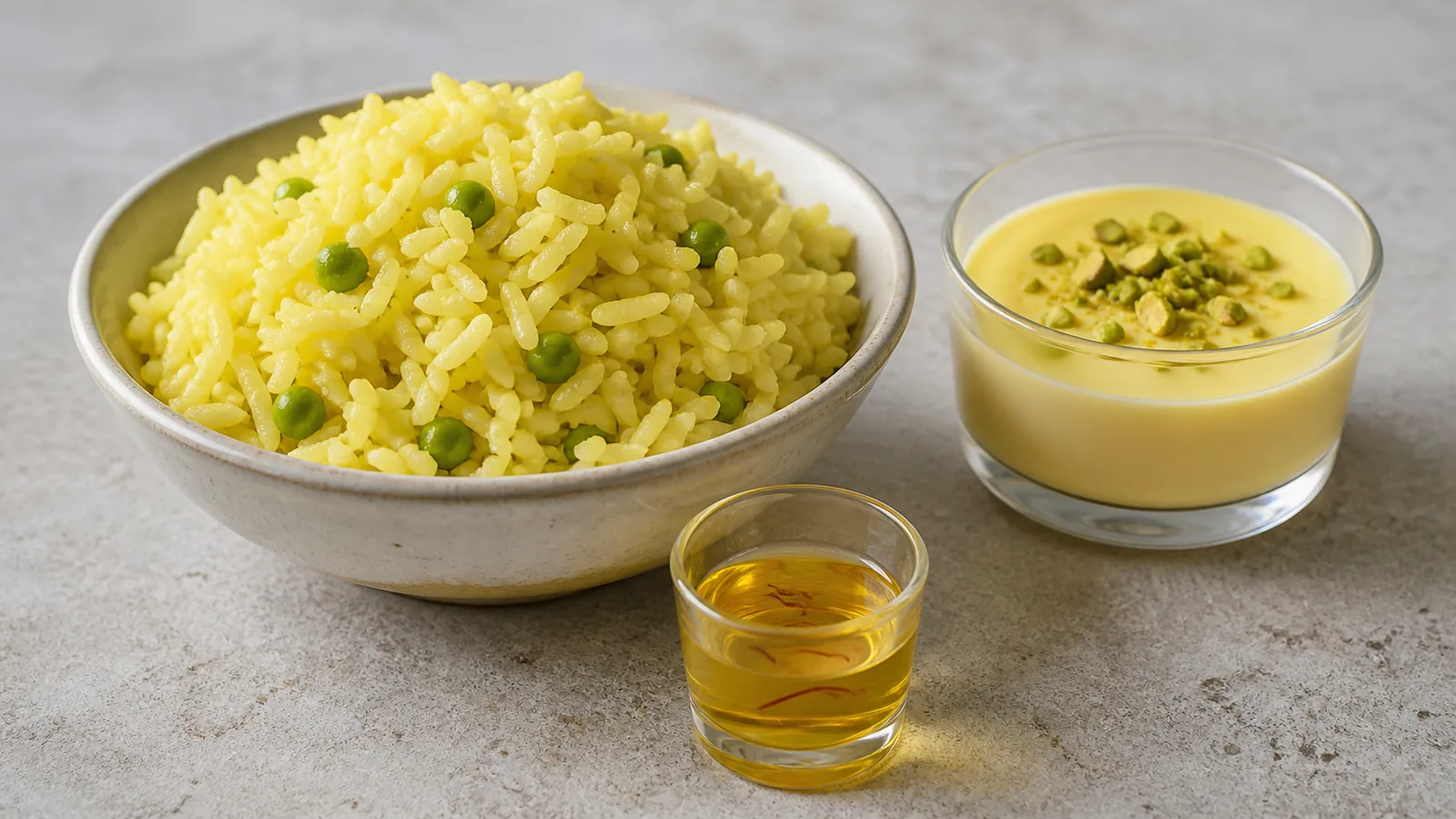
If saffron is only being used for food, a small culinary pinch can colour and flavour a shared rice dish, soup, sauce or dessert. Stop adding it when the recipe is balanced; more threads often make the result bitter and expensive rather than better.
Do More Threads Create More Health Benefits?
No dose-response rule says that a darker cup or a larger pinch gives greater benefit. Research on mood, sleep and other outcomes generally tests measured preparations for a defined period. It does not prove that increasing daily culinary saffron improves mood, digestion, skin or mental clarity.
A broad review of saffron meta-analyses and clinical trials found promising areas but also important weaknesses in the quality of the evidence. The responsible conclusion is to match claims to the exact study, not to turn research into a daily thread target.
Potential Side Effects of Overconsumption
Too much saffron or an unsuitable product can cause nausea, vomiting, abdominal discomfort, diarrhoea, dizziness, headache, weakness or an allergic reaction. A 2026 systematic review of human safety data found studied preparations generally well tolerated, with gastrointestinal effects most often reported, while recommending added caution and monitoring for higher-dose or prolonged medicinal use.
The former article’s statement that 5 grams is “the toxic dose” should not be used as a safety line. A concerning exposure cannot be judged by assuming everything below one internet number is harmless. Product form, amount, body size, symptoms and individual health all matter.
For a deliberate gram-level amount, an unknown amount, a child exposure or symptoms after use, contact a poison centre or urgent medical service. In the United States, Poison Help advises calling 1-800-222-1222 without waiting for symptoms. Call emergency services for collapse, a seizure, severe breathing difficulty or another life-threatening sign.
Who Should Not Set a Daily Thread Target Alone?
Ask a clinician or pharmacist before repeated or concentrated use during pregnancy or breastfeeding, alongside prescription medicine, before surgery, with a medical condition or after a previous saffron reaction. Do not use a thread count to replace an interaction review.
A few threads in a shared meal and a concentrated daily preparation are different exposures. This is particularly important in pregnancy, where evidence is limited and a food amount should not be used to justify medicinal use.
How to Safely Incorporate Saffron Into Food
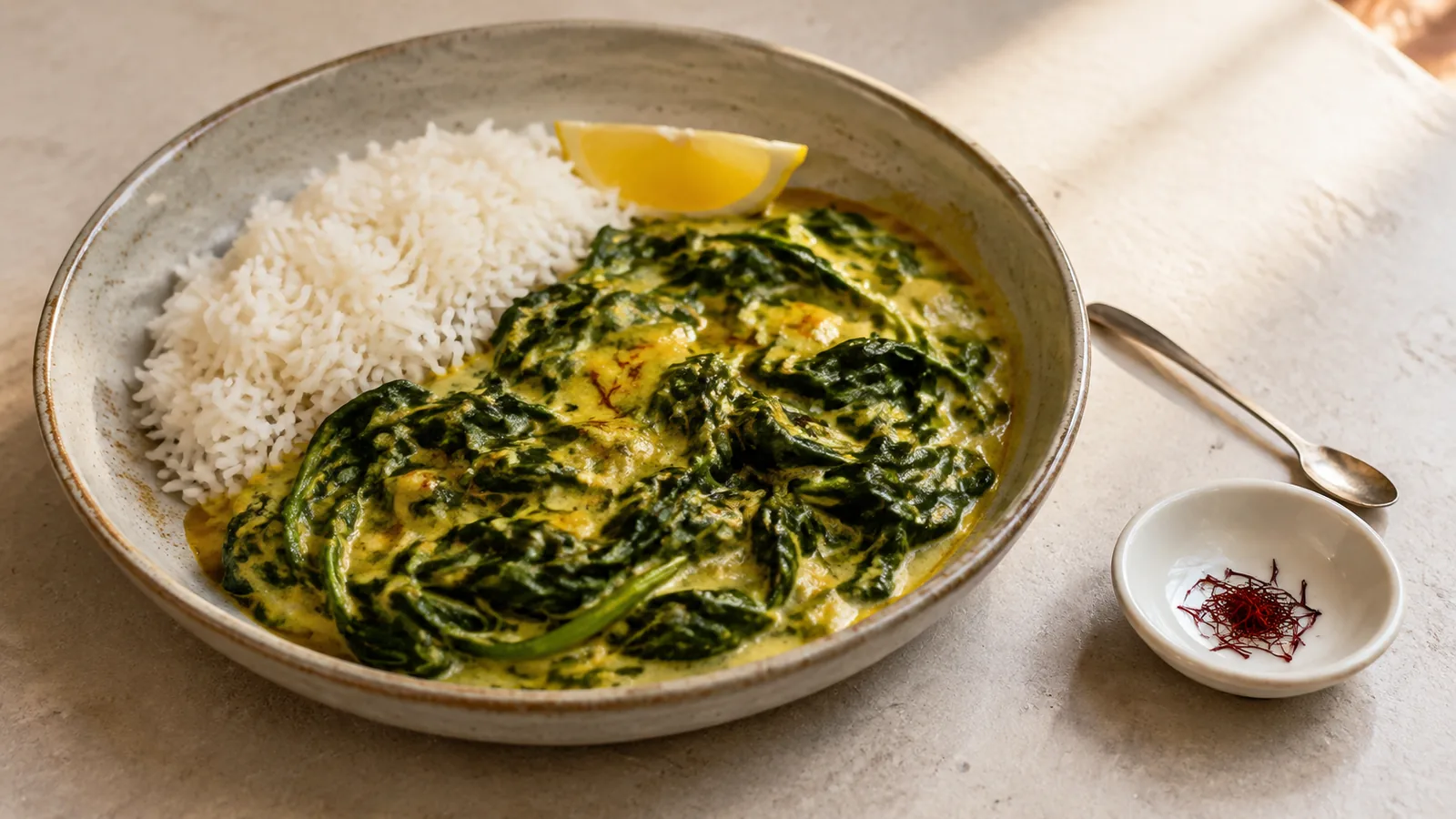
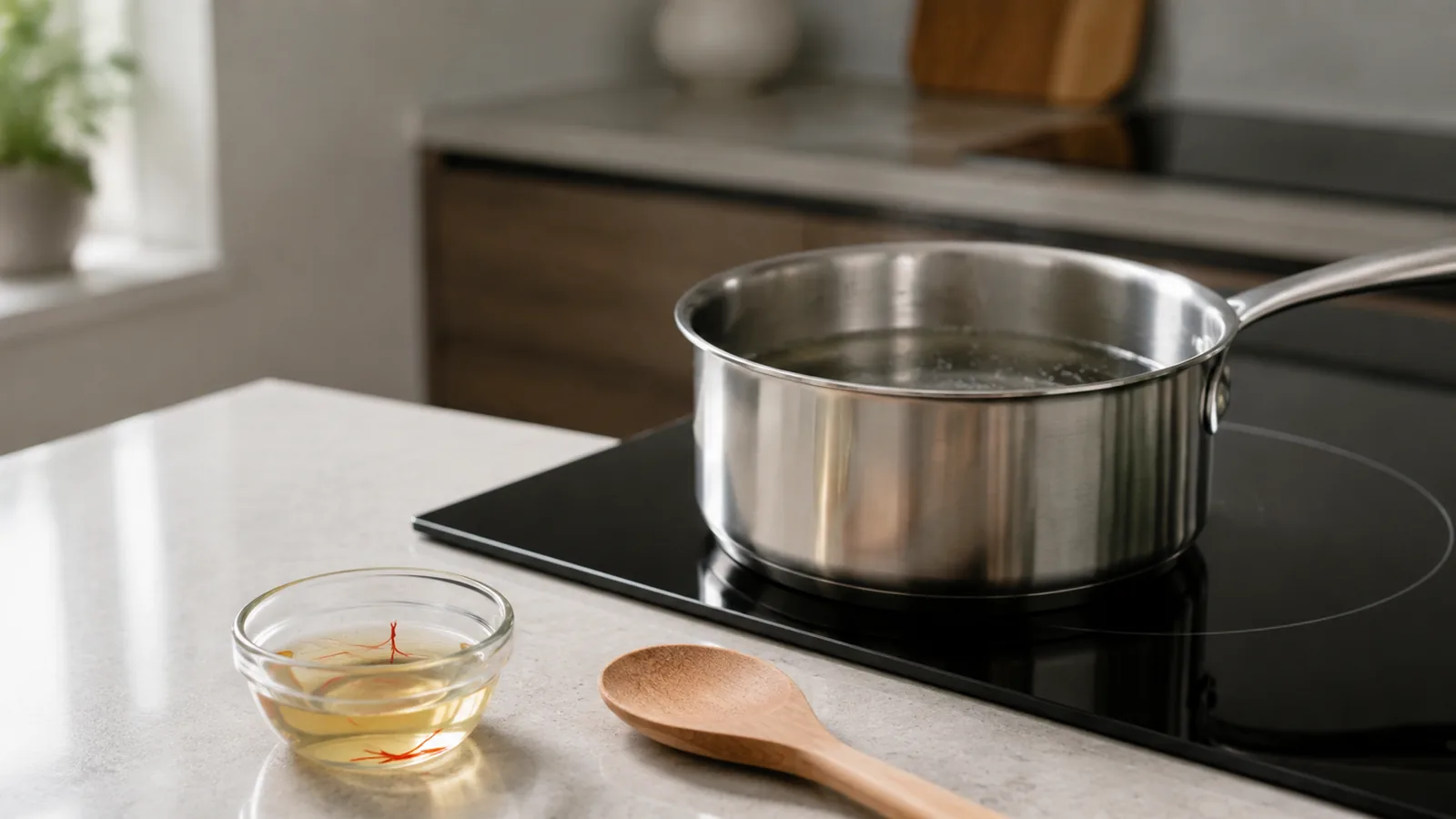
For even colour and flavour, gently crush a small culinary pinch, bloom it in a little warm water, milk or broth, and add the full infusion to the dish. Measure according to the recipe and number of servings rather than a personal daily quota.
Keep dry threads in a tightly closed container away from light, heat and moisture. Choose a traceable product; counting pieces cannot reveal adulteration or quality. For more on form and preparation, see ways to take saffron safely.
The Practical Answer
Do not use 20, 30 or any other thread count as a universal daily dose. Use a modest recipe amount for food. If a health professional and a product label define a supplement schedule, follow that exact preparation instead of converting it to “pieces.” The safest count is the one that belongs to the real recipe—not a number invented for every person.