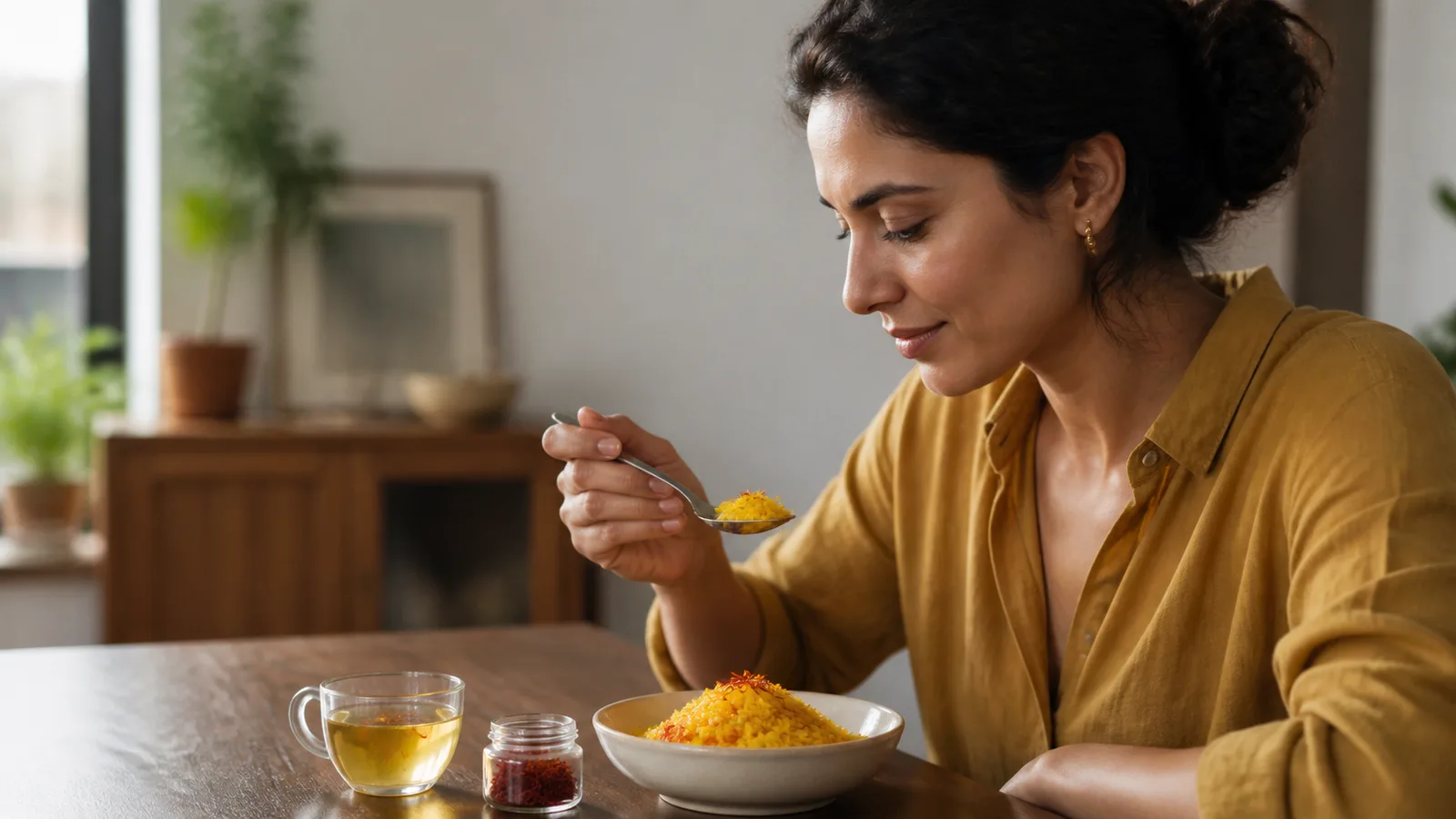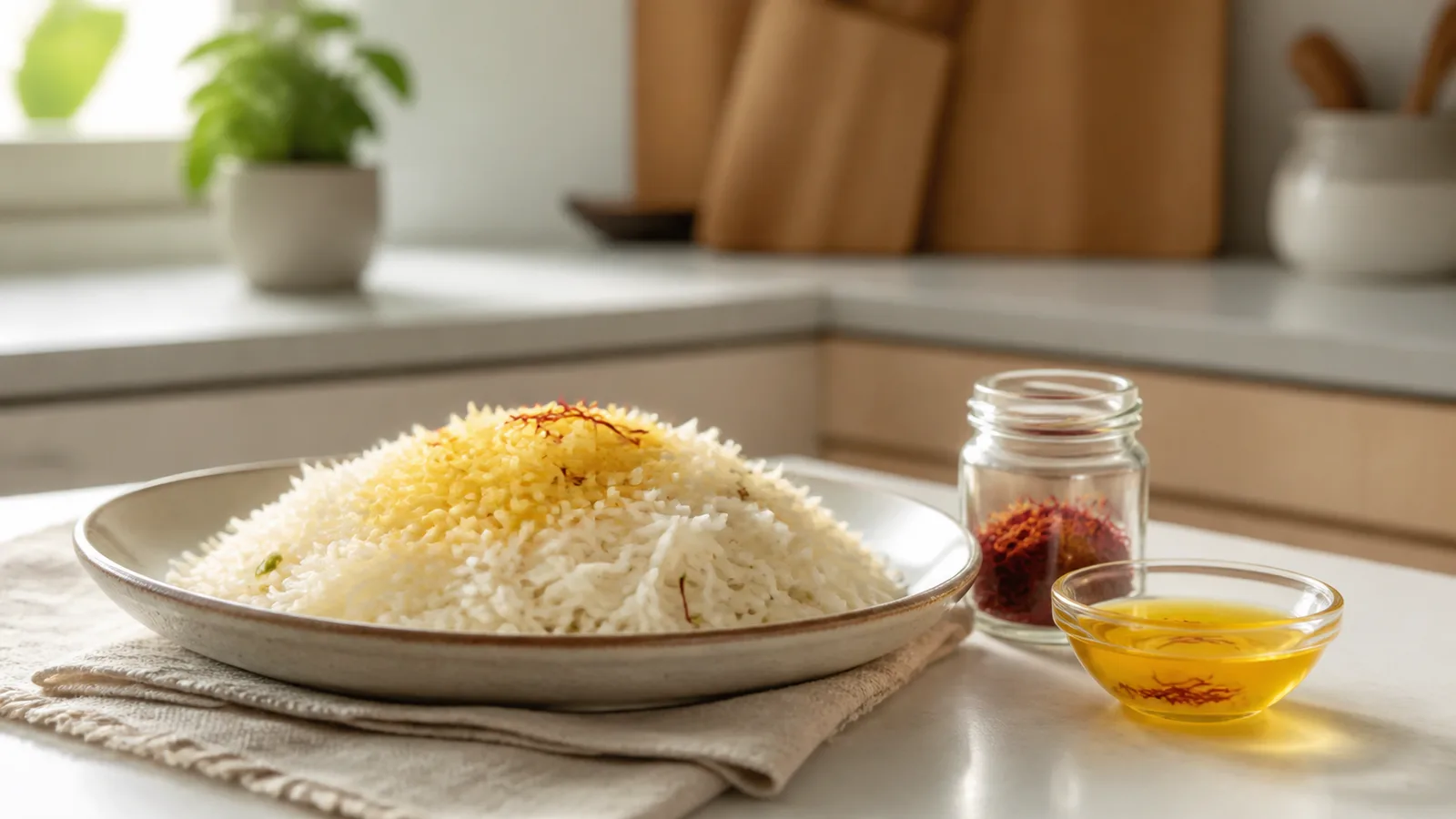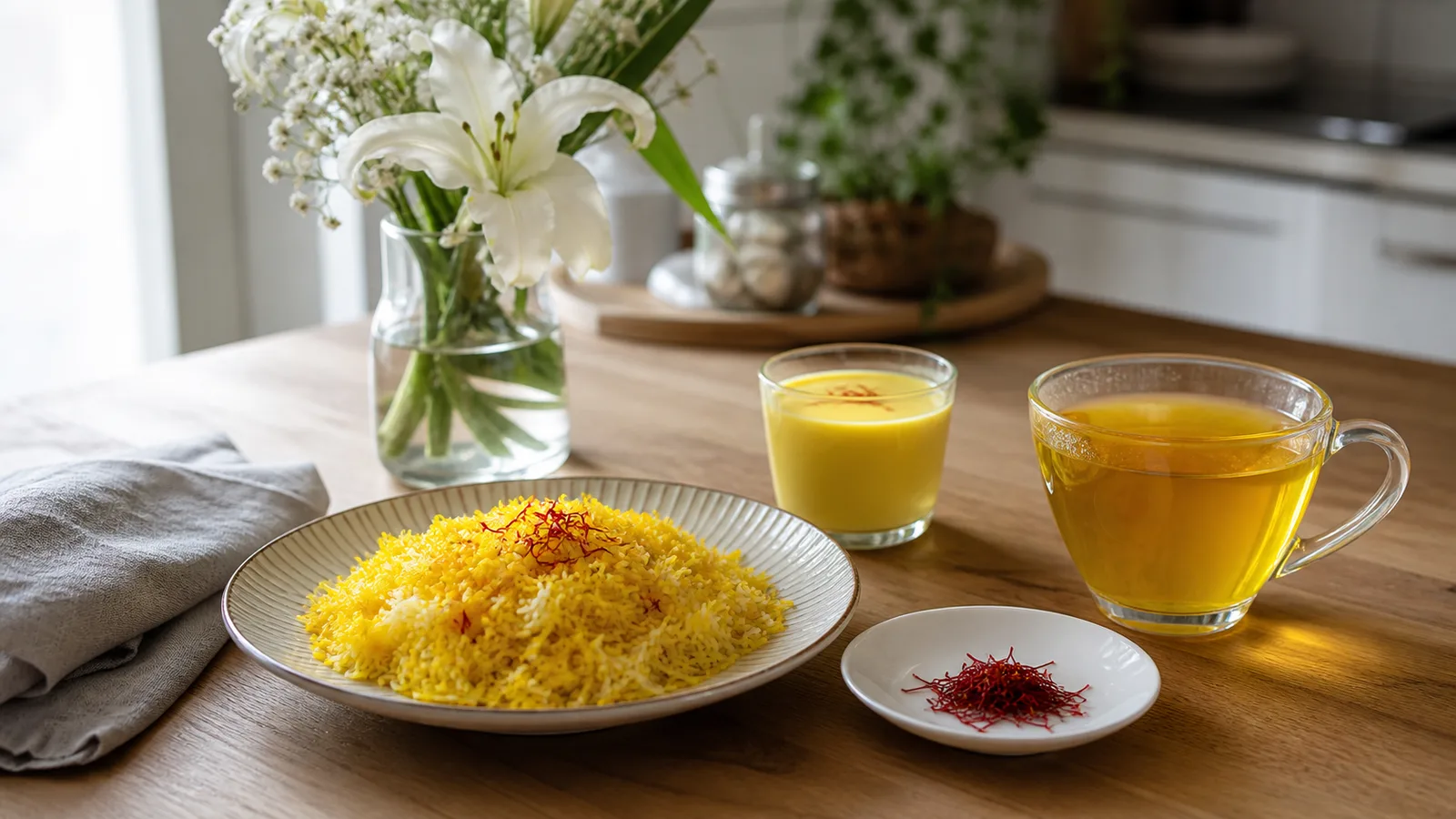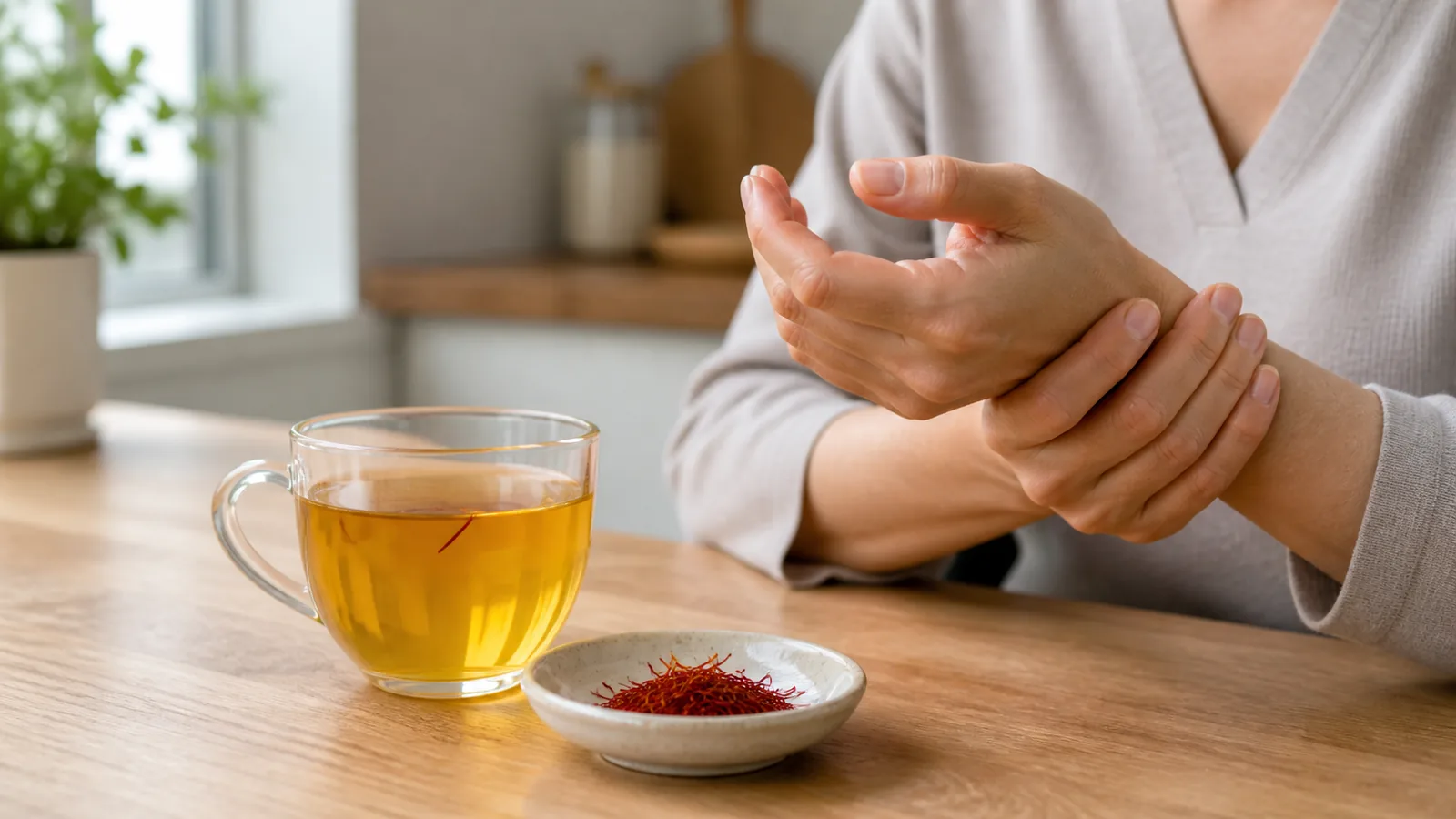
What does saffron do for women’s health? The clearest human research concerns specific symptoms—not a general promise to “balance hormones.” Trials and reviews have explored premenstrual symptoms, period pain, mood during perimenopause and female sexual function. Results are encouraging in places, but studies are limited and usually test measured extracts rather than saffron in food.
Saffron for Women’s Health: What the Evidence Actually Covers
When people ask about saffron benefits for female health, several very different questions can sit underneath the phrase: menstrual symptoms, menopause, mood, fertility, pregnancy, skin or sexual well-being. They should not be collapsed into one list of guaranteed benefits.
Saffron remains a valued culinary spice. Using a few threads in a meal is different from taking a standardised product daily for a health concern. The following evidence describes research areas, not a recommendation to self-treat.
PMS and Period Pain
Premenstrual syndrome (PMS) and dysmenorrhoea, or painful periods, are the women-specific areas with the most directly relevant pooled research. A 2026 systematic review and meta-analysis combined randomised trials and reported improvements in PMS symptoms and a smaller pooled effect for dysmenorrhoea.
That finding is not the same as proving that saffron regulates the menstrual cycle or corrects a hormonal disorder. The included trials used particular preparations and schedules, and pooled results do not tell an individual whether symptoms have another cause.
Severe pain, very heavy bleeding, fainting, bleeding between periods or a major change in the cycle deserves medical assessment. The American College of Obstetricians and Gynecologists advises discussing any PMS product or supplement with an ob-gyn because many marketed products are unproved and excess amounts or medicine combinations can be harmful; see its PMS guidance.
Mood and Stress
Saffron extracts have been studied for depression and anxiety in adults, but those outcomes are not inherently female-specific. A recent GRADE-assessed review of randomised trials found potential benefits while also documenting limits in certainty and study quality.
That evidence does not support the former article’s claim that saffron simply raises serotonin or naturally resolves hormonal mood swings. Low mood, anxiety and stress can have many causes. Saffron should not replace assessment, counselling or prescribed treatment, and urgent help is needed for thoughts of self-harm or an immediate mental-health crisis.
Perimenopause and Menopause
One randomised trial followed 86 perimenopausal women with menopausal complaints for 12 weeks. A standardised extract was associated with greater improvement in psychological symptoms than placebo, but not with greater improvement in vasomotor symptoms, physical symptoms or the other measured quality-of-life outcomes. The perimenopause trial is useful because it shows both the positive result and its boundary.
This does not establish saffron as hormone therapy or a treatment for hot flushes. Menopause symptoms and treatment choices are individual, especially when medical history affects the safety of hormone or non-hormone options.
Does Saffron Increase Estrogen?
There is no dependable clinical evidence that ordinary saffron use reliably increases estrogen in women. Findings from animal or laboratory work cannot be converted into a promise that saffron balances estrogen and progesterone in people.
It is therefore misleading to claim that saffron regulates cycles, improves fertility or corrects a hormone imbalance through an estrogen effect. Anyone with irregular periods, fertility concerns, endometriosis, polycystic ovary syndrome, symptoms of menopause or a hormone-sensitive condition should discuss the real diagnosis and all supplements with a clinician. Our focused review addresses saffron and estrogen evidence in more detail.
Female Sexual Function
A small three-centre randomised trial studied saffron capsules in women aged 18 to 55 with severe sexual dysfunction. Both groups improved, while the analysis favoured saffron for the total score at the statistical threshold and for some domains. The authors called for more robust research; see the female sexual-function trial.
That result does not show that saffron is an aphrodisiac for every woman. Pain, low desire, dryness and arousal difficulties may relate to medicines, menopause, pelvic conditions, mental health, relationships or other factors. A clinician can help identify the cause instead of treating all symptoms as one problem.
Skin, Energy and Digestion
Saffron contains identifiable plant compounds, and extracts show antioxidant activity in laboratory settings. That does not prove that eating or applying saffron brightens skin, erases signs of ageing or produces a “glowing complexion.” Topical mixtures can also irritate skin or introduce another allergen.
Claims that saffron raises oxygen levels, boosts stamina, improves circulation or cures bloating were also too strong in the former article. Fatigue and digestive symptoms have broad causes. Persistent or worsening symptoms deserve assessment rather than a spice-based explanation.
Pregnancy and Breastfeeding
A few threads in a shared dish and medicinal or supplement-style use are not the same exposure. Do not begin repeated, concentrated or high-quantity use during pregnancy without the obstetric clinician’s advice. A 2026 systematic review of saffron in pregnancy found limited and varied clinical evidence; it does not justify a promise of safety, fertility support or a preferred trimester.
Reliable information for breastfeeding is also limited. Discuss the exact product, amount, medicines and infant circumstances with a qualified professional.
Using Saffron Without Turning It Into a Treatment
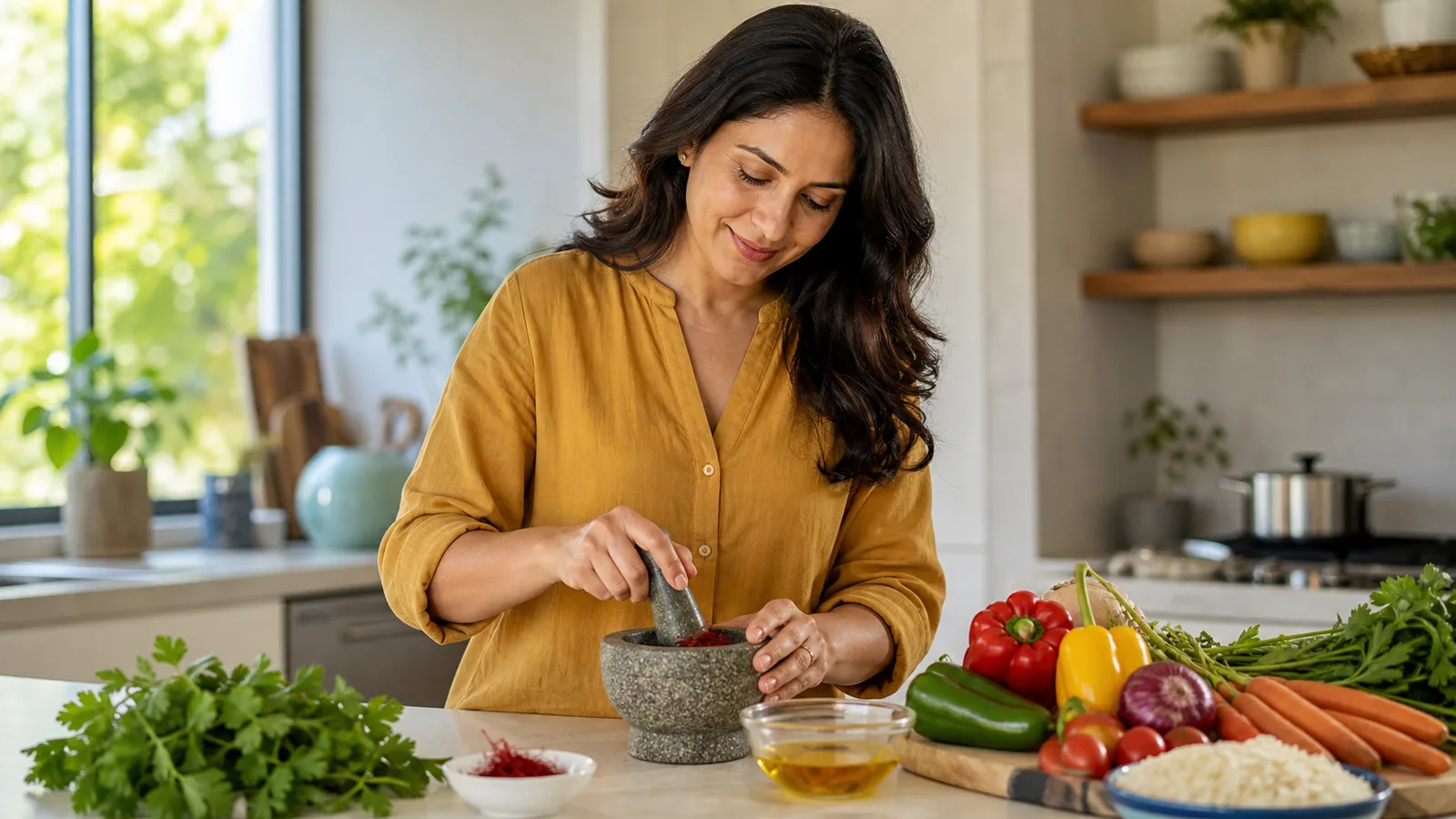
For food, bloom a small culinary pinch in warm water or milk and add the liquid and threads to the dish. For a supplement, read the full label and ask a clinician or pharmacist whether the product is appropriate. Do not copy the amount from a trial or combine several products.
A recent systematic review of human safety data found studied saffron preparations generally well tolerated, with gastrointestinal effects most often reported, while recommending more caution and monitoring for higher-dose or longer medicinal use. That is a more useful safety message than describing saffron as universally safe because it is natural.
The Balanced Answer
Saffron research for women’s health is most interesting where it asks a defined question in a defined group. PMS and period-pain findings, limited perimenopause data and small sexual-function trials deserve attention; hormone balancing, fertility, skin, energy and digestive promises do not have the same support. Enjoy saffron as food, and treat concentrated health use as a separate decision that deserves evidence and individual advice.