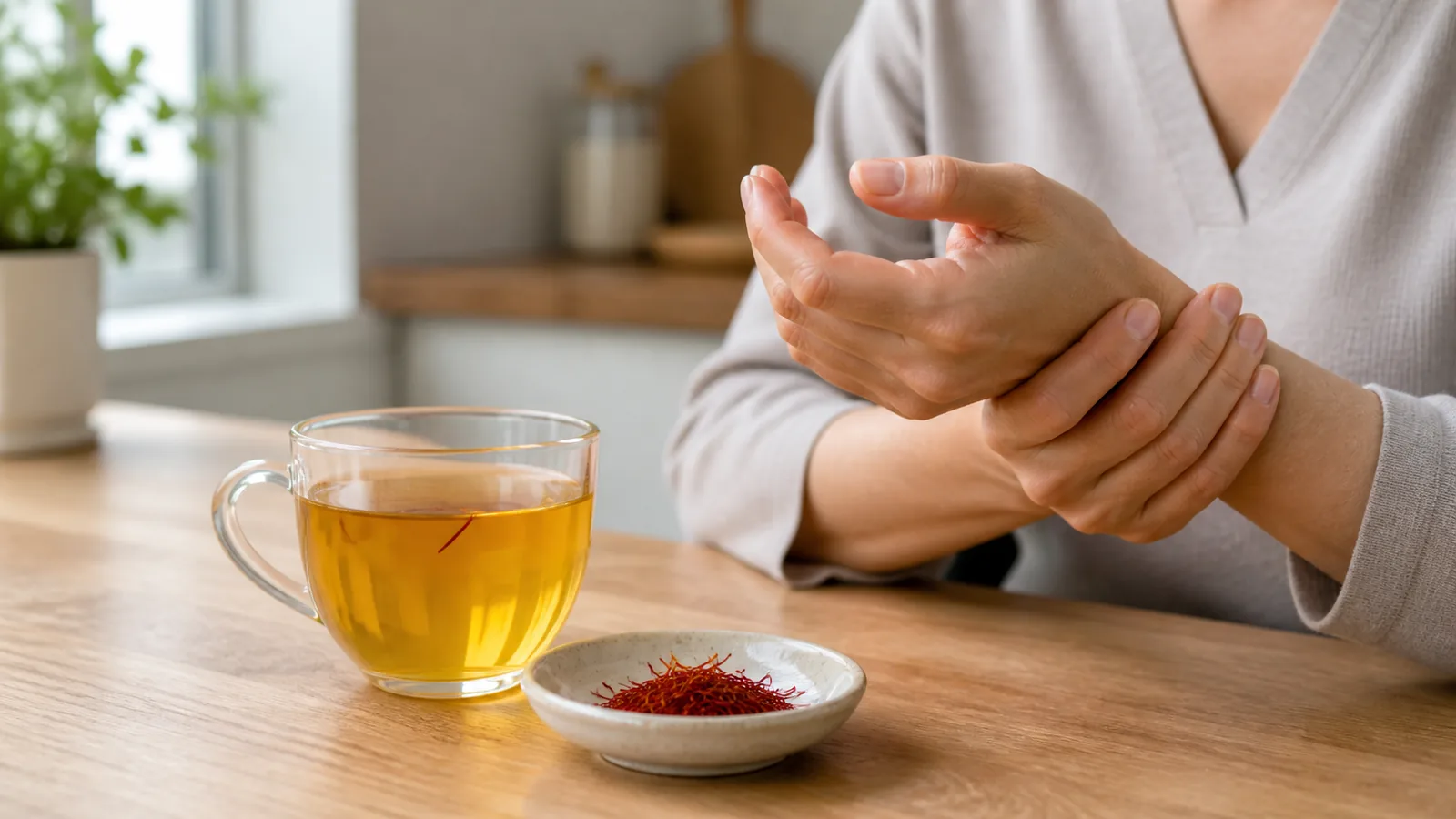
Does saffron increase estrogen? Current human evidence does not show that eating saffron or taking a saffron extract reliably raises estrogen levels. Studies of PMS, perimenopausal mood or other symptoms are sometimes described online as “hormone balancing,” but a change in symptoms is not proof that estrogen increased.
Saffron and Hormone Balance: The Evidence on Estrogen
Saffron contains plant compounds including crocin and safranal. Researchers have explored how saffron or its constituents behave in laboratory, animal and human studies. These levels of evidence are not interchangeable. A laboratory mechanism can suggest a question for a clinical trial; it cannot tell a person that a spice will correct their hormone level.
No dependable clinical trial has established saffron as an estrogen-raising treatment. It should not be described as a substitute for prescribed estrogen, fertility care or an evaluation of menstrual or menopause symptoms.
Estrogen Is Not One Fixed Number
Estrogens are a group of hormones. Estradiol, estrone and estriol have different roles and patterns. Levels vary with age, sex, the menstrual cycle, pregnancy, menopause, medicines and health conditions.
The U.S. National Library of Medicine explains these differences in its estrogen-level testing guide. It also notes that the meaning of a result depends on the estrogen measured, the reason for testing and other clinical information. One symptom or supplement cannot diagnose “high” or “low” estrogen.
Why Saffron Is Linked With Estrogen Online
The connection usually comes from one of three leaps:
- a cell or animal finding is presented as a confirmed effect in people;
- a trial reports a symptom change and the change is attributed to estrogen without measuring it;
- the marketing phrase “hormone balance” is used without naming a hormone, test or diagnosis.
A 2024 systematic review of saffron and the female reproductive system included laboratory, animal and human research across many conditions. It is useful for mapping possible research directions, but that broad mix does not prove that saffron increases circulating estrogen in women.
PMS Findings Do Not Prove an Estrogen Increase
Saffron has been studied for premenstrual symptoms and period pain. A 2026 meta-analysis of randomised trials reported pooled symptom improvements for PMS and dysmenorrhoea. Those outcomes deserve further study, but they do not establish estrogen as the mechanism or show that saffron regulates a menstrual cycle.
Someone with severe pain, heavy bleeding, absent periods, bleeding between periods or a marked change in the cycle needs an appropriate assessment. Treating the symptom as a simple hormone imbalance can delay identification of another cause.
Menopause Findings Have a Similar Boundary
In a randomised trial of 86 perimenopausal women, a standardised saffron extract was associated with greater improvement in psychological symptoms than placebo. It did not produce greater improvement in vasomotor symptoms, physical symptoms or the other measured quality-of-life outcomes. Read the perimenopause trial for the exact result.
That study did not make saffron an estrogen replacement. The NHS explains that estrogen-containing hormone replacement therapy is a defined medical treatment, available in specified forms and chosen according to an individual’s history; see its menopause treatment guidance.
What About “Saffron Estrogen Dominance”?
Saffron estrogen dominance is not a diagnosis that can be confirmed from a symptom list or corrected with a spice. Symptoms attributed online to “estrogen dominance” can overlap with normal cycle changes, perimenopause, thyroid problems, polycystic ovary syndrome, medicine effects and other conditions.
ACOG identifies “hormone balance or imbalance” as marketing language that deserves caution in menopause discussions. Its guide to detecting menopause misinformation also notes that “natural” does not automatically mean safe.
Can Saffron Indirectly Affect Hormonal Health?
Research may find effects on a symptom without showing that a sex-hormone concentration changed. Mood, sleep, pain perception and sexual function involve many systems. Describing every result as hormone support makes the evidence sound more certain and more specific than it is.
The safer conclusion is narrow: saffron extracts have been investigated for some symptoms experienced around PMS or perimenopause, but the mechanism, clinical importance and applicability depend on the study. This does not prove fertility improvement, cycle regulation, higher estrogen or higher progesterone.
Who Should Be Especially Cautious?
Ask a clinician or pharmacist before supplement-style use if you are pregnant or breastfeeding, use hormonal contraception or hormone therapy, take prescription medicine, are preparing for surgery, or have a hormone-sensitive condition or cancer history. Do not stop or alter prescribed hormone treatment because of a claim about saffron.
A 2026 systematic review of human saffron safety data found studied preparations generally well tolerated, while recommending added caution and monitoring for higher-dose or prolonged medicinal use. Culinary threads and concentrated extracts remain different exposures.
How to Use Saffron Without Making a Hormone Claim
For food, use a modest pinch for colour, aroma and flavour. Bloom the threads in warm liquid, then add the full infusion to the dish. There is no need to take saffron daily or on an empty stomach to “raise estrogen.”
If you are considering an extract for a defined symptom, discuss the exact product, other ingredients, amount and evidence with a qualified professional. Our broader review of saffron research for women’s health separates several women-specific questions rather than treating them all as hormone effects.
The Direct Answer
Saffron has not been shown to reliably increase estrogen in humans. Symptom research is not an estrogen test, “hormone balance” is not a mechanism, and an extract is not a replacement for diagnosis or hormone therapy. Enjoy saffron as a spice; treat any attempt to change hormone levels as a medical question.