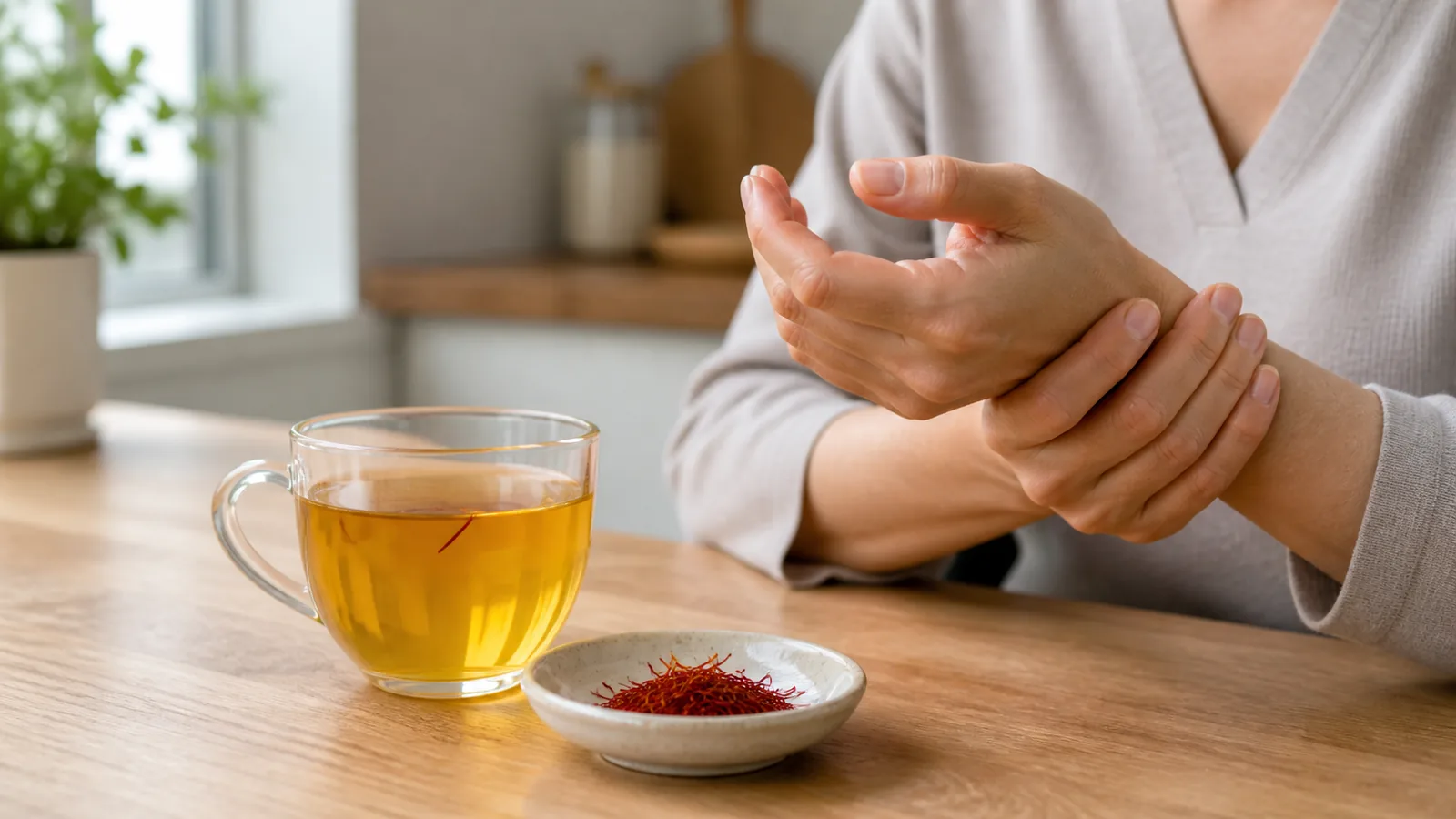
Saffron for ADHD treatment is an interesting area of early research, not an established replacement for medication or behavioral care. A few small studies in children and teenagers have reported improvements on ADHD rating scales. Their short duration, small samples, different saffron products, and limited comparison groups make the results preliminary.
That leaves room for a sensible conversation. It does not justify calling saffron “natural Ritalin,” promising that it works without side effects, or giving a child a supplement without the clinician who manages their care knowing about it.
The Relationship Between Saffron and ADHD Treatment
Attention-deficit/hyperactivity disorder, or ADHD, is a neurodevelopmental condition. It can involve difficulty sustaining attention, organizing tasks, controlling impulses, or regulating activity. The pattern differs from one person to another; not every child with ADHD is visibly hyperactive.
A child who is restless or distracted on an occasional day does not necessarily have ADHD. Diagnosis looks for relevant symptoms that have persisted for at least six months, with several present before age 12, and for impairment in more than one setting, such as home and school. Clinicians also consider other explanations, including sleep problems, anxiety, learning differences, hearing or vision issues, and other health conditions.
The CDC’s summary of the American Academy of Pediatrics guideline recommends gathering information from parents or caregivers, school staff, and the young person, using standardized criteria, and screening for conditions that may occur alongside ADHD. An online symptom list cannot perform that assessment.
ADHD symptoms in boys and girls
Children with a more hyperactive or impulsive presentation may fidget, leave their seat when they are expected to remain there, interrupt, act before considering danger, or struggle to wait. Children with a more inattentive presentation may lose track of instructions, miss details, forget routine tasks, or have difficulty finishing work.
Boys are diagnosed more often, while girls are more likely to be overlooked when their difficulties are quieter or mainly inattentive. These are broad patterns, not rules. A girl can be hyperactive, a boy can be primarily inattentive, and behavior must be understood in the context of the individual child.
Saffron for ADHD: what has been studied?
The most frequently cited study is a 2019 randomized, double-blind pilot trial from Tehran University of Medical Sciences. It enrolled 54 children and adolescents aged 6 to 17 with an ADHD diagnosis. For six weeks, participants received either saffron capsules or methylphenidate, the generic medicine sold under brand names that include Ritalin.
Parent and teacher rating scores improved in both groups, and the researchers found no statistically significant difference between them. That result is encouraging enough to support more research. It does not prove that saffron and methylphenidate are equivalent treatments.
Why the distinction? This was a small, short pilot study without a placebo group. Roughly 25 participants in each group completed it, and six weeks tells us little about sustained school performance, long-term function, relapse, or uncommon adverse effects. A finding of “no significant difference” in a small study is not the same as a properly designed equivalence or non-inferiority trial.
What did later studies add?
An eight-week Iranian trial compared methylphenidate alone with methylphenidate plus saffron in children and adolescents. It reported greater improvement on some parent and teacher rating measures in the combined group. Another study in Spain compared a proprietary saffron extract with usual methylphenidate treatment, but it was non-randomized and also small.
A later review found only four relevant saffron studies and could not combine them in a meta-analysis because the ages, rating scales, and treatment approaches differed. Three of the four studies came from one country. The authors described the signal as promising while calling for more research to establish effectiveness.
This is the honest state of the evidence: several positive signals, but not the breadth, independence, duration, or methodological strength needed to place saffron alongside established ADHD treatments.
What does saffron do for ADHD?
Researchers have proposed that constituents such as crocin and safranal may influence signaling systems involved in attention, mood, or sleep. Dopamine, norepinephrine, glutamate, and GABA are often mentioned in laboratory discussions. These ideas help scientists form hypotheses; they do not establish what a saffron capsule does in a child’s brain or predict an individual response.
The old article said saffron enhances mood and energy, calms children, and mimics Ritalin. Those statements go beyond the clinical evidence. The trials measured symptom-rating scores for specific preparations over short periods. They did not demonstrate a universal calming effect, prove a mechanism, or test saffron used in a meal.
Saffron benefits for ADHD
Potential saffron benefits for ADHD remain research outcomes rather than dependable clinical promises. Some studies suggest a possible change in inattention or hyperactivity ratings; one non-randomized study also explored sleep. We still need larger placebo-controlled trials, consistent products, longer follow-up, measures of everyday functioning, and replication by independent teams.
There is especially little basis for extending these pediatric results to adults. Adult ADHD has its own diagnostic and treatment considerations, and a trial in school-age participants cannot answer whether an adult should use saffron.
Is saffron safer than methylphenidate?
No current trial supports calling saffron side-effect-free. In the 2019 pilot, participants in the saffron group reported headache, dry mouth, nausea, insomnia, decreased appetite, sweating, and vomiting. The events were mild to moderate, and the frequency did not differ significantly from the methylphenidate group, but they occurred.
Methylphenidate has a much larger clinical evidence base, regulated dosing, established monitoring, and known risks and benefits. Saffron supplements can vary by plant material, extraction method, marker compounds, contaminants, and other ingredients. “Natural” does not remove the need for dose control or safety monitoring.
For broader food and supplement cautions, read our guide to precautions when consuming saffron. A known saffron allergy, another medicine, a medical condition, or a multi-ingredient supplement may change the risk.
Saffron extract for ADHD is not the same as cooking saffron
The clinical studies did not ask families to add a few saffron threads to rice. They used capsules or standardized extracts in controlled research settings. A culinary pinch cannot be assumed to reproduce the study exposure, and a commercial gummy, tincture, or capsule cannot be assumed to match it either.
That is why this article does not give a child dosage. Copying the milligram amount from one trial onto a different product ignores concentration, extraction, purity, body weight, and the participant exclusions used by the researchers. It also turns a preliminary experiment into unsupervised treatment advice.
How established ADHD care works
The 2024 evidence review from the US Agency for Healthcare Research and Quality found that FDA-approved stimulant and non-stimulant medicines had the strongest evidence across treatments for improving core symptoms and other outcomes. Psychosocial interventions also help, and recommendations vary with age.
Care is broader than choosing a substance. Depending on the child, it may include:
- parent training in behavior management;
- classroom strategies, school accommodations, or learning support;
- an approved medicine selected and adjusted with a clinician;
- regular review of symptoms, daily function, sleep, appetite, growth, and adverse effects;
- care for anxiety, depression, learning disorders, tics, sleep problems, or other coexisting needs.
For children younger than six, behavior therapy—particularly parent training—is generally recommended before medication. For school-age children and adolescents, the plan may combine medicine with behavioral and school support. The goal is meaningful daily function, not simply a lower score on one questionnaire.
What parents should do with the saffron research
If you are interested in saffron for ADHD, bring the study question and the exact product label to the child’s pediatrician, psychiatrist, or pharmacist. Ask what evidence applies to the child’s age and health, how an interaction would be checked, what outcome would be monitored, and when the experiment would stop if it did not help.
Do not stop methylphenidate or another prescribed treatment abruptly to try saffron. Do not combine the two without the prescriber’s knowledge. A clinician can also help separate a genuine treatment response from changes in sleep, school demands, expectations, or natural variation in symptoms.
Teachers and caregivers remain valuable observers. Brief notes about when difficulties occur, what support was used, and how the child functioned can inform a professional assessment. They should not be used to diagnose ADHD on their own or to make a child feel watched throughout the day.
A measured conclusion
Saffron and ADHD research deserves attention because the early studies raise a plausible question. At present, however, those studies are too small and short to establish saffron as a standard treatment or a safer substitute for methylphenidate.
Families do not have to choose between curiosity and caution. Follow established ADHD care, discuss any supplement openly, and treat saffron as an investigational option unless stronger evidence and clinical guidance say otherwise.
Evidence reviewed: 2019 randomized pilot trial of saffron versus methylphenidate; 2021 randomized trial of saffron added to methylphenidate; 2022 non-randomized clinical effectiveness study; review of saffron studies for ADHD; 2024 AHRQ systematic review of pediatric ADHD diagnosis and treatment; and CDC summary of AAP clinical recommendations.