


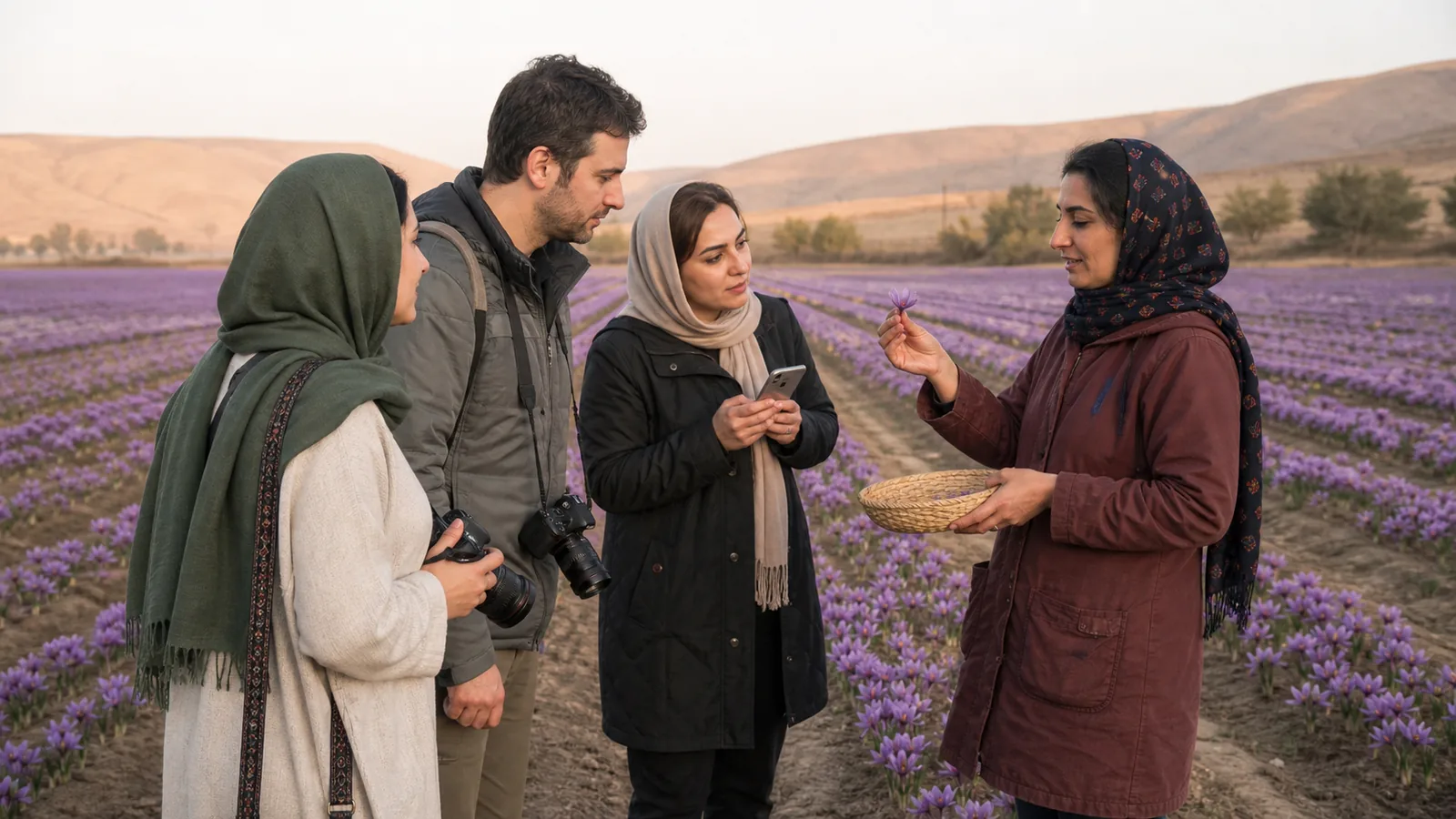
Torbat Heydariyeh used its autumn saffron harvest to welcome domestic and foreign tourism tours into the fields. Fourteen groups were reported as planned or ready to visit, with itineraries connecting flower picking and processing to the city’s market, research, handicrafts and historic places.
What the 14 saffron tourism tours represented
Ali Mohammadi, head of the local Cultural Heritage, Handicrafts and Tourism Office at the time, described 14 domestic and international tours organised around the saffron season. The original English post makes them sound like completed visits, while contemporary local reporting says the groups had announced their readiness or were scheduled to come.
That distinction is worth keeping. The figure records the programme’s intended reach, not necessarily 14 tours that all arrived and completed the same itinerary. It still shows an effort to turn a short agricultural season into a reason to spend time in Torbat Heydariyeh.
The concept had been developing for several years. An earlier report on Torbat Heydariyeh’s first saffron tourism initiative described coordination with travel offices and a plan to combine farms with historical and cultural attractions.
What visitors were meant to see
The tours were designed to follow saffron beyond a scenic purple field. Visitors could watch flowers being collected, see how the red stigmas were separated from the blooms and learn about later processing stages.
The itinerary also included the large flower market, where growers and buyers handle fresh blooms during the brief harvest. A research centre added the scientific side of cultivation and quality, while saffron drinks showed one familiar way the spice enters local hospitality.
Seen together, those stops explain why saffron is expensive more clearly than a shop display can. A visitor sees the low-growing crop, the early manual harvest, the volume of flowers and the small amount of red stigma that remains after separation and drying.
How to visit a working saffron field responsibly
A saffron farm is a workplace before it is a photograph. Tours need the grower’s permission, a local guide and a route that keeps visitors off planted rows. Corms and emerging shoots can be damaged by careless foot traffic even when the field looks open.
Harvest usually starts early, while flowers are closed or just opening. A useful visit should fit around the farmer’s working rhythm rather than delay it. Small groups are easier to supervise, and anyone invited to handle flowers should use clean hands and follow the producer’s instructions.
Visitors should also ask before photographing workers. Picking and stigma separation are skilled paid work, often carried out under time pressure. A responsible tour explains that labour and pays fairly for any farm demonstration instead of treating people as background scenery.
Our guide to the beginning of saffron harvest in Torbat Heydariyeh and Zaveh describes the daily sequence from early flower collection through separation and drying.
The Australian visitors and the wider itinerary
The report also recorded an Australian couple who travelled to Torbat Heydariyeh to see saffron farms, local handicrafts and historical monuments. Their visit illustrates the broader appeal of an agricultural tour: the crop can be the starting point, but not the entire destination.
At the time, the county reported 250 identified historical and tourism sites. Forty-eight historical buildings and sites and two spiritual or intangible heritage elements were said to be on the national register. These figures belong to that reporting period; later inventories may count or classify the area differently.
For visitors, the important point is the connection. A well-designed itinerary leaves room for traditional markets, craft workshops, local food and historic places rather than moving directly from a field to a souvenir counter.
Why Torbat Heydariyeh was promoted as a saffron capital
The title called Torbat Heydariyeh “the most saffron city in Iran and the world.” That is promotional language based on the scale of cultivation reported at the time, not a permanent international designation.
The same report attributed 8,500 hectares of saffron to Torbat Heydariyeh out of 82,000 hectares across Khorasan Razavi, with another 12,000 hectares in neighbouring Zaveh. The numbers explain why the two counties were central to the tourism story, but they should be read as historic agricultural statistics rather than current acreage.
Area is also only one measure. Production changes with yield, weather and the age of fields, while a tourism destination depends on access, trained guides, accommodation, safety and respect for the farms themselves.
Planning a saffron-season visit today
This article records a past programme; it is not a current tour listing. Dates, access to private farms, market opening, accommodation and permissions should be confirmed with a licensed local operator or the responsible tourism office before travel.
Autumn flowering is brief and can shift with weather and irrigation, so a fixed booking date does not guarantee a field at peak purple bloom. A good operator should offer a meaningful alternative—processing, a market, research or heritage visit—if the flowers are early or late.
The best saffron tours do more than deliver a photograph. They let visitors understand how Torbat Heydariyeh’s crop moves from corm and flower to dried spice, while returning value to the growers, guides, craftspeople and local businesses who make the experience possible.

![Exporting Saffron to Turkey + Price Guide [Complete 0 to 100]](https://img.rowhanisaffron.com/20260827003933/saffron-export-turkey-quality-inspection.webp)



