


Harvesting 400 tons of saffron flowers from Quchan farms was the forecast for a season covering 800 hectares. The same report projected about four tonnes of dried saffron, a 20-day harvest and a support-purchase centre for local growers. These are historic, season-specific figures rather than current production data.
What the 400-ton Quchan forecast described
The head of Quchan’s Agricultural Jihad department said more than 400 tonnes of fresh saffron flowers were expected from 800 hectares under cultivation. That works out to an average forecast of about 500 kilograms of flowers per hectare.
The next sentence in the old English version calls the expected four-tonne result “saffron flowers” again. In context, that unit cannot be right: it would collapse a 400-tonne flower forecast into four tonnes of flowers. The coherent reading is approximately four tonnes of dried saffron after the red stigmas were separated and dehydrated.
On that reading, the implied dry yield was around five kilograms per hectare, and roughly 100 kilograms of fresh flowers produced one kilogram of dried spice. Actual conversion varies with flower size, stigma separation and final moisture. A broad review of saffron production and quality notes that large quantities of flowers are needed for a small weight of dried stigmas and that post-harvest processing affects the result.
A short harvest with a large labour requirement
The Quchan report gave the flower-harvest period as about 20 days. That brief window concentrates work: fields are visited repeatedly, flowers are picked early, and each day’s crop must be transported, opened, separated and dried without a long delay.
It also reported more than 40,000 people employed directly and indirectly. The archived translation does not say whether this meant unique workers, seasonal work engagements or person-days accumulated across the 20-day period. The number should therefore remain a reported labour estimate, not a count of 40,000 permanent jobs.
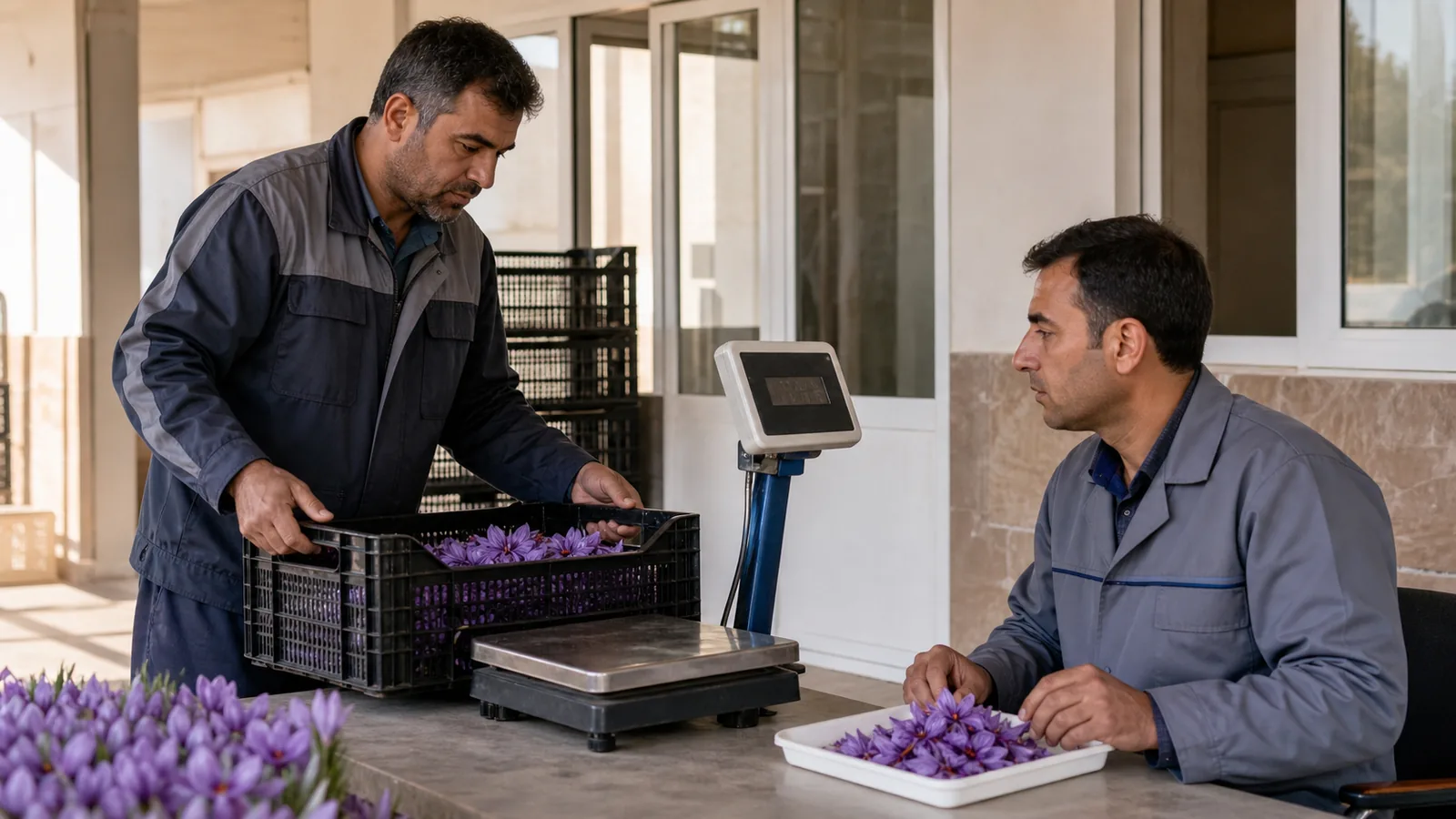
Quchani growers depend on many kinds of work during those weeks. Picking and stigma separation are the most visible, but transport, clean-room handling, drying, testing, packing, warehouse operations and buying also contribute.
Why processing quality mattered to export buyers
The agricultural official said saffron buyers in export markets paid particular attention to quality and called for more care in production and processing. Place of origin alone does not guarantee a grade. The finished product reflects what happened from flower collection through drying and storage.
Fresh blooms should be protected from crushing and contamination. Stigmas need to be separated in a clean space, dried in a controlled way and kept away from moisture, strong odours and light after processing. Foreign plant material, excess yellow style and inconsistent drying can reduce the value of a lot.
For an export claim, a buyer also needs evidence: sample identity, moisture and purity checks, the test method, the grade assigned and traceability back to a producer or batch. “High quality” is useful only when both parties know what was measured.
The proposed Quchan growers’ cooperative
Kanaani said a cooperative company for Quchan saffron growers would be established in the near future. The aim was to organise producers and strengthen their position as the province began a support-purchase programme.
The announcement referred to follow-up work by the governorate, Agricultural Jihad and the Rural Cooperative Company. It said a saffron support-purchase centre would open in Quchan and buy only from saffron farmers.
Those statements described plans at the time of the report. The article does not provide a registration record for the cooperative, the centre’s final address, a price schedule or proof that every planned service became operational. They should not be presented as a centre that readers can use today.
The stated support-purchase dates
The centre was expected to buy saffron flowers from November 9 until the end of that month at the latest. Buying fresh flowers rather than only dried saffron can give a grower an earlier route to market, but it also moves the processing responsibility to the purchaser.
A fair flower-purchase system needs a transparent weighing method, clear deductions for containers or damaged material, a published price basis and prompt payment. Because fresh flowers lose value quickly, growers have little time to compare offers once a day’s harvest has been picked.
Limiting purchases to verified growers may help direct support to producers. It also requires a practical identity and farm-verification process so smallholders are not excluded by paperwork or forced to sell through an intermediary.
How this report fits Quchan’s saffron development
The forecast followed a period of expanding local interest in the crop. Our earlier report on Quchan farmers’ growing attention to saffron records the area’s cultivation, household participation and flower-output context from another stage of that development.
The figures should not be merged as though they describe one season. Acreage, field maturity and weather changed, and some numbers were forecasts while others were reported outcomes.
Read on its own terms, the 400-tonne forecast gives a useful picture of the Quchan harvest economy: 800 cultivated hectares, a projected four tonnes of dried saffron, an intense 20-day labour period, export-quality concerns and an attempt to create cooperative purchasing support. Preserving those distinctions is more informative than repeating the two flower weights as if both were literal.

![Exporting Saffron to Turkey + Price Guide [Complete 0 to 100]](https://img.rowhanisaffron.com/20260827003933/saffron-export-turkey-quality-inspection.webp)



