Saffron and Pregnancy calls for a simple distinction: a small amount used to season food is not the same as saffron tea made repeatedly, a concentrated extract or a supplement. Pregnancy-specific safety evidence is limited, so saffron should not be used as a remedy for nausea, mood, blood pressure, anaemia or labour unless the maternity team responsible for the pregnancy has reviewed the exact product and reason.
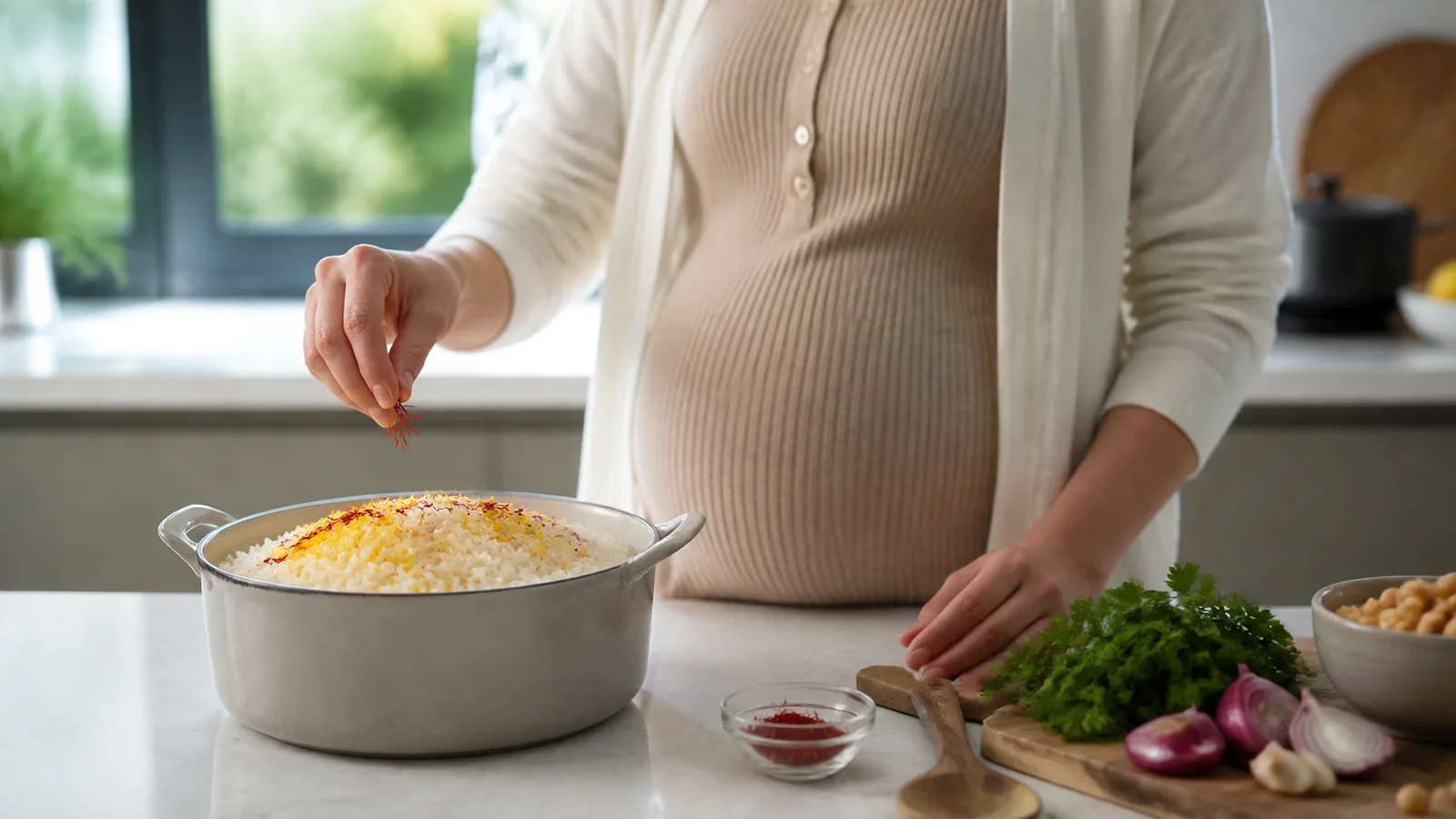
There is no reliable week of pregnancy at which self-prescribed medicinal saffron suddenly becomes safe. If you are pregnant and have already eaten a dish containing saffron, that is not by itself a reason to panic. Note the form and amount, and contact a midwife, obstetrician, pharmacist or local poison service if the quantity was large or unknown, a concentrated product was involved, or symptoms develop.
What do we actually know about saffron during pregnancy?
Most research on saffron has been conducted in non-pregnant adults or in laboratories. A recent review of saffron use in pregnancy and childbirth found only 12 relevant studies and described the overall evidence on effectiveness and safety as limited and inconclusive. Cultural use is common, but long-standing tradition does not supply the missing information about fetal development, interactions or a safe dose for every pregnancy.
The NHS advice on medicines in pregnancy makes the wider point clearly: not every “natural” remedy is safe, product quality may vary, and herbal therapies cannot replace antenatal care. Tell your midwife, doctor or pharmacist about extracts, capsules, powders and regular medicinal drinks, just as you would tell them about a medicine.
Food seasoning, saffron tea and supplements are different exposures
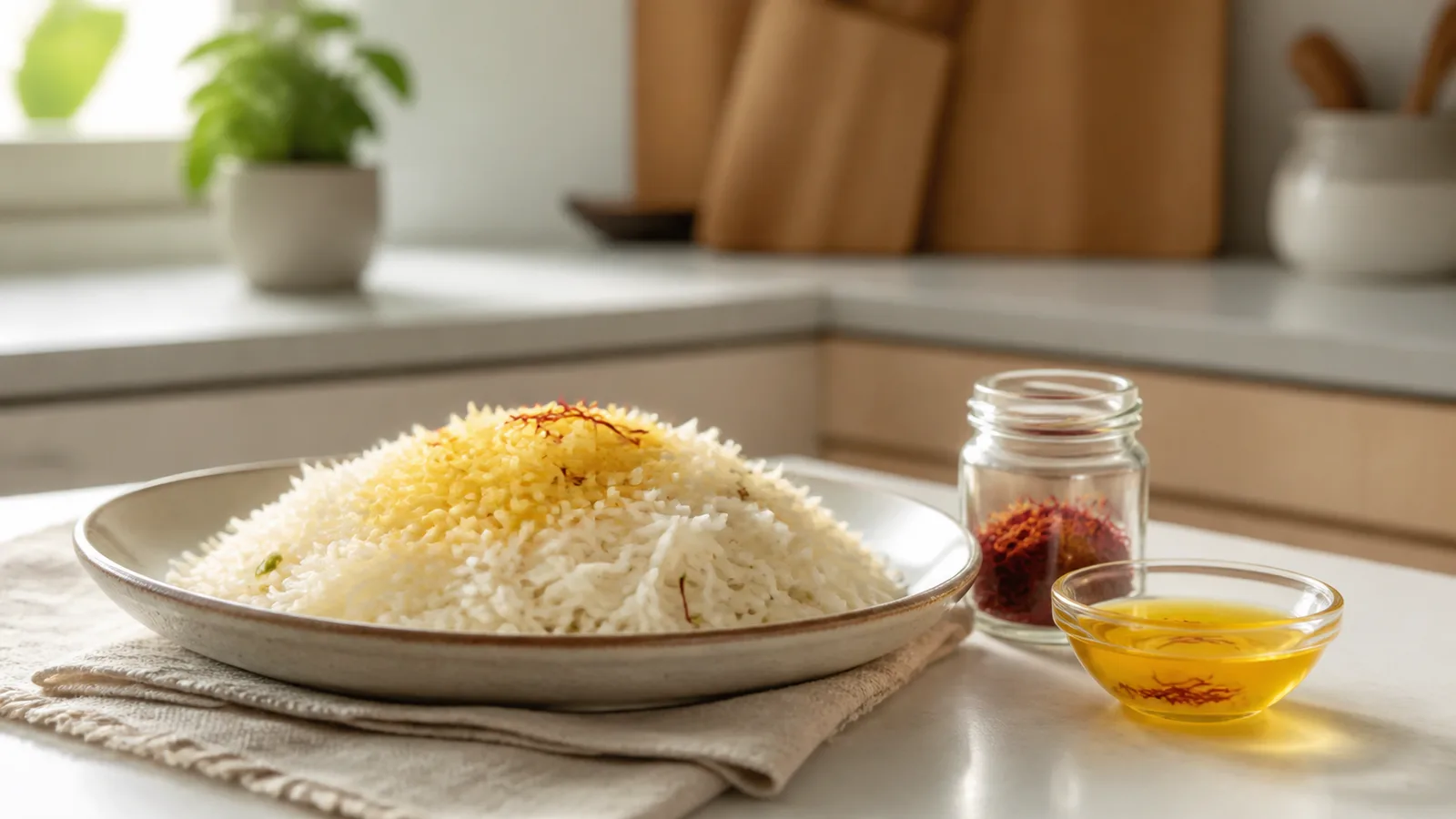
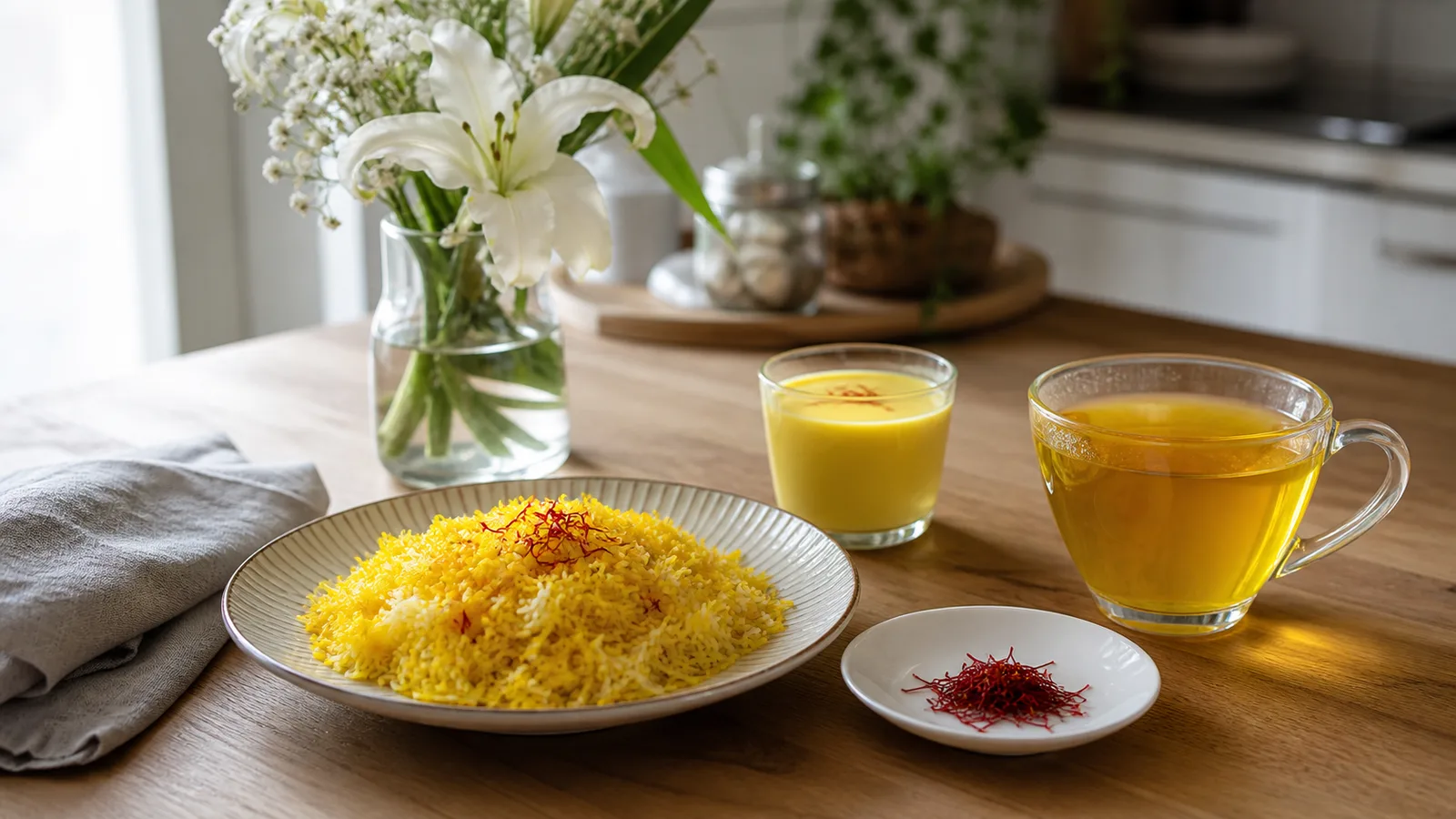
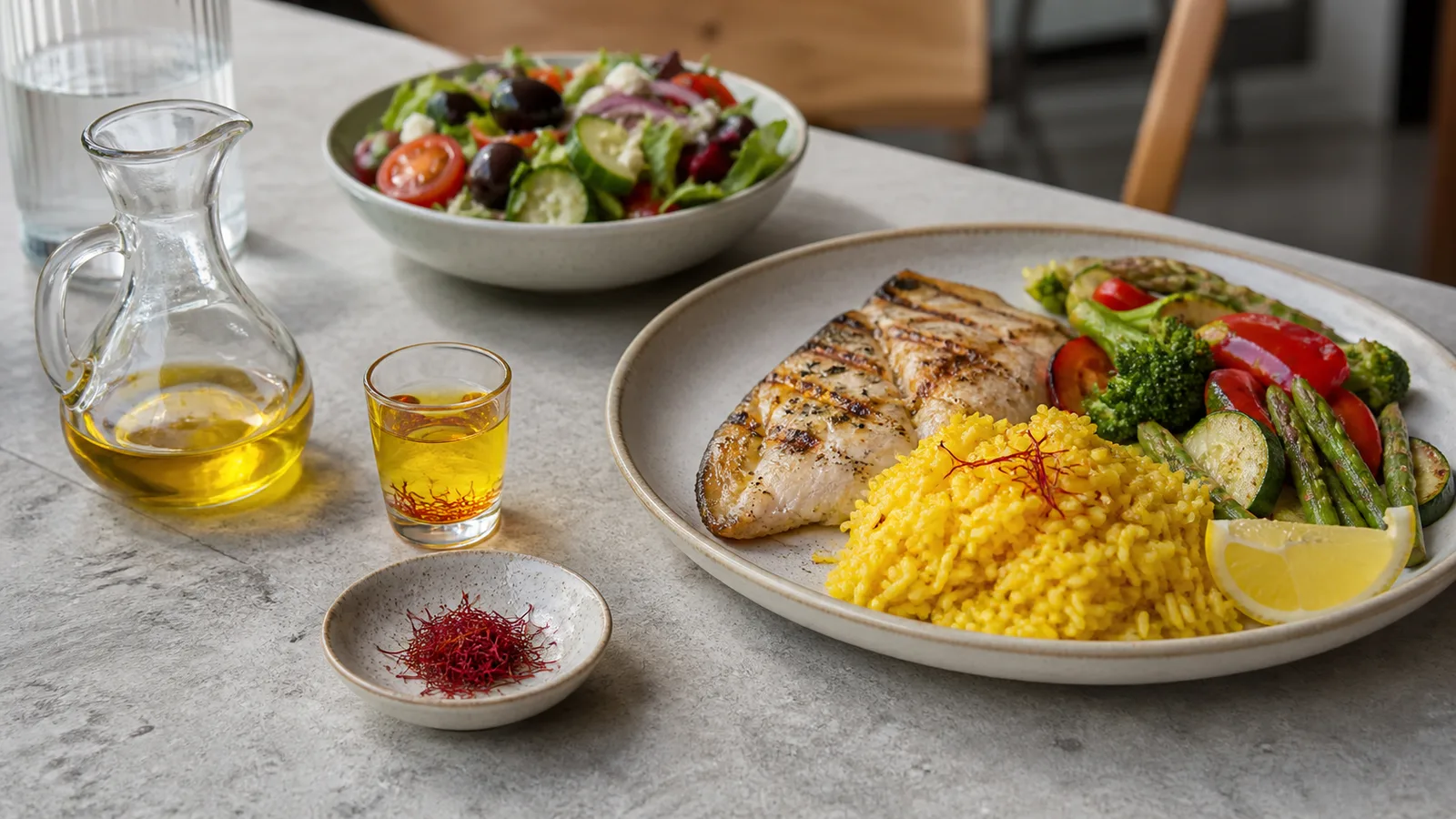
In cooking, a few saffron threads may flavour an entire pot of rice, soup or stew shared by several people. A mug of saffron milk or tea can contain more, depending on who made it. Capsules and liquid extracts may deliver a standardized or concentrated amount, sometimes alongside other active ingredients.
That difference matters more than the product name. “Saffron” on the front of a bottle does not tell you how much Crocus sativus is present, what part of the plant was used, how it was extracted or what else is in the formula. Do not combine a supplement with strong saffron drinks, and do not copy the dose from a clinical trial. Research doses are not personal pregnancy recommendations.
Are there proven benefits of saffron in pregnancy?
Saffron is sometimes promoted for morning sickness, sleep, digestion, hair loss, iron, mood, blood pressure and pain. Those claims are not supported well enough in pregnant people to recommend saffron as treatment. A result from a non-pregnant population cannot simply be carried across to pregnancy, where physiology, medicine choices and the safety question are different.
Saffron is also not a meaningful substitute for prescribed iron or folic acid. The small amount used in food cannot be expected to prevent anaemia, and replacing antenatal supplements or treatment could delay effective care. Persistent vomiting, depression, high blood pressure, pain, bleeding or reduced fetal movement needs maternity advice—not a saffron recipe.
Can saffron cause contractions or miscarriage?
Concern about uterine stimulation is one reason medicinal saffron is treated cautiously during pregnancy. The available evidence does not produce a dependable household threshold below which every product is safe or above which miscarriage is certain. Repeating dramatic gram limits from secondary websites can be dangerous because thread weight, extracts, individual risk and timing differ.
Avoid medicinal quantities and concentrated saffron products unless an obstetric professional explicitly recommends them. Seek urgent assessment for vaginal bleeding, painful or regular contractions, severe abdominal pain, fainting, fluid leakage or any other symptom your maternity service has told you to treat as urgent. Do not wait for a spice-related explanation before getting care.
First, second and third trimester advice
The old idea that saffron should be “introduced from week 15” is not an evidence-based safety rule. The second trimester does not remove uncertainty around a concentrated herbal product. Similarly, a study performed at term cannot establish safety in early pregnancy.
In one small placebo-controlled trial of 50 women at 39–41 weeks, participants received three 250 mg saffron or placebo pills over 24 hours. Cervical-readiness scores differed at one later measurement, but there was no significant difference in the timing of active contractions, labour duration, augmentation or newborn Apgar scores. The researchers specifically said the study’s limitations did not support definite clinical conclusions.
That trial does not show that saffron eases labour pain, makes the uterus “more elastic,” prevents complications or should be taken at home near the due date. Labour induction and cervical ripening are clinical decisions because gestational age, fetal position, placental issues, previous surgery and other factors can change what is safe.
Saffron side effects in pregnancy
Possible adverse effects reported in saffron research more broadly include nausea, abdominal discomfort, diarrhoea, dry mouth, headache and dizziness. Those symptoms are not proof of a saffron allergy, and pregnancy itself has overlapping symptoms. Stop the suspected product and tell the maternity team what was taken, when and how much.
Hives, swelling of the lips, tongue or throat, wheezing, trouble breathing, fainting, severe persistent vomiting or diarrhoea, chest pain or unusual bleeding needs prompt medical attention. Keep the container or ingredient list. A reaction may involve saffron, another botanical, a colourant or an undeclared ingredient.
Medicines and higher-risk pregnancies
A pregnant person taking medicine for blood pressure, diabetes, depression, clotting or another condition should not add a saffron supplement without a medication review. The same applies before a planned procedure. The potential interaction depends on the actual medicine and product; a generic online claim that saffron “regulates blood pressure” is neither a treatment plan nor a safety assessment.
Extra caution is appropriate with a history of miscarriage or preterm labour, current bleeding, a high-risk pregnancy, multiple pregnancy, liver or kidney disease, or an allergy after saffron or a mixed herbal product. This is not because every culinary dish is proven harmful. It is because the consequence of guessing is higher and the pregnancy team has information a general article does not.
What if you have already consumed saffron while pregnant?
- Do not assume harm from one normal serving of food, and do not take more to “test” your reaction.
- Write down whether it was threads in food, tea, powder, an extract, a capsule or a mixed product.
- Check the label for the amount per serving and other ingredients; keep the package.
- Contact the maternity team or pharmacist if the amount was concentrated, repeated, large or uncertain.
- Use urgent maternity or emergency care for bleeding, contractions, severe pain, breathing trouble, collapse or another serious symptom.
For day-to-day meals, the sensible approach is modest culinary use, not an attempt to obtain a medicinal effect. Do not rely on saffron to change a baby’s complexion, treat a pregnancy symptom or prepare the body for birth. Our broader guide to the side effects of saffron consumption explains the difference between intolerance, allergy and supplement reactions; pregnancy questions still belong with the clinician who knows the individual pregnancy.