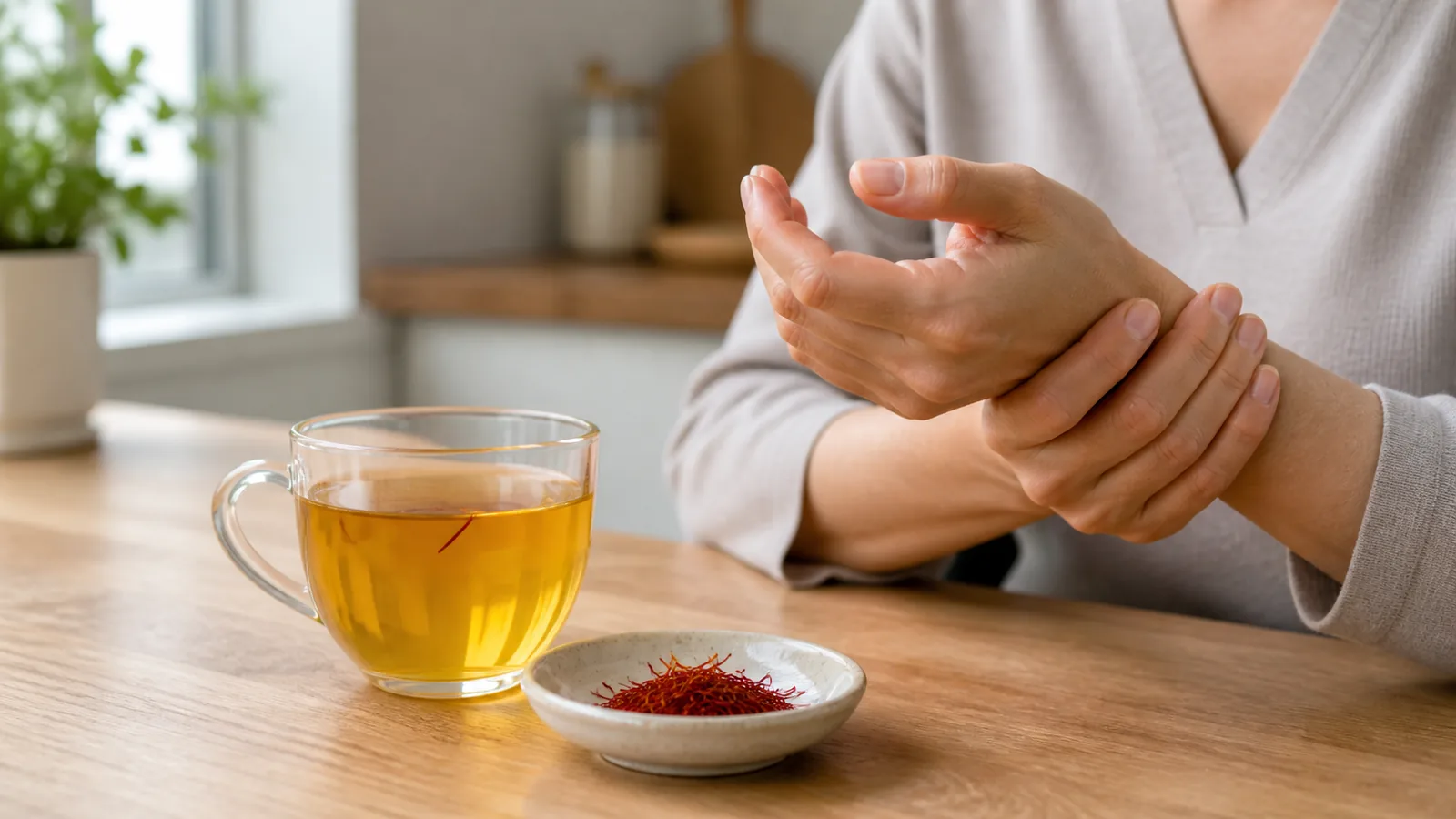
Saffron is not a cancer treatment and cannot replace chemotherapy, radiotherapy, surgery, immunotherapy, screening, or oncology care. Its compounds are scientifically interesting, and researchers have reported effects in cells and animals. Those early findings have not established that eating saffron or taking a saffron supplement prevents, shrinks, or cures a human cancer.
The distinction matters because a headline about saffron and cancer can sound much stronger than the experiment behind it. This guide explains what a saffron cancer study can show, what it cannot show, and why anyone receiving treatment should discuss supplements with their care team.
Why researchers study saffron and cancer
Saffron contains several bioactive compounds, including crocin, crocetin, safranal, and picrocrocin. In laboratory research, scientists have examined their antioxidant and anti-inflammatory activity as well as their effects on cell signaling, cell-cycle regulation, and apoptosis, the controlled process by which cells die.
Some experiments have exposed cultured cancer cells to saffron extracts or purified compounds. Others have tested them in animal models. Researchers use this work to identify mechanisms and decide whether an idea deserves further investigation. It is preclinical evidence, not a recommendation for patients.
What do “saffron anti cancer” claims actually mean?
A substance can affect cells in a dish at a concentration that is impossible or unsafe to reach in the human body. Digestion and metabolism may change it, delivery to a tumor may be poor, and an effect on one cell line may not occur in another cancer. Animal results also do not reliably predict human benefit or safety.
Descriptions of saffron as “anti cancer” usually refer to this preclinical work. Phrases such as “slows cancer cell growth,” “suppresses tumor growth,” or “prevents cancer spread” must include the experimental context. They do not mean that culinary saffron will inhibit a tumor in a person.
Saffron for cancer treatment: what human evidence exists?
There is no established human treatment in which saffron or one of its compounds controls a tumor, improves a cancer response rate, or extends survival. Recent reviews of saffron compounds in breast-cancer research continue to describe the evidence base as predominantly preclinical.
One small 2021 randomized trial studied crocin during doxorubicin-based chemotherapy in 72 people with non-metastatic breast cancer. Its main focus was anxiety, depression, and treatment toxicity rather than whether crocin treated the cancer. The authors reported improved anxiety and depression scores, but they also reported more grade II–IV leukopenia in the crocin group. A suggested survival trend required longer follow-up and was not proof of a survival benefit.
That study cannot be used to recommend saffron for cancer. It tested a specific compound and dose under clinical supervision, in a particular group, alongside a particular chemotherapy regimen. It did not test saffron tea, cooking with saffron, or self-selected supplements.
Saffron and chemotherapy: why caution is necessary
Cancer drugs have narrow treatment goals and complex metabolism. Supplements and herbal products can change how a drug is absorbed, processed, or removed, and antioxidant supplements may interfere with some treatment mechanisms. The U.S. National Cancer Institute advises patients to tell their doctors about every supplement, herbal product, vitamin, and special tea they use.
MD Anderson Cancer Center likewise recommends using saffron as an ingredient rather than a supplement and warns that saffron may interact with some medicines, potentially including cancer treatments. Supplement contents and concentrations can also vary from the label.
Do not start saffron extract, crocin, crocetin, or high-dose medicinal saffron to reduce chemotherapy side effects or improve treatment outcomes unless the oncology team has reviewed the exact product. Do not stop a prescribed treatment because of laboratory results or testimonials.
Is culinary saffron different from a supplement?
Yes. A normal culinary pinch dispersed through a meal is not equivalent to a concentrated capsule or extract. For many people, ordinary food seasoned with saffron can remain part of the diet during cancer care, but individual treatment plans, symptoms, swallowing problems, allergies, and food-safety requirements differ.
Ask the oncology dietitian or care team if you have been given a restricted diet or are unsure about a particular food. “Natural” does not mean interaction-free, and a safe amount for a healthy person is not automatically appropriate during chemotherapy.
How to read saffron cancer research critically
Before treating a claim as relevant to human care, check five things:
- Was the research done in people? Cell and animal studies are exploratory.
- What was tested? Whole saffron, a purified compound, and a branded extract are not interchangeable.
- What outcome was measured? A change in a laboratory marker is different from tumor response, survival, quality of life, or treatment toxicity.
- Was there a suitable control group? Randomization and blinding reduce some forms of bias, although one small trial is still not definitive.
- Were harms and interactions assessed? An experimental benefit does not cancel an adverse effect.
What saffron cannot replace
Saffron cannot replace cancer screening, a biopsy, staging, evidence-based treatment, symptom management, or follow-up. If someone has a new lump, unexplained bleeding, persistent pain, unexplained weight loss, or another concerning change, they should seek medical assessment rather than try a spice or supplement.
The evidence-based conclusion is narrow but useful: saffron compounds remain a subject of cancer research, particularly in laboratory models. Human evidence is far too limited to call saffron a preventive agent, chemotherapy enhancer, or cancer therapy. Enjoy the spice for its flavor and color, and keep decisions about supplements inside the oncology conversation.
Sources
- U.S. National Cancer Institute: cancer-therapy interactions with foods and dietary supplements
- U.S. National Cancer Institute: antioxidants and cancer prevention
- MD Anderson Cancer Center: what to know about saffron
- 2025 systematic review of preclinical saffron and breast-cancer research
- 2021 randomized trial of crocin during breast-cancer chemotherapy