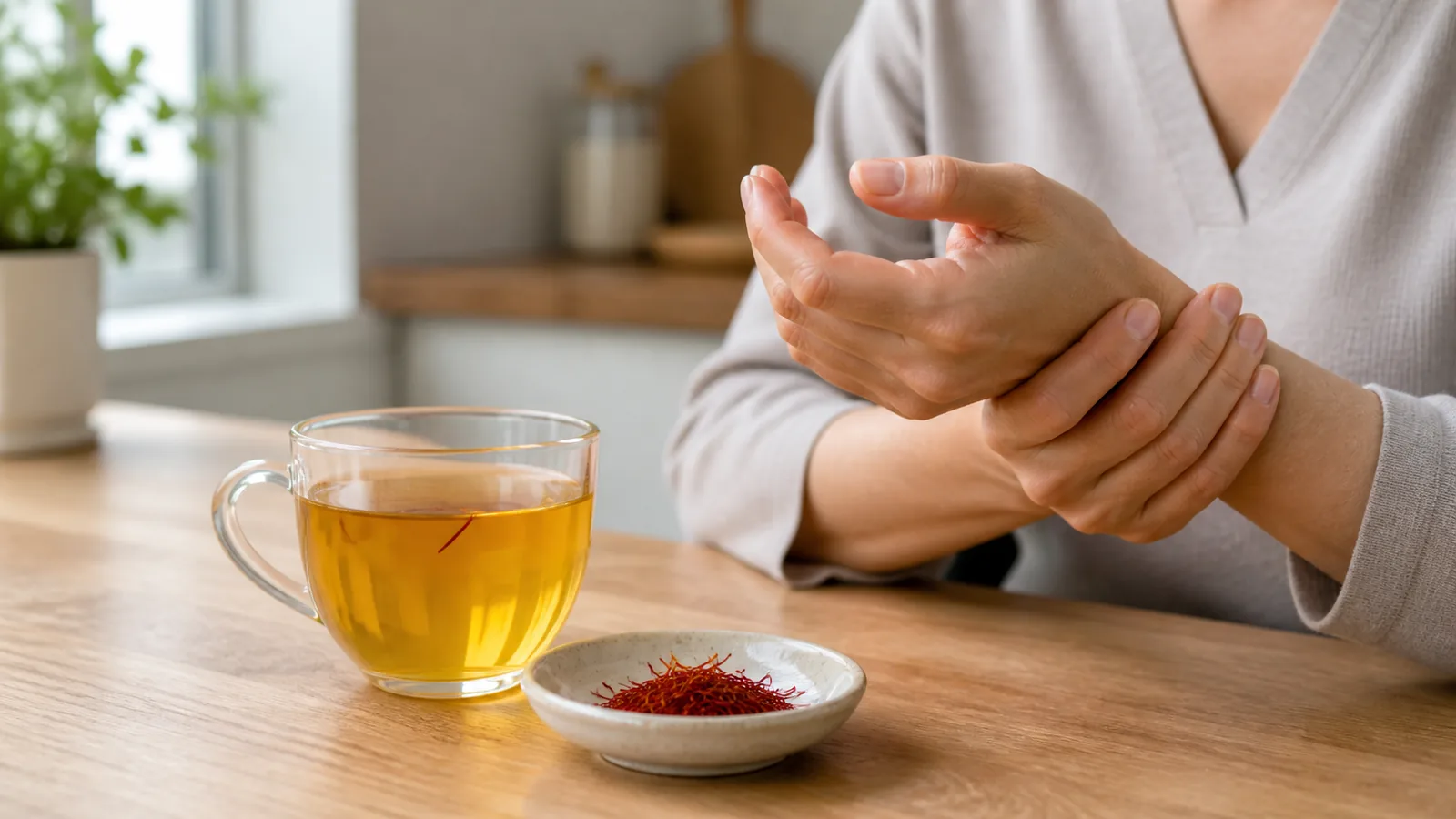
Saffron has not been shown to treat breast cancer in people. Research on crocin, crocetin, picrocrocin and safranal has produced interesting results in cells and chemically induced rat tumors, but a 2025 systematic review found no human clinical trial of saffron or its constituents as a breast-cancer treatment.
If you have breast cancer, do not replace or delay oncology care with saffron, an extract or a supplement. The National Cancer Institute explains that treatment is selected by cancer type and stage and may include surgery, radiation, chemotherapy, hormone therapy, targeted therapy or immunotherapy. Ask the oncology team before adding any supplement, because food use and concentrated experimental compounds are not the same exposure.
Why the old “treating breast cancer” headline was wrong
The original page summarized university research in female rats whose mammary tumors were induced with N-methyl-N-nitrosourea, or NMU. It then turned an experimental result into a treatment claim. No participant in those studies was a person with breast cancer, and the work did not test ordinary culinary saffron as part of clinical care.
A rat model can help researchers investigate biological mechanisms under controlled conditions. It cannot establish that a compound is effective, safe, absorbable at a practical dose or compatible with cancer drugs in humans. “Reduced tumor size in rats” and “treats breast cancer” are not equivalent statements.
The FDA warns that unproven cancer products can cause direct harm and can also harm patients by delaying or interfering with proven treatment. Calling an herb natural does not resolve efficacy, dose, purity or interaction questions.
What the Tarbiat Modares research programme studied
Both archived reports came from a research line at Tarbiat Modares University. The experiments discussed several chemically distinct saffron constituents:
- crocin, a water-soluble carotenoid associated with saffron’s colour;
- crocetin, the carotenoid backbone related to crocin;
- picrocrocin, associated with saffron’s bitter taste; and
- safranal, a volatile compound associated with aroma.
These names should not be collapsed into “saffron works.” A purified compound given at a controlled experimental dose may behave differently from whole spice, and different compounds can produce different or unexpected effects.
Crocin and crocetin in an NMU rat model
One published experiment compared crocin and crocetin around the initiation and promotion stages of NMU-induced mammary tumors in female Wistar rats. The compounds were given by gavage before or after the first NMU exposure. The researchers reported fewer tumors, lower tumor volume and longer latency than in the NMU-only group, with crocetin producing the stronger result in that model.
The full peer-reviewed animal study called the finding preventive in rats. It did not test treatment of an existing human breast cancer, establish a human dose or compare the compounds with standard oncology therapy.
What happened to p53, p21, p27 and cyclin D1?
The older source page tried to describe gene-expression work but corrupted several names in translation: p53 became “P35,” p27 became “P72,” and RT-PCR became “RCP-TR.” Those errors make the original account unsafe to quote literally.
A published study from the same Tarbiat Modares group examined crocin in NMU-induced rat mammary tumors and measured cell-cycle regulators including p53, p21, p27 and cyclin D1. It reported reduced tumor volume and changes consistent with apoptosis and cell-cycle inhibition. Importantly, its average changes in p27 messenger RNA were not statistically significant, and the authors noted that they could not investigate the question by Western blot.
That nuance matters. The published crocin study does not support the old page’s simple claim that reduced p27 expression proved a therapeutic mechanism. Gene-expression findings are intermediate laboratory outcomes, not evidence that eating saffron treats a person’s tumor.
Later work from the group also studied crocetin and regulators including p53, p21, p27 and cyclin D1. That helps clarify the research programme, but it remains preclinical animal evidence.
The picrocrocin and safranal report
The destination page summarized an interview with clinical-biochemistry researcher Hamid Heydarzadeh. It said picrocrocin was compared with saffron extract and safranal in NMU-induced rat tumors, that picrocrocin appeared favourable, and that safranal produced an unexpected result. It also referred to laboratory work on safranal and DNA structure.
The archived page does not provide a paper title, journal, dose, group size, numerical result or statistical analysis for that experiment. Without those details, the account can document what the researcher reportedly investigated, but not establish efficacy or safety. The unexpected safranal observation is another reason not to assume every saffron constituent is beneficial.
What the complete preclinical evidence says
A 2025 systematic review collected 44 cell and animal studies of saffron or its constituents in breast-cancer models. It found potential mechanisms involving apoptosis and cell-cycle regulation and judged crocin to have the largest preclinical evidence base among the compounds reviewed.
The review’s decisive limitation is explicit: no human clinical trial had examined saffron as a treatment for any cancer. Preclinical promise justifies better research; it does not justify a treatment recommendation, a supplement dose or a sales claim.
What would have to happen before a clinical claim?
Researchers would first need reproducible compound identity and purity, pharmacokinetic data, toxicology and credible dosing. Carefully designed human trials would then have to test safety, interactions and meaningful outcomes against an appropriate comparison. Breast cancers also differ by stage and molecular features, so one laboratory model cannot represent every patient.
Until clinical evidence exists, the practical conclusions are limited:
- saffron is a food spice, not an approved breast-cancer treatment;
- rat and cell studies must be labelled preclinical;
- purified research compounds are not equivalent to a culinary serving;
- no dose from these experiments should be converted into a human self-treatment dose; and
- patients should discuss supplements with their oncology team and continue prescribed care.
Saffron and breast cancer remain a legitimate research subject. The responsible summary is narrower than the old headline: several saffron compounds have affected tumors or molecular pathways in preclinical models, but none has been demonstrated to treat breast cancer in humans.