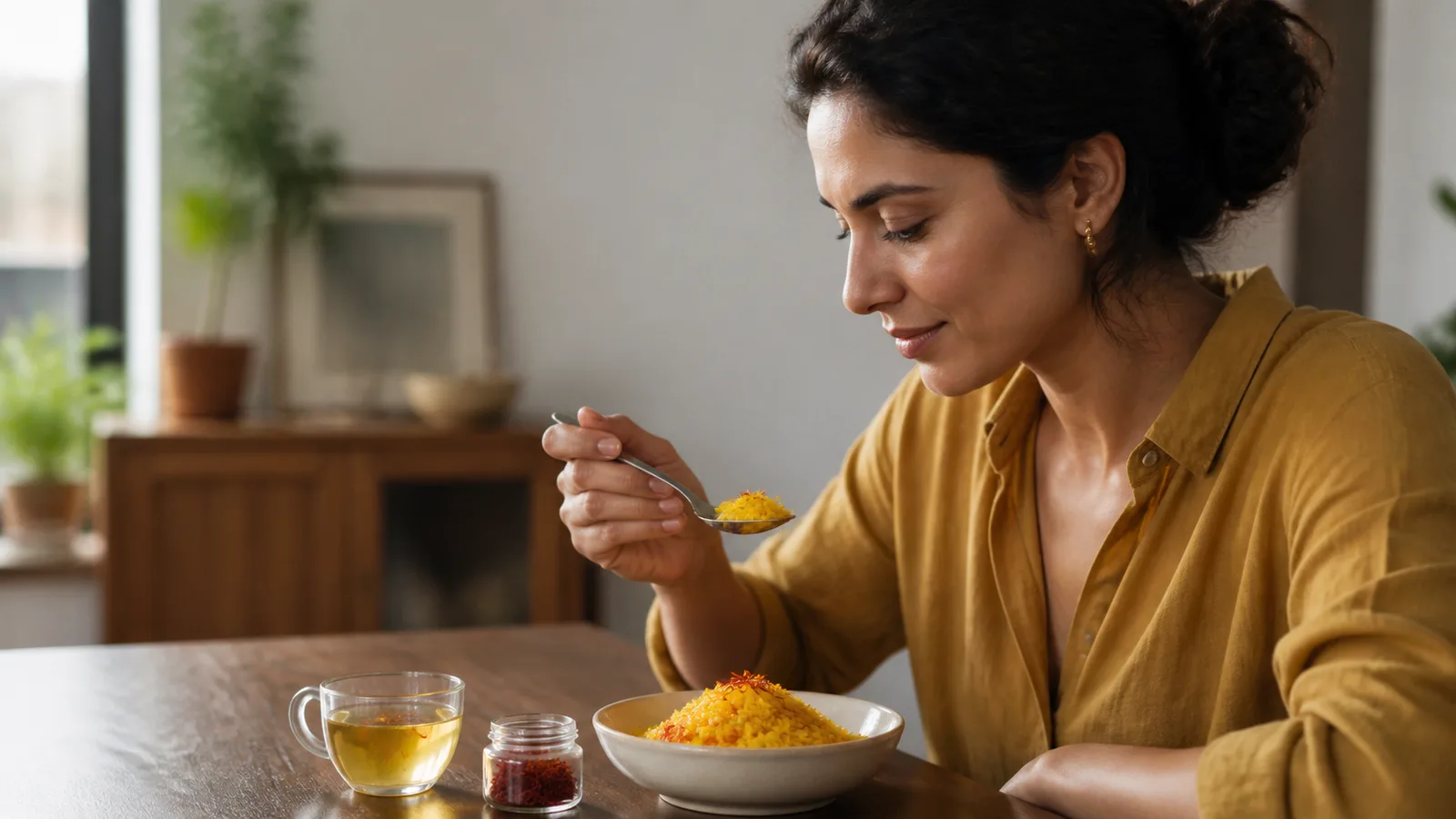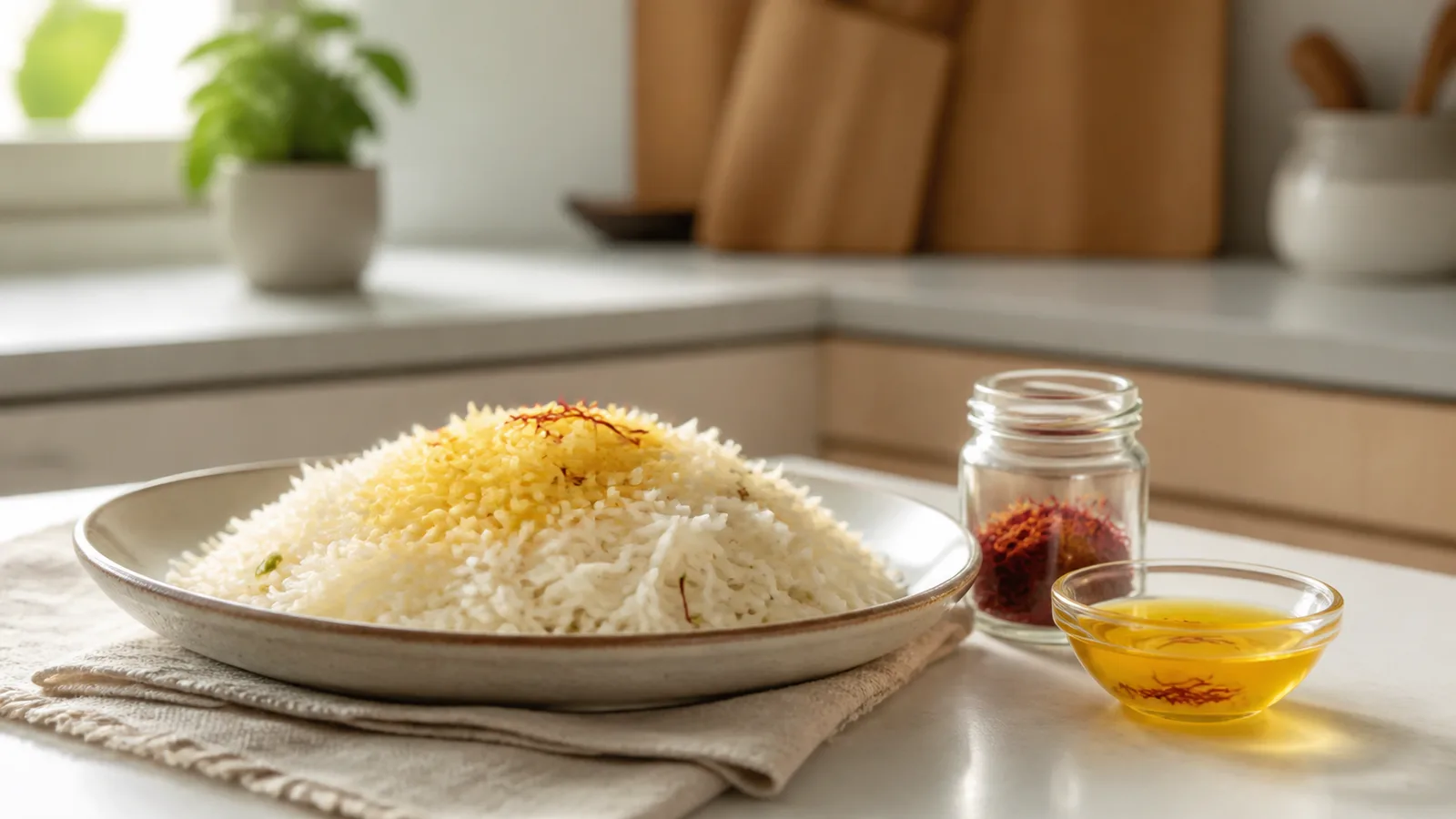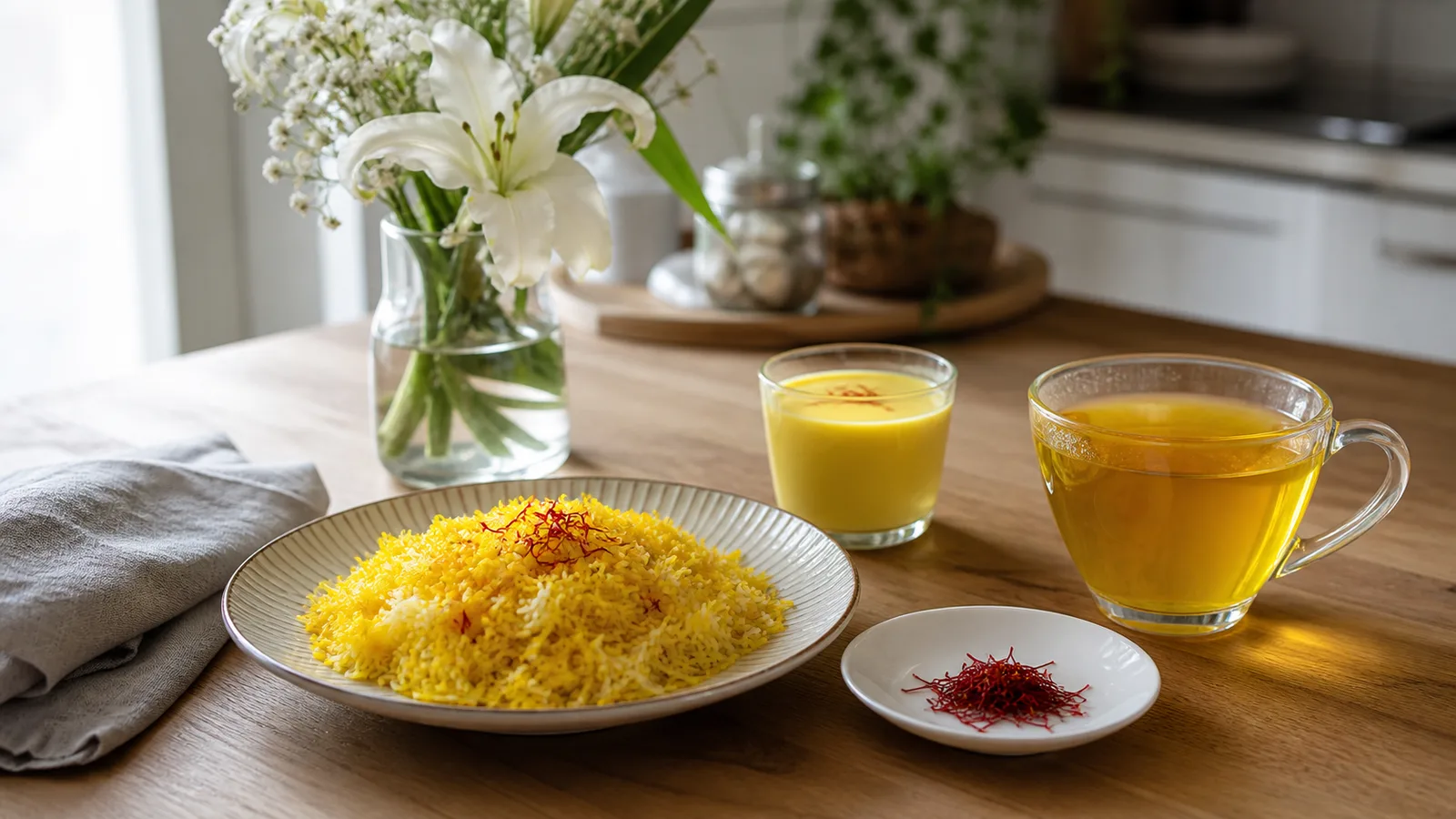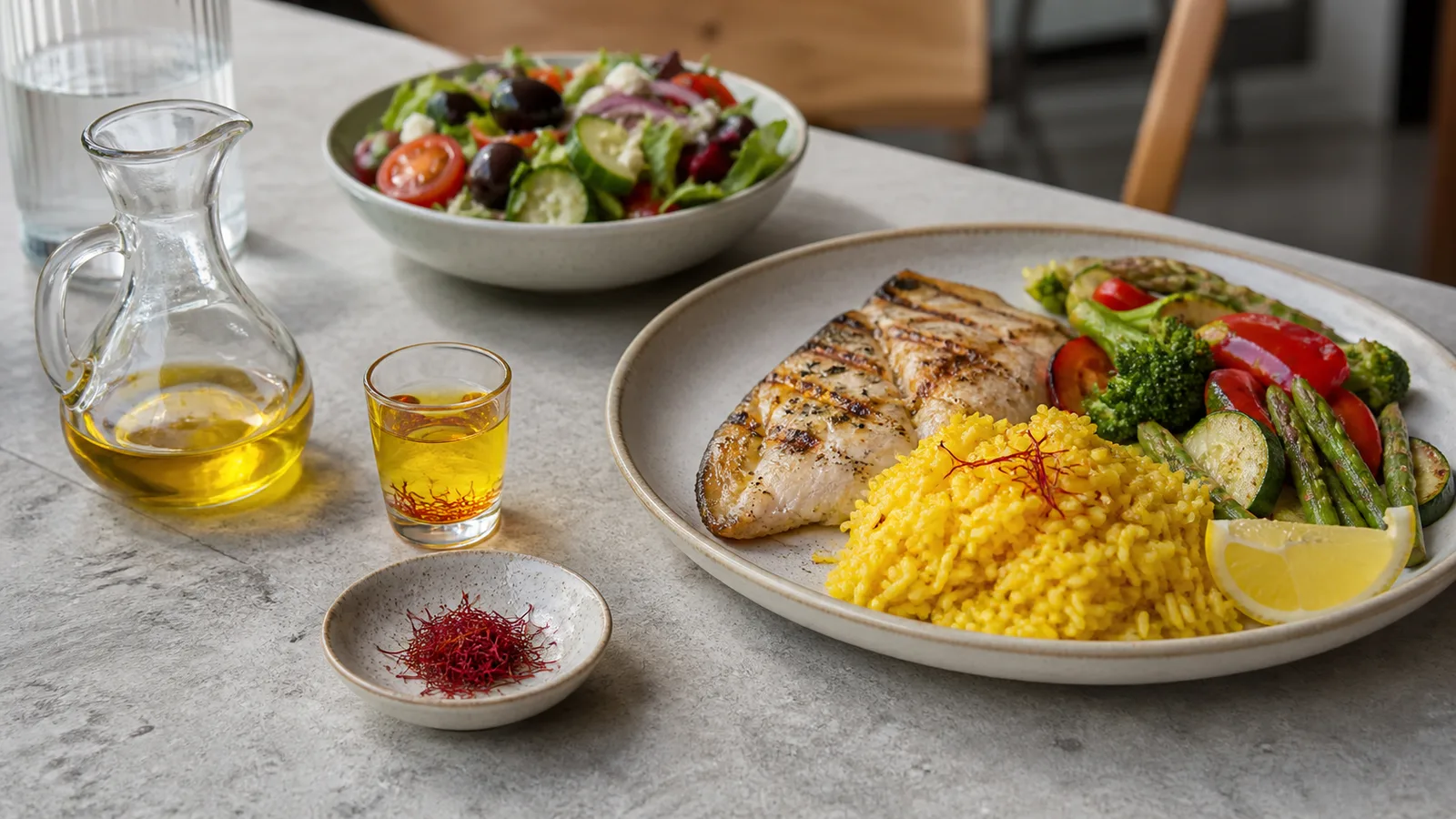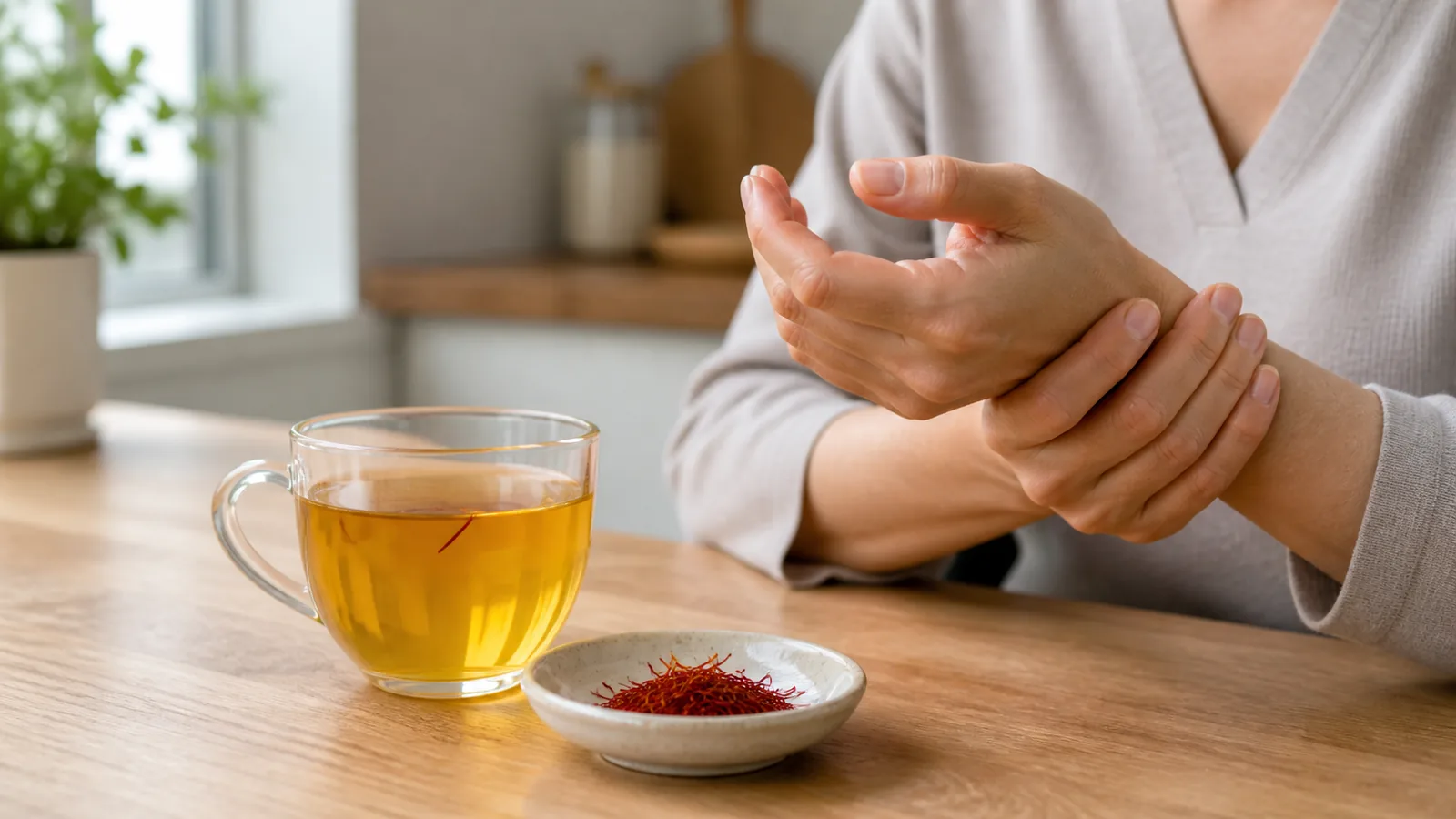
“This tea takes the front of the cold” is a literal translation of a Persian headline meaning that a warm herbal drink may help ward off or face cold-season discomfort. It should not be read as a promise that tea prevents infection. A saffron, ginger and cinnamon infusion can provide warmth, fluid and a pleasant aroma. It cannot remove a respiratory virus or replace treatment when symptoms are serious.
The old article went much further. It called various herbal mixtures medicines for allergies, angina, migraine, sinusitis, lung infection, bronchitis, kidney problems and blocked arteries. It also recommended smoke and fasting preparations to clear viruses, industrial pollution and carcinogens. Those claims were attributed to traditional-medicine researcher Younis Heidari in a Young Journalists Club interview, but the post did not supply clinical evidence. This revision keeps every topic visible while separating a comforting drink from unsupported treatment advice.
A simple saffron tea for a cold day
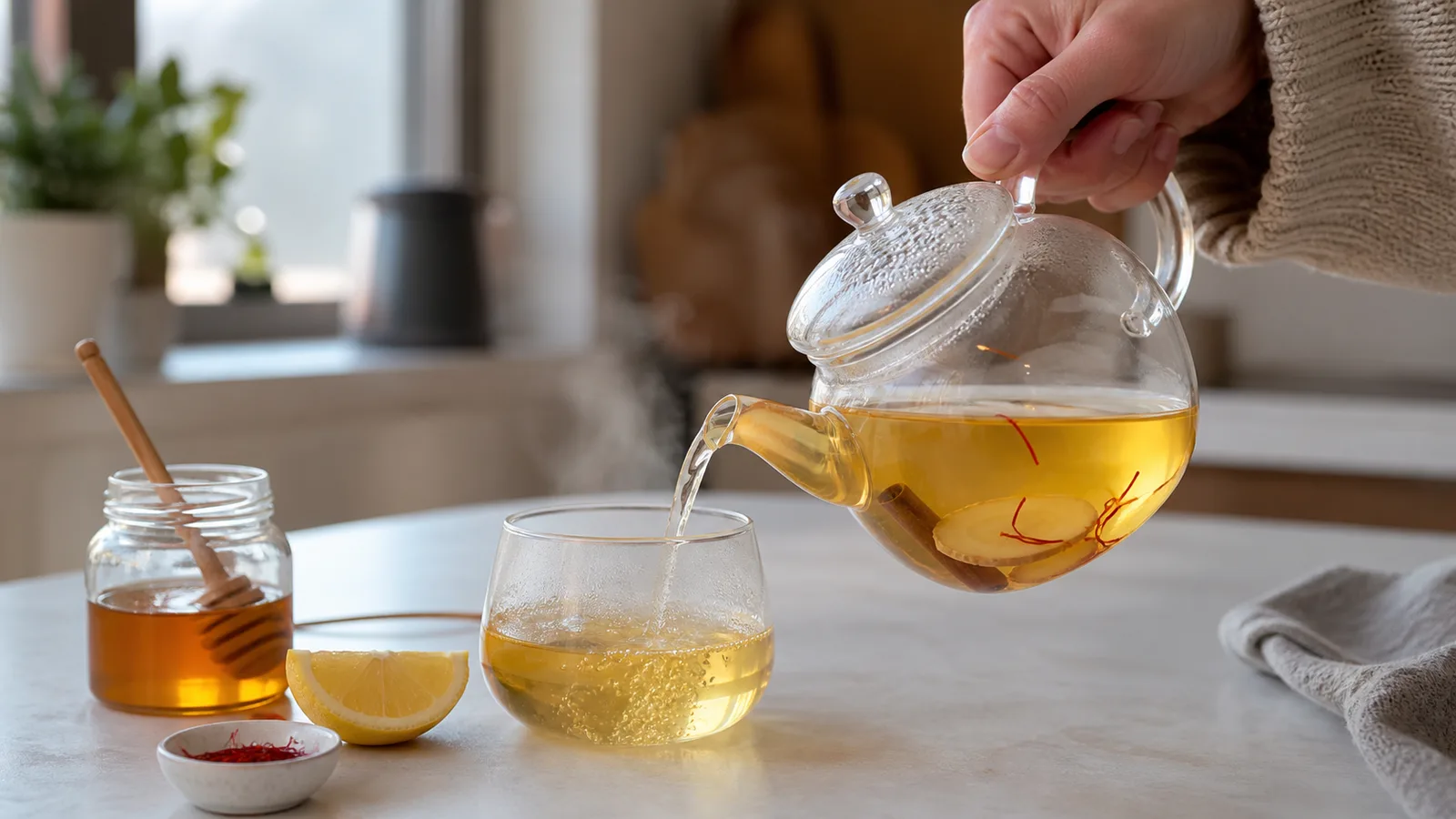
This is a culinary infusion for one or two adults. It is deliberately simple so the ingredients and any personal reaction are easy to understand.
- 400 ml water;
- 6–8 genuine saffron threads, lightly crushed;
- 2–3 thin slices of fresh ginger;
- one small piece of cinnamon stick;
- a slice of lemon or a small piece of dried lime, optional;
- honey to taste, added after the tea cools slightly, optional.
- Bring the water just to a boil, then remove it from the heat.
- Add the ginger and cinnamon, cover and steep for about five minutes.
- Add the saffron and steep, covered, for another five minutes.
- Strain, add lemon if wanted and let the cup cool to a comfortable drinking temperature. Add honey last.
The drink can taste warm and spicy, but feeling warm is not proof of increased blood circulation or immune activity. Honey may help relieve cough in adults and children aged at least one year, according to the CDC; it must never be given to an infant under one because of the risk of infant botulism.
Can this tea take the front of the cold?
The common cold has no cure and usually improves on its own. The CDC’s current cold-care guidance recommends rest, fluids and measures such as saline spray, a clean humidifier and honey for eligible people. Antibiotics do not work against the viruses that cause a cold.
A search of the human clinical literature did not identify a trial showing that saffron tea prevents or treats the common cold. Saffron has been studied for other outcomes and in other preparations, but that evidence cannot be transferred to this recipe. Its honest role here is flavour, aroma and colour within a warm drink that contributes to fluid intake.
Cold-like symptoms can also be caused by influenza or COVID-19. People at higher risk of severe illness may qualify for antiviral treatment that works best when started early, so they should contact a healthcare professional promptly rather than waiting to see whether a tea works.
What the old herb combinations claimed
Heidari’s interview grouped many plants by symptom. Marjoram, thyme and “mountain tea” were presented for allergy, angina, migraine and sinusitis. Thyme with honey was recommended for people described as having a weak immune system. Other mixtures included pennyroyal or mint, Pulicaria, chamomile, rose, horsetail, saffron, cardamom, echinacea, valerian, borage, passionflower, maidenhair fern and hyssop.
Naming a plant next to a condition does not establish that it treats the condition. It also creates translation problems. “Angina” can refer to chest pain from reduced blood flow to the heart, but in some translated contexts it may be intended to mean a severe sore throat or tonsillitis. Neither interpretation is suitable for casual tea advice. Chest pain needs urgent medical assessment; persistent or severe throat symptoms also need appropriate care.
The National Center for Complementary and Integrative Health has reviewed many complementary approaches for colds. Its evidence summary says echinacea has not been convincingly shown to prevent or relieve colds, although some products may have a small effect. Different species, plant parts and preparations make results hard to compare. This is a good example of why a home blend cannot inherit the evidence of one standardized product.
Claims that should not guide treatment
The original post said herbal tea could prevent or treat lung infection, remove bronchitis, strengthen the immune system, solve kidney problems, prevent arterial blockage and clear industrial or carcinogenic material from the lungs. It offered no reliable support for those outcomes. A tea should not delay assessment of pneumonia, asthma, chronic bronchitis, kidney disease, cardiovascular symptoms or exposure to harmful pollution.
It also recommended eucalyptus vapour and smoke from Anbar Nesaara—traditionally burned donkey dung—to “clean” a living space. Smoke adds particles and irritants to indoor air; it does not disinfect the lungs or room. This article does not recommend burning it. Steam can cause burns, especially around children, so a clean cool-mist humidifier is the safer way to add moisture to a room.
For dry cough or croup, the post referred to a “four-seed” mucilage and quince-seed glaze. A soothing texture may temporarily coat the throat, but croup can affect breathing and is mainly an illness of young children. No homemade preparation should delay urgent care for noisy breathing, struggling to breathe, bluish lips, unusual drowsiness or dehydration.
“Hot temperament” and mouth-ulcer advice
The interview warned people with a “hot temperament” against saffron, thyme and honey, claiming they could lead to mouth ulcers, and suggested lemon or dried lime to create balance. Temperament is a concept within traditional systems; it is not a clinical diagnosis or a reliable way to predict a drug interaction or allergy.
If a particular food repeatedly irritates the mouth, stop using it and discuss persistent ulcers with a dentist or clinician. Adding an acidic lemon may worsen pain for some people with an existing sore. Personal tolerance is more useful here than assuming the same rule applies to everyone in a temperament category.
The same passage singled out people with hypertension and suggested dried lime as a balancing addition to the ginger, cinnamon and saffron blend. Dried lime can change flavour; it does not make the tea a blood-pressure treatment or cancel a medication interaction. Anyone managing hypertension should follow their clinician’s plan and check unfamiliar herbal mixtures with a pharmacist or qualified healthcare professional.
Why mixing many herbs can increase risk
A long ingredient list is not automatically stronger or safer. Echinacea can cause allergic reactions and may interact with some medicines. Valerian and passionflower may add to sedating effects. Pennyroyal products can be hazardous in concentrated forms. Horsetail and other herbs may be unsuitable for some people with medical conditions or for those taking medication.
That does not make every culinary use dangerous. It means the dose, plant species, preparation and user matter. Avoid treating an unlabeled bundle of herbs as interchangeable with a tea bag or standardized extract. People who are pregnant or breastfeeding, preparing tea for a child, taking prescription medicine, living with kidney or liver disease, or managing a chronic condition should check with a qualified professional before using multi-herb medicinal preparations.
When a cold needs more than tea
Seek medical care for trouble or fast breathing, dehydration, a fever lasting more than four days, symptoms lasting more than ten days without improvement, symptoms that improve and then return or worsen, or a chronic condition that becomes worse. Severe or concerning symptoms deserve care regardless of how long they have been present.
A warm drink can still be worthwhile. Keep it simple, use food-grade ingredients, avoid scalding liquid and judge it by the comfort and hydration it provides. The safest conclusion is modest: saffron, ginger and cinnamon make an aromatic cold-season tea; they do not “take the front of the cold” in the sense of preventing or curing infection.
Sources reviewed: CDC, “Manage Common Cold” (updated March 2026); NCCIH, “Colds, Flu, and Complementary Health Approaches” and “Echinacea: Usefulness and Safety”; the YJC interview with Younis Heidari reproduced in the original post. No human clinical trial of saffron tea for common-cold prevention or treatment was identified in the PubMed search reviewed for this update.