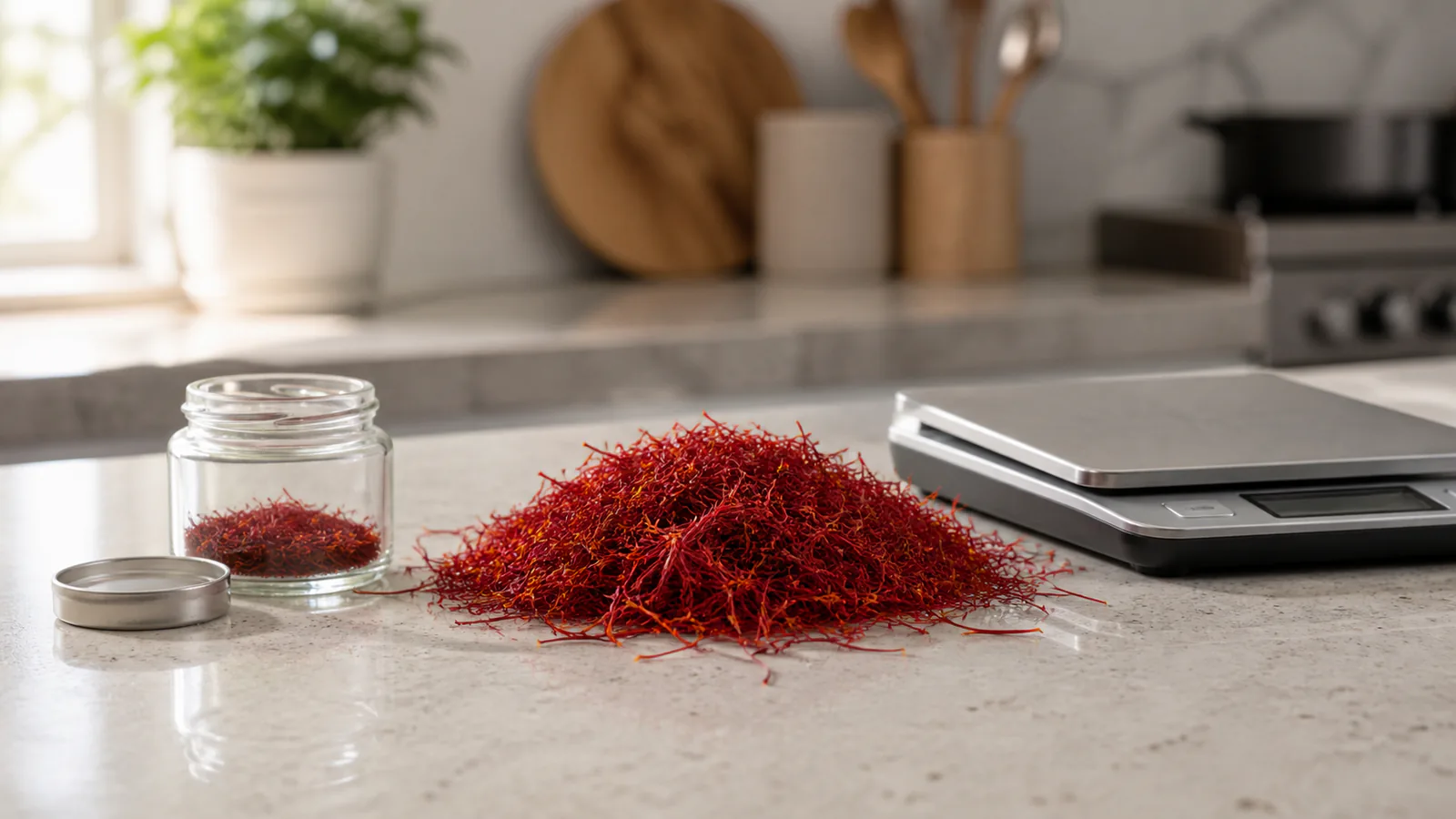
Possible saffron overdose symptoms can include nausea, vomiting, stomach upset, headache and dizziness, but symptoms alone cannot tell you whether an exposure is dangerous. Human evidence about true saffron overdose is limited, and the risk depends on the product, amount, person and timing. If someone may have swallowed a large or unknown amount, do not wait for symptoms before getting expert advice.
In the United States, call Poison Help at 1-800-222-1222. Elsewhere, contact your local poison centre or urgent medical service. Call emergency services now if the person has collapsed, cannot be awakened, is having a seizure or has trouble breathing.
What are the symptoms of a saffron overdose?
There is no clinically validated checklist that can confirm “saffron poisoning” at home. A 2026 systematic review of 102 human trials found that saffron preparations were generally well tolerated, but adverse events did occur. Gastrointestinal problems were the most frequently reported and were usually minor and self-limiting in those controlled studies.
Reported adverse effects across human studies included:
- nausea, vomiting or abdominal discomfort;
- headache or migraine;
- dizziness;
- dry mouth or reduced appetite;
- palpitations or a noticeable heartbeat in a small number of reports; and
- rare allergic reactions.
These findings describe adverse events during studied use, not a reliable sequence of overdose symptoms. Some events also occurred in control groups, and an individual symptom can have many causes. A person who feels well may still need advice after a potentially harmful exposure.
Warning signs that need urgent help
After a large or uncertain ingestion, treat any severe or rapidly worsening symptom as an emergency. Seek immediate help for:
- trouble breathing, swelling of the face or throat, or widespread hives;
- collapse, fainting, severe weakness or inability to wake;
- a seizure, marked confusion or unusual behaviour;
- persistent vomiting or severe abdominal pain;
- chest pain or a very fast, slow or irregular heartbeat; or
- unusual or heavy bleeding.
These signs are not specific to saffron. They are reasons to obtain urgent care after any suspected poisoning. Do not rely on the internet to decide whether the amount was safe.
Why a single “toxic dose” is misleading
Online articles often repeat a fixed number of grams as a fatal dose. The evidence does not support using one universal threshold for self-triage. Much of the acute-toxicity literature comes from animal experiments, sometimes using extracts or injected compounds rather than saffron threads taken by mouth. Animal lethal-dose figures cannot be converted into a safe or fatal human amount.
Human trials usually examine standardized preparations at specified doses under monitoring. They are useful for identifying tolerability and possible adverse effects, but they do not establish what will happen after a large accidental or intentional ingestion. The 2017 toxicology review also noted that the available safety data were not uniform.
Culinary saffron, extracts and supplements are different
A few threads used to flavour a shared dish are not equivalent to swallowing a concentrated extract, multiple capsules or an unknown powder. Labels may express amounts as raw saffron, extract or a particular compound such as crocin. Products can also contain additional ingredients, and an unverified product may not contain what its label claims.
When you call a poison centre, keep the container or a clear photo of the label nearby. Be ready to give the person’s age and weight, the product name and strength, the amount that may be missing, the time of exposure, symptoms and relevant medical conditions. This information is more useful than trying to count symptoms.
What to do after a suspected saffron overdose
- Call for expert advice now. Poison Help advises people not to wait for signs of poisoning.
- Do not induce vomiting. Do not give activated charcoal, food, drink or a home remedy unless a poison specialist or clinician tells you to.
- Keep the product information. Save the container, ingredient list and remaining material.
- Watch the person closely. If breathing, alertness or other symptoms worsen, call emergency services.
- Be honest about the amount and reason. If the exposure may have been intentional, say so. Emergency and poison-centre staff can arrange the right medical and mental-health support.
What about smoking saffron?
Saffron is a food spice, not an inhaled product. There is no good human evidence establishing a safe way to smoke saffron, and burning plant material creates an exposure that culinary and supplement studies do not evaluate. If smoke exposure causes coughing, wheezing, dizziness, chest discomfort or breathing difficulty, move to fresh air and contact a poison centre; use emergency services for severe breathing symptoms.
Who should be especially cautious?
Children, pregnant people, older adults and anyone taking several medicines should not be assessed from a generic dose chart. Body size, health conditions and drug interactions can change risk. Concentrated saffron products should also be discussed with a clinician before use, particularly when medicines affect blood pressure, bleeding or mood.
For a broader explanation of ordinary use and adverse effects, see our evidence-based guide to how saffron affects the body. That information is not a substitute for poison-centre advice after an actual exposure.
Sources
- Hasheminasab FS, Hajimonfarednejad M, Najibi SM, et al. Adverse events of saffron: systematic review of current human evidence. Health Science Reports. 2026.
- Bostan HB, Mehri S, Hosseinzadeh H. Toxicology effects of saffron and its constituents: a review. Iranian Journal of Basic Medical Sciences. 2017.
- US Health Resources and Services Administration. What to do in a poisoning emergency.