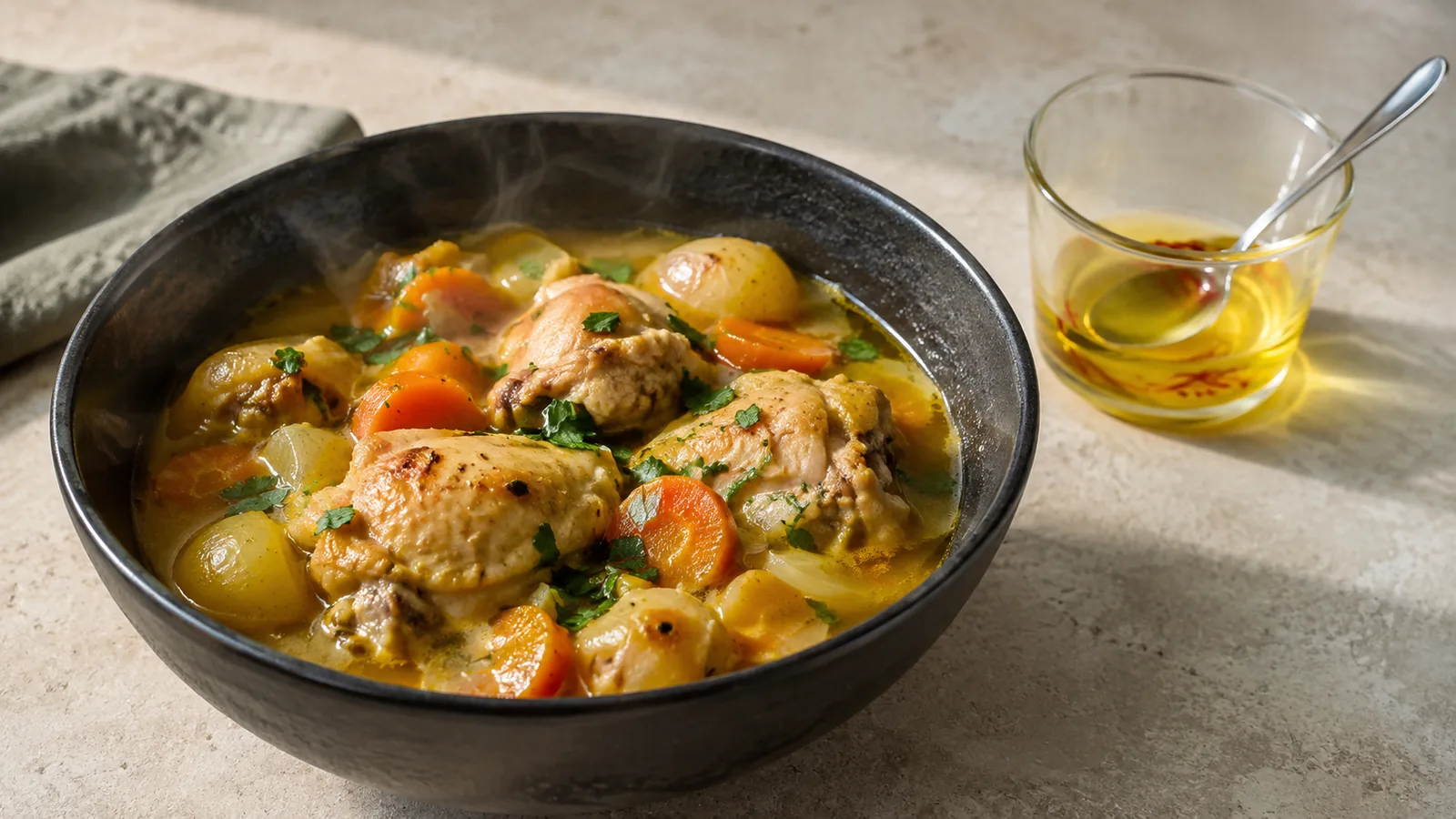
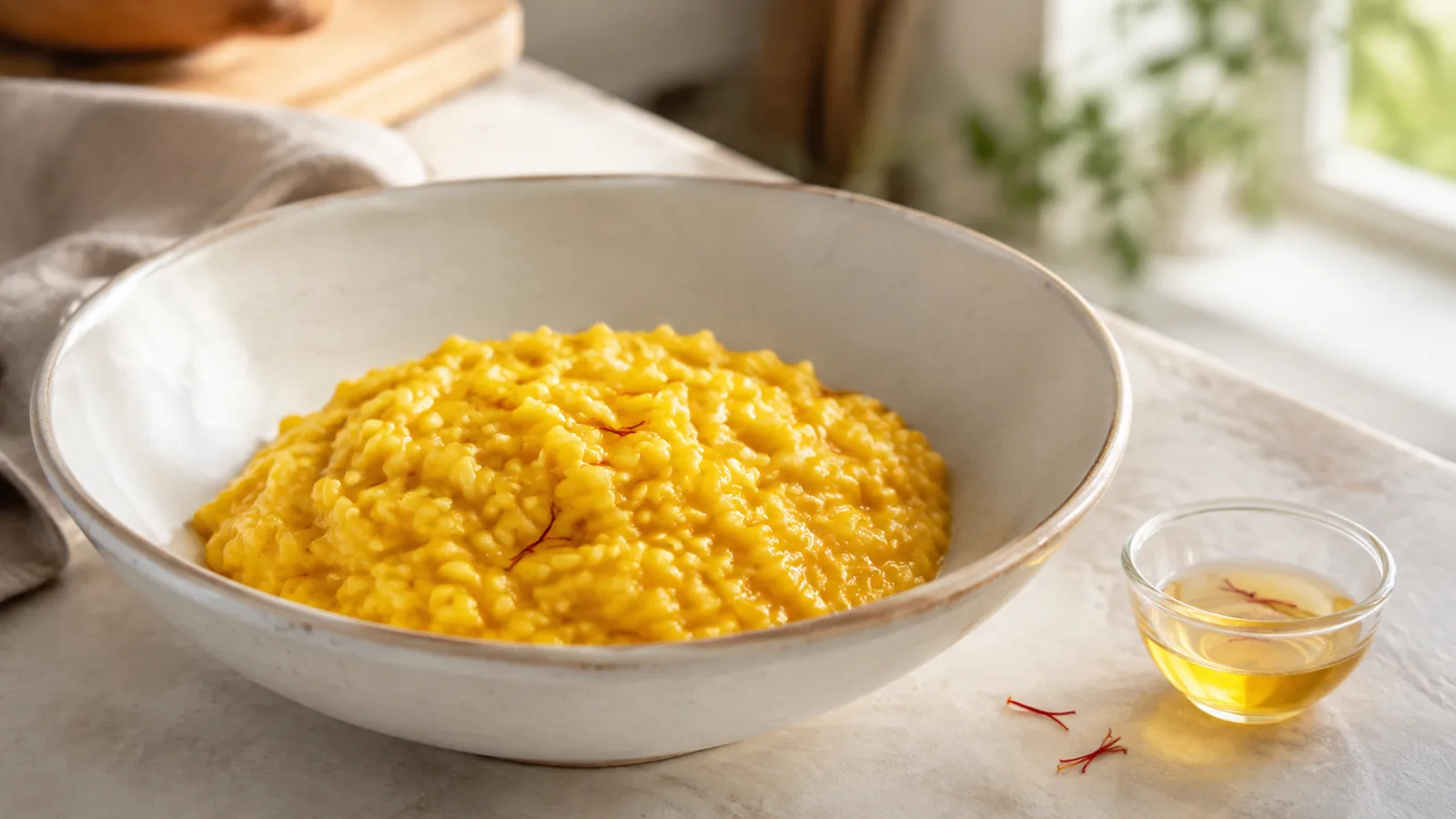
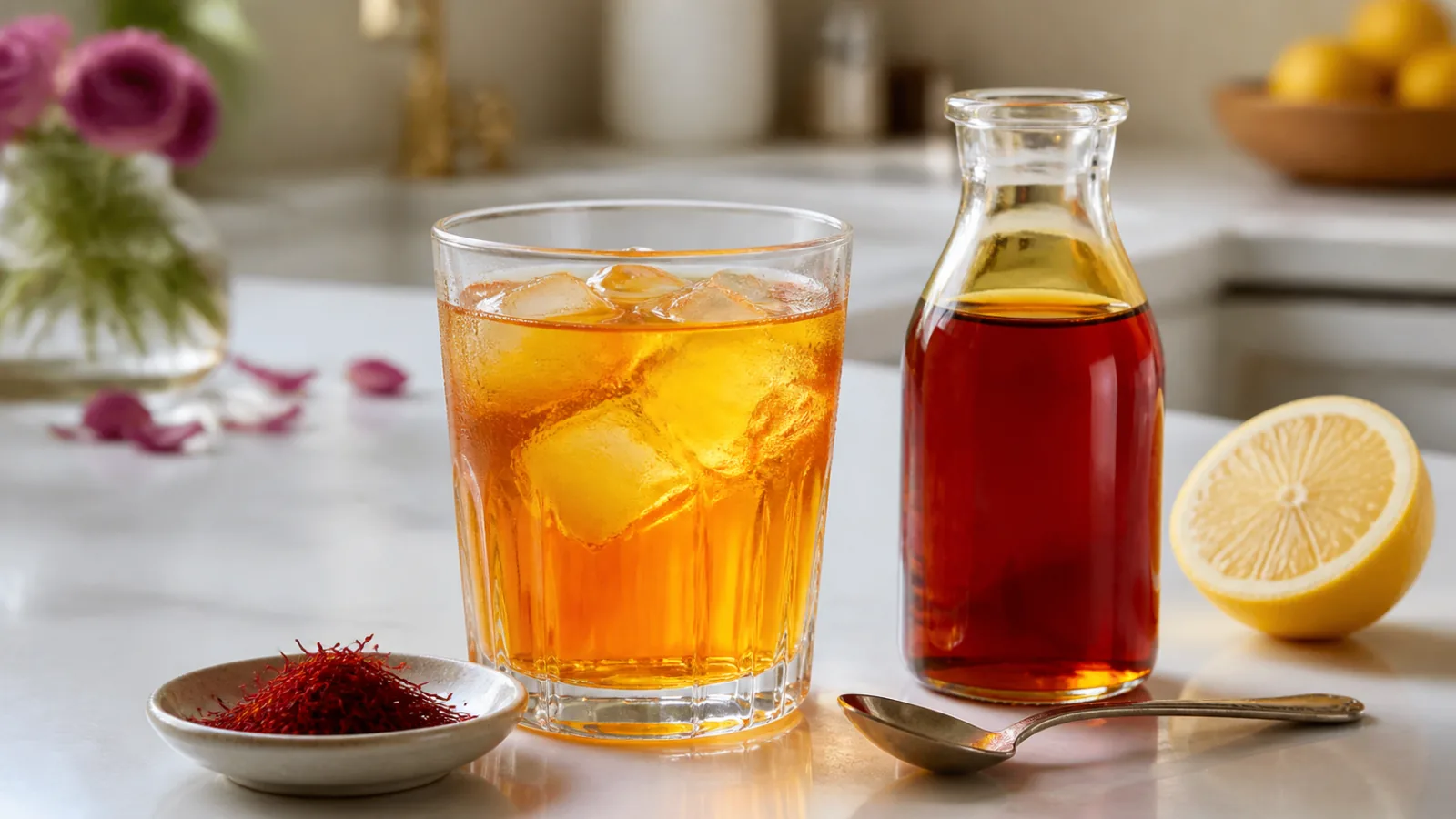
This saffron syrup recipe makes a concentrated Iranian-style drink base with saffron and rose water. Pour one part syrup into a glass, add two parts cold water, then finish with ice. The result is floral and refreshing without asking the saffron to compete with too much sugar.
The original recipe used half a litre of water, half a spoon of ground saffron and three spoons of “roseback,” a translation error for rose water. It did not specify the sugar. The measured version below keeps that character while giving you a repeatable starting point.
Saffron Syrup Recipe
Ingredients
- 500 ml water, divided
- 400 g granulated sugar
- 1/2 teaspoon saffron threads
- 3 tablespoons culinary rose water
- 1 teaspoon lemon juice, optional
Use culinary rose water, not a cosmetic product. The optional lemon juice adds a slight brightness and can make crystallisation less likely; leave it out if you want the cleanest saffron-and-rose aroma.
How to prepare it
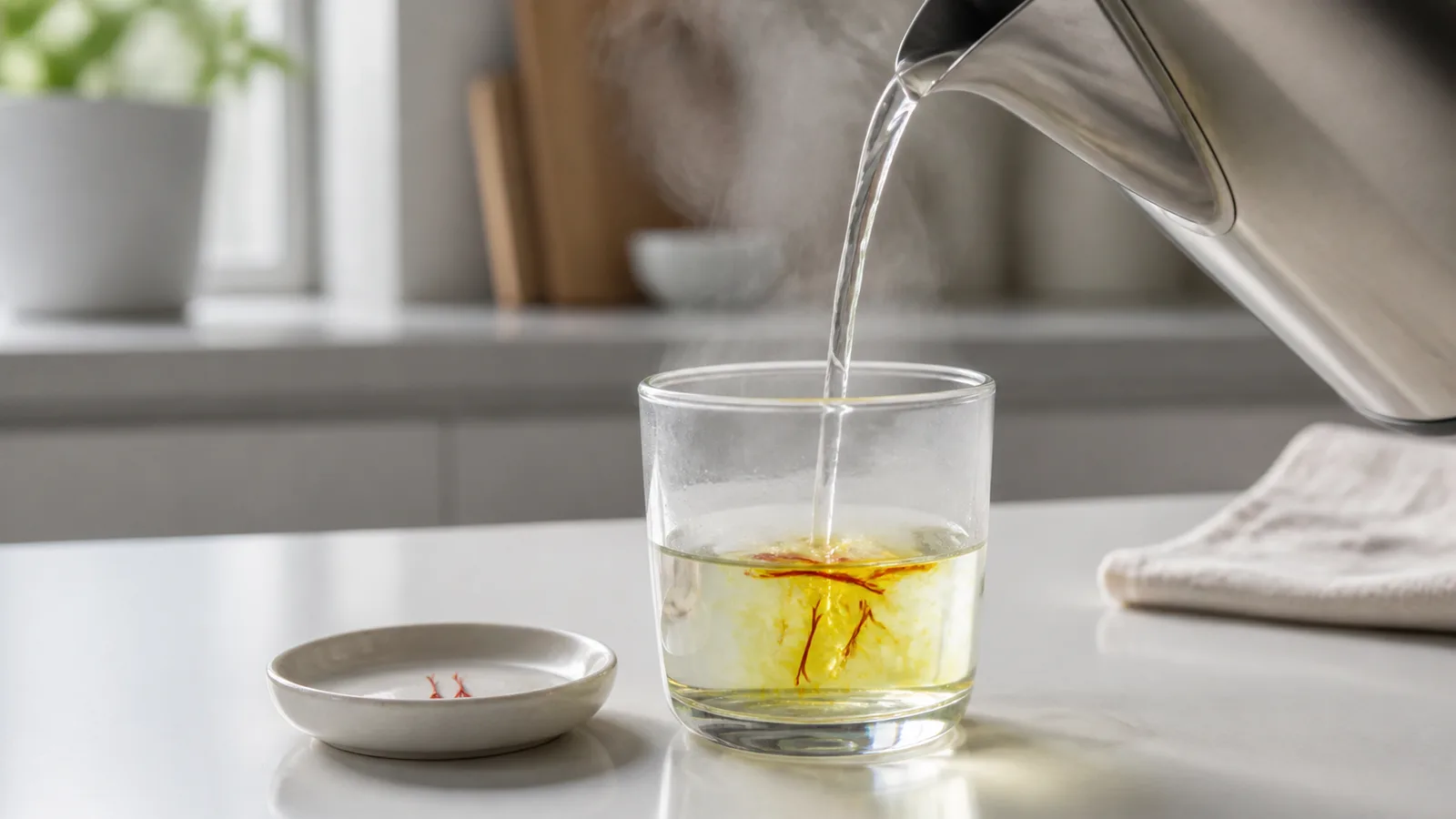
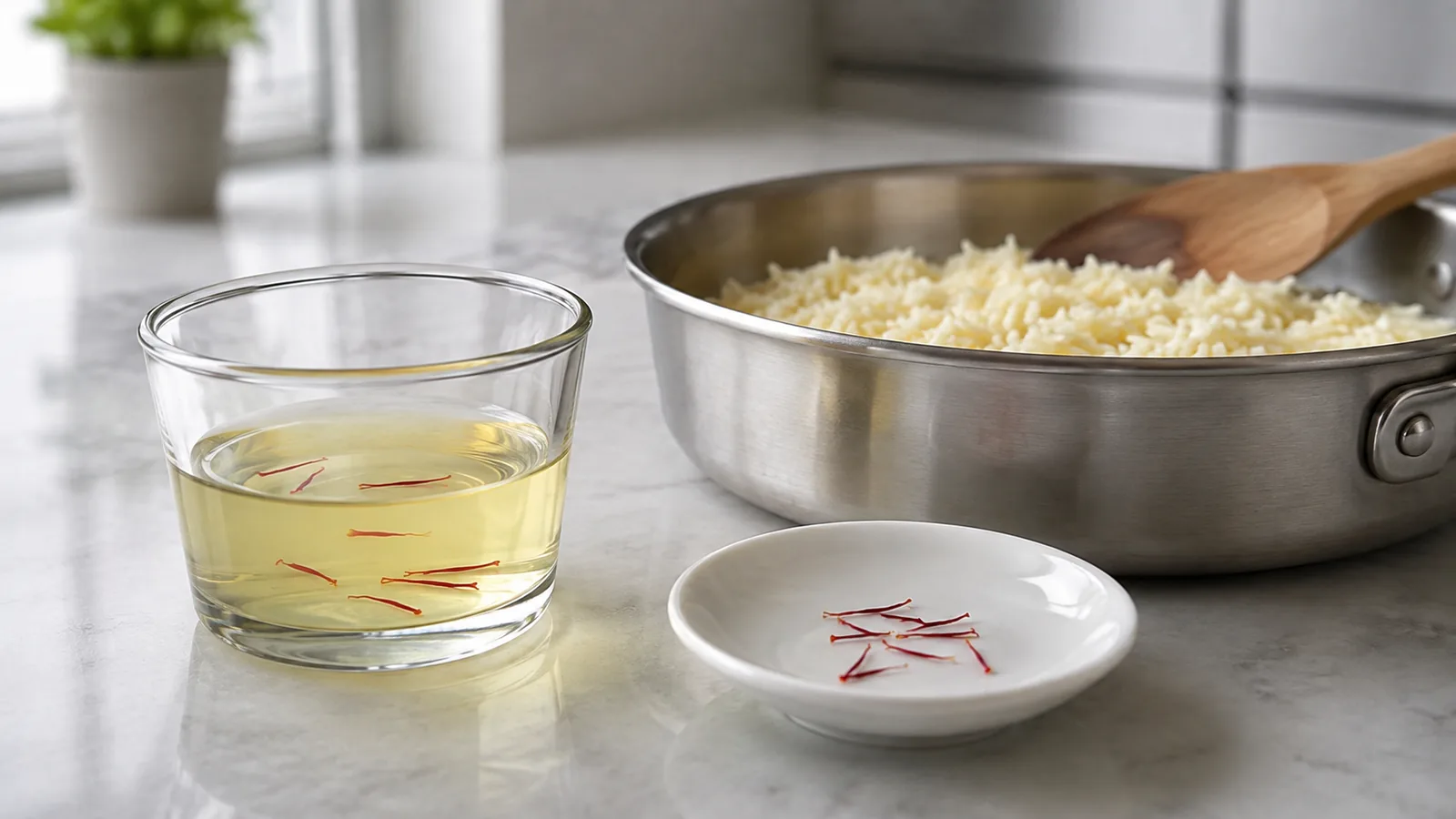
- Bloom the saffron. Grind the threads with a small pinch of the measured sugar. Add 2 tablespoons of hot water from the 500 ml total, cover and leave for 10–15 minutes.
- Dissolve the sugar. Put the remaining water and sugar in a saucepan. Warm over medium-low heat, stirring just until the crystals have dissolved.
- Reduce gently. Bring the mixture to a quiet simmer and cook for about 10 minutes. Avoid a hard rolling boil, which can reduce too far and make the finished drink heavy.
- Add the aromatics. Stir in the bloomed saffron, rose water and optional lemon juice. Simmer for another 2 minutes, then remove the pan from the heat.
- Cool and bottle. Let the syrup cool, pour it into a clean glass bottle or jar, cover and refrigerate.
This keeps the old recipe’s roughly 15-minute cooking process but adds the saffron and rose water near the end, where less of their aroma is lost to prolonged heat. The batch yields about 600 ml, depending on the pan and evaporation.
How to serve saffron syrup
For the traditional cold drink, fill roughly one-third of a glass with syrup and the remaining two-thirds with chilled water. Stir, add ice and taste. If you prefer a lighter drink, begin with 2 tablespoons of syrup in a 250 ml glass and add more only if needed.
Sparkling water gives it a cleaner, festive finish. A squeeze of fresh lemon cuts sweetness, while a few mint leaves add aroma without hiding the saffron. Add those to the glass rather than the storage bottle so the base remains versatile.
Saffron syrup is associated with warm-weather hospitality in Iran and is especially familiar in Khorasan. It may also be prepared for gatherings during Muharram. Recipes vary between households, so the concentration and balance of rose water are matters of taste rather than a single fixed formula.
Saffron simple syrup or drink concentrate?
A standard simple syrup is often made with equal weights of sugar and water and used by the spoonful in drinks or desserts. This recipe uses 400 g sugar with 500 ml water, then reduces it slightly. It is concentrated enough to dilute into a drink but remains easier to pour when cold.
If you need a cocktail-style saffron simple syrup, use equal weights of sugar and water, keep the simmer brief and add saffron near the end. If you want a ready-to-drink beverage, make the recipe above and dilute the whole batch only shortly before serving.
How to make saffron water
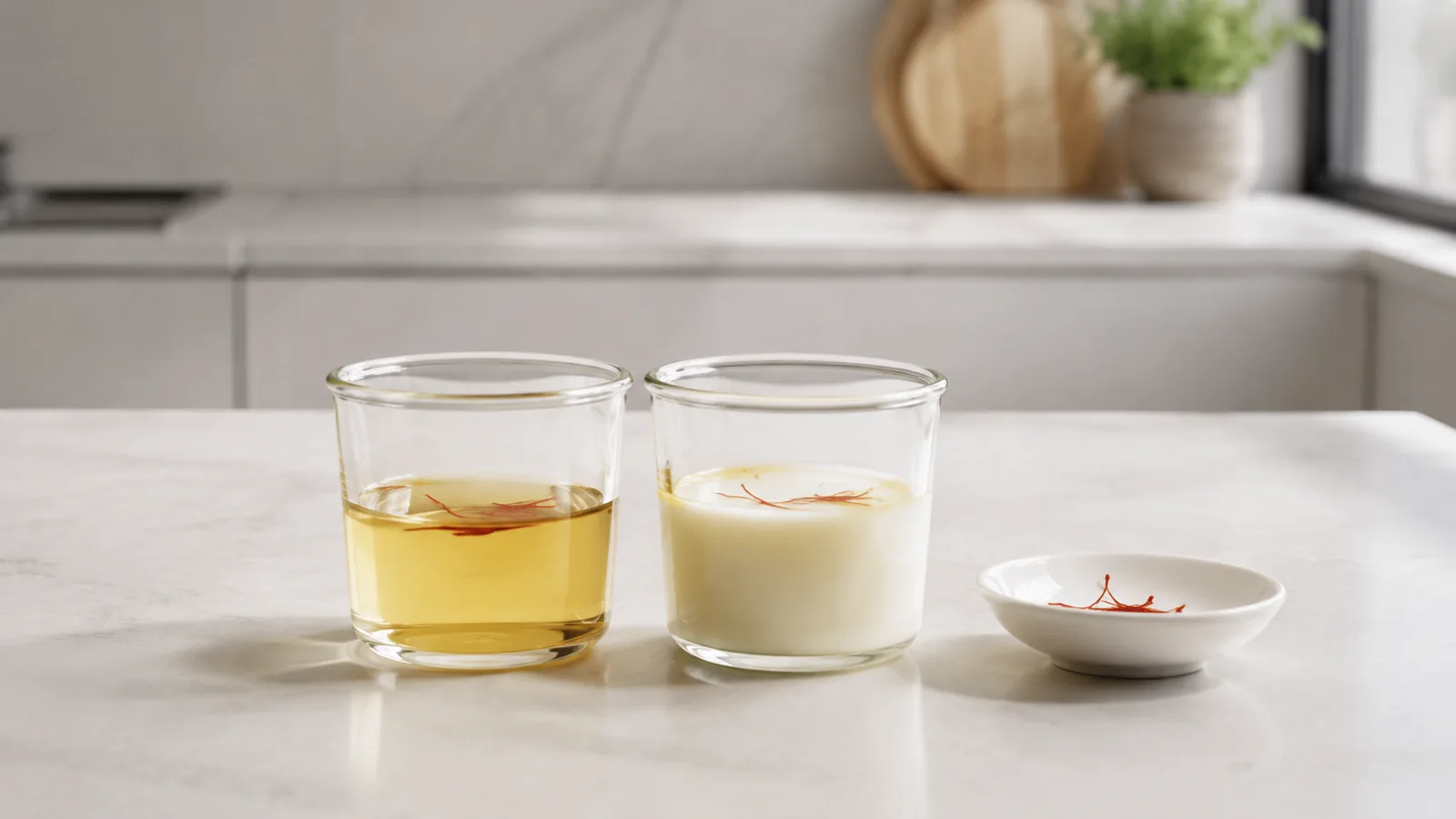
Saffron water is the unsweetened infusion used inside this recipe. Grind 1/2 teaspoon of threads with a pinch of sugar or coarse salt, add 2–3 tablespoons of hot water, cover and steep for 10–15 minutes. The liquid should become richly coloured and aromatic.
Grinding increases the surface area available to the water. Covering the cup helps retain aroma. Very long boiling is unnecessary; extraction continues when the infusion is stirred into the warm syrup.
Our guide to the best way to brew saffron compares warm-water and ice methods in more detail.
Useful ways to use saffron syrup
- Dilute it with still or sparkling water for a cold saffron drink.
- Sweeten iced tea or lemonade a teaspoon at a time.
- Brush a small amount over a plain cake while it is warm.
- Spoon it over fruit, yogurt, rice pudding or ice cream.
- Use it as the sweet component in an alcohol-free citrus mocktail.
Because the syrup is already sweet, reduce other sugar in the dish or drink. Start with less than you think you need: you can add more, but you cannot easily remove it.
Troubleshooting the texture and flavour
The syrup is too thick
It probably reduced for too long or at too high a heat. Warm it gently with a tablespoon of water at a time until it pours easily. Remember that it will thicken further in the refrigerator.
The syrup is too thin
Return it to a clean pan and simmer for a few minutes, then cool a spoonful before judging. A hot syrup always looks thinner than a chilled one.
Sugar crystals formed
Warm the syrup slowly with a little water until the crystals dissolve. Next time, avoid scraping dried crystals from the side of the pan into the mixture and consider using the optional lemon juice.
The rose water dominates
Rose water varies greatly in strength. Begin with 2 tablespoons if your bottle is highly aromatic, then add the third after tasting the cooled syrup. More saffron will not necessarily correct too much rose water.
Storage and food safety
Store homemade saffron syrup in a clean, tightly closed glass container in the refrigerator. Use a clean spoon or pour directly rather than dipping used utensils into it. For best quality, make a quantity you can use within about one week.
Discard the syrup if it ferments, develops mould, smells unusual or becomes unexpectedly cloudy. This is a refrigerator recipe, not a shelf-stable canning method.
The best saffron syrup is not the darkest or sweetest. It has enough concentration to dilute cleanly, a clear saffron aroma and just enough rose water to support it. Once those three are balanced, the recipe is easy to adjust glass by glass.