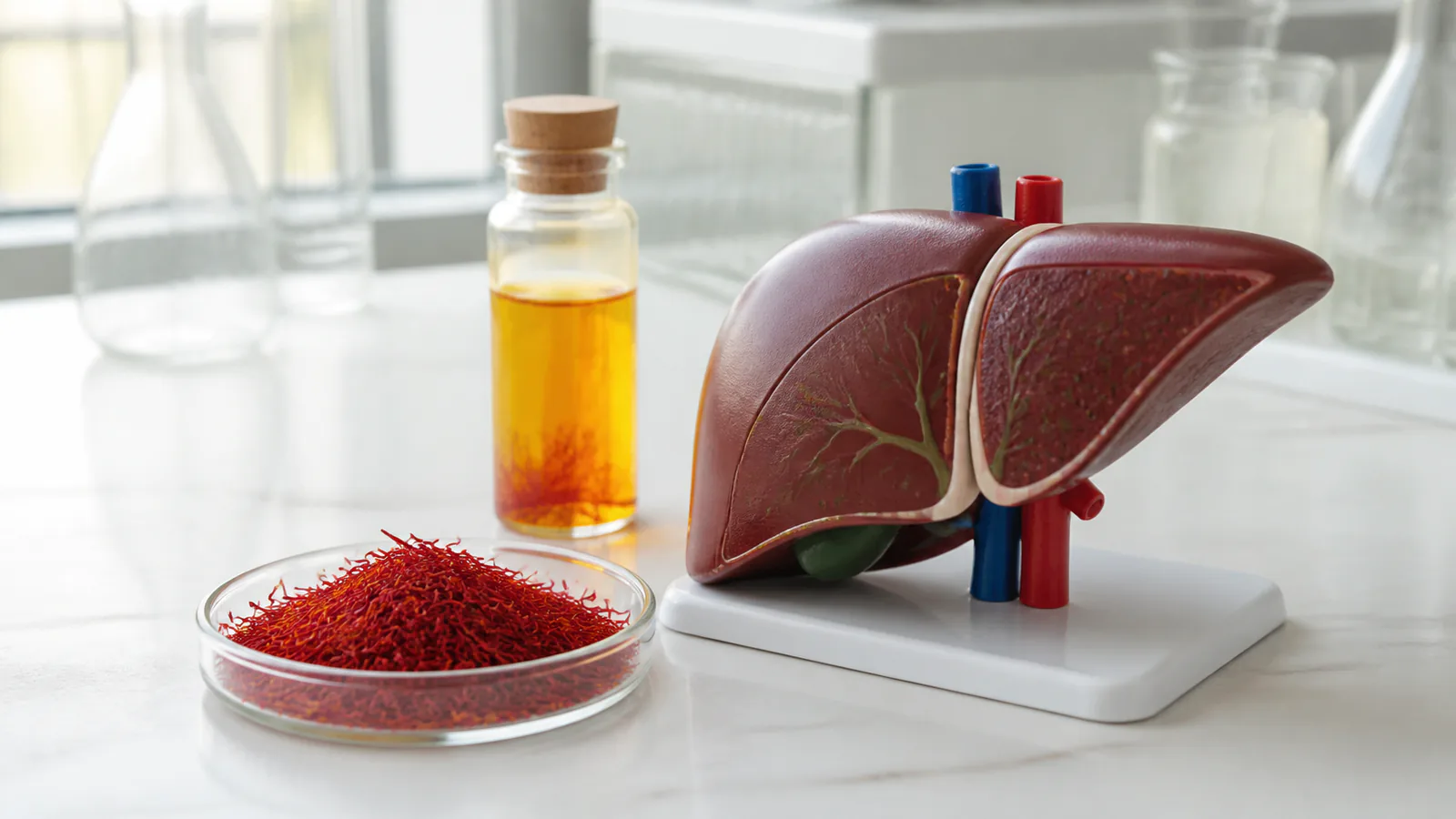
Research on saffron and liver cancer is still preclinical. Crocin, crocetin and other saffron compounds have affected liver-cancer cells in laboratory experiments, and some studies have reported changes in chemically induced liver tumours in rats. These findings do not show that saffron prevents or treats liver cancer in people.
Saffron should never replace screening, surgery, ablation, radiation, immunotherapy, targeted therapy or another treatment recommended by a cancer specialist. A person with liver disease or cancer should discuss any concentrated saffron supplement with the clinical team before using it.
What kind of liver cancer has been studied?
“Liver cancer” can describe different diseases. Hepatocellular carcinoma, usually shortened to HCC, begins in liver cells and is the most common primary liver cancer in adults. Cancer that begins in the breast, colon, pancreas or another organ and later spreads to the liver is a liver metastasis. It is not the same disease as primary liver cancer.
This distinction matters because the saffron literature includes cell experiments labelled as HCC, rat models designed to imitate HCC, and one very small human pilot involving liver metastases from several primary cancers. They cannot be combined as if they tested one condition.
What laboratory studies found
Researchers often use HepG2 cells as a model for studying liver-cancer biology. In these experiments, crocin and other saffron constituents have been associated with reduced cell proliferation, changes in the cell cycle and increased apoptosis, the controlled process by which damaged cells die.
Those results identify biological pathways worth investigating. They do not answer whether a compound reaches a human liver tumour at an effective concentration, whether the dose is safe, or whether it improves survival. Cells in a dish also lack the full immune, metabolic and tumour environment of a patient.
What animal studies found
A 2016 study tested crocin in rats whose liver lesions were chemically induced. The researchers reported anti-proliferative, pro-apoptotic and anti-inflammatory effects and also studied HepG2 cells. Later rat experiments have explored crocin alone or with sorafenib, a cancer medicine.
These are not trials in people. The animals received controlled compounds and experimental exposures that are unlike adding saffron to food. An improvement in tissue markers or tumour features in a rat cannot establish an effective human treatment, and it does not justify combining a supplement with sorafenib outside a clinical study.
What human evidence exists?
There is no robust human trial showing that saffron prevents or treats primary liver cancer. The human study most often cited in this area was a small randomized pilot published in 2015. It enrolled 13 people whose cancers had spread to the liver. Everyone received chemotherapy; saffron capsules or placebo were added.
Six participants did not complete the study, leaving seven in the final analysis. The primary cancers were not all the same. The authors reported a signal in the saffron group and explicitly called for a larger investigation. With so few completers, the study cannot establish effectiveness, survival benefit or safety for a wider cancer population.
It is also a study of liver metastases alongside chemotherapy, not a demonstration that saffron treats HCC. A promising pilot can support further research, but it cannot support a consumer treatment claim.
Does saffron prevent liver cancer?
No human evidence currently shows that eating saffron or taking a saffron supplement prevents liver cancer. The word “chemopreventive” in an animal-study conclusion describes an experimental finding, not a public-health recommendation.
The US National Cancer Institute identifies established liver-cancer risks and preventive actions. Major risks include chronic hepatitis B or C infection, cirrhosis, heavy alcohol use, metabolic liver disease, aflatoxin exposure and smoking. Evidence-based prevention includes hepatitis B vaccination and appropriate treatment and monitoring of chronic viral hepatitis. People at elevated risk may need regular clinical surveillance.
Why culinary saffron and experimental crocin are not equivalent
Crocin is one of the pigments responsible for saffron’s golden colour. Laboratory researchers can purify it, control its concentration and choose how it is delivered. A meal made with saffron contains a much smaller and variable mixture of compounds. A retail capsule may use an extract with a different strength again.
It is therefore inaccurate to convert a cell-culture concentration or animal dose into a number of threads, cups of tea or capsules for a person. There is no proven home regimen for liver cancer.
Could a supplement interfere with treatment?
Potential interactions are one reason not to self-prescribe concentrated products during cancer care. Laboratory discussions about combining crocin with a medicine are not instructions for patients. Supplements may differ in composition, and a product can affect bleeding, blood pressure, drug metabolism or treatment side effects.
Show the oncologist or oncology pharmacist the exact label before taking it. The team can consider the treatment plan, liver function and other medicines. This is particularly important because a damaged liver may process substances differently.
How to judge a saffron-and-liver-cancer claim
- Identify the disease. Was the research about HCC, another primary liver cancer or metastases?
- Check the model. A cell line, rat model and human trial answer different questions.
- Identify the material. Whole saffron, an extract, crocin and crocetin are not interchangeable.
- Look for a patient outcome. Molecular markers do not by themselves prove longer survival or better quality of life.
- Read the limitations. Sample size, dropouts, control groups and follow-up determine how much a study can support.
The current conclusion
Saffron compounds remain an interesting line of liver-cancer research, mainly in cells and animals. The work may help scientists select mechanisms or drug candidates for future testing. It does not make saffron a proven preventive measure or treatment for HCC or liver metastases.
Our broader article on saffron and cancer research explains the same evidence hierarchy across other cancer types. For an individual diagnosis, the appropriate source is a hepatology or oncology team.
Sources
- US National Cancer Institute. Liver cancer causes, risk factors and prevention.
- Amin A, Hamza AA, Daoud S, et al. Saffron-based crocin prevents early lesions of liver cancer: in vivo, in vitro and network analyses. Recent Patents on Anti-Cancer Drug Discovery. 2016.
- Hosseini A, Mousavi SH, Ghanbari A, et al. Effect of saffron on liver metastases: a randomized, double-blind, placebo-controlled pilot trial. Avicenna Journal of Phytomedicine. 2015.
- Wang CZ, Ma Q, Kim S, et al. Effects of saffron and crocin on cancer management: a narrative review. Longhua Chinese Medicine. 2022.