


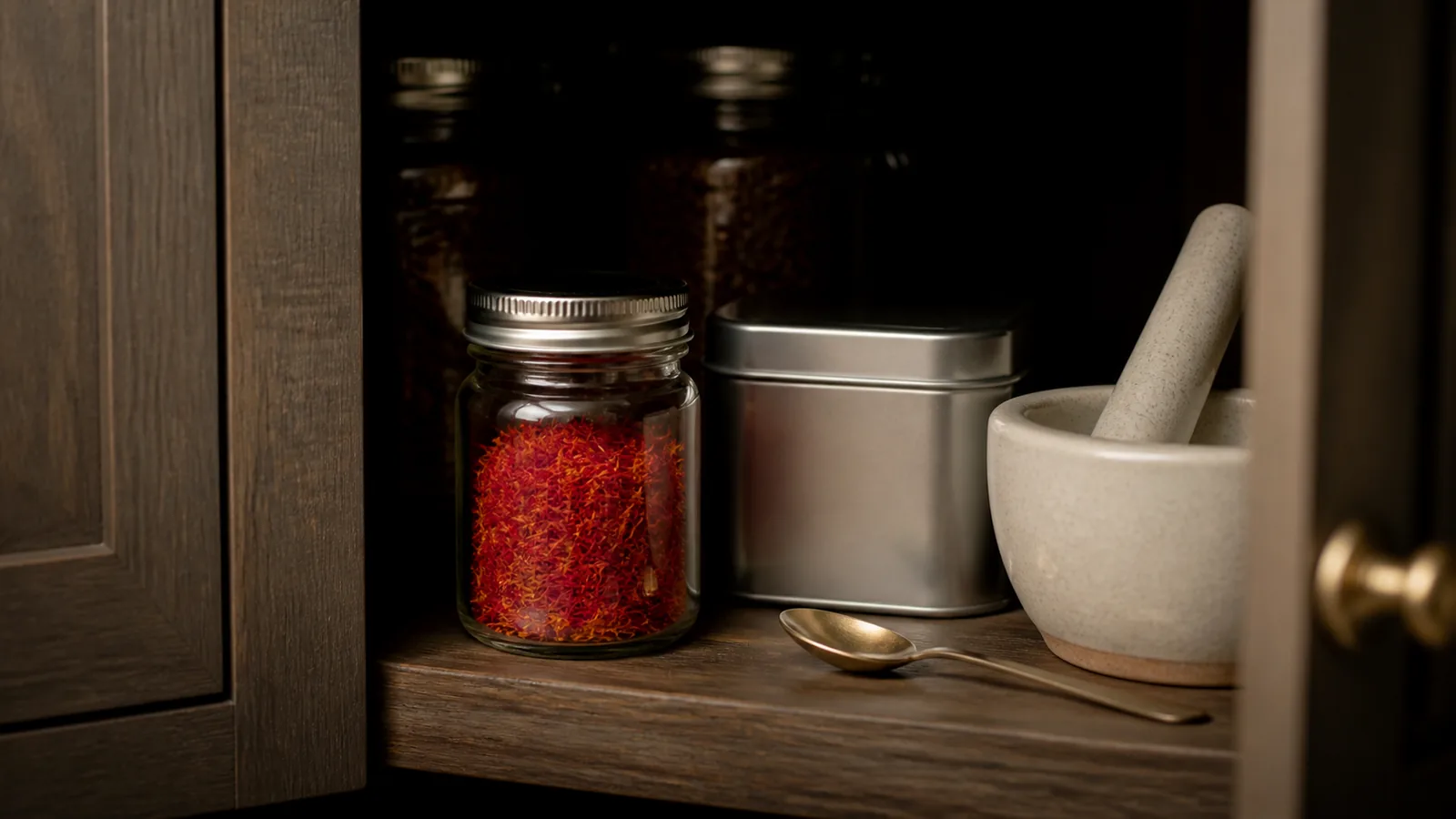
Good saffron storage is simple: keep the threads whole, dry, cool, protected from light and sealed against air and kitchen odours. A small airtight glass jar or food-safe metal tin in a dark cupboard is suitable for most homes. Store it away from the cooker, oven, sink and a sunny window.
Saffron does not suddenly become useless on a particular day, but its colour, aroma and flavour change with time and poor handling. The aim is to slow that change while preventing moisture from entering the container.
Why saffron needs protection
The sensory character of saffron comes from several compounds. Crocins contribute its colour, picrocrocin is associated with bitterness, and safranal is an important part of its aroma. Heat, light, oxygen, moisture and storage time can alter these compounds in different ways.
A one-year study of dried Moroccan saffron found significant changes in crocins, picrocrocin, safranal and other constituents during storage, even when samples were kept in smoked glass away from light. That is a useful reminder that a container slows change; it cannot stop ageing completely.
The current ISO 3632-1:2025 saffron specification applies to dried saffron in filaments, cut filaments and powder and includes storage and transport recommendations in its annex. For a household, the same basic concerns translate into controlling light, moisture, heat and repeated exposure to air.
Choose a small airtight container
Use a clean, completely dry container with a lid that closes firmly. Glass is easy to inspect and does not absorb aroma, but clear glass still needs a dark cupboard. An opaque food-safe tin offers light protection as well as a physical seal.
A small container is preferable to a half-empty large one because less fresh air enters the package each time it is opened. If you buy saffron in a well-sealed retail pack, you can keep it there until opening, provided the pack is intact and suited to food storage. Once opened, close it immediately after taking out what you need.
Avoid a loose paper envelope, a jar with a damaged gasket or any container that previously held a strong-smelling spice. Saffron’s own aroma is delicate, and a poorly sealed package can pick up odours from coffee, cloves, cleaning products or other goods stored nearby.
Keep it dark, cool and dry
A closed pantry or cupboard in a stable part of the kitchen is normally better than a shelf above the cooker. “Cool” does not require an exact household temperature; it means avoiding heat sources and large daily swings. Do not leave the jar in direct sunlight, in a hot car or beside an appliance that releases steam.
Moisture is the more immediate practical problem. Never put a wet spoon into the jar, and do not handle the threads with damp fingers. Close the lid before working over a steaming pot. If the threads clump because liquid or condensation entered the container, spreading them out on a counter does not reliably restore the original quality or establish that they are safe.
Should saffron be refrigerated?
Refrigeration is usually unnecessary for dried saffron kept in an airtight container in a reasonably cool home. A refrigerator is humid, and opening a cold jar in warm air can create condensation on the saffron and inside the package.
In a persistently hot or very humid environment, cold storage can be considered only with a genuinely moisture-proof container. Keep the jar closed while it returns to room temperature, then open it and remove the required portion with a dry utensil. This step prevents warm room air from condensing on cold threads. Avoid moving the same jar in and out of the refrigerator every day.
The older source article recommended a refrigerator in humid regions to prevent sticking. The sealed-container and warm-up steps are essential additions to that advice; without them, refrigeration may introduce the moisture it was meant to avoid.
Store threads whole and grind only what you need
Whole threads expose less surface area to air than powder. Keep the main supply as filaments, whether the product is sold as Negin or another thread grade, and grind a small portion immediately before use. A clean mortar and pestle works well.
Grinding a month’s supply at once saves a little time but gives aroma more opportunity to escape and makes the product harder to inspect. Powder can also absorb moisture and foreign odours more readily. If you buy ground saffron, keep it tightly sealed, purchase a quantity you can use promptly and check the seller’s authenticity and lot information carefully.
Do not grind saffron in a damp grinder or return unused powder from a cooking dish to the storage jar. Any added water, sugar, salt or food residue changes the storage conditions of the whole package.
A practical saffron-storage routine
- Check that the jar and lid are clean, odour-free and completely dry.
- Transfer the threads with a dry spoon or clean dry hands.
- Label the container with the product or packing date and lot details supplied by the seller.
- Close it firmly and place it in a dark cupboard away from heat and steam.
- Remove only the amount needed, then close the jar at once.
- Grind that portion just before blooming or adding it to the recipe.
If you keep several lots, do not automatically mix an older one into a new jar. Retaining their identities makes it easier to compare aroma, colour and quality and to trace a problem back to its package.
How to tell when quality has declined
Open the jar and assess the threads before use. Well-kept saffron should have a recognisable, complex aroma and a dry texture. A noticeable loss of aroma or weaker colour release can indicate ageing, although those observations cannot determine grade or purity by themselves.
Discard the product if you see mould, insects, damp patches or unexplained contamination. A musty or otherwise abnormal odour also warrants caution. Do not taste a visibly spoiled spice to decide whether to keep it.
A best-before date concerns expected quality under the stated storage conditions; it does not measure how often the jar was opened or whether moisture entered it. Follow the package instructions and use the condition of the container and product as additional evidence.
Storage starts when you buy
Buy a quantity that suits how often you cook with saffron. A large package is not economical if it remains open for years. Look for intact packaging, a clear net weight, seller identity, lot or batch information and a packing or best-before date. Threads also let you examine the product more readily than an anonymous powder.
Commercial buyers need more than a household jar. They should agree on packaging material, moisture protection, lot identification and transport conditions, then sample and test the received lot appropriately. Our guide to saffron quality explains how appearance and documentation fit with laboratory grading.
The short version
For most kitchens, the best place for saffron is an airtight small jar in a dark, dry cupboard at a stable temperature. Keep the threads whole, open the package briefly and grind only the portion you are about to use. Refrigerate only when the climate makes it necessary and the container can stay sealed until it has warmed to room temperature.
These habits preserve more of the colour, flavour and aroma you paid for, without complicated equipment or a shelf full of powdered saffron losing character before it reaches the pan.

![Exporting Saffron to Turkey + Price Guide [Complete 0 to 100]](https://img.rowhanisaffron.com/20260827003933/saffron-export-turkey-quality-inspection.webp)



