


Saffron for farmers is more than a crop in the field. Once the flowers have been picked, every grower must decide where the dried threads will be assessed, how they will be stored, and when they should be sold. An approved saffron warehouse can bring those steps into a documented system, but it is important to understand both the advantages and the conditions before delivering a harvest.
What is a saffron commodity warehouse?
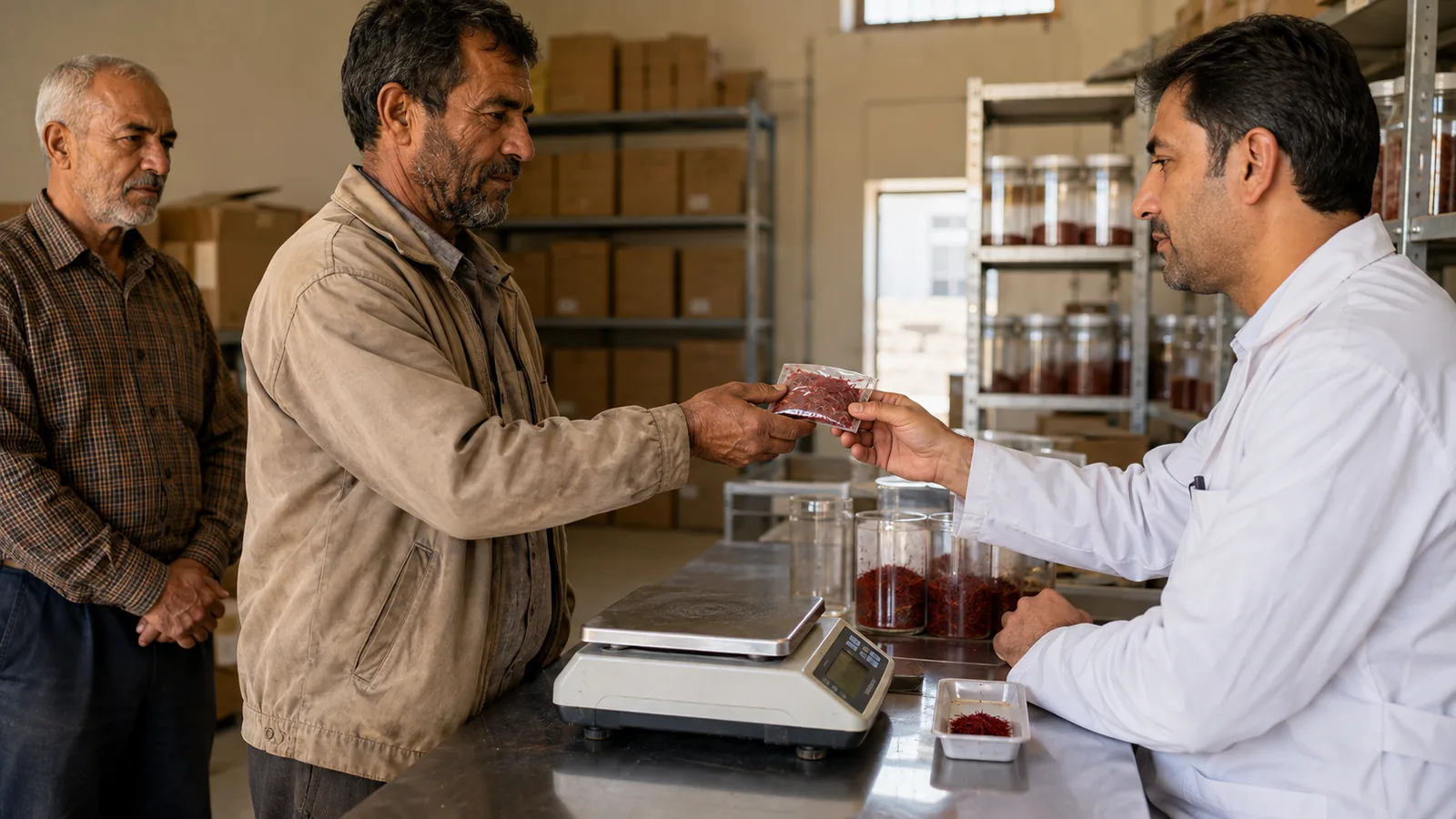
A saffron commodity warehouse is an approved facility that receives eligible dried saffron, checks the lot against its acceptance specification, records its weight and assessed quality, and stores it under controlled conditions. Once an accepted lot is registered, the owner can receive a warehouse receipt or commodity deposit certificate representing that saffron.
The receipt is the important link between physical storage and the market. Instead of carrying the product from buyer to buyer, a farmer can offer the registered quantity through the relevant exchange and brokerage system. Ownership can change through the record while the saffron remains in the warehouse until it is withdrawn or delivered under the market rules.
Iran has used this model for saffron because the spice is valuable, compact, quality-sensitive, and often sold when harvest expenses are pressing. A separate article explains the wider purpose of Iran’s saffron exchange and why transparent grading and price discovery matter.
How the warehouse process works
The precise forms, fees, grades, trading symbols, and settlement timetable can change. Farmers should obtain the current instructions from the approved warehouse and a licensed broker before travelling with a lot. The working sequence is generally as follows:
- Ask what the warehouse accepts. Confirm the eligible saffron type, minimum quantity, delivery hours, identification documents, packaging requirements, testing charges, and daily storage fee.
- Present the lot for assessment. The warehouse weighs and samples the saffron. Material that does not meet the stated specification may be rejected rather than entered into the receipt system.
- Review the recorded grade and net quantity. The certificate should describe what the warehouse actually accepted after any permitted sample or deduction.
- Choose whether and when to sell. Registration creates a route to the market; it does not force an immediate sale. Trading normally requires the appropriate exchange and brokerage account.
- Account for every cost. Storage, assessment, brokerage, taxes or levies, and withdrawal charges can affect the amount a farmer ultimately receives.
An earlier explanation from Iran’s Agricultural News Agency described saffron being assessed while in quarantine, followed by the issue of a receipt for a compliant lot. It also described the receipt being offered through an authorised brokerage. Those details help explain the mechanism, but its quoted hours, charges, and settlement period belong to the rules in force when that report was published. They are not a substitute for the current warehouse and broker instructions.
Why a saffron warehouse can help farmers
A documented route to market
A warehouse receipt turns an identified physical lot into a record that can be traded under published procedures. This can make the accepted grade, weight, ownership, and transaction easier to document than an informal cash sale. An exchange price also gives farmers another reference point when comparing offers and can make access to liquidity quicker once a trade settles.
More control over harvest-time selling
Picking and separating saffron flowers creates an immediate demand for labour and cash. A grower who must pay those costs may otherwise accept the first available offer. Warehousing cannot remove price risk or guarantee a better price, but it can give an eligible farmer another way to store the crop and decide how much to offer.
Warehouse-receipt systems are used more broadly in agriculture for the same reason. A World Bank review of an agricultural warehouse-receipt programme describes certified storage, later selling, and the possible use of receipts in finance. That is useful context, not a promise that every Iranian saffron receipt will qualify as collateral or that a bank will lend against it.
Security and traceability
Saffron kept at home can be difficult to insure and protect. An approved facility should have documented custody, controlled access, inventory records, and procedures for depositing and withdrawing a lot. Farmers should still ask who bears the risk of theft, fire, contamination, or loss, and what evidence would be required for a claim.
Consistent handling of quality
Dried saffron needs protection from light, moisture, foreign odours, unsuitable temperature, and other causes of deterioration. Research indexed by FAO’s AGRIS database found that saffron samples stored in darkness retained quality better than samples exposed to light over the study period. The saffron conservation study supports careful dark storage, although it does not prove that every warehouse produces identical results.
A warehouse can standardise handling, but acceptance is not the same as an unlimited freshness guarantee. Quality still depends on how the flowers were handled, how the threads were dried, the lot’s moisture and cleanliness, its packaging, and the conditions maintained during storage.
The Unity Jam message to growers
At the start of a previous harvest season, Mojtaba Payam Asgari, identified in the original report as chief executive of the Unity Jam saffron warehouse in Torbat-e Jam, encouraged growers to learn how commodity warehouses operate. He highlighted faster access to a formal sale, added value from assessment and registration, protection from theft, and better storage than many farmers could arrange at home.
The report gave a specific example: a farmer could sell three days after delivering an accepted lot and receive payment the next day. That timing was presented as an example of that season’s system, not an unconditional promise. Acceptance testing, non-working days, broker procedures, market liquidity, and settlement rules can all affect the actual timetable.
It also announced that a Unity Jam warehouse for premium cut-filament Negin saffron would open on November 1 with a 1403 Iranian-calendar maturity, which overlapped 2024. That announcement is historically useful because it shows how a particular warehouse and trading symbol were introduced. It should not be read as confirmation that the same symbol, maturity, or delivery window remains open now. Exchange warehouse symbols are time-specific.
What a warehouse does not guarantee
The phrase “safe haven” describes the value of secure, controlled custody. It should not be confused with a guaranteed investment return. A warehouse cannot promise that saffron prices will rise, that a buyer will always be available at the desired price, or that fees will be lower than every alternative.
Nor does formal trading automatically remove every disadvantage faced by small growers. A farmer may still encounter travel costs, minimum-lot rules, grading disagreements, account-opening requirements, storage charges, or limited bargaining power. Our review of why the saffron exchange has not always helped small farmers looks at that gap more closely.
These limits are reasons to compare the options carefully, not reasons to reject warehouse storage. The useful question is whether the facility gives a particular farmer better security, documentation, flexibility, and net proceeds after all costs.
Questions to ask before delivering saffron
- Is this warehouse currently approved for the exact saffron grade and trading symbol I intend to use?
- What quantity, packaging, identity, ownership, and account documents must I bring?
- Which tests will be performed, how large may the sample be, and can I review the result?
- What are the assessment, storage, brokerage, sale, and withdrawal costs?
- When can an accepted receipt be traded, and what is the current settlement timetable?
- Can I withdraw unsold saffron, and under what conditions?
- What happens if the lot is rejected or I disagree with the grade?
- What insurance or compensation applies if stock is damaged or lost?
Farmers should keep the delivery note, sample record, grade result, warehouse receipt, fee schedule, and sale statement together. Those documents make it easier to compare the warehouse route with a direct offer on a net basis rather than comparing headline prices alone.
A safer choice when the terms are understood
A well-run saffron warehouse can protect a valuable harvest, create a documented grade and quantity, and give farmers access to a formal trading route. Its real strength is not a guarantee of profit. It is the combination of secure custody, traceable handling, and an additional selling option.
For a grower, the best decision comes after checking the current symbol, acceptance standard, fees, timing, and responsibilities in writing. When those terms suit the lot and the farmer’s cash needs, commodity warehousing can be a practical safeguard rather than just another promise made at harvest time.

![Exporting Saffron to Turkey + Price Guide [Complete 0 to 100]](https://img.rowhanisaffron.com/20260827003933/saffron-export-turkey-quality-inspection.webp)



