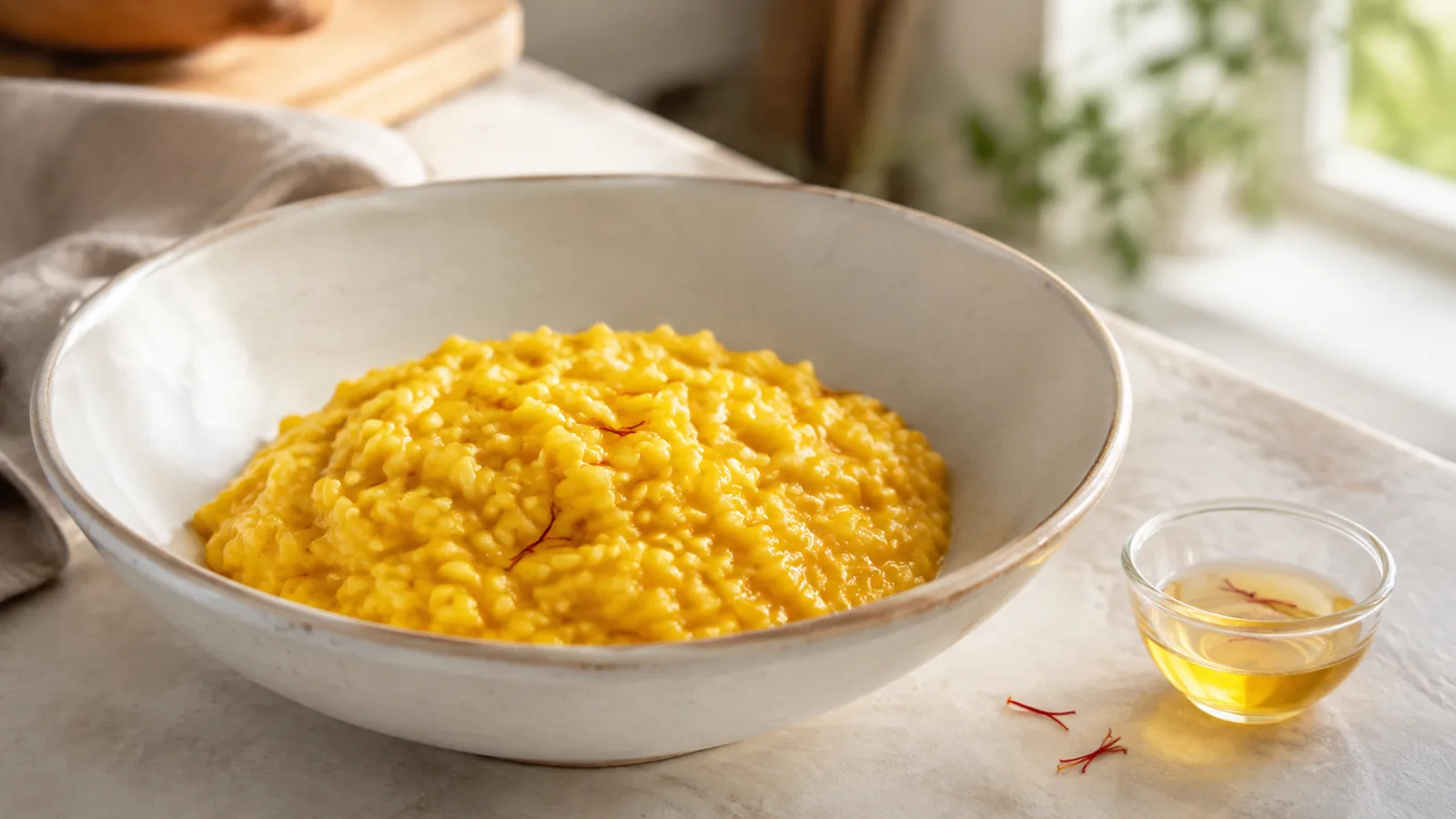
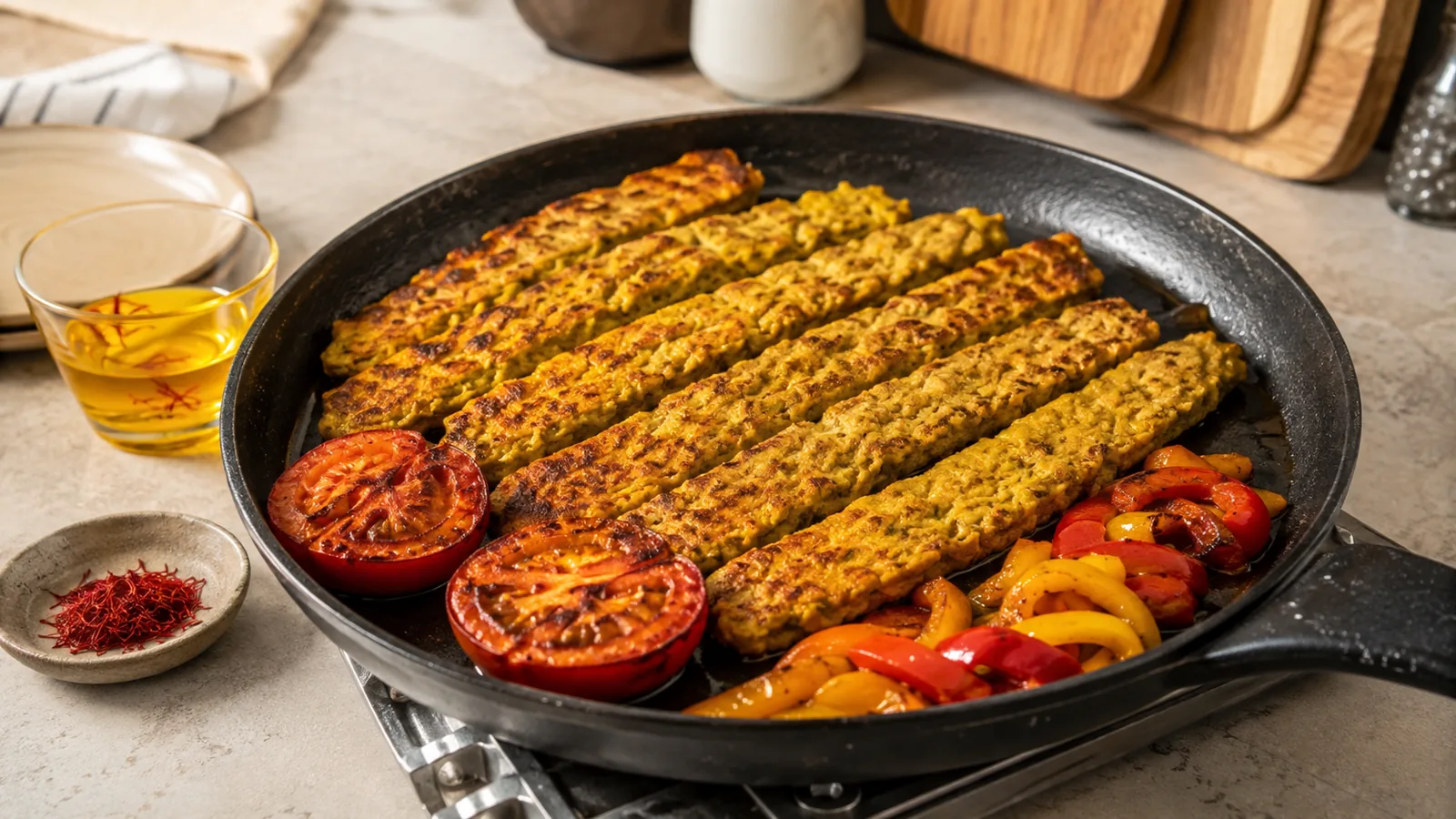
This Saffron Chicken Koobideh Recipe turns seasoned ground chicken into long, tender kebab strips in an ordinary frying pan. You get the familiar saffron, onion and charred-kebab flavours without charcoal or the difficulty of keeping soft chicken mixture on a skewer.
What is chicken koobideh?
Koobideh is an Iranian kebab made from finely minced meat mixed with grated onion and seasoning. Beef and lamb versions are common, but chicken koobideh uses ground poultry for a lighter flavour that lets saffron stand out. The mixture can be shaped around skewers for grilling or pressed into a pan for an easier home method.
This recipe is closer to kabab tabei, or pan kebab. The meat is flattened, divided into strips and browned in the same pan. It is still recognisably koobideh chicken, but it does not claim that a stovetop crust tastes exactly like charcoal.
Ingredients for chicken koobideh kebab
This quantity serves three to four people.
- 500 g (1.1 lb) ground chicken, preferably a mixture of thigh and breast
- 1 medium onion
- 3 tablespoons very finely diced red or yellow bell pepper, optional
- 20–25 saffron threads
- 1 tablespoon hot water
- 1 teaspoon fine salt
- ½ teaspoon black pepper
- 1 small garlic clove, finely grated, optional
- 1 tablespoon neutral oil for the pan
- 1 tablespoon melted butter or olive oil for the saffron glaze, optional
Which chicken should you use?
Chicken thigh brings enough fat to keep the kebab tender, while breast gives the mixture a firmer texture. A roughly equal blend is reliable. If you mince the meat yourself, remove bone, skin and tough connective tissue, then pulse chilled pieces until finely ground. Stop before the meat becomes a paste.
Some chicken koobideh recipes add lamb fat. It can make the kebab richer, but it is not essential, and it defeats the purpose for anyone choosing chicken to avoid red meat. Using some thigh meat is a simpler way to prevent dryness.
Prepare the onion properly
Grate the onion on the large holes of a box grater. Gather it in a clean cloth or fine sieve and squeeze out as much liquid as possible. Wet onion is the usual reason a koobideh mixture loosens, steams and breaks instead of browning.
Bloom the saffron
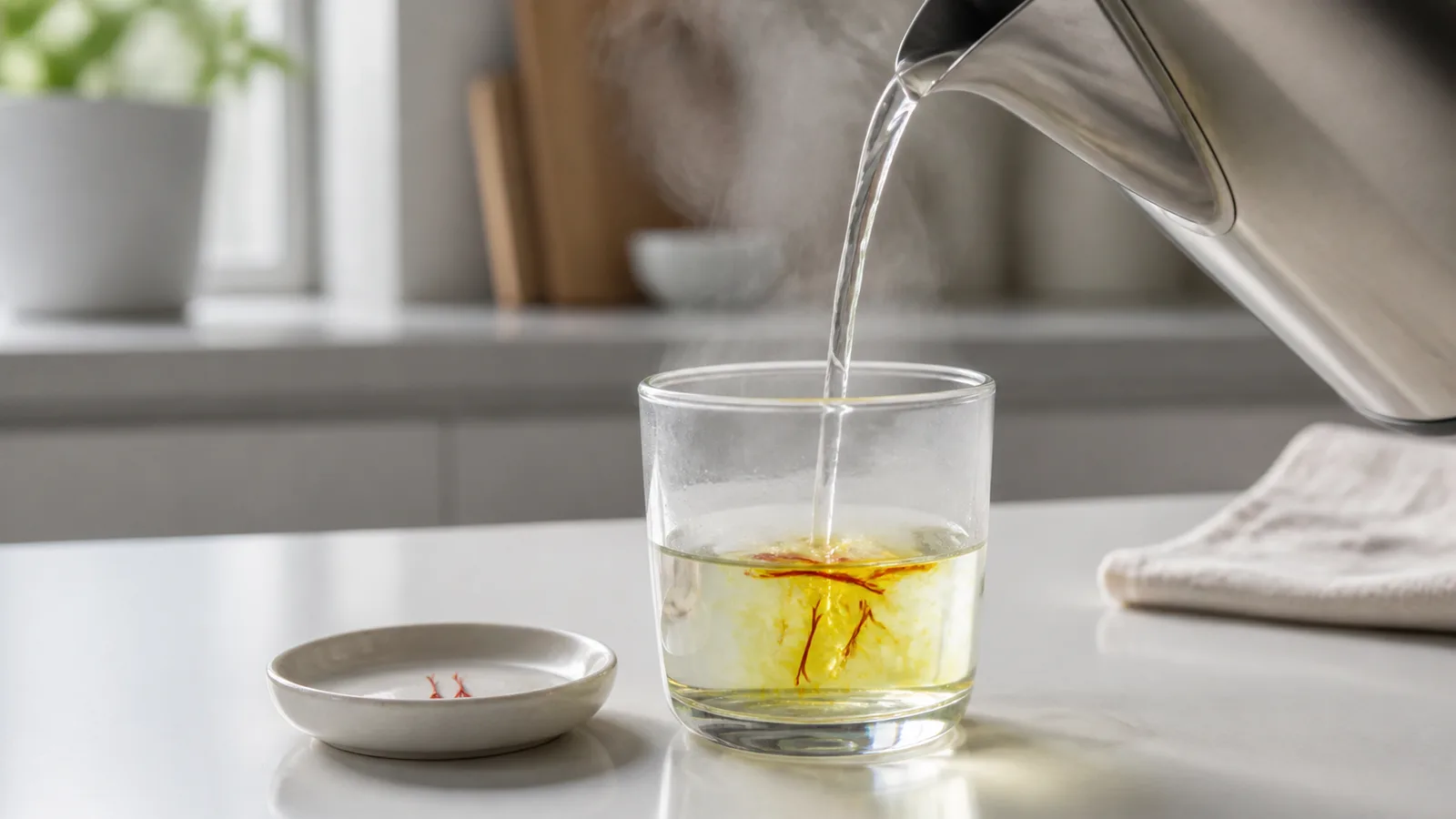
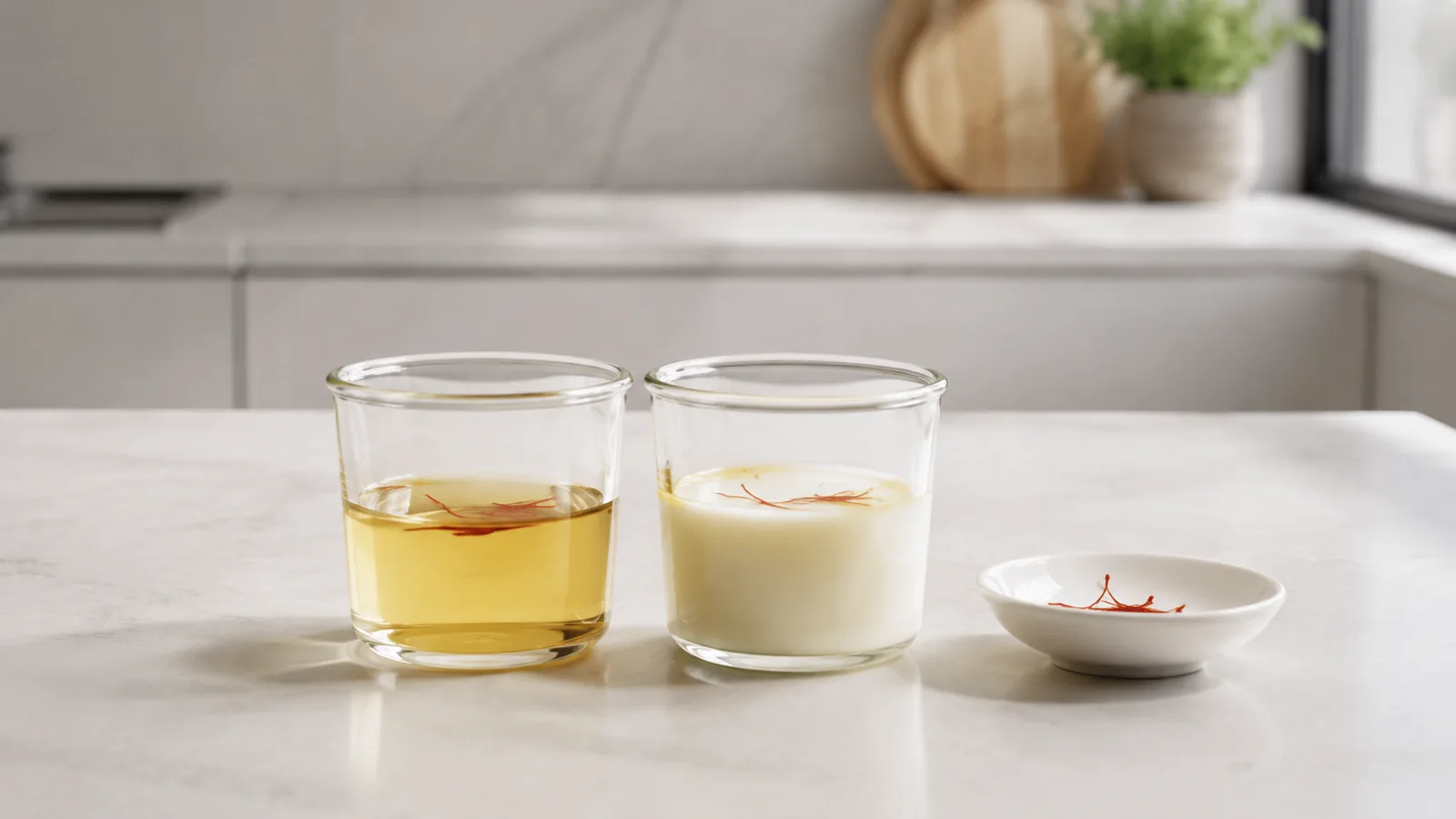
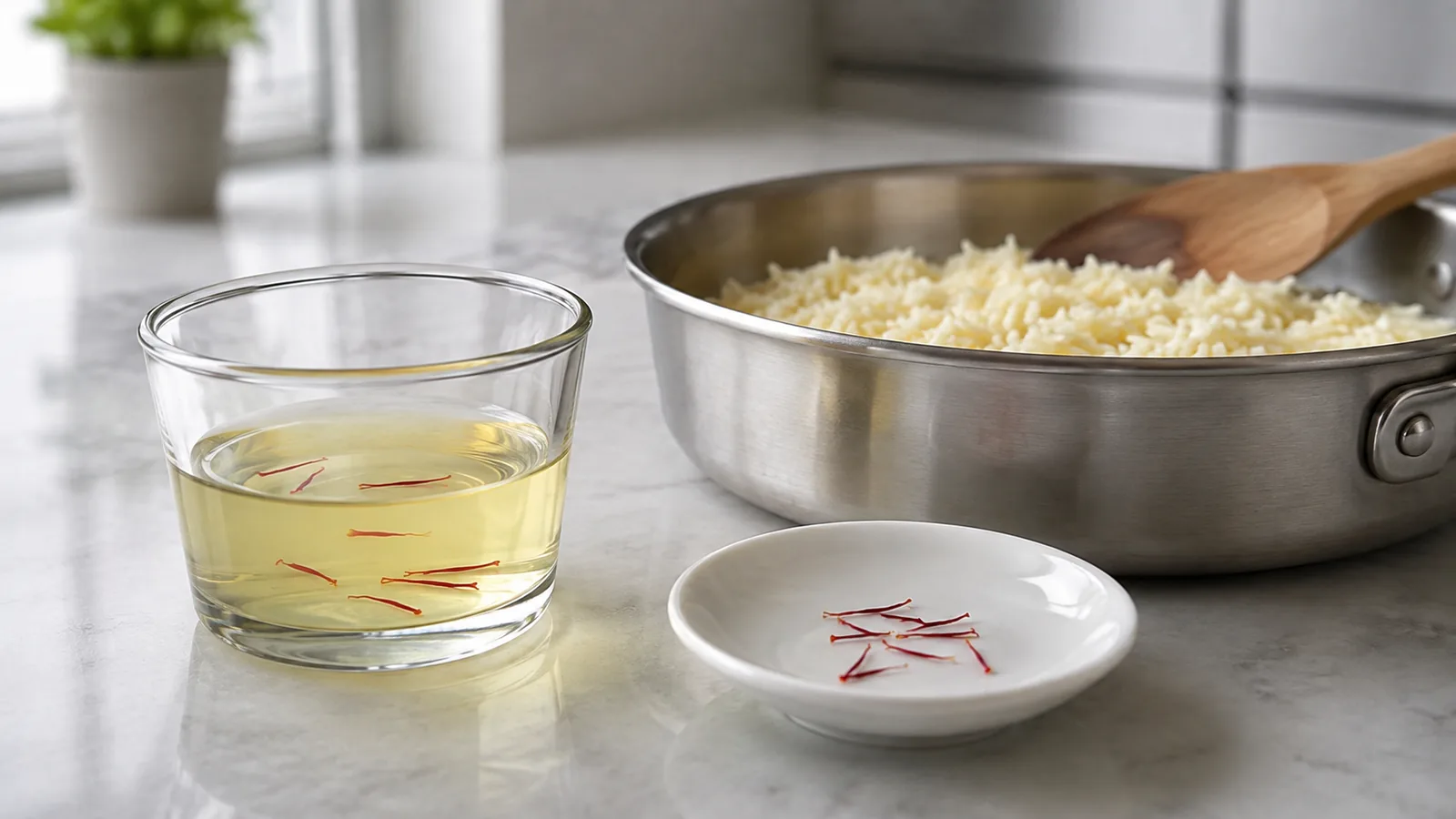
Lightly crush the saffron threads, cover them with 1 tablespoon hot water and leave for 10 minutes. Our guide to brewing saffron with hot water or ice explains the two methods in detail. Let this small infusion cool before mixing it into raw ground chicken.
How to make chicken koobideh in a pan
Step 1: Mix and knead
Put the ground chicken, squeezed onion, optional bell pepper, cooled saffron infusion, salt, pepper and optional garlic in a bowl. Knead with clean hands for 3 to 4 minutes, until the mixture looks even and slightly tacky. This helps the strips hold together without breadcrumbs or egg.
Cover and refrigerate for 30 to 60 minutes. Chilling firms the fat and makes shaping easier. Do not leave ground chicken at room temperature while preparing the rest of the meal.
Step 2: Shape the kebab strips
Brush a 28 cm (11-inch) non-stick or well-seasoned skillet with the oil. Place the chilled mixture in the cold pan and press it into an even layer about 1.5 cm (⅝ inch) thick. Smooth the top with a damp spatula.
Use the edge of the spatula to divide the layer into long strips about 3 cm (1¼ inches) wide. Press the channels down to the pan so the pieces separate cleanly as they cook. If the mixture sticks badly to the spatula, rinse and dampen it again rather than adding more oil to the meat.
Step 3: Cook the first side
Set the pan over medium heat. Cook for 6 to 8 minutes, until the underside is browned and the top has changed from glossy pink to opaque. Ground chicken releases some liquid at first; let that moisture evaporate before trying to turn the strips.
Loosen each strip carefully with a thin spatula. If the base still clings, give it another minute. Turning too early is more likely to break the kebabs than a slightly longer first-side cook.
Step 4: Turn and finish
Turn the strips one by one and cook the second side for about 5 to 7 minutes. Timing depends on thickness and pan material, so check the centre of the thickest piece with an instant-read thermometer.
FoodSafety.gov’s safe minimum temperature chart lists all poultry, including ground chicken, at 165°F (74°C). Saffron and pepper change the surface colour, so visual appearance alone is not a dependable safety test.
Step 5: Add the saffron glaze
For a glossy finish, mix the melted butter or olive oil with a teaspoon of freshly bloomed saffron that has never touched raw chicken. Brush it lightly over the cooked strips during the final minute. A thin coat is enough; too much butter makes a delicate chicken kebab greasy.
Can you make the mixture ahead?
Yes. Mix and refrigerate it in a covered container, then cook within a day. For a longer delay, freeze the raw mixture promptly in a labelled freezer-safe container or bag. Flattening it into a thin layer helps it freeze and thaw evenly.
Thaw frozen chicken koobideh in the refrigerator before cooking. The old shortcut of cutting a frozen slab into strips and placing them directly in a pan can brown the outside while the centre remains cold. Never peel ordinary plastic into or over a hot pan.
How to keep chicken koobideh tender
- Include chicken thigh rather than using only very lean breast.
- Squeeze the grated onion thoroughly so the mixture browns instead of steaming.
- Keep the chicken cold before shaping.
- Make the layer an even thickness so every strip finishes together.
- Cook over medium heat; very high heat can scorch the surface before the centre is safe.
- Stop cooking when the thickest piece reaches 74°C (165°F).
What to serve with Persian chicken koobideh
Serve the pan kebabs with grilled or pan-seared tomatoes, roasted bell peppers, fresh herbs and flatbread. Steamed basmati also catches the juices well; the measured method in our simple saffron rice recipe makes a natural side.
A cucumber-and-yogurt salad adds a cool contrast. Put lemon wedges on the table rather than mixing a large quantity of lemon juice into the meat, where the extra liquid can loosen the texture.
Common problems
The mixture is too wet
The onion probably retained too much juice, or the bell pepper pieces were large. Squeeze the onion firmly and dice the pepper as finely as possible. If the mixture is already made, chill it longer and use the press-in-pan method rather than trying to force it onto skewers.
The kebab breaks when turned
It may not have browned enough on the first side. Wait until the released moisture has evaporated and use a wide, thin spatula. Smaller sections are easier to turn than one full-pan piece.
The chicken tastes dry
Use some thigh meat and check temperature early. Butter added after overcooking can coat the surface, but it cannot restore moisture inside the chicken.
The saffron disappears
Bloom the spice in a small amount of water and keep strongly flavoured additions modest. Large quantities of raw garlic, pepper or lemon can overwhelm rather than support saffron’s aroma.
Storing and reheating leftovers
Refrigerate cooked chicken koobideh promptly in a covered container and use it within 3 to 4 days. Reheat the strips gently in a covered pan with a spoonful of water, then uncover briefly to refresh the surface. Bring the centre back to 74°C (165°F).