Saffron may help some symptoms of premenstrual syndrome (PMS) and primary dysmenorrhea, but it has not been shown to treat “menstrual disorders” as a whole. Several small randomized trials and a recent meta-analysis reported improvements in premenstrual symptoms or period pain with particular saffron preparations. The evidence is still limited, and it does not show that saffron regulates irregular periods, treats endometriosis or polycystic ovary syndrome, or corrects abnormal bleeding.
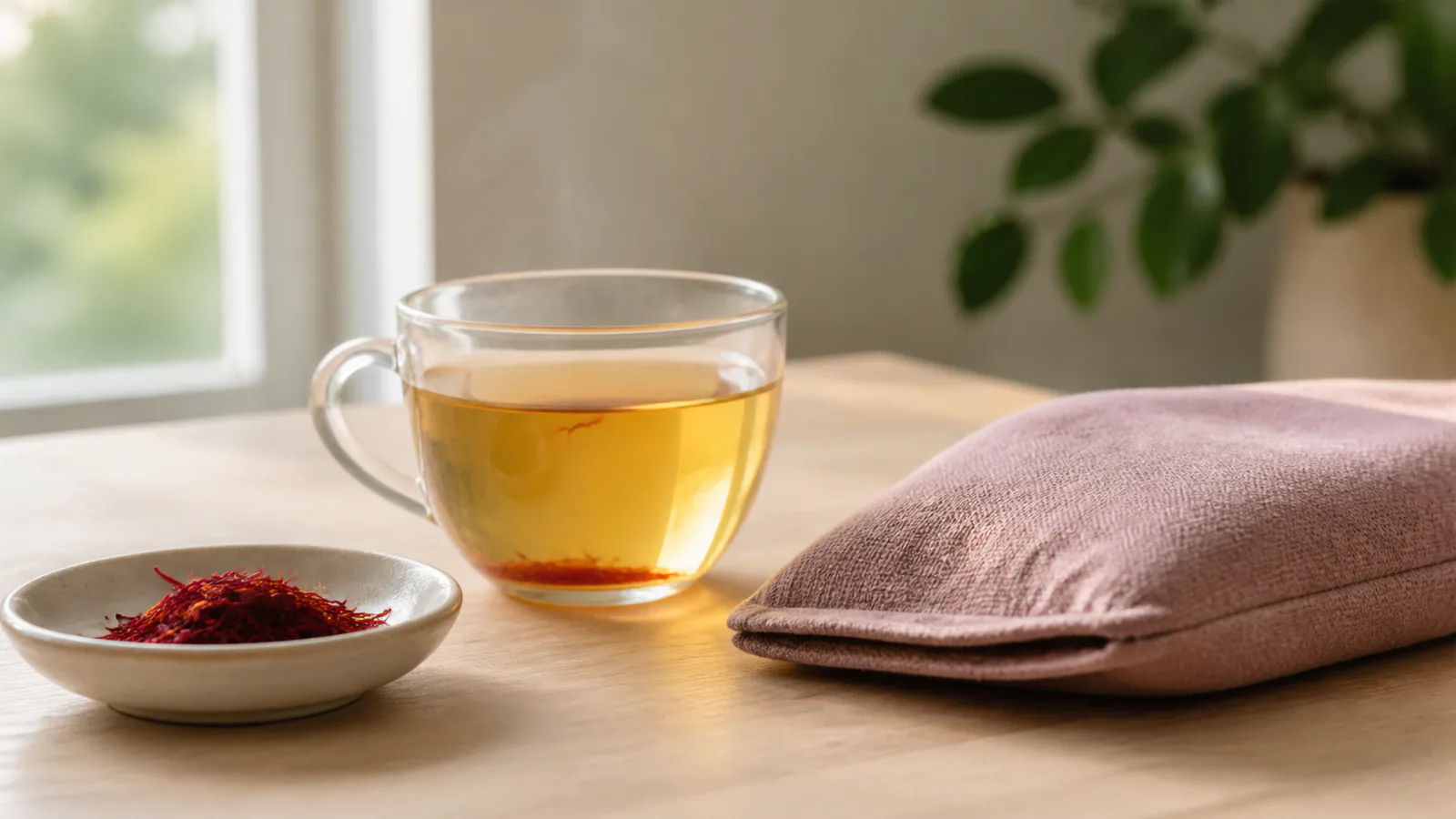
That narrower answer is more useful than attributing every menstrual problem to serotonin. Period symptoms have different causes, and the right response depends on what is actually happening.
Which menstrual symptoms have been studied?
Premenstrual syndrome
PMS is a recurring pattern of physical or emotional symptoms in the days before a period. It may involve mood changes, irritability, breast tenderness, bloating, headache, food cravings, fatigue or sleep disturbance. Symptoms should follow a cycle-linked pattern rather than being present in the same way all month.
A 2008 double-blind placebo-controlled trial studied women aged 20–45 who had regular cycles and at least six months of PMS symptoms. Participants received either a measured saffron capsule or placebo for two cycles. Symptom-report and depression-rating scores improved more in the saffron group. It was an encouraging result, but it was one small, short trial.
Premenstrual dysphoric disorder
Premenstrual dysphoric disorder (PMDD) is a severe form of premenstrual illness that interferes with daily life. A randomized trial in 120 participants with PMDD compared saffron, fluoxetine and placebo during the luteal phase of two menstrual cycles. Saffron performed better than placebo on one daily symptom measure, while another depression scale did not show a significant difference among groups.
That mixed pattern matters. It does not establish saffron as a replacement for fluoxetine or other evidence-based PMDD care. People with severe depression, hopelessness or thoughts of self-harm need prompt professional support.
Primary dysmenorrhea
Primary dysmenorrhea means painful periods without another identified pelvic condition. A 2026 systematic review and meta-analysis combined randomized studies of saffron for PMS and dysmenorrhea. It reported moderate average improvement in PMS symptoms and a smaller, borderline estimate for period pain. The limited number and size of trials mean the result needs confirmation.
See our practical guide to saffron and menstrual pain for a focused look at cramps, home care and warning signs.
What saffron has not been shown to treat
“Menstrual disorder” can refer to many different problems. Current clinical evidence does not justify relying on saffron to treat:
- very heavy or prolonged bleeding;
- periods that stop unexpectedly or remain irregular;
- endometriosis, adenomyosis, fibroids or pelvic infection;
- polycystic ovary syndrome;
- infertility;
- bleeding during pregnancy or after menopause.
A review may discuss laboratory or animal findings about hormones and reproductive tissues, but that is not evidence that a saffron drink corrects those conditions in people.
Does saffron work by increasing serotonin?
Researchers have proposed effects on serotonin signalling as one possible explanation for saffron’s mood-related findings. Saffron also contains crocins, crocetin, picrocrocin and safranal, which are studied for several biological activities. The mechanism in people with PMS or PMDD has not been settled.
It is therefore too strong to say that saffron raises serotonin in the brain and, as a result, treats menstrual depression. Clinical trials measure symptoms; they do not directly prove that simple biochemical chain. Hormonal sensitivity, stress, sleep, pain and co-existing depression or anxiety can all shape premenstrual symptoms.
How to tell PMS from a condition that needs assessment
A daily symptom record kept for at least two cycles can show whether symptoms reliably appear before menstruation and improve soon after it begins. The American College of Obstetricians and Gynecologists notes that depression, anxiety and several other conditions can worsen before a period and resemble PMS.
Arrange medical care if pain or bleeding disrupts normal activity, symptoms are new or worsening, periods become markedly irregular, or mood symptoms are severe. Urgent evaluation is needed for fainting, severe one-sided pelvic pain, soaking through pads or tampons rapidly, possible pregnancy with pain or bleeding, or thoughts of self-harm.
Safety and product differences
The preparations used in clinical trials were measured capsules or extracts, not an unspecified cup of saffron tea. Culinary threads and concentrated supplements can differ greatly in exposure. A research dose is a description of a trial, not a personal recommendation.
Large amounts of saffron have historically been associated with uterine stimulation and bleeding. Pregnancy, a bleeding disorder, low blood pressure and medicines that affect clotting or mood are reasons to speak with a clinician or pharmacist before using a concentrated product. Stop and seek advice if a supplement causes dizziness, vomiting, unusual bleeding, an allergic reaction or a marked mood change.
A practical evidence-based approach
- Identify the symptom: mood change, cramping, heavy bleeding and irregular cycles are not the same problem.
- Track timing and severity over at least two cycles.
- Use proven self-care or treatment appropriate to the diagnosis.
- If considering saffron, discuss the exact standardized product with a qualified professional, especially when taking medicine.
- Reassess rather than continuing a supplement if symptoms persist or worsen.
Saffron research on PMS and period pain is worth following. For now, it is best understood as preliminary evidence for specific symptoms, not as a general treatment for menstrual disorders.