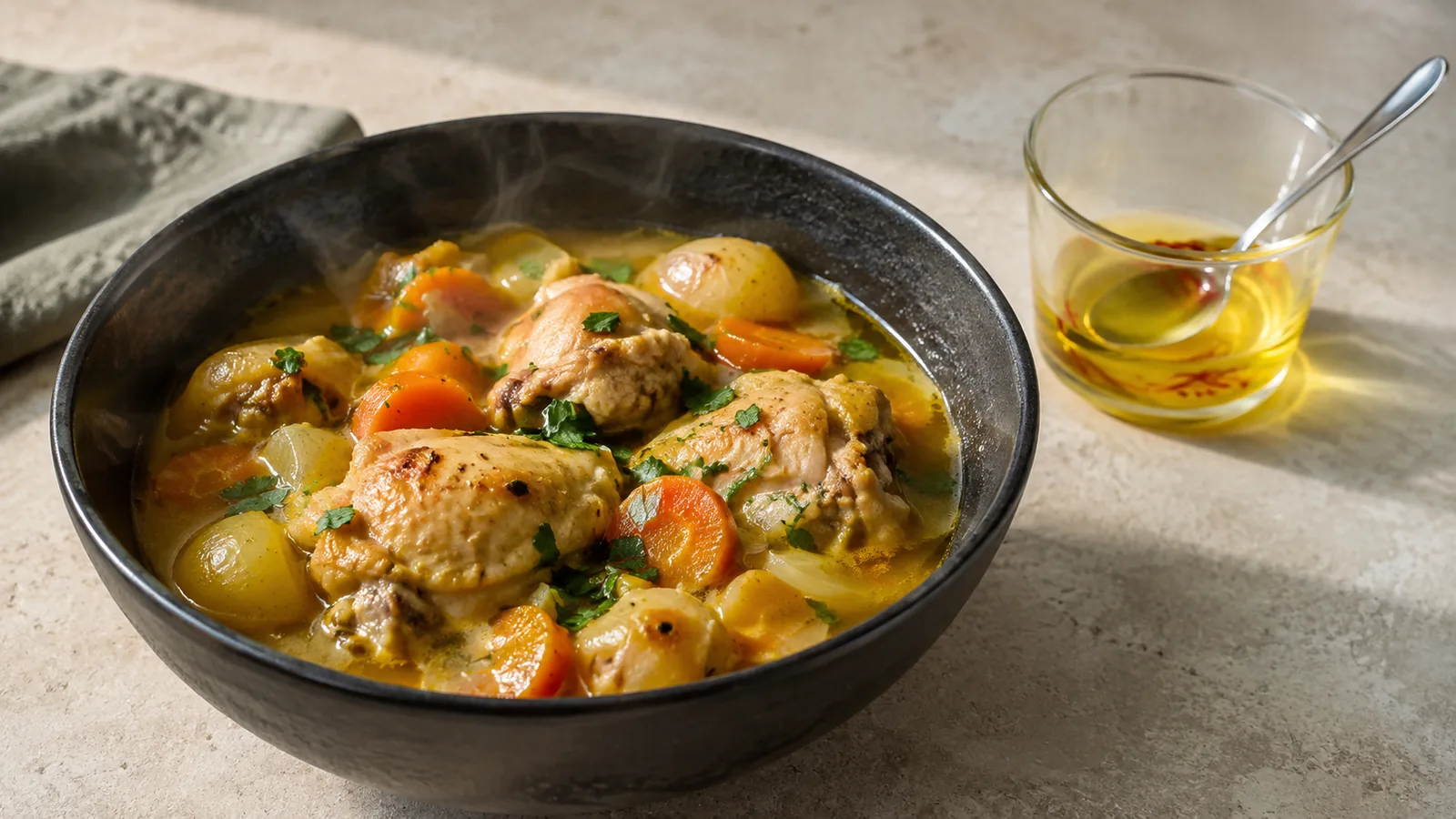
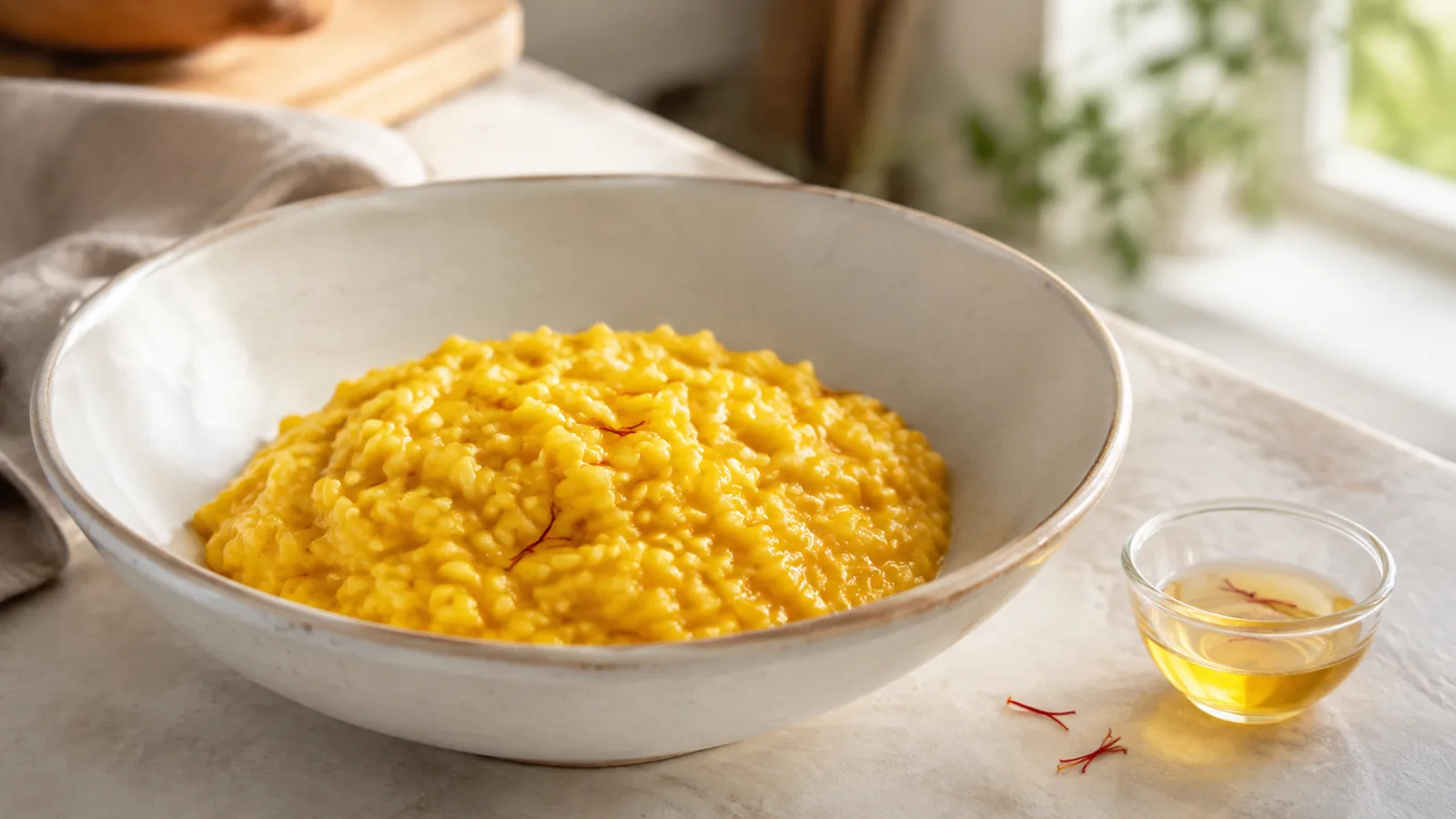
This Rice halvah Saffron Recipe makes a soft Persian halva with rice flour, rose water, cardamom and a clear saffron colour. It can be spooned into a serving dish while warm or cooked a little longer and set in small moulds.
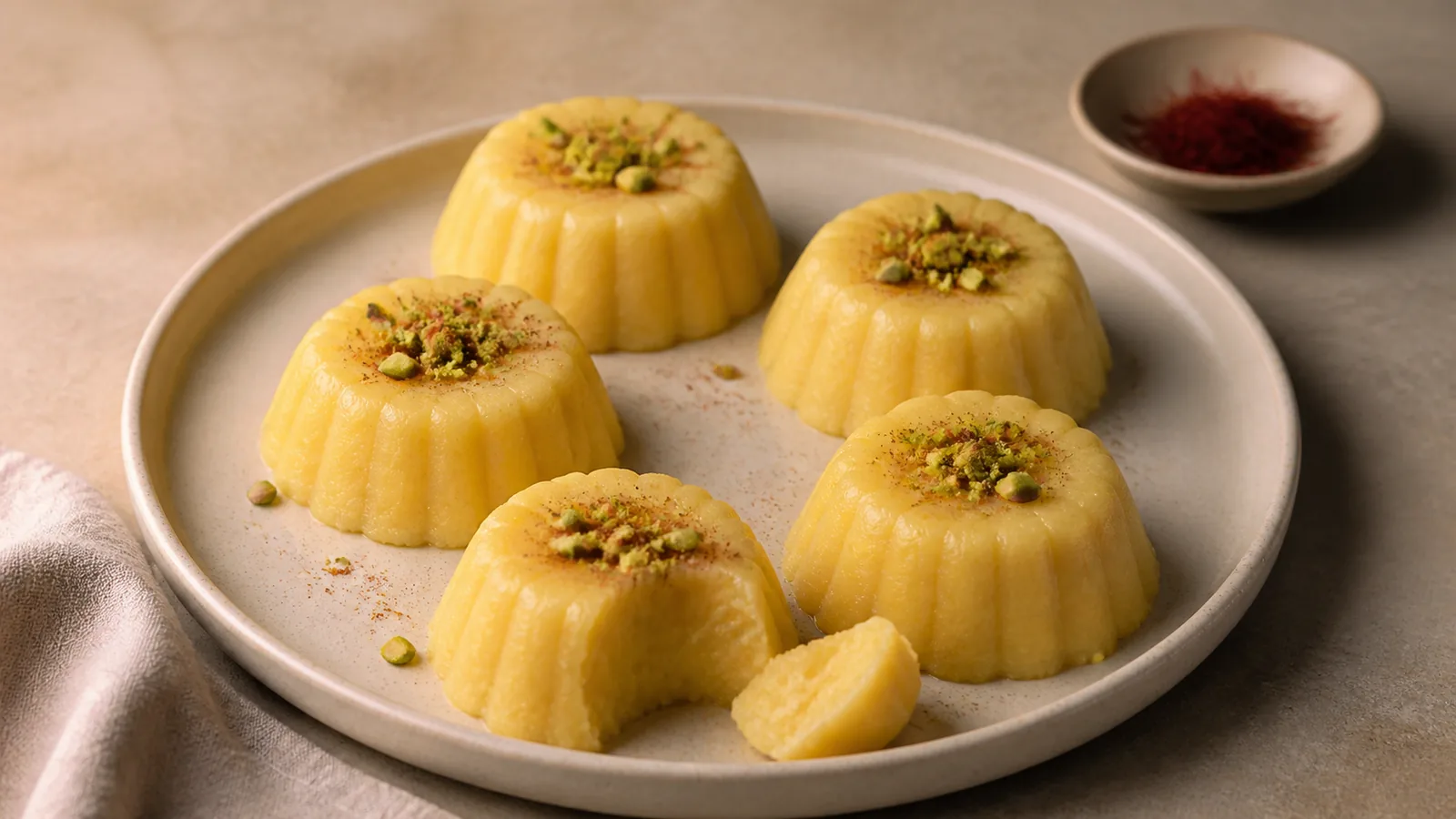
Unlike wheat-flour halva, this Persian halva with rice flour should stay pale while the flour is toasted. Its golden colour comes from saffron, not from browning the flour.
Ingredients
- 65 g (1/2 cup) rice flour
- 60 ml (1/4 cup) neutral oil
- 150 g (3/4 cup) granulated sugar
- 720 ml (3 cups) water
- 1 tablespoon cornstarch, or 2 tablespoons for a firmer moulded halva
- 5 green cardamom pods
- 120 ml (1/2 cup) rose water
- 60 ml (1/4 cup) saffron infusion
- Ground cinnamon and slivered pistachios, for decoration
The recipe is deliberately soft. Rice flour thickens gradually, and the halva becomes firmer as it cools. Decide whether you want a spoonable dessert or neat moulded portions before choosing the amount of cornstarch.
Prepare the cardamom and moulds
Crack the cardamom pods and crush the seeds finely. Stir them into the rose water and leave for 10 minutes. Strain if you prefer a perfectly smooth halva.
For moulded portions, brush small silicone or metal moulds with the thinnest film of oil and set them on a tray. A 20 cm saucepan gives enough surface area for even thickening.
Toast the rice flour gently
Put the rice flour in a dry saucepan over low heat. Stir continuously for 4 to 6 minutes, just until the raw flour smell disappears. The flour should remain cream-coloured.
Add the neutral oil and stir until every grain is coated and the mixture looks like damp sand. Cook for 1 minute, then take the pan off the heat. If the flour turns brown, the finished halva will not have its intended clear saffron-yellow colour.
Add water without making lumps
Let the pan cool for 2 minutes. Whisk in 1 cup of the water a little at a time. Once the mixture is smooth, add the remaining 2 cups.
Return the pan to medium-low heat and whisk until the rice flour is fully dispersed. If stubborn lumps remain, pass the liquid through a fine sieve into a clean saucepan before continuing.
Sweeten and flavour the halva
Add the sugar and stir until it dissolves. Continue cooking over medium-low heat, stirring often, until the mixture begins to coat the spoon.
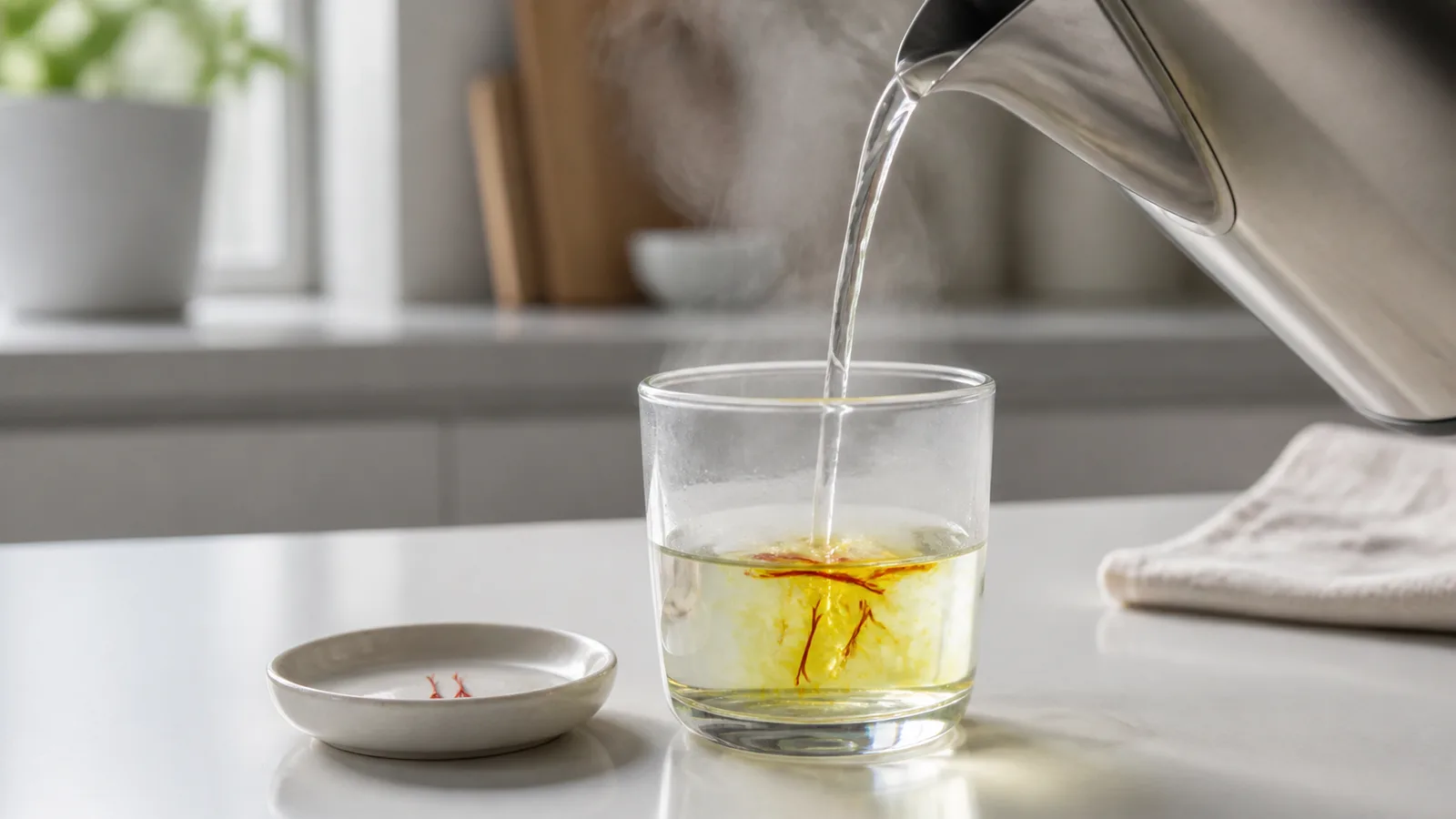
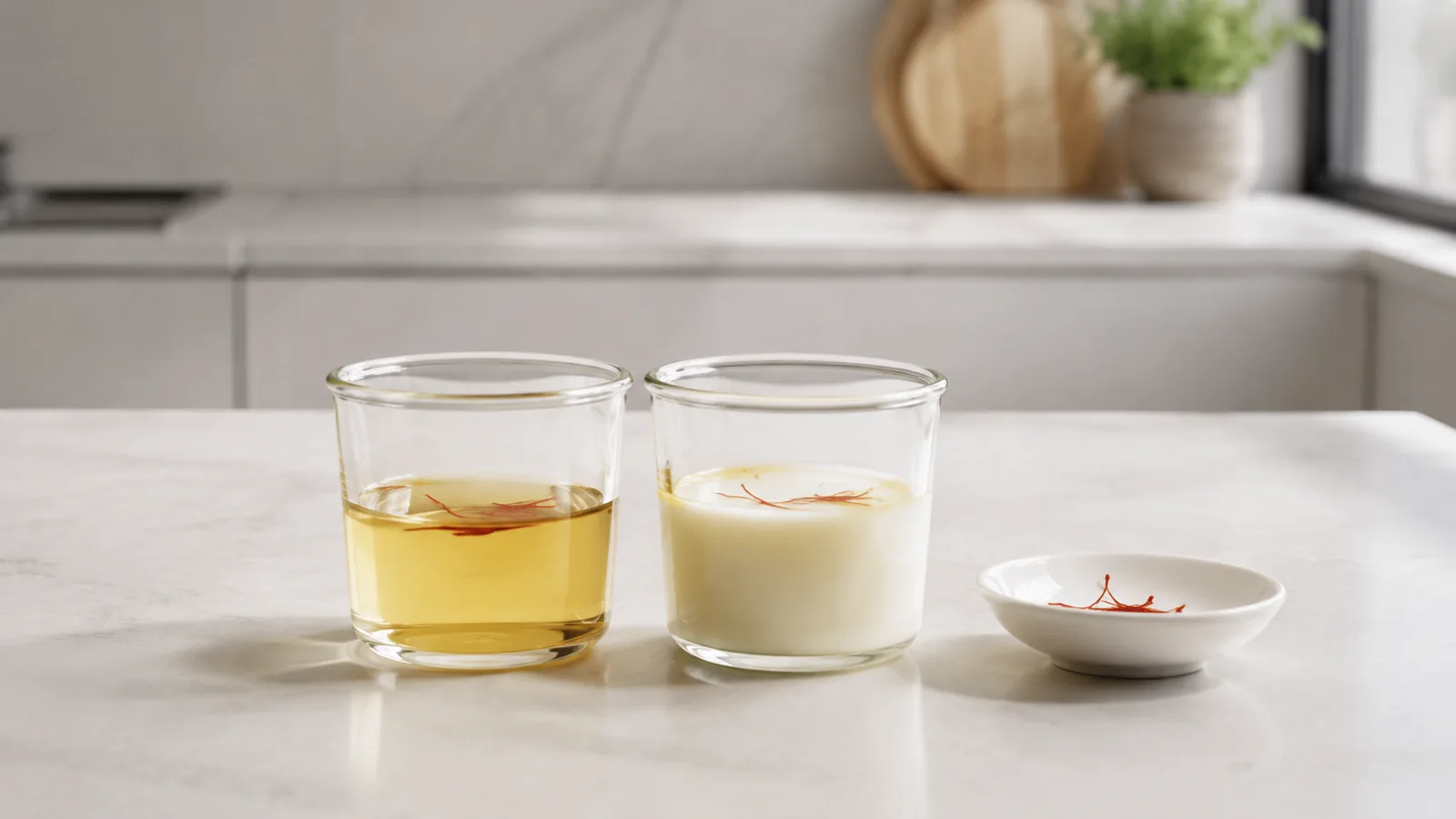
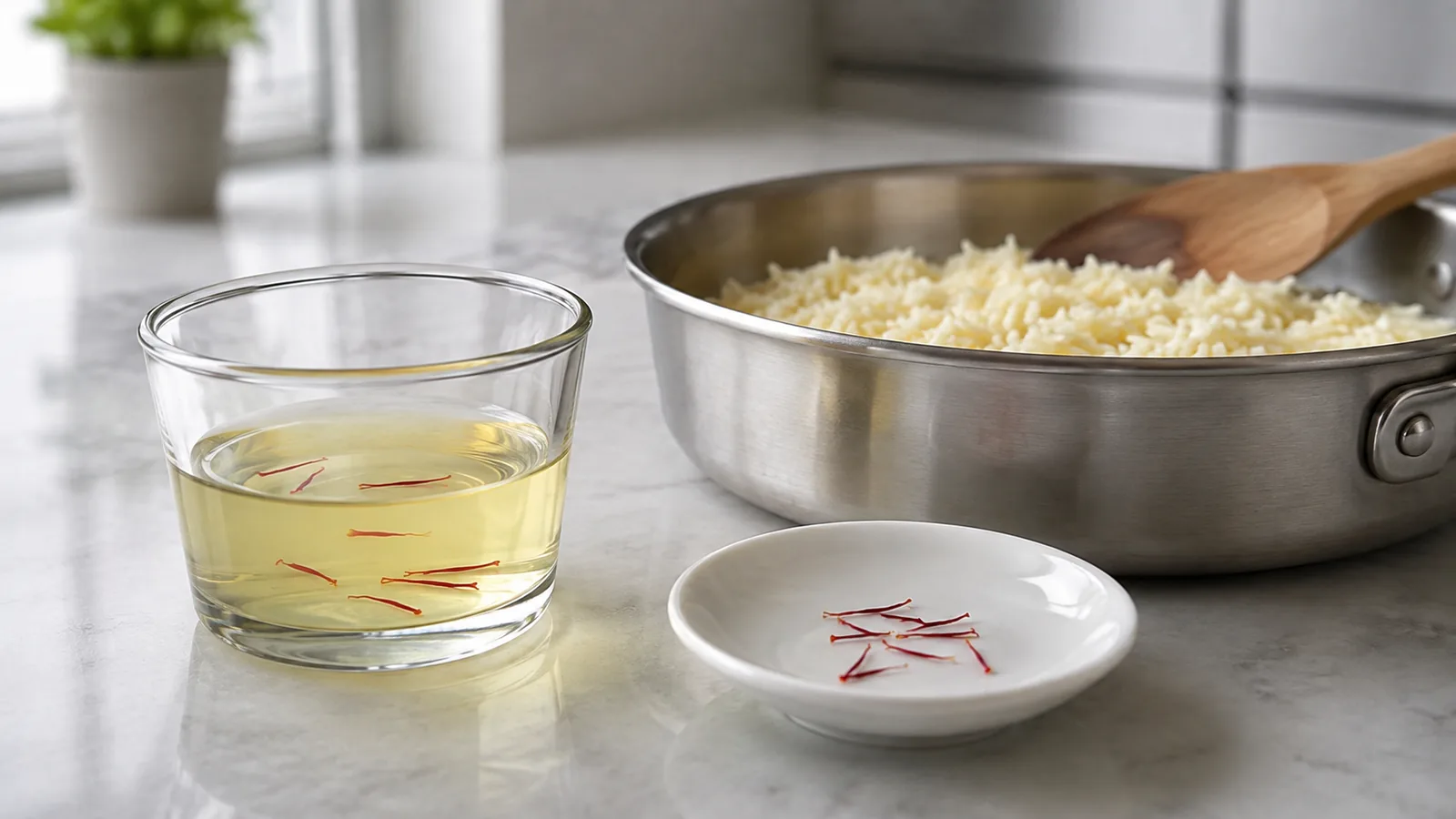
Stir in the saffron infusion and cardamom rose water. A concentrated infusion provides colour without unnecessary liquid; our saffron-brewing guide gives the method.
Keep the heat gentle and scrape the base and corners of the pan. The mixture can bubble and spit as it thickens, so use a long-handled spoon and keep your face and hands away from the steam.
Set the final texture
Mix the cornstarch with 1 tablespoon cold water until smooth. Pour it into the simmering halva while stirring. Cook for at least 5 minutes so the starch loses its raw taste.
For a soft serving-dish halva, stop when a spoon drawn across the bottom leaves a path that closes slowly. For moulds, use 2 tablespoons cornstarch and continue until the mixture falls from the spoon in a thick ribbon and holds the line for several seconds.
Mould, cool and turn out
Spoon the hot halva into the prepared moulds and tap the tray gently to release air pockets. Smooth the tops with the back of an oiled spoon.
Cool at room temperature for 30 minutes, then refrigerate for 2 to 3 hours. Run a thin, damp knife around metal moulds before turning them over. Silicone moulds can be peeled back carefully.
Decorate and serve
Dust the rice halva lightly with cinnamon and add a few slivered pistachios. The decoration should not hide the saffron colour. Serve cool or let it stand at room temperature for 15 minutes for a softer texture.
For variation, divide the cooked mixture before moulding and flavour a small portion with cocoa or coffee. Keep at least one portion plain so the rose, cardamom and saffron remain easy to taste.
Solving common texture problems
- Lumpy halva: whisk in the first cup of water gradually and strain before adding sugar if needed.
- Brown colour: the rice flour was toasted over too much heat.
- Halva will not release: chill it longer, then loosen only the edge rather than digging into the centre.
- Too firm: stir in a spoonful of hot water while the halva is still in the pan.
- Too soft: return it to low heat and cook, stirring, for a few more minutes.
This recipe contains pistachios if they are used for decoration. Refrigerate leftovers in a covered container and eat within 3 days.