This Iranian baklava recipe layers crisp filo with pistachios, almonds or walnuts, then finishes the pastry with a saffron, rosewater and cardamom syrup. That floral syrup is what gives Persian baklava its own character: fragrant and nutty, with sweetness balanced by lemon rather than a heavy honey coating.
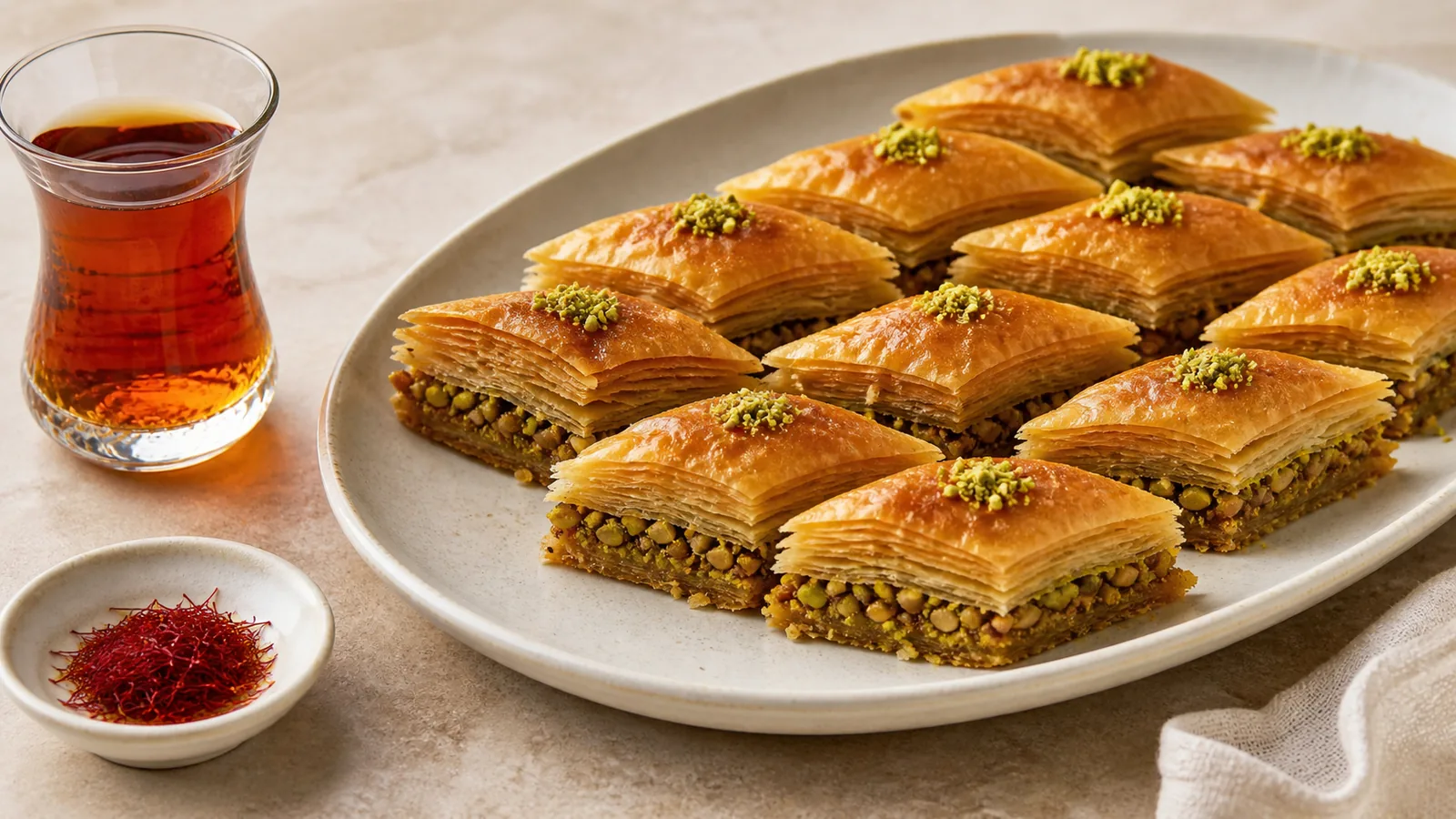
Ingredients for saffron baklava
For the pastry and filling
- 1 package filo or baklava yufka, thawed according to the packet
- 200 g pistachios, almonds, walnuts or a mixture, finely chopped
- 4 tablespoons icing sugar
- 1 to 2 teaspoons ground cardamom
- 1 teaspoon ground cinnamon, optional
- 1 tablespoon rosewater
- 150 to 180 g unsalted butter, melted
For the saffron-rosewater syrup
- 1 cup granulated sugar
- 1 cup water
- ¼ cup rosewater
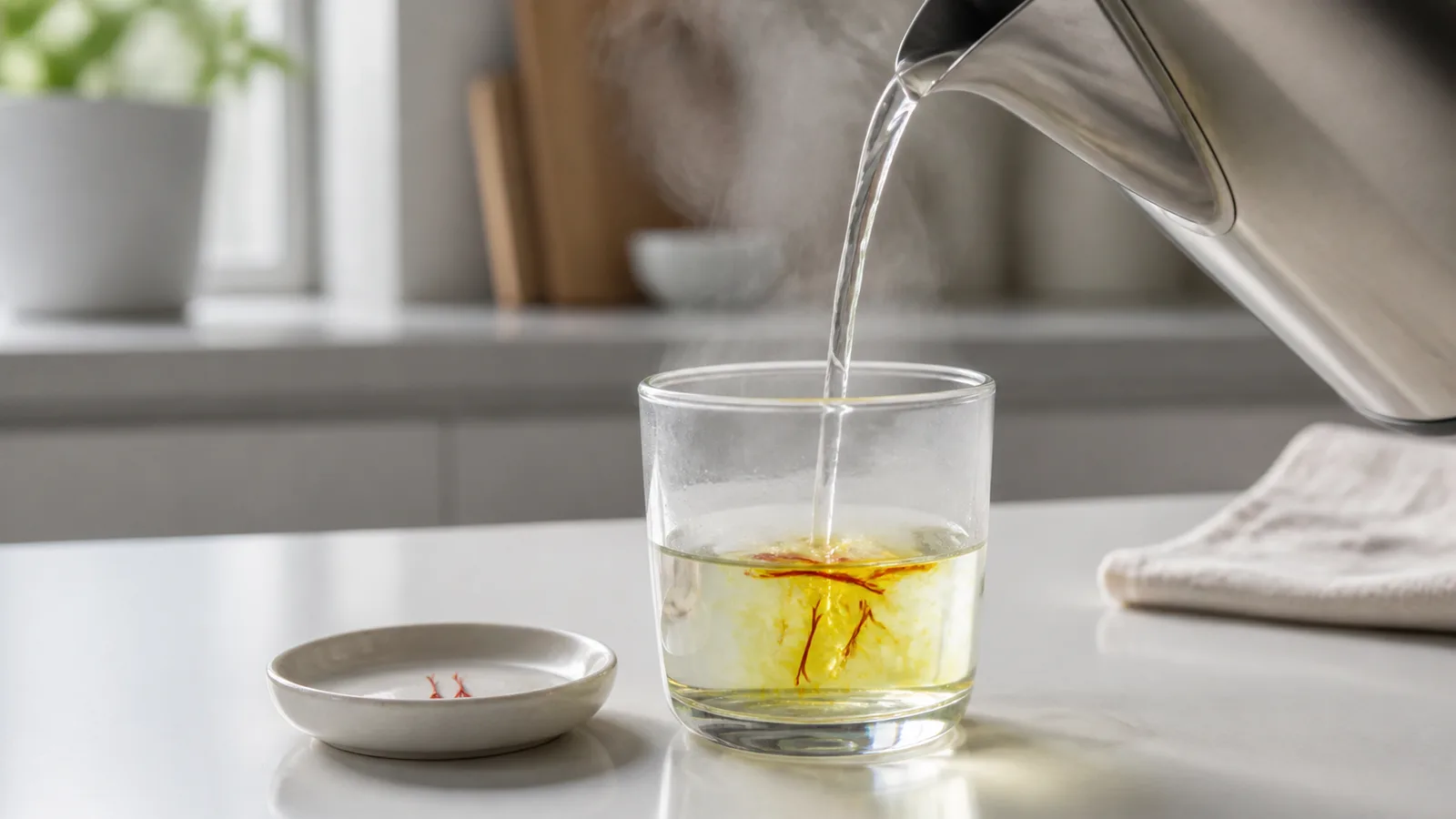
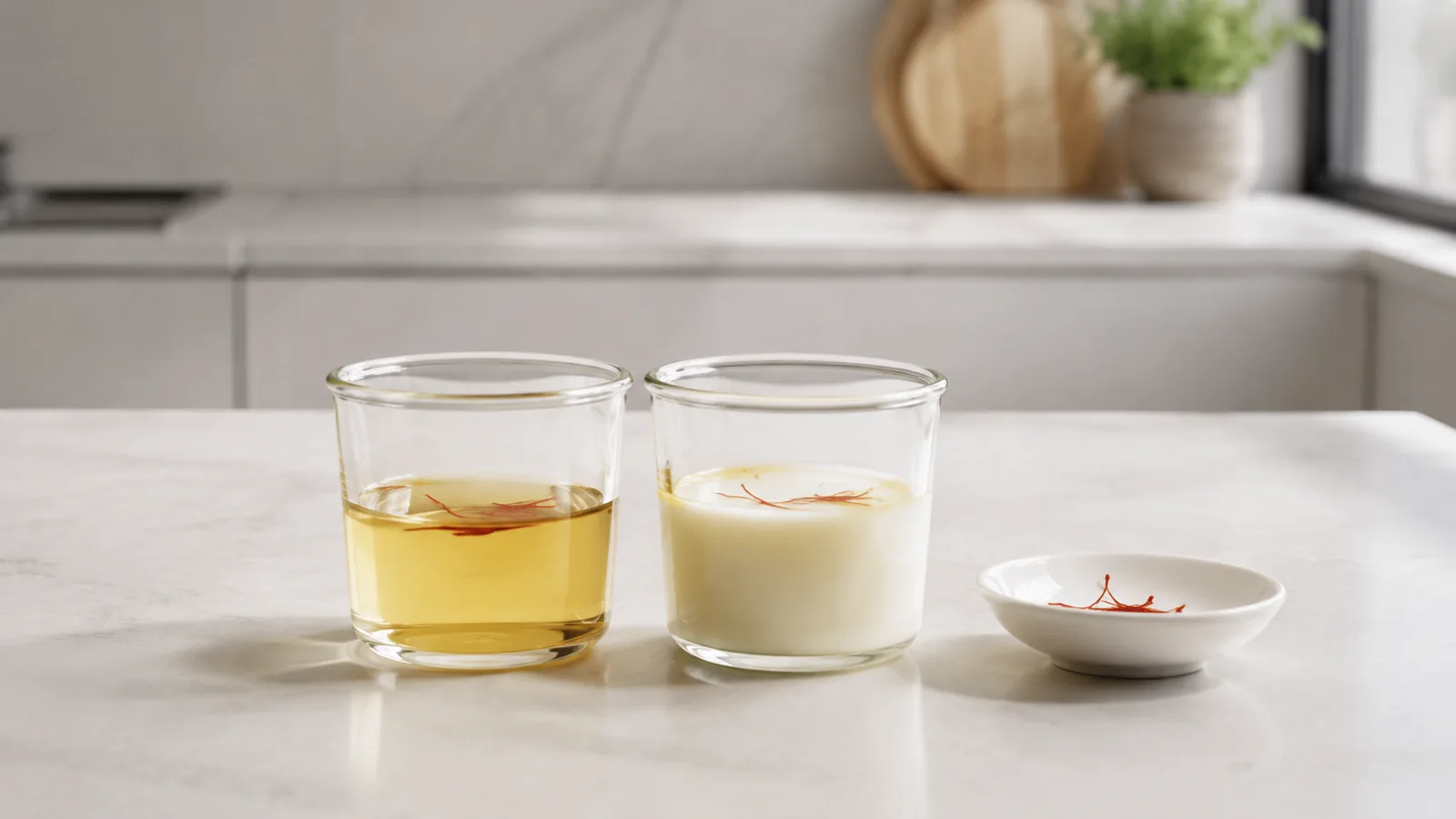
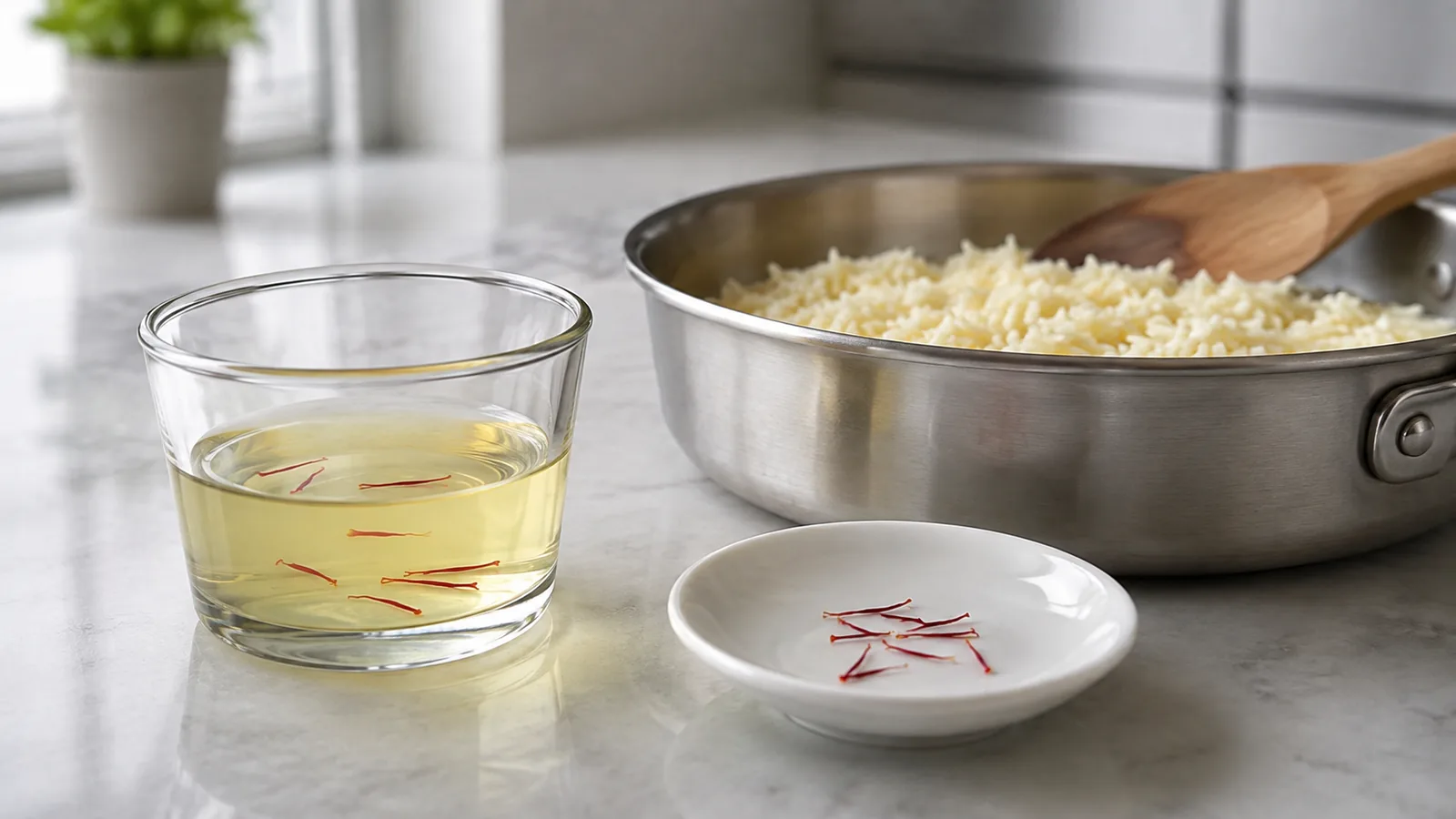
- 2 tablespoons concentrated brewed saffron
- 1 tablespoon fresh lemon juice
Before you start
Choose a baking dish that is slightly smaller than the sheets or trim the filo to fit. Keep unused sheets under a barely damp tea towel while you work; exposed filo dries and cracks in minutes. The towel should not touch wet pastry, because too much moisture makes the layers stick together.
Heat the oven to 180°C (350°F). Brush the base and sides of the dish with melted butter. Pulse the nuts until finely chopped but stop before they become nut butter, then combine them with the icing sugar, cardamom and optional cinnamon. Stir the tablespoon of rosewater through the filling lightly.
How to assemble traditional sweet baklava
Build the bottom layers
Lay one filo sheet in the dish and brush it lightly with butter. Repeat until you have 7 to 9 buttered sheets. There should be a fine film of butter between the layers, not puddles. A sound base matters: it supports the nut filling and keeps the first pieces from collapsing when they are lifted.
Add the nuts and top sheets
Spread the nut mixture evenly, pressing only enough to level it. Cover with another 7 to 9 filo sheets, brushing each one with butter as it goes in. Finish the top sheet with a thin, even coat.
With a sharp knife, cut diamonds or squares all the way through to the base before baking. Shallow cuts seal up as the layers expand and make the baked pastry difficult to divide cleanly.
Bake until crisp
Bake on the centre rack for 30 to 40 minutes, until the top is evenly golden and the layers at the edges look crisp. If it colours too quickly, lower the temperature slightly rather than using the grill. The nuts should smell toasted, but the top should not become dark brown.
Make the saffron syrup
While the baklava bakes, combine the sugar and water in a small saucepan. Warm gently, stirring only until the sugar dissolves, then simmer for 12 to 15 minutes. Add the lemon juice. During the final minute, stir in the rosewater and brewed saffron, then remove the pan from the heat.
Let the syrup cool while the pastry finishes. When the baklava comes out of the oven, deepen the cuts if necessary and slowly spoon the cool syrup over the hot pastry, concentrating along the cut lines. You should hear a light crackle. Use enough to flavour the layers without leaving them submerged.
Leave the uncovered tray at room temperature for at least 3 hours, preferably longer, so the syrup settles and the top stays crisp. Cut through the original lines once more before lifting each piece. Finish with chopped pistachios if you like.
What makes this Persian baklava different?
Baklava belongs to many neighbouring food traditions, and there is no single recipe shared by every region. In Iran, baklava—often written baghlava or searched as baklava Iran—is commonly scented with cardamom, rosewater and saffron. Yazd and Qazvin have notable local styles, including versions made with a slightly thicker homemade dough.
This filo version is an accessible home method rather than a claim to represent every Iranian variation. The nut blend can change, but the saffron-rosewater aroma and restrained cardamom keep the flavour recognisably Persian.
Homemade baklava dough option
If you prefer to make the dough, beat 1 egg yolk with ¼ cup milk, 2 tablespoons thick yogurt and 1 tablespoon melted butter. Sift together 1¼ cups plain flour and ½ teaspoon baking powder, then add the dry ingredients gradually until a soft, non-sticky dough forms.
Cover and rest for 1 hour. Divide it into 6 equal balls, cover again and rest for 10 minutes. Roll each one paper-thin on a lightly floured surface. Homemade sheets are less forgiving than filo, so work slowly and keep the unused pieces covered. Layer, fill and bake as above, watching the colour because the exact baking time will depend on how thinly the sheets were rolled.
How to keep baklava crisp
Use hot pastry with cool syrup, or cool pastry with hot syrup—never both hot. Do not cover the tray with foil while it is steaming, because trapped condensation softens the top. Once completely cool, keep the pieces in a tightly closed container at cool room temperature with parchment between layers.
If the bottom is soggy, the pastry may have been underbaked or the syrup too thin. If the top separates when cut, the pre-bake cuts were not deep enough. For the cleanest sweet baklava, use a sharp knife before baking and follow the same lines after the syrup has settled.