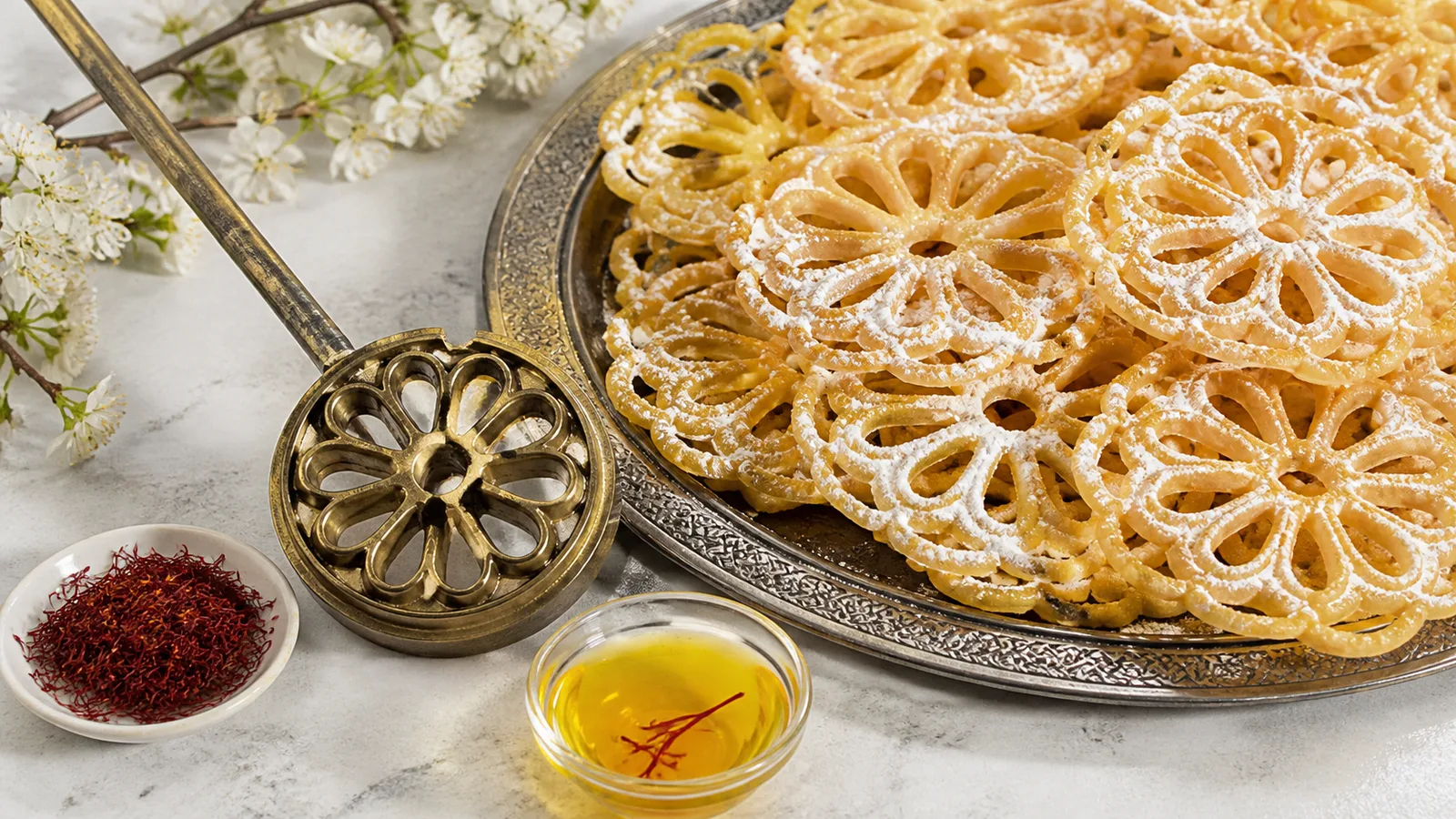
This recipe for sweets and window bread with Iranian saffron makes the delicate fried pastries known in Persian as nan panjereh. A patterned metal iron carries a thin saffron batter into hot oil, where it sets into a crisp, lacy shell. Once cool, the sweets receive a light dusting of powdered sugar.
What is Iranian window bread?
Window sweets are also called window bread, window lady sweets or rosette cookies in English. Despite the search phrase “Iranian sweet bread,” this is not a yeast bread or a loaf. It is a thin fried confection shaped by a rosette iron. The open pattern resembles a decorative window, which explains the translated name.
Machine translations sometimes reverse the name to “bread window”; both phrases refer here to nan panjereh. In lists of Iranian sweets names, it may also appear as khatoon panjereh. The shape and rosette-iron method are more reliable identifiers than the English word order.
Families often prepare nan panjereh for Nowruz and other celebrations. Rosette irons come in flowers, stars and geometric designs. Their long handles keep the cook’s hand away from the oil, but the process still requires care: the iron, batter and oil sit close together, and splashes can burn.
Ingredients
- 65 g cornstarch, about ½ cup
- 60 ml rosewater
- 60 ml cool water
- 30 g rice flour, about ¼ cup
- 30 g plain or all-purpose flour, about ¼ cup
- 2 large eggs, at room temperature
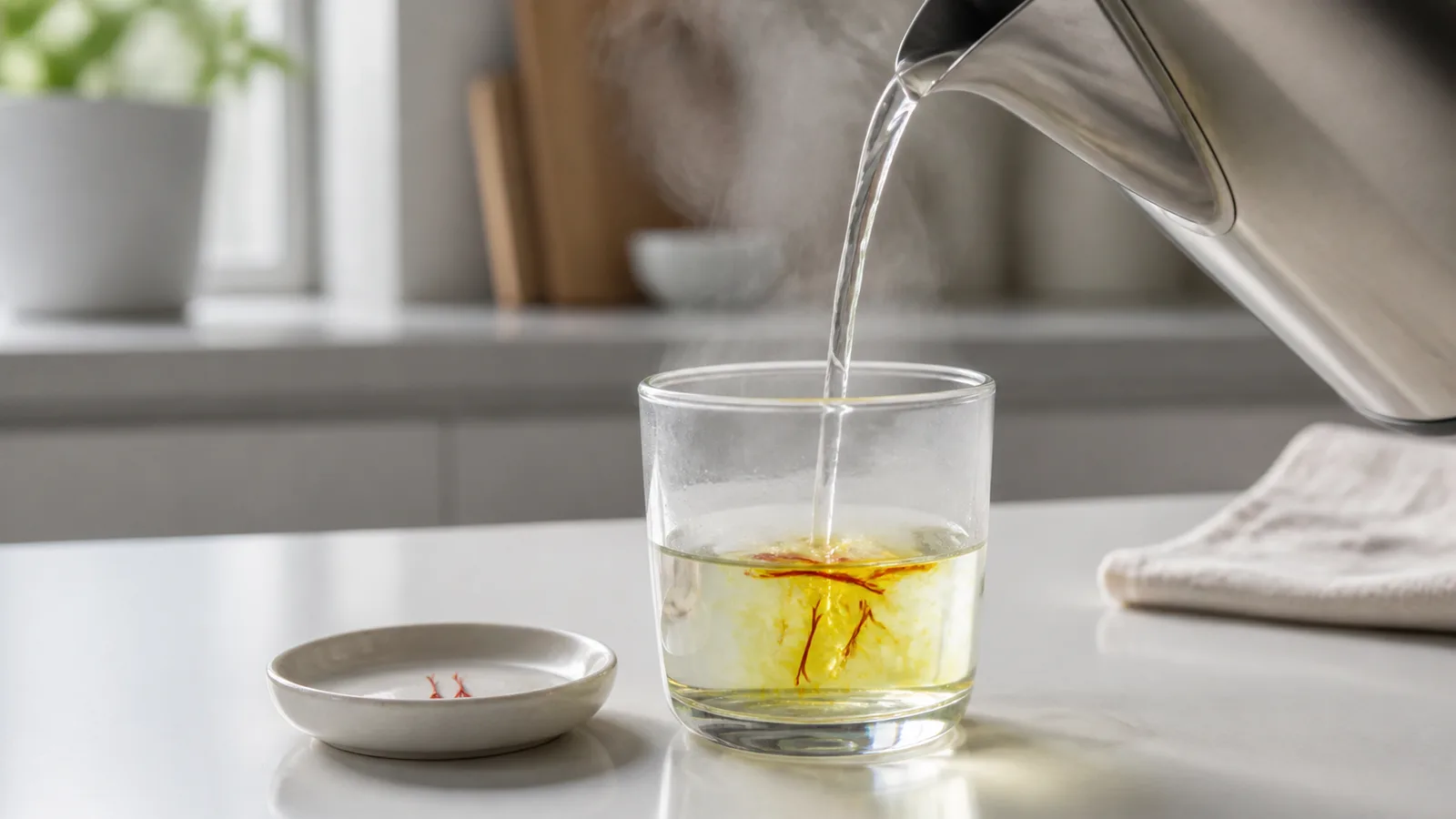
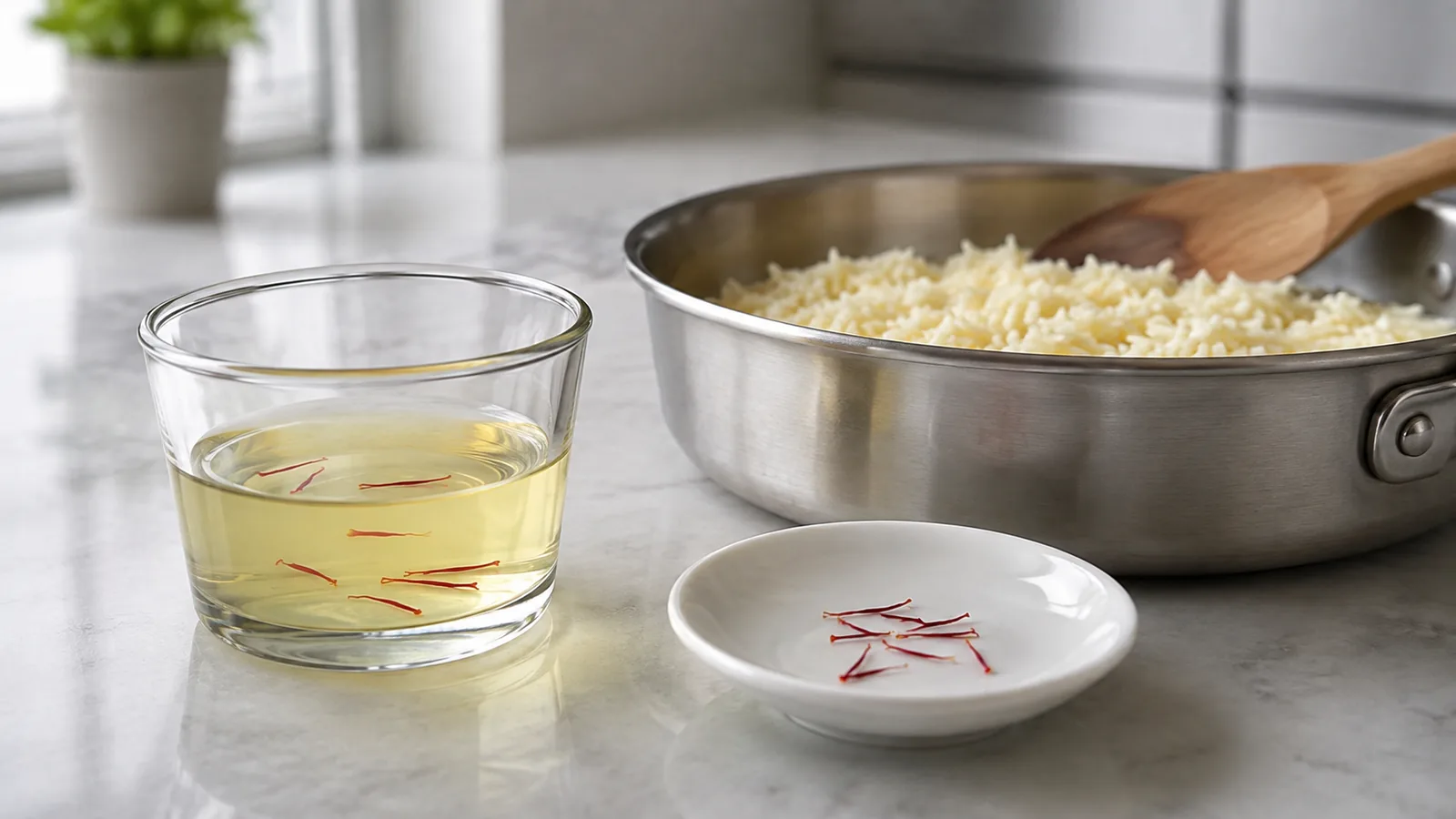
- 1 tablespoon concentrated brewed saffron
- Neutral frying oil, enough for 5–6 cm depth
- Powdered sugar, for finishing
The old recipe measured the rosewater-and-water mixture and the two-flour mixture as half a glass each. The weights above make the ratio repeatable while preserving those proportions. Flour absorbs differently, so use the consistency test below as the final guide.
Equipment
- A metal rosette or window-pastry iron with a long handle
- A deep, heavy saucepan or small Dutch oven
- A narrow bowl just wider than the iron
- A whisk and fine sieve
- A thermometer suitable for frying oil
- A tray lined with a wire rack or absorbent kitchen paper
How to make saffron window sweets
1. Mix the starch and liquids
Whisk the cornstarch, rosewater and cool water in the narrow bowl until completely smooth. Add the eggs one at a time, whisking well after each, then mix in the brewed Iranian saffron. If the saffron infusion is warm, cool it first so it does not begin to set the egg.
2. Add the flours and rest
Sift the rice flour and plain flour together once, then whisk them into the wet mixture. Pass the finished batter through a fine sieve if small lumps remain. Cover and refrigerate for 15 minutes. Ten rounds of sifting, as suggested in the older instructions, are unnecessary; an even batter matters more than the count.
3. Heat the oil and iron
Pour the oil into the pan, leaving ample space above it, and heat to about 170°C. Stand the clean, dry rosette iron in the oil for 30–45 seconds. A cool iron will not pick up the batter; an excessively hot one can cook the batter before it grips the pattern.
4. Coat only the face of the iron
Lift the hot iron, let excess oil drip back into the pan and touch its patterned face to the batter for two or three seconds. Stop just below the top rim. If batter flows over the upper edge, the cooked sweet will lock around the iron instead of releasing.
5. Fry and release
Move the coated iron directly into the oil. After a few seconds, shake it gently or use a wooden skewer to ease the pastry free without touching the hot metal. Fry until pale gold and crisp, usually 30–60 seconds rather than relying on the old fixed two-minute instruction. Turn once if needed.
6. Reheat and repeat
Transfer the sweet to the rack and return the bare iron to the oil for 15–20 seconds before dipping again. Stir the batter from the bottom occasionally because starch settles. Keep the oil near 165–175°C and work steadily, without rushing.
7. Cool before adding sugar
Let each batch drain in a single layer. When completely cool, sift powdered sugar over both sides. Sugar added while the pastries are hot dissolves into the oil and makes the surface sticky.
The correct batter consistency
The batter should flow like light cream and leave a thin, opaque film on the heated iron. If it slides off without coating, whisk in plain flour one teaspoon at a time, up to about one tablespoon. If it clings in a heavy layer, add cool water or milk one tablespoon at a time. The old suggestion of adding half a cup of milk at once could make the batter far too loose.
Troubleshooting window bread
- Batter will not stick: reheat the iron, dry it before the first use and confirm the batter is not watery.
- Pastry will not release: do not let batter cover the iron’s top edge; a light seasoning of the clean iron may also help.
- Sweets are greasy: bring the oil back to temperature and avoid crowding the pan.
- Centre stays soft: use a thinner coating and let the pastry fry a little longer at a steady temperature.
- Edges burn: lower the oil temperature and shorten the time the empty iron reheats.
- Batter changes during the batch: stir gently because starch and rice flour settle.
Flavour variations
Cardamom is the easiest variation: add ¼ teaspoon finely ground seed with or without saffron. The original post also suggested cocoa or coffee powder in place of saffron. Use only a small amount and expect to adjust the liquid, because either powder changes the colour and consistency. Make one test sweet before altering the whole bowl.
For the clearest Iranian saffron flavour, keep the rosewater restrained and use a properly concentrated infusion. Our guide to brewing saffron shows how to extract colour before adding it to a batter.
Storage
Cool the sweets fully before storage. Keep them in a rigid airtight container at room temperature with baking paper between layers; wrapping warm pastries in cellophane traps condensation and removes their crispness. They are best during the first few days. If they soften, place them briefly in a low oven, cool again and dust with fresh sugar.
Frying safety
Use a stable pan on a clear hob, keep children away and never place a wet iron into hot oil. Do not fill the pan more than halfway. If oil smokes, turn off the heat; if it ignites, cover the pan with a lid and never throw water on it. The long rosette handle reduces reach over the pan but does not make hot-oil cooking risk-free.
Once the rhythm is established—heat, dip, fry, release, reheat—window bread becomes consistent. The result should be light enough to snap, fragrant with saffron and rosewater, and clearly patterned from edge to centre.