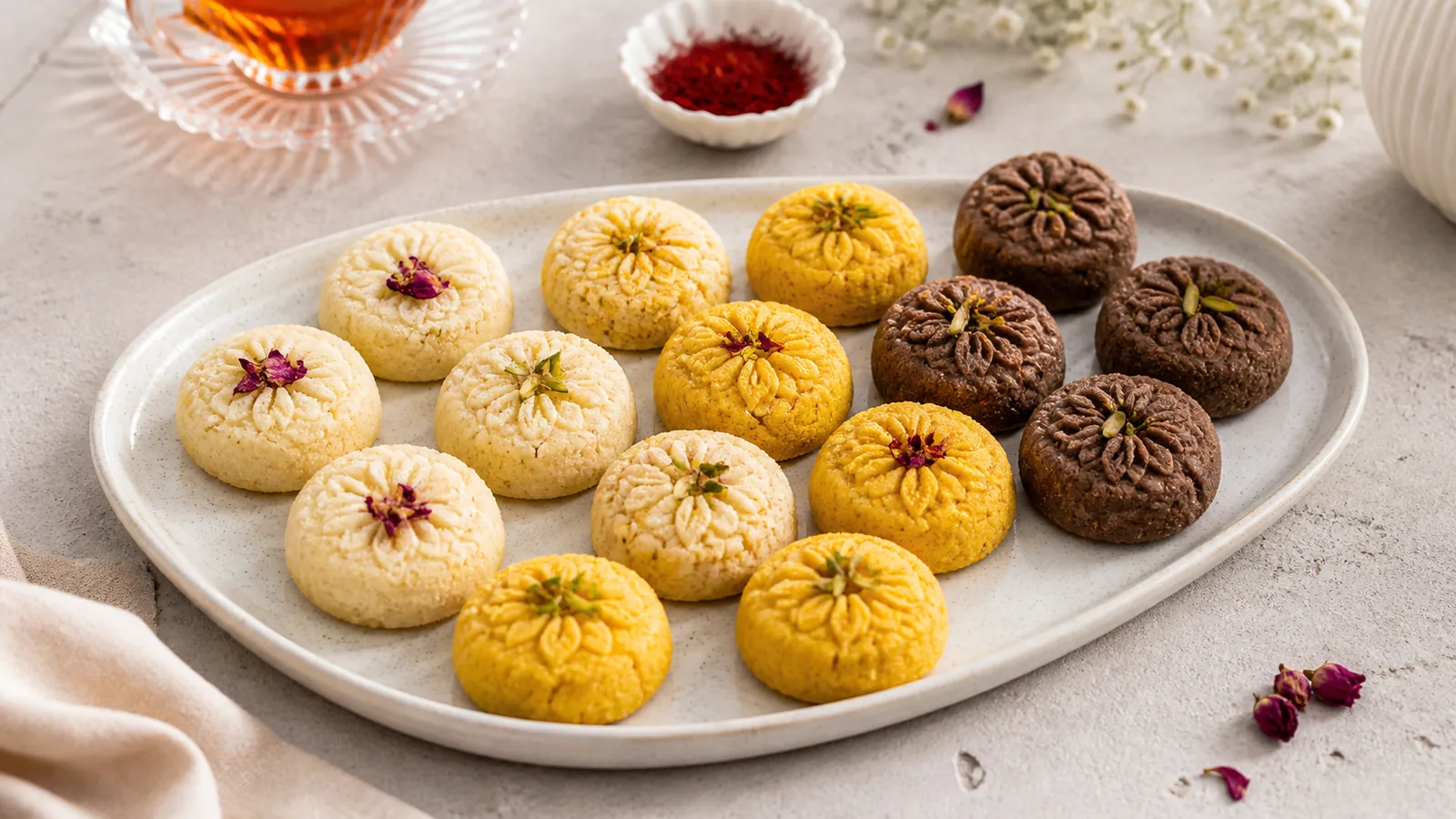
These Iranian rice sweets are tender, fragrant cookies made with rice flour, rosewater and saffron. Dividing the dough into plain, saffron and cocoa portions gives one batch three distinct colours and flavours, which makes them particularly inviting on an Eid sweet tray.
Ingredients
- 70 g powdered sugar, sifted
- 125 g butter, softened
- 60 g wheat flour
- 190 g rice flour
- 2 tablespoons rosewater
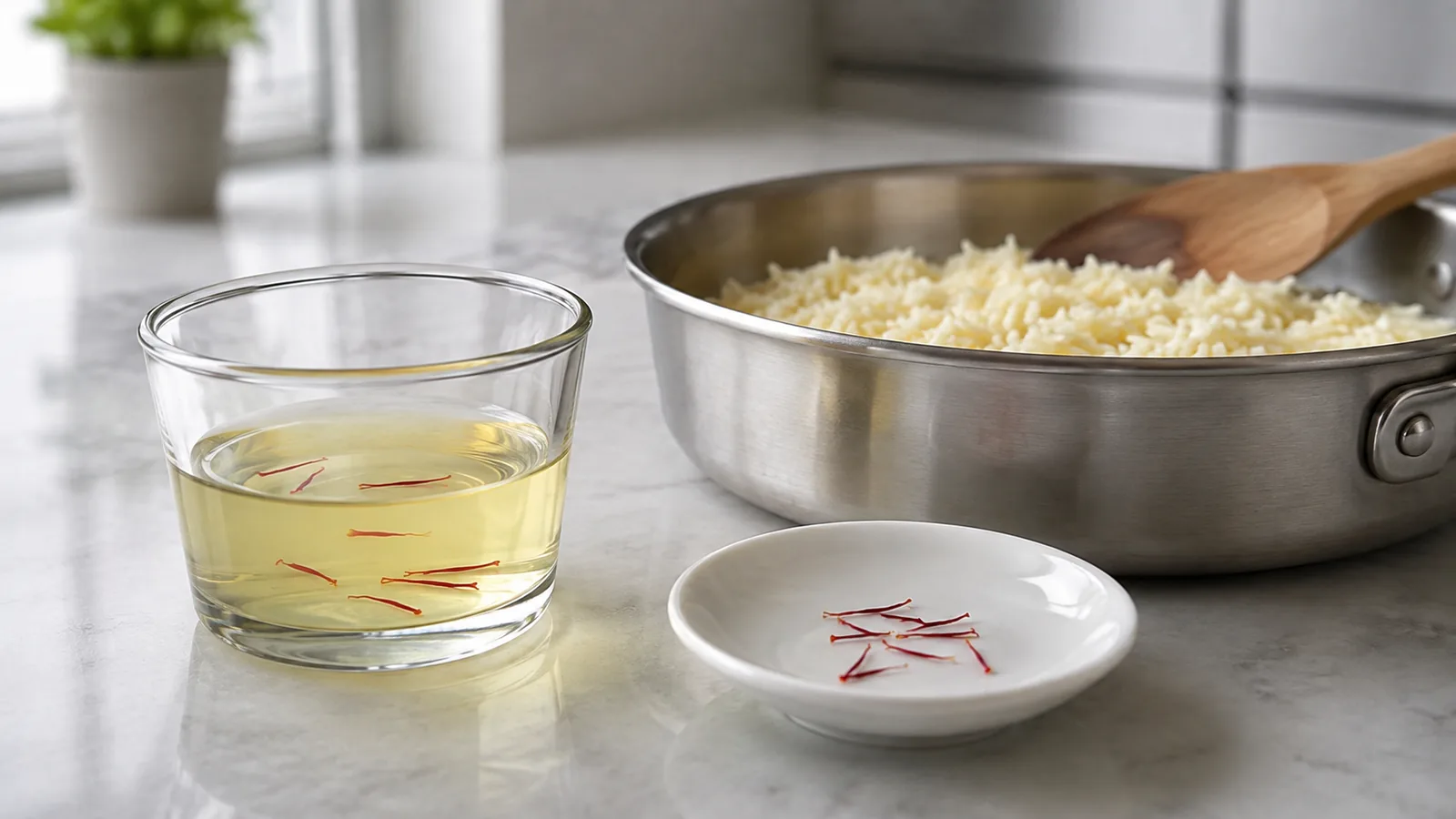
- 1 tablespoon brewed saffron
- 1 tablespoon cocoa powder
- 1 tablespoon granulated sugar
- 1 egg yolk
- About half an egg white, lightly beaten
- Poppy or purslane seeds, optional, for decoration
Rice flour varies in how finely it is milled. Use a fine flour intended for baking, weigh it if possible and hold back from adding extra until the dough has had time to come together.
How to make rice sweets with saffron
Mix the base dough
Beat the softened butter with the sifted powdered sugar until smooth and a little lighter. Add the egg yolk and rosewater, then mix in the beaten egg white gradually. Half a large white is roughly one tablespoon; stop if the mixture already looks loose.
Sift in the wheat flour and mix just until it disappears. Add the sifted rice flour in stages, bringing the dough together gently by hand at the end. It should feel soft and mouldable, not wet. If it clings heavily after a few minutes, add rice flour one teaspoon at a time rather than making the cookies dry.
Create three flavours
Mix the cocoa powder and granulated sugar with just enough boiling water to form a thick, smooth paste, then let it cool. Divide the dough into three equal portions. Knead the brewed saffron into one portion and the cocoa paste into another; leave the third plain.
Wrap each portion closely so no surface is exposed. Refrigerate for 24 hours. This rest lets the rice flour hydrate and the flavours settle, but good wrapping matters: dried edges will crack when the cookies are shaped.
Shape and bake
- Remove the dough from the refrigerator and let it stand for 15–30 minutes, just until the butter softens enough for shaping.
- Heat the oven to 180°C (350°F) and line a baking tray.
- Roll small, evenly sized balls. Flatten them to about 5–8 mm thick, then use a small stamp or mould if you want a patterned surface. The inherited measurement of 3–5 cm is too thick for a 10–12 minute cookie and has been corrected here.
- Add a few poppy or purslane seeds to the centre if desired.
- Bake for 10–12 minutes, until the cookies are set and their undersides have only begun to colour. The tops should remain pale.
Leave the rice sweets on the tray for several minutes before moving them. They are fragile while hot and become firmer as they cool. The batch yields about 25–30 small cookies, depending on the mould.
Using a convection microwave
A combination microwave can be used only in its true convection mode, with microwave energy switched off, and only with cookware approved by the manufacturer. Preheat the convection setting to 180°C and start checking around 10 minutes. The old instruction to combine 180°C with “20% power” is not portable between appliances and could produce unpredictable results, so follow the convection guidance for your particular model.
How to prevent dry or cracked cookies
- Keep every dough portion covered during the long rest.
- Use softened, not hot melted, butter so the dough emulsifies evenly.
- Add liquids gradually; the cocoa and saffron portions may need slightly different handling.
- Do not keep adding flour simply because chilled butter makes the dough feel firm.
- Shape the cookies evenly and take them out before the tops brown.
Store completely cooled rice sweets in an airtight container, with parchment between layers if they are stamped. Their rosewater and saffron aroma becomes clearer after a short rest, while the three flavours keep the finished plate varied without requiring three separate doughs.