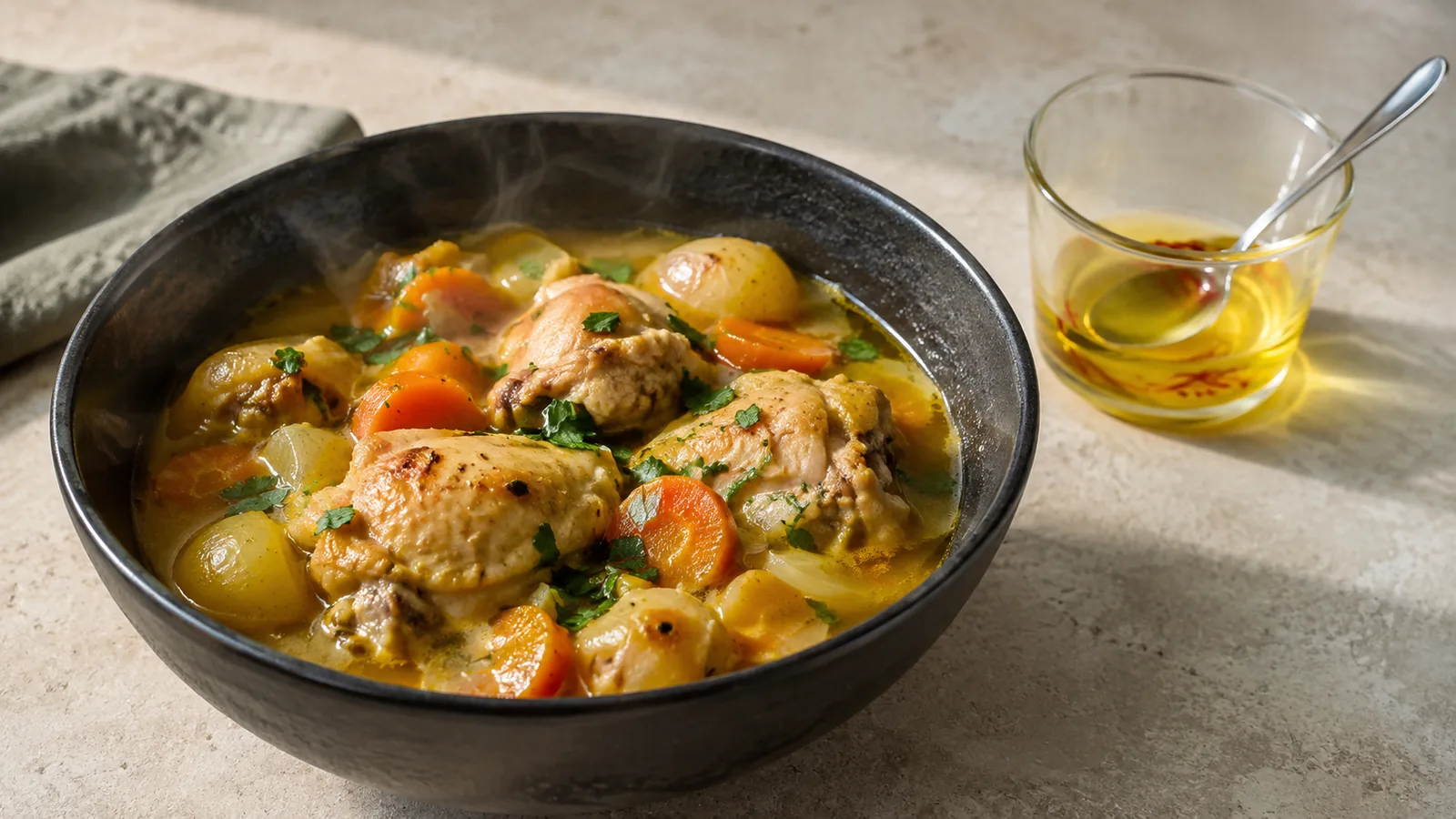
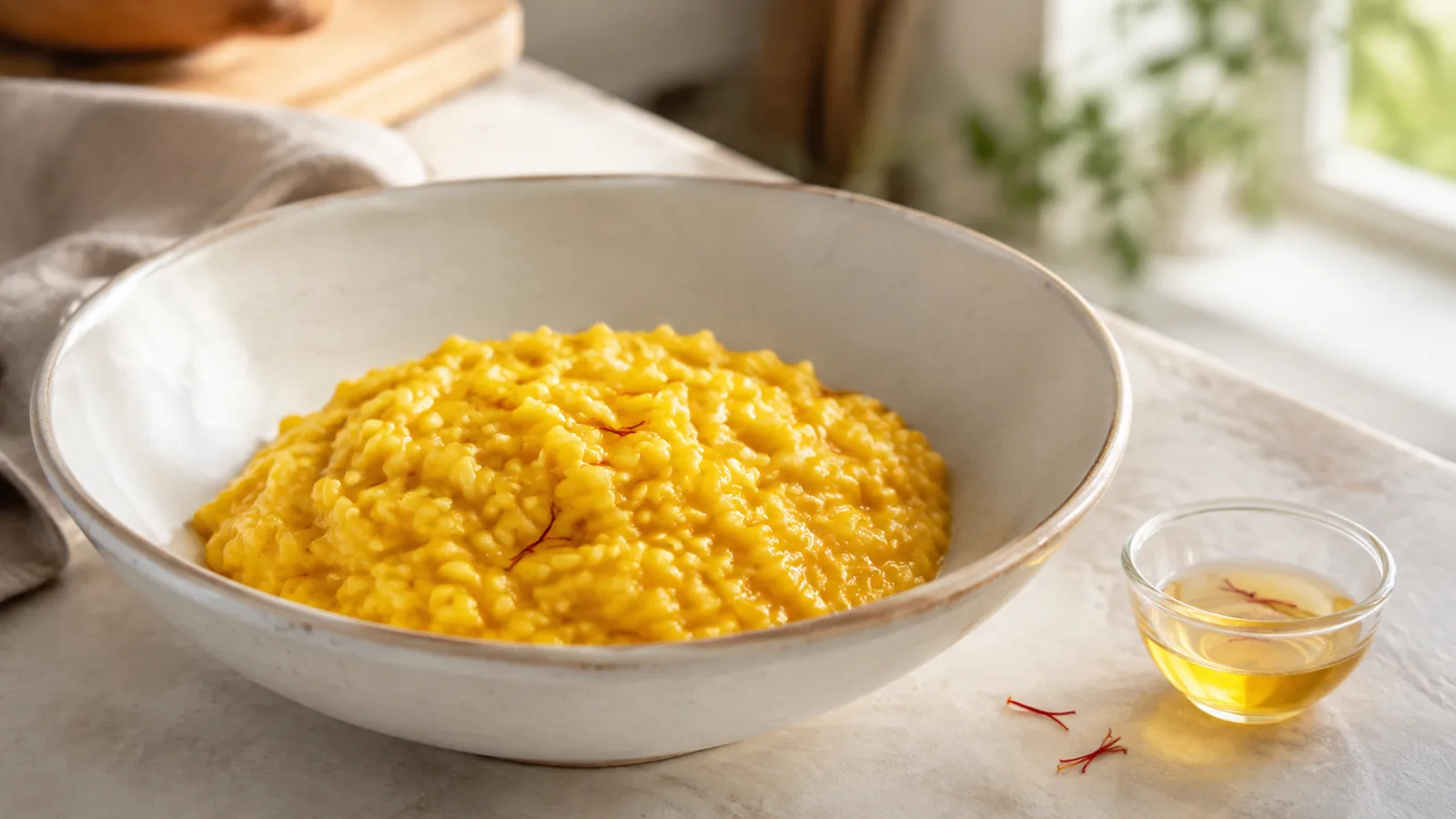
This milk halva with saffron is a soft Iranian halva made with flour and milk instead of water. Butter, cardamom, rosewater and saffron give it a rounded aroma, while careful toasting keeps the wheat flour from tasting raw.
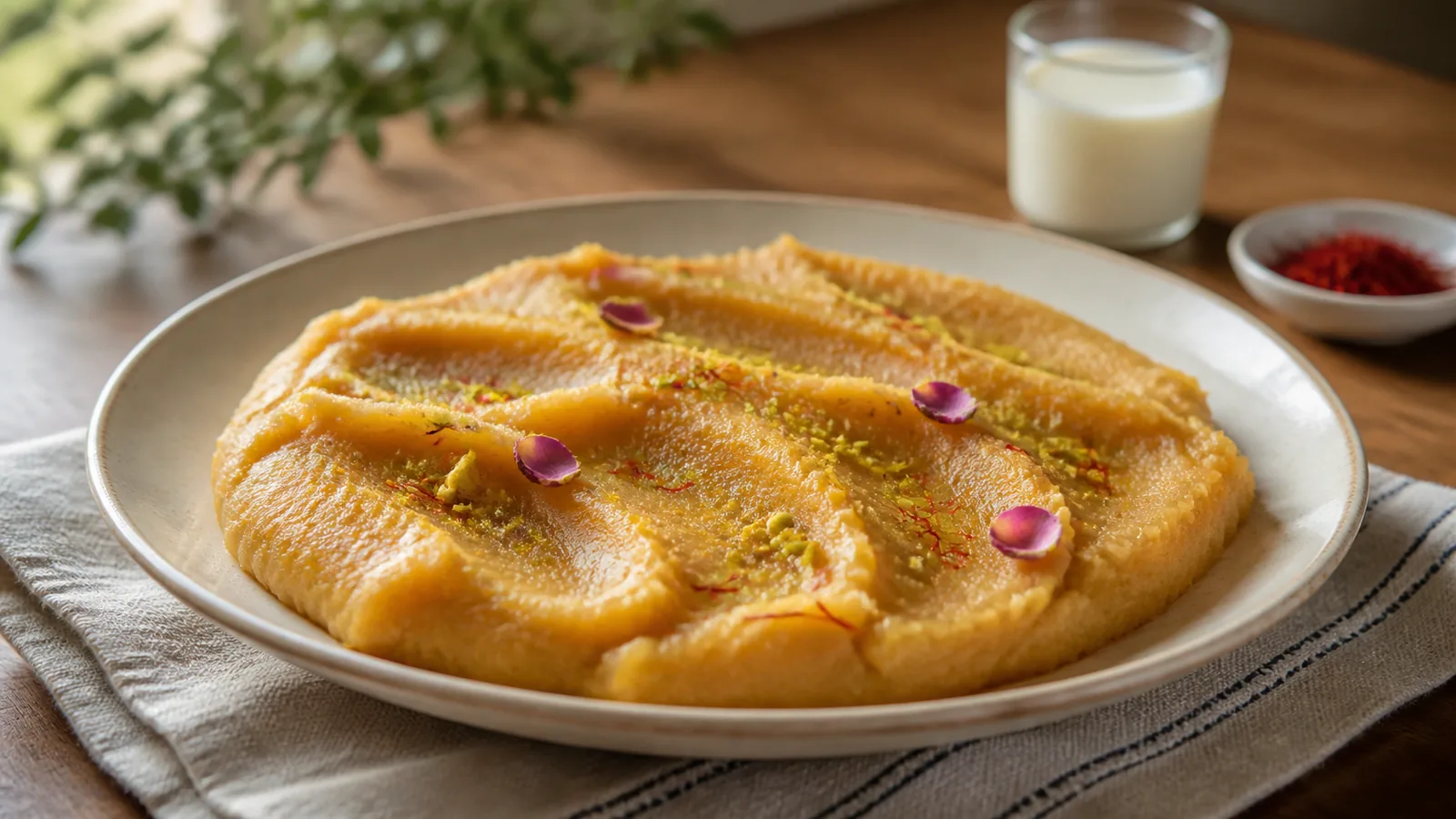
You may see the same idea labelled milk halva, milk helva or milky halva. Searches such as “halva milk,” “halva Persian” and “Persian halva recipe” can also lead to similar flour-based sweets, although ingredients and texture vary between regions and households.
This version can be spooned into a serving dish, piped while warm or pressed into small moulds. It is often served during Ramadan and at iftar, but it works just as well as a small dessert at other times.
Milk halva ingredients
- 125 g plain white or pastry flour
- 50 g butter
- 75 g neutral oil
- 1 cup milk
- 100 g sugar
- 1 tablespoon rosewater
- 1 teaspoon ground cardamom
- 1 tablespoon prepared saffron infusion
Make the saffron milk syrup
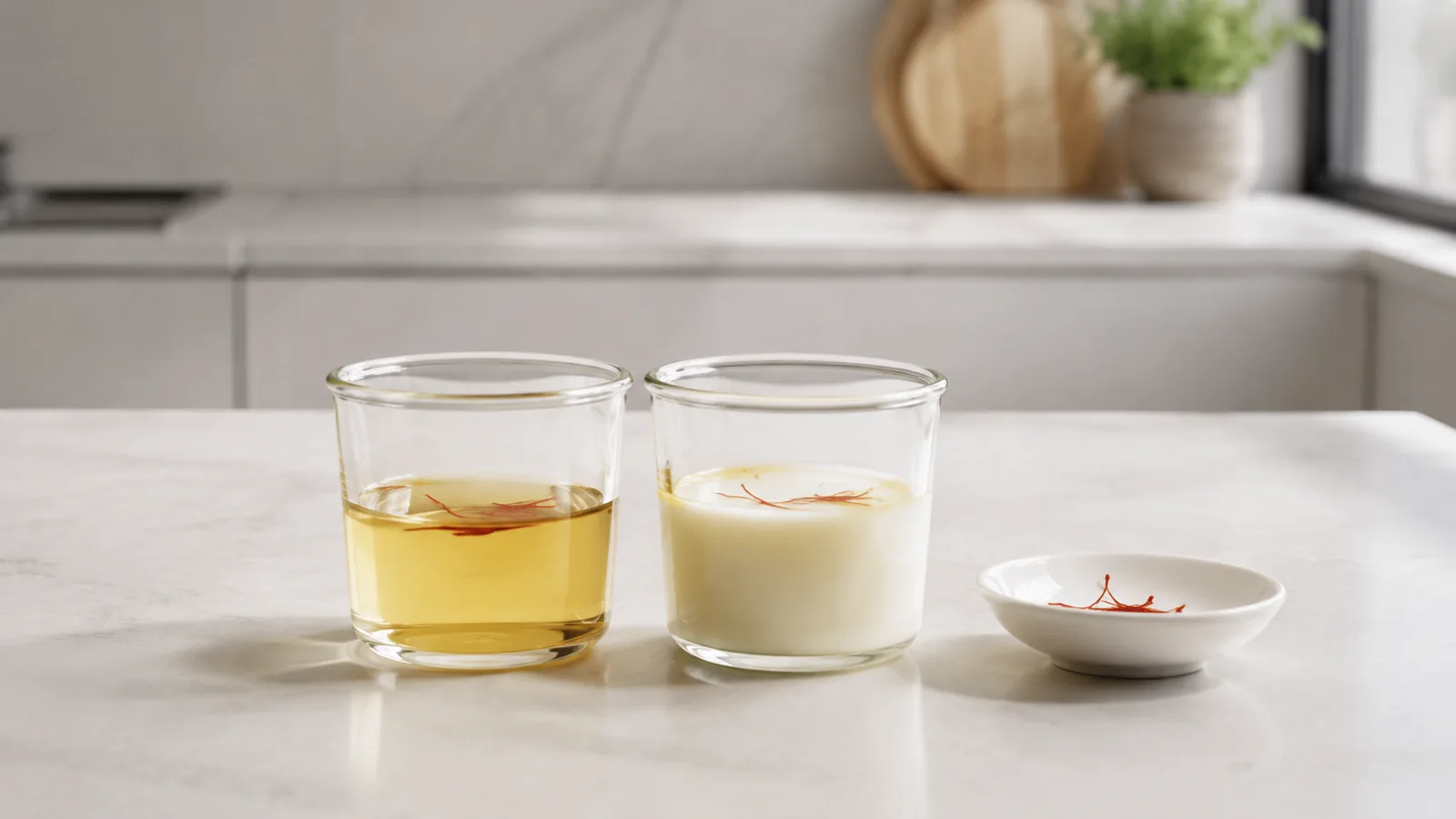
Pour the milk into a small saucepan and warm it over medium-low heat. Add the sugar and stir until it has completely dissolved. The milk only needs to steam gently; a hard boil can make it catch on the bottom of the pan.
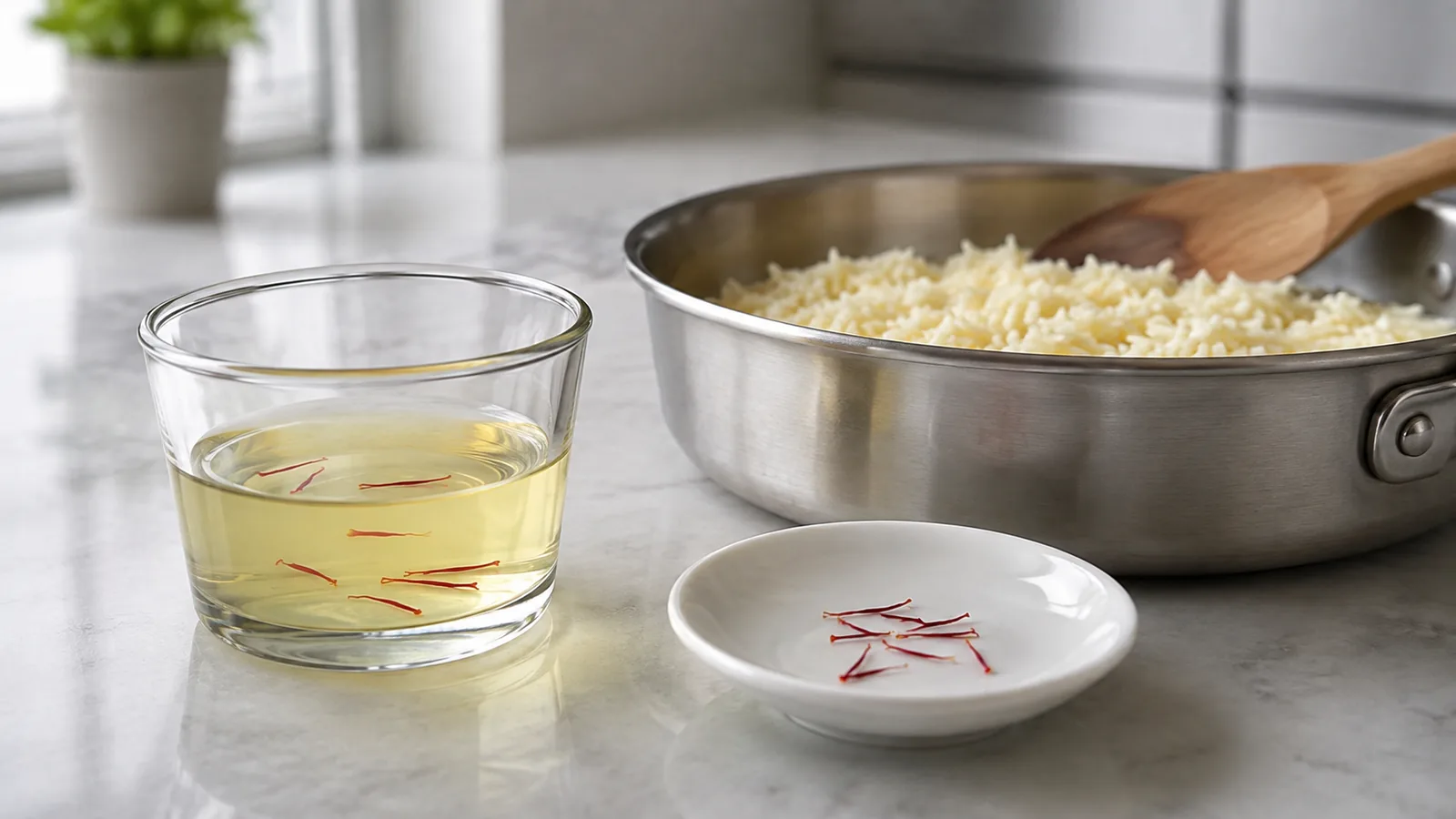
Remove the saucepan from the heat. Stir in the cardamom, rosewater and saffron infusion, then cover it so the aromas stay in the milk while you toast the flour.
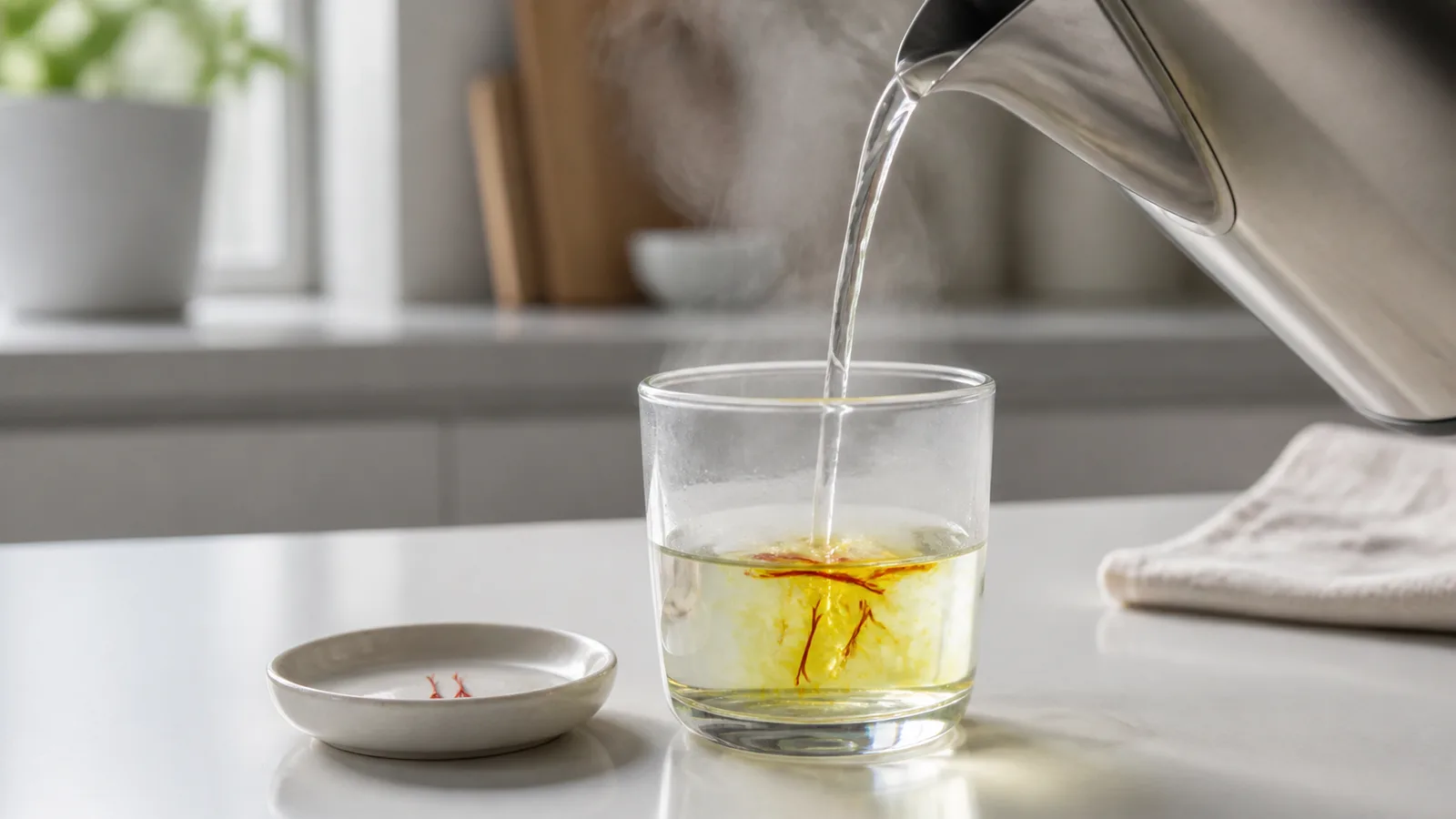
If you need to prepare the infusion first, our saffron brewing guide explains how to develop the colour without adding too much water.
Toast the flour evenly
Sift the flour into a wide, heavy pan. Cook over medium-low heat, stirring continuously, until the raw flour smell disappears and the colour changes to pale gold.
A longer toast will make a darker halva with a stronger nutty taste. Keep the heat modest and scrape the corners of the pan; even a small patch of burnt flour can make the whole batch bitter.
Add the butter and oil
Add the butter and neutral oil to the warm flour. Stir over low heat until the butter melts and the mixture becomes a smooth paste with no dry pockets.
Continue cooking for another 2 to 3 minutes. The paste should look glossy and smell toasted, but it should not contain dark specks.
Bring the milk halva together
Take the flour mixture off the heat. Add the warm saffron milk in several portions, stirring thoroughly after each one. Use a long-handled spoon because the mixture may bubble when the liquid first meets the hot pan.
Return the pan to very low heat. Fold and stir until the halva gathers together and pulls away from the sides. Stop while it is still supple; it will firm as it cools.
Serve, pipe or mould the halva
For a shared dessert, spoon the warm halva into a shallow dish and shape simple ridges with the back of a spoon. Finish with pistachios, almonds, dried rose petals or a few saffron threads if you like.
To pipe it, transfer the halva to a strong piping bag while it is still warm enough to move easily. Do not use a thin disposable bag with very hot halva.
For moulded portions, lightly grease a food-safe silicone, metal or firm plastic mould. Press in the warm halva, smooth the surface and chill just until set. Turn it out gently; its butter and oil should help it release.
How to control the texture
- Too soft: cook over low heat for another minute or two, stirring constantly.
- Too firm: work in a spoonful of warm milk before the halva cools.
- Lumpy: sift the flour and add the milk mixture gradually.
- Cardamom grit: use finely ground cardamom or strain the infused milk before adding it.
- Oily surface: keep folding the warm halva until the fat is drawn back in.
Can the syrup be made ahead?
You can prepare the saffron milk mixture several hours ahead or the night before. Cool it promptly, cover and refrigerate it, then warm it gently before combining it with the flour. Do not pour refrigerator-cold milk into the hot paste.
Storage
Because this halva contains milk, cover and refrigerate leftovers within 2 hours. Use them within 3 days and let each portion soften briefly at room temperature before serving.